
Click here to continue your tour!
|
|
|
|
|
|
|
|
|
|
|
|
|
|
|
|
|
|
|
|
|
|
|
|
|
|
|
|
|
|
|
|
|
|
|
|
|
|
|
|
|
| Gettysburg (continued) | ||||||||||||||||||||||||||||||||||||||||
| For a closer look at each picture, simply click on it. Then click the "Back" button at the top left of your browser screen to return to this page. Enjoy! | ||||||||||||||||||||||||||||||||||||||||
|
|
|||||||||||||||||||||||||||||||||||||||
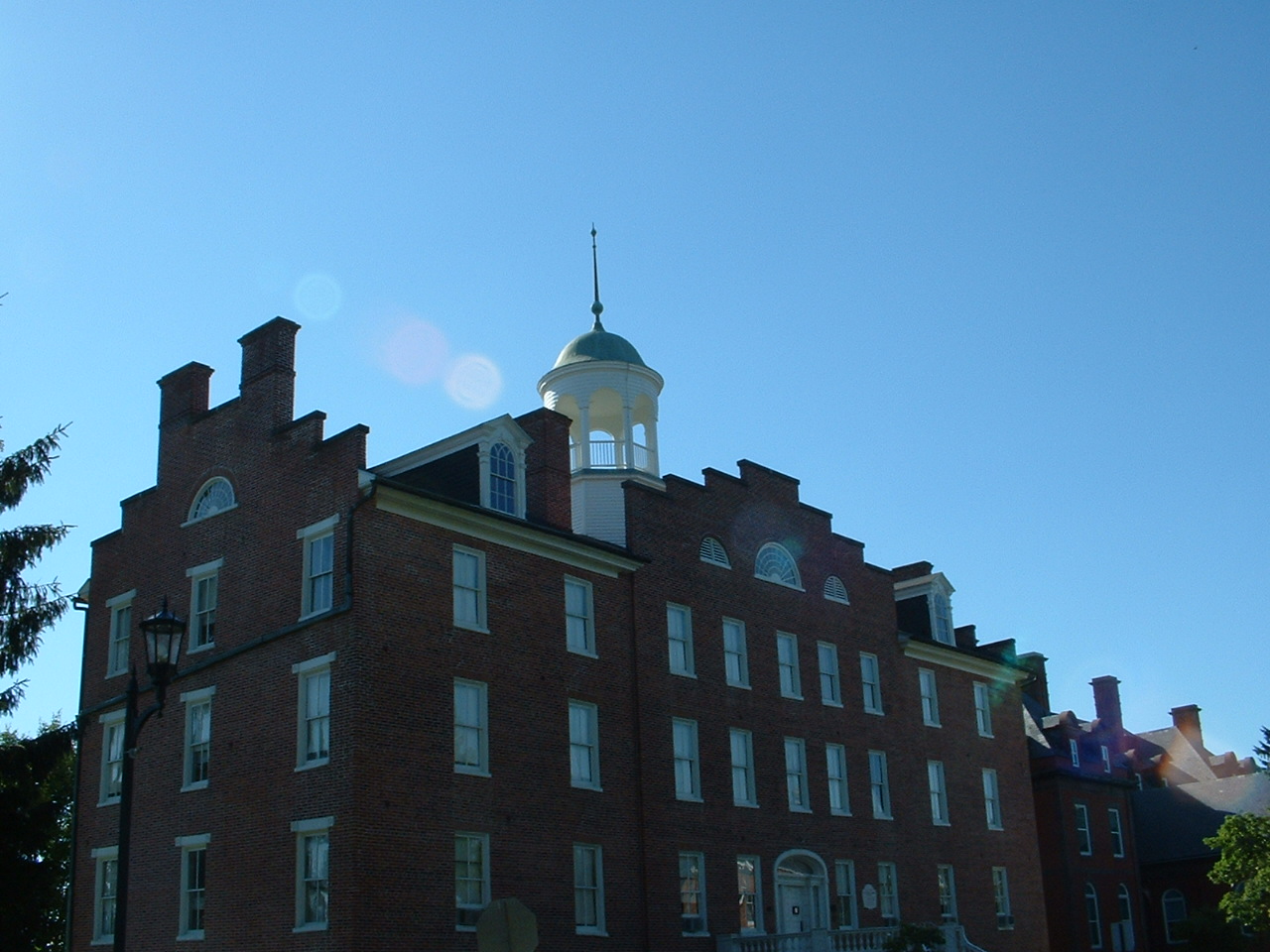
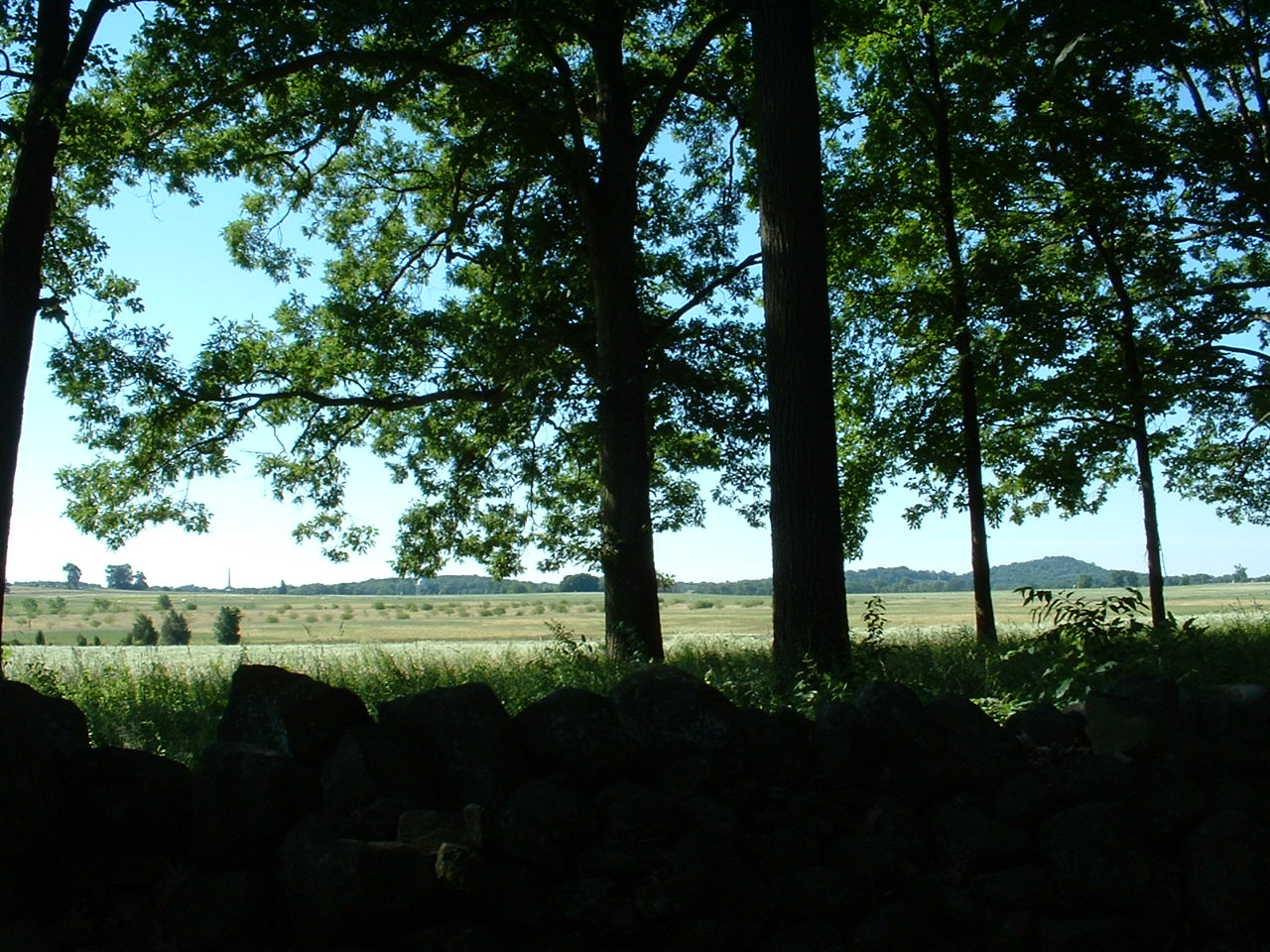
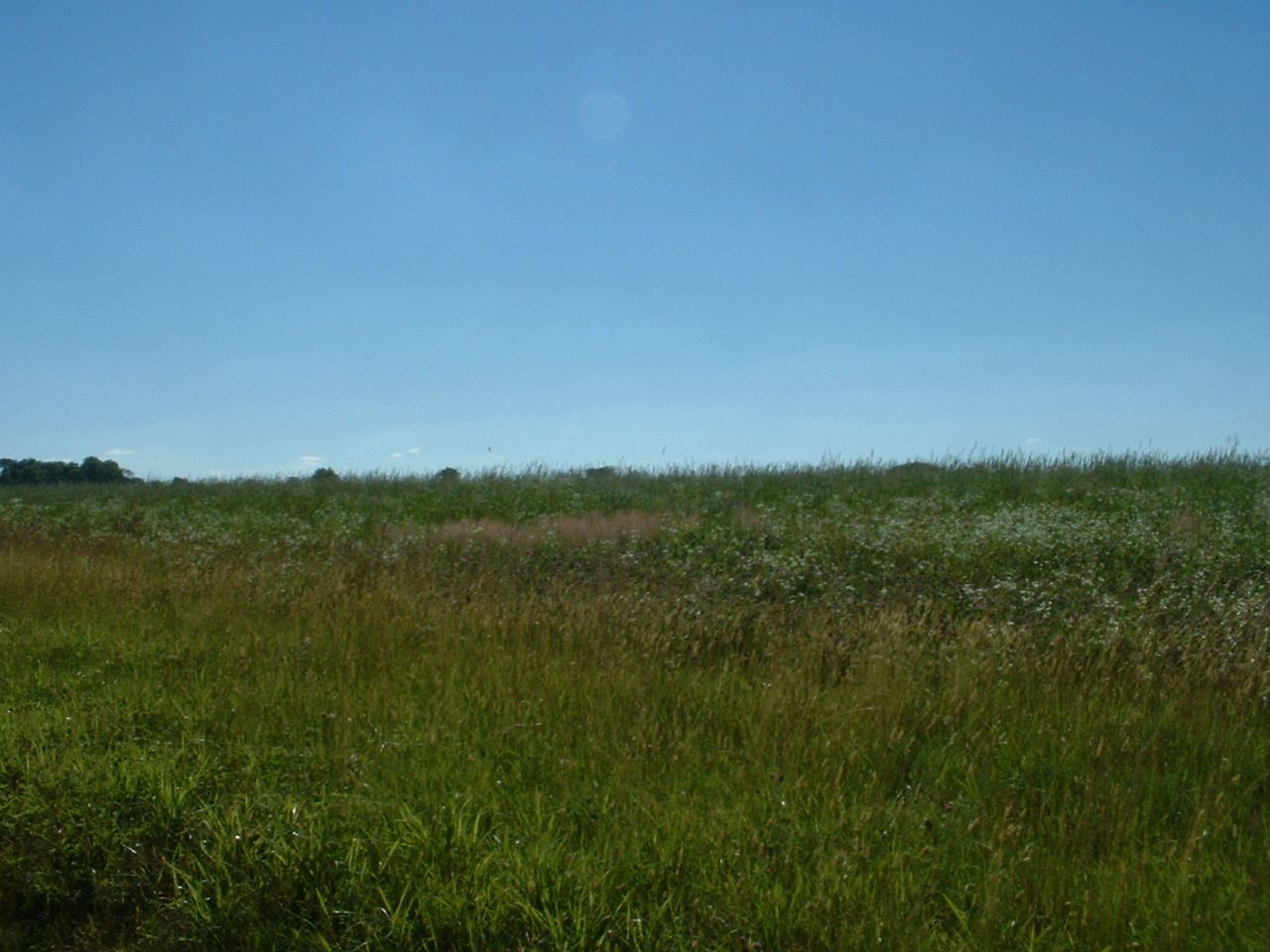
| The Lutheran Theological Seminary served Union and then Confederate soldiers as both an observation tower and field hospital during the three days battle. Brigadier General John Buford would at times watch the days action from the Seminary's cupola. Along Seminary Ridge, during the latter half of July 1st, the remaining men of the Iron Brigade attempted another stand during their fighting withdrawal from Major General Pender's Division of Lt. General A. P. Hill's Corps. Ironically, the Seminary's founder, Samuel Simon Schmucker, was a staunch abolitionist who could not have predicted the role these buildings and grounds would play in the largest battle ever fought on North American soil. He did however use the Seminary, along with hidden rooms in his own basement, as a stop on the Underground Railroad, providing temporary safety for slaves fleeing bondage. Union soldiers destroyed anti-slavery materials found there to avoid their falling into Confederate hands. For two months after this horrific battle, soldiers from North and South attempted to recover within the Seminary's sturdy walls. (from brotherswar.com) | Far left flank of Pickett's charge, looking towards Cemetery Ridge. Brockenbrough's brigade, commanded by Col. Robert Mayo, was slowed moving through these woods at the start of the advance, and tried to catch up with the other assaulting units. The brigade fell under fire from batteries on Cemetery Hill and men began to fall out of line and head towards the rear. As Mayo's command moved towards the Emmitsburg Road it came under flanking fire from the 8th Ohio Infantry. This was more than the badly shaken men of the brigade could take, and the entire brigade broke for the rear. The retreat of Mayo's command exposed Davis's brigade to a heavy Federal cross fire, and the Mississippi brigade began to crumble. As things began to deteriorate on Pettigrew's left, the right flank of the formation had joined with Pickett's left and the Confederates began to move up the long, gentle slop of Cemetery Ridge towards the Federal center. | |||||||||||||||||||||||||||||||||||||||
|
||||||||||||||||||||||||||||||||||||||||
|
||||||||||||||||||||||||||||||||||||||||
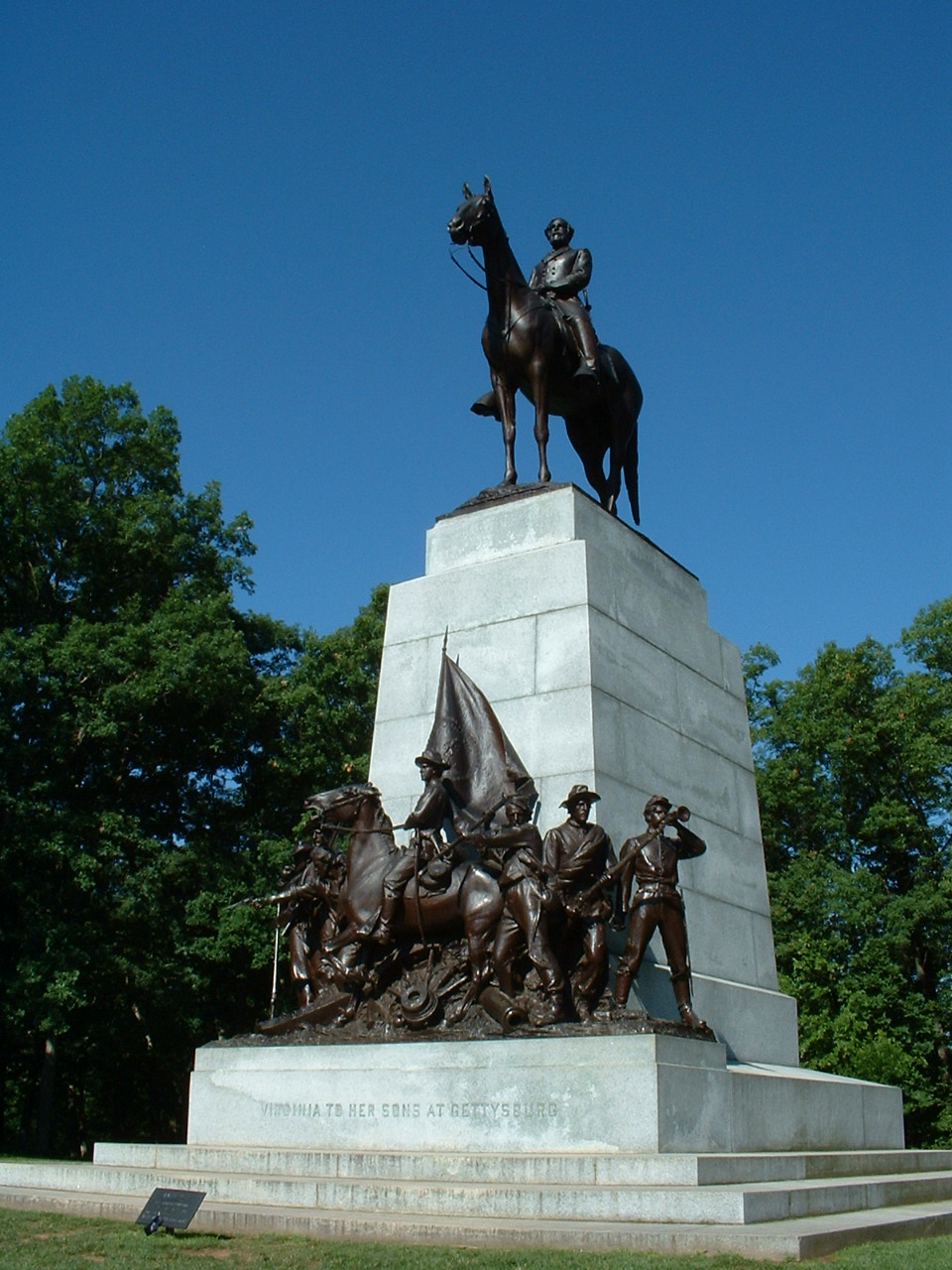
| Virginia Monument. Located near the center of Seminary Ridge, the Virginia Monument is one of the largest southern monuments in the park and features a heroic-size equestrian statue of General Lee atop Traveller, his favorite mount. On the base of the monument is a grouping of bronze figures representing the various backgrounds of the soldiers who served under Virginia's flag. All of the figures are the work of sculptor F. William Sievers. The monument was unveiled and formally dedicated on June 8, 1917. This location for the monument, overlooking the fields of Pickett's Charge, was selected because it was here that General Lee witnessed the disastrous charge. Even in defeat, Lee was magnanimous. Rising to the greatness that has symbolized him throughout history, the general placed full blame for the failure squarely on himself. To a distraught General Pickett, Lee spoke words of comfort: "Come, General Pickett, this has been my fight, and upon my shoulders rests the blame. The men and officers of your command have written the name of Virginia as high today as it has ever been written before." It is no wonder that the Confederate soldiers who served under Lee gave him their undying loyalty and many historians feel that this day at Gettysburg, as tragic as it was, may have been his finest hour. (National Park Service) | ||||||||||||||||||||||||||||||||||||||||
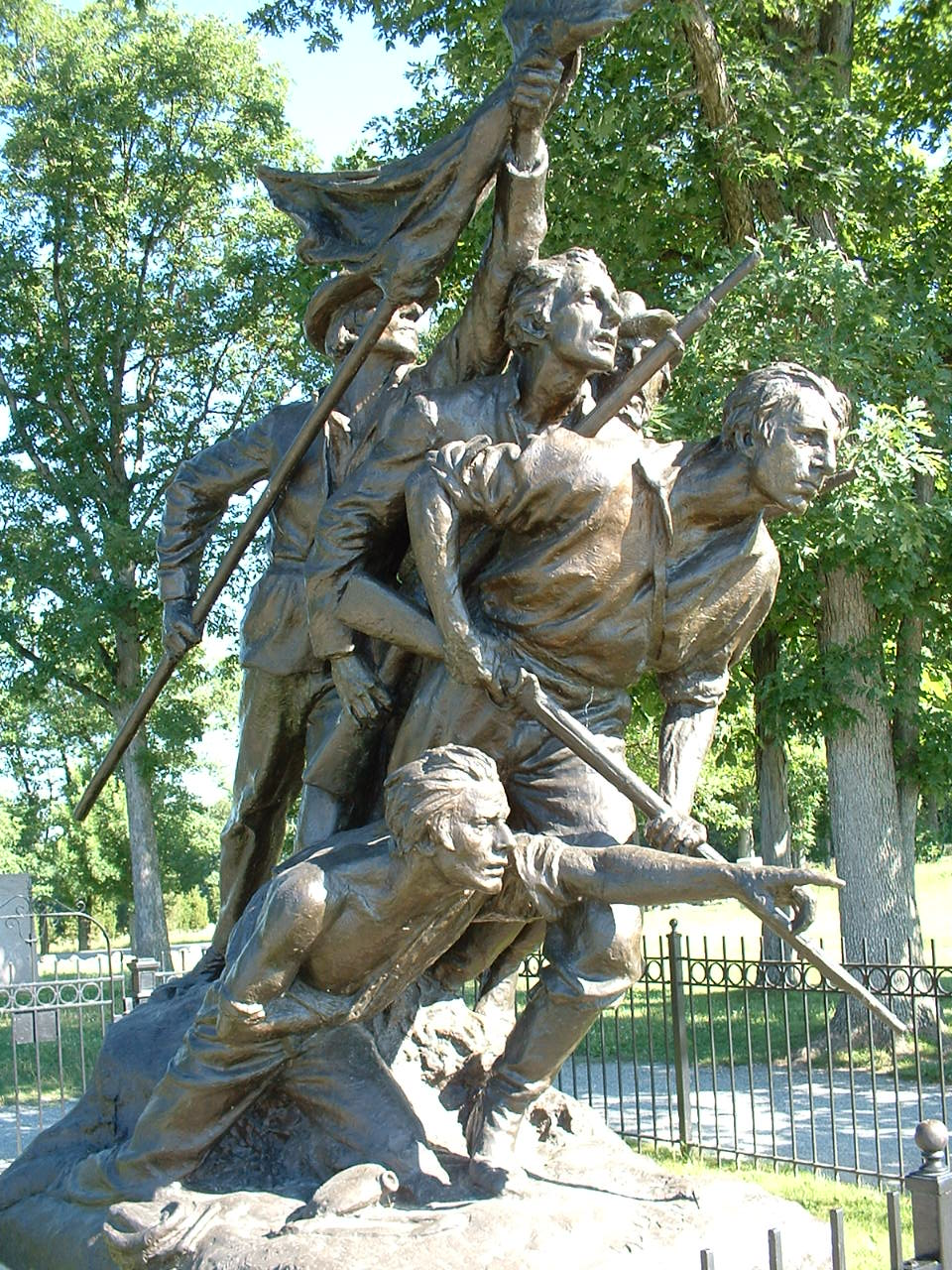
| The North Carolina Monument was dedicated to the forty-two regiments and batteries from that state which served at Gettysburg. The North Carolina legislature appointed a special commission of veterans to visit the battlefield park in 1913 and return with a design proposal for a state monument to be place there, but the advent of World War I put the state's plans on hold. It was not until 1927 when the plan was rekindled by the North Carolina Chapter of the United Daughters of the Confederacy and Governor Angus McLean. The state appropriated $50,000 to purchase the site, contract with an artist for the design and manufacture, and provide landscape features as an appropriate setting. Dedicated on July 3, 1929, the North Carolina Monument is the work of world renown sculptor Gutzon Borglum (1867-1941) whose most famous work is the four presidents on Mount Rushmore. The monument represents a group of North Carolina soldiers in "Pickett's Charge". Fifteen North Carolina infantry regiments, all of which had suffered heavily during the first day's battle, participated in the attack. The monument is accompanied by dogwoods, which is the state tree, and a stone monolith that lists the North Carolina commands present at Gettysburg. The state's sacrifice at the Battle of Gettysburg was humbling- one in every four Confederate soldiers who fell here was from the "Old North State". (National Park Service) | ||||||||||||||||||||||||||||||||||||||||
|
||||||||||||||||||||||||||||||||||||||||
|
||||||||||||||||||||||||||||||||||||||||
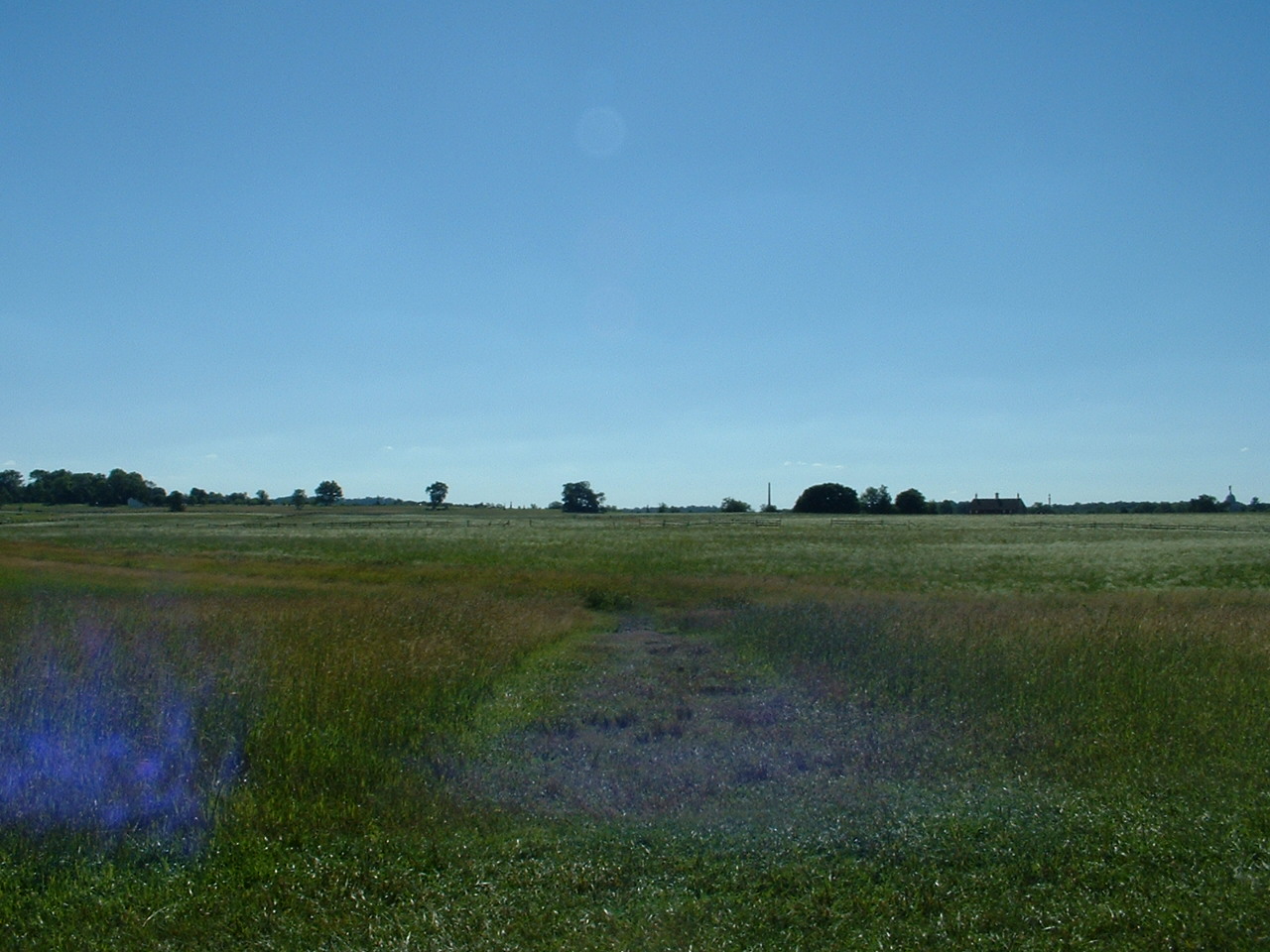
| This is a continuation of a description of Pickett's charge beginning with the picture on the left. Looking east (Confederate view). The picture on the left makes it appear as though the terrain was flat. However, not long after starting their advance, Confederates entered this swale. As you can tell, you can no longer see the Federal lines ahead. Although they still would have been under artillery fire, this area would have given the Confederates a chance to reform their lines. (continued on next picture below and to the left) | ||||||||||||||||||||||||||||||||||||||||
| Pickett's charge, looking east towards the Union lines from Seminary Ridge, the starting point of the charge. The copse of trees and angle are straight ahead. I apologize for the quality of this photo. I'm not sure what happened. All of you haunted Gettysburg believers will say you know the answer. The attack began with over one hundred Confederate guns opening fire along the Union lines. The Confederate shells tended to land over the Union lines and land amidst the rear (near the wagons and hospitals). In fact, Meade was forced to relocate his headquarters to Power's Hill. Colonel Alexander, commander of the Confederate I Corps, noticed that the Union batteries were momentarily withdrawing from their positions (only to be replenished and supported with replacement batteries) . If any time had come, this was the time. In effect, Colonel Alexander gave his opinion that the charge should proceed. The attack started from Seminary Ridge with Pickett's and Trimble's Divisions (about 12,000 men) and slowly marched eastward. Union batteries from Cemetery Hill (out of picture on left) to Little Round Top (out of picture on right) immediately opened fire on the advancing line, opening temporary gaps in the units. (continued with photo on the right) (militaryhistoryonline.com) | ||||||||||||||||||||||||||||||||||||||||
|
||||||||||||||||||||||||||||||||||||||||
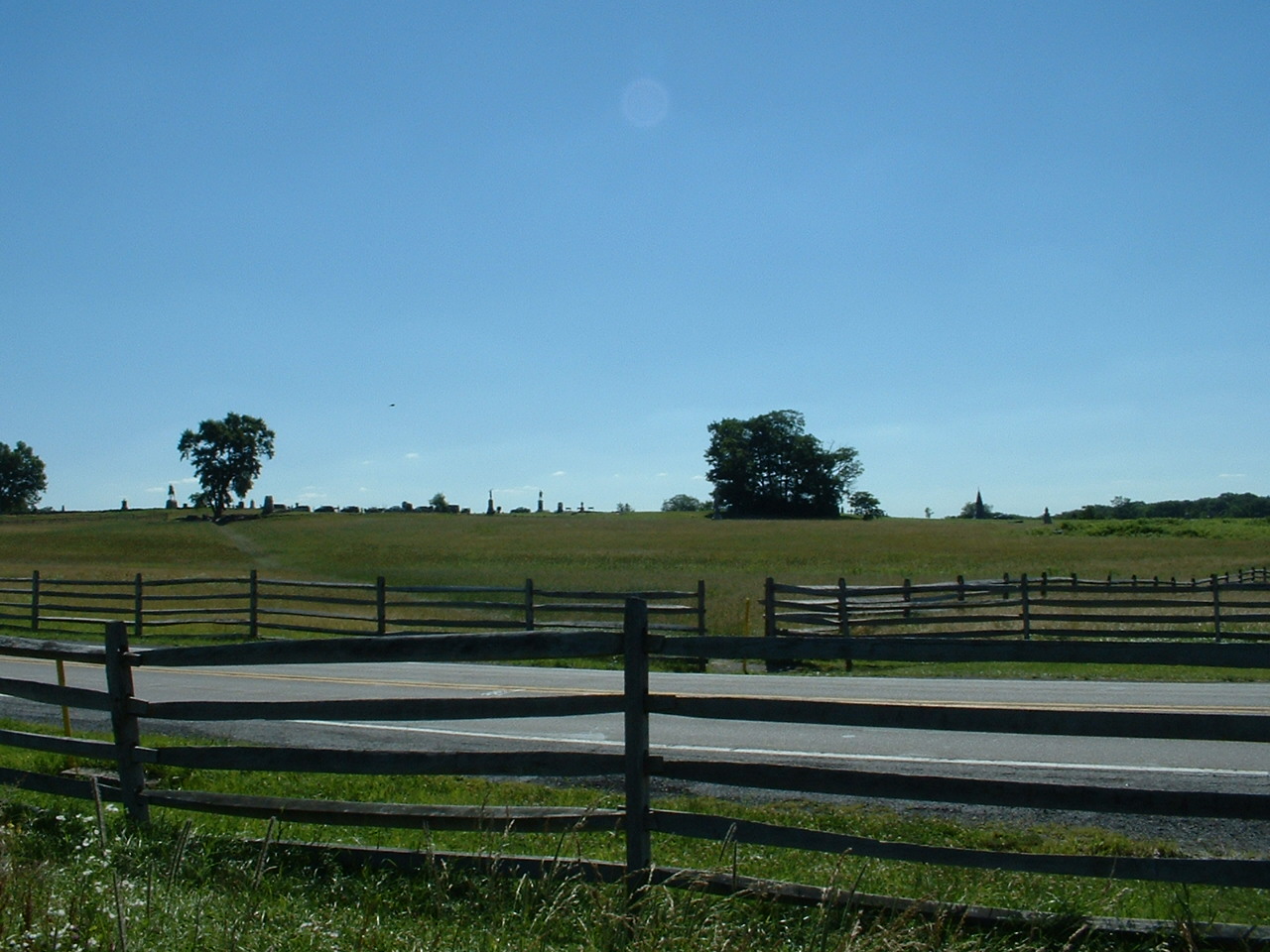
| Pickett's charge arrives at Emmitsburg Road, continued from picture on the left. The Confederates kept coming and, after 15 minutes, reformed their lines after crossing Emmitsburg Road. When the Confederates were within 400 yards, the Union artillery began firing canister and were also within Union rifle distance. The two wings of the Confederate advance converged as Pettigrew moved to the right and Pickett to the left. The line now compacted to about 1/2 mile long. James L. Kemper's Brigade formed Pickett's lead right-front brigade. Note the area of rough ground (rock outcroppings and brush) on the far right. This rough ground divided Kemper's brigade during the final charge--some of the troops attacking on one side of it, some on the other. To his left was Richard B. Garnett's Brigade followed by Lewis A. Armistead's Brigade. Pickett ordered his men to turn to the northeast in order to link with Pettigrew's Division. This exposed his right flank to the artillery on Little Round Top and the southern portion of Cemetery Ridge. This allowed the Union artillery to fire along the Confederate line with little chance of missing a target. Col. Robert Mayo's Brigade, Pettigrew's left brigade, was attacked by artillery of the XI Corps on Cemetery Hill. The 8th Ohio Regiment (of Carroll's Brigade), under the command of LtC. Franklin Sawyer, had been sent out earlier to form a skirmishing line. Instead of withdrawing (as skirmishers are usually required), Sawyer faced his men southwest to fire on Mayo's Brigade which was passing in front. Though Sawyer's Regiment was largely outnumbered, Mayo's men had sustained enormous losses from the artillery barrage on Cemetery Hill. Sawyer's attack was enough to send Mayo's men running to the rear. This now exposed the remaining Pettigrew Brigades to flanking fire. (militaryhistoryonline.com) | ||||||||||||||||||||||||||||||||||||||||
|
||||||||||||||||||||||||||||||||||||||||
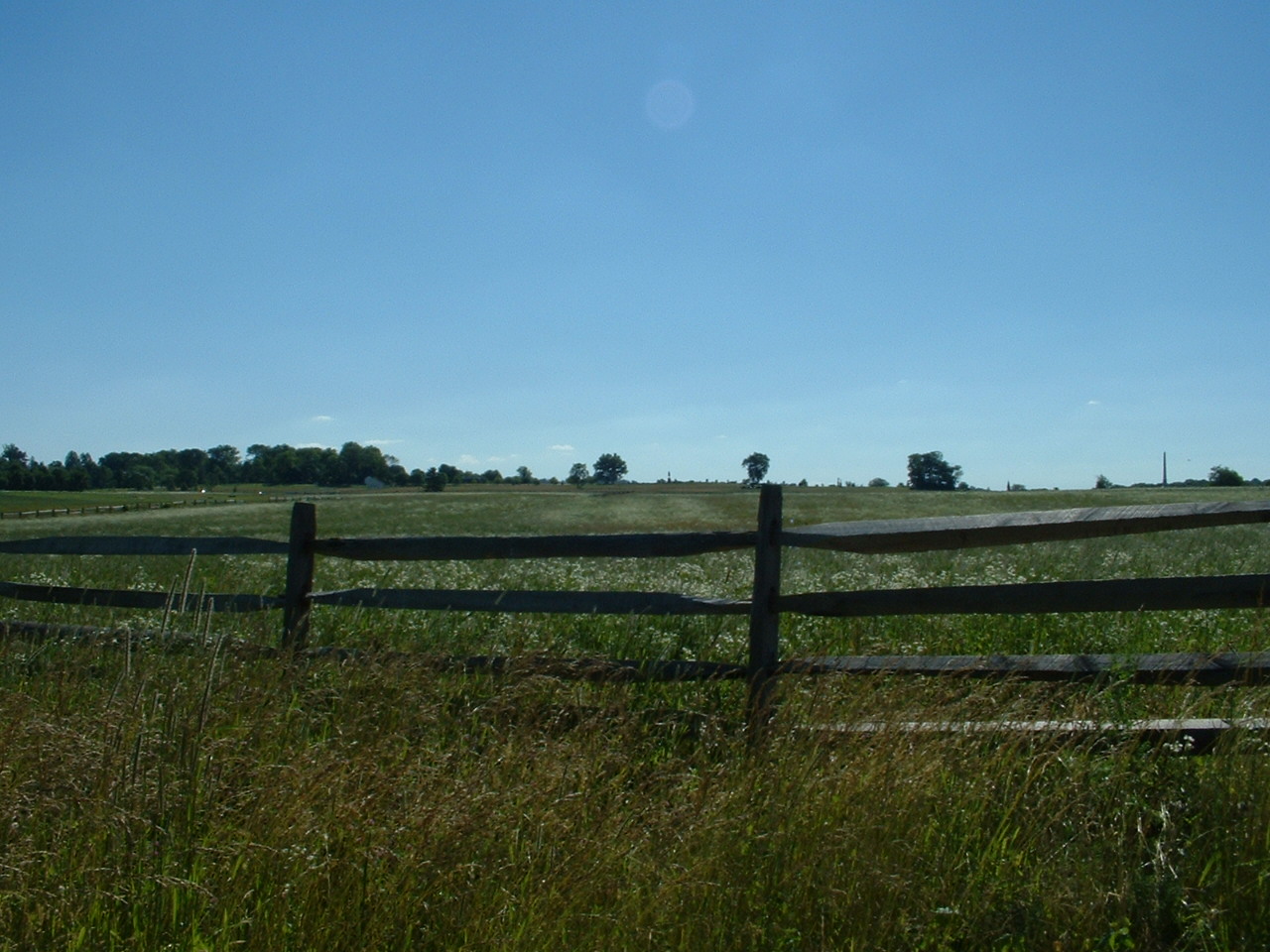
| Pickett's charge, continued from photo above and to the right. James McPherson wrote, "These fields were crisscrossed in 1863 by Virginia worm fences or post-and-rail fences enclosing small fields of grain, corn, and hay. Farmers in southern Pennsylvania customarily fenced in their crops and left livestock free to graze in open pastures and woods. These fences formed an obstacle to infantry moving across the fields. The Park Service intends to rebuild replica fences where they existed in 1863. But to be entirely realistic, many of the fence rails should then be thrown down, for by the afternoon of July 3, 1863, soldiers of both armies had already done precisely that during the previous two days. And when the Confederate infantry attacked across these fields, details of soldiers ran ahead of the main body to pull down many of the remaining rails." | ||||||||||||||||||||||||||||||||||||||||
| Be sure to sign the GuestBook by clicking here. Click here to continue your tour! |
||||||||||||||||||||||||||||||||||||||||
| E-mail me with your comments and suggestions! | ||||||||||||||||||||||||||||||||||||||||
| Page 1 | Page 2 | Page 3 | Page 4 | Page 5 | Page 6 | Page 7 | Page 8 | Page 9 | ||||||||||||||||||||||||||||||||