
Click here to continue your tour!
|
|
|
|
|
|
|
|
|
|
|
|
|
|
|
|
|
|
|
|
|
|
|
|
|
|
|
|
|
|
|
|
|
|
|
|
|
|
|
|
| Gettysburg (continued) | |||||||||||||||||||||||||||||||||||||||
| For a closer look at each picture, simply click on it. Then click the "Back" button at the top left of your browser screen to return to this page. Enjoy! | |||||||||||||||||||||||||||||||||||||||
|
|
||||||||||||||||||||||||||||||||||||||
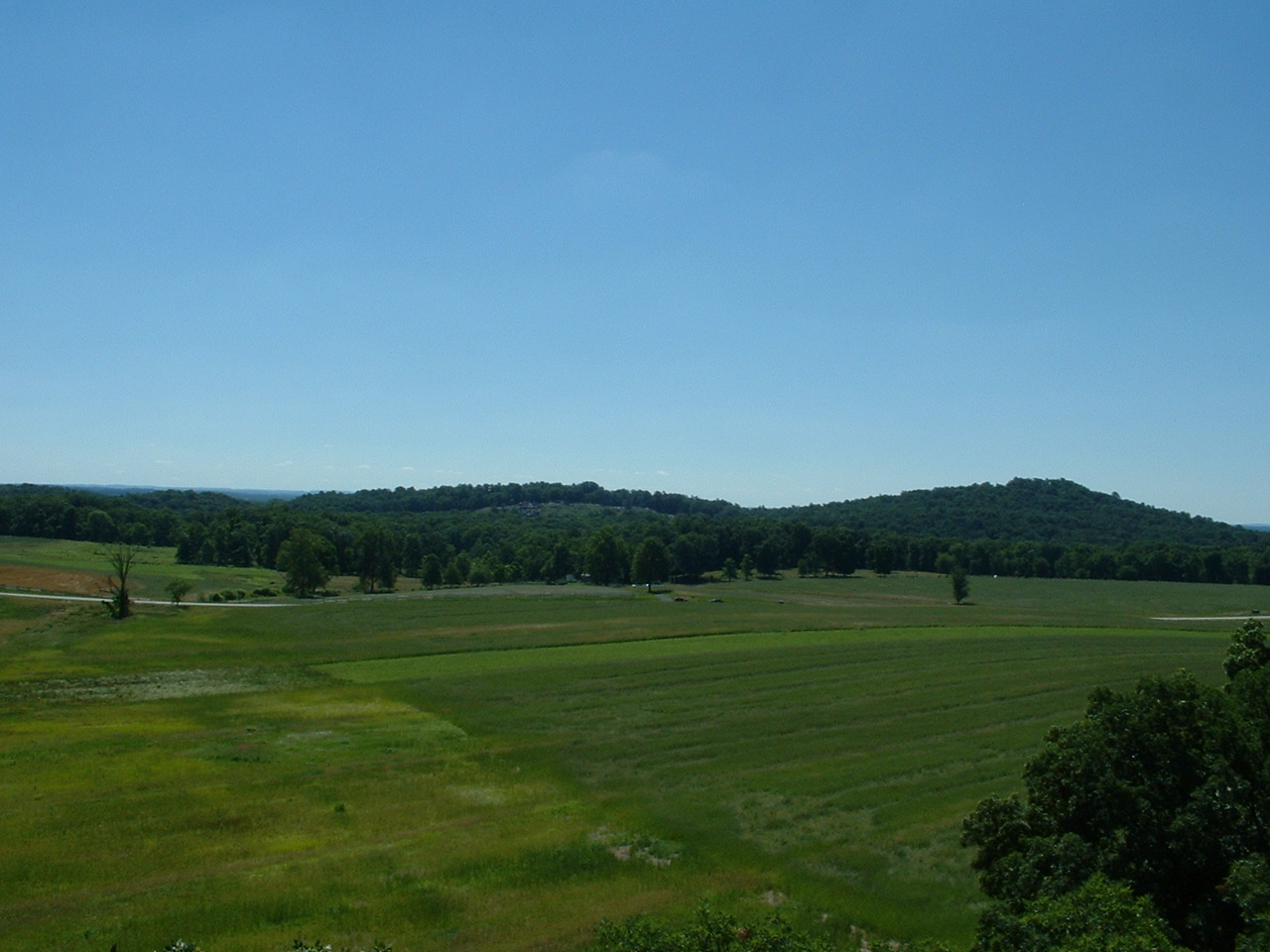
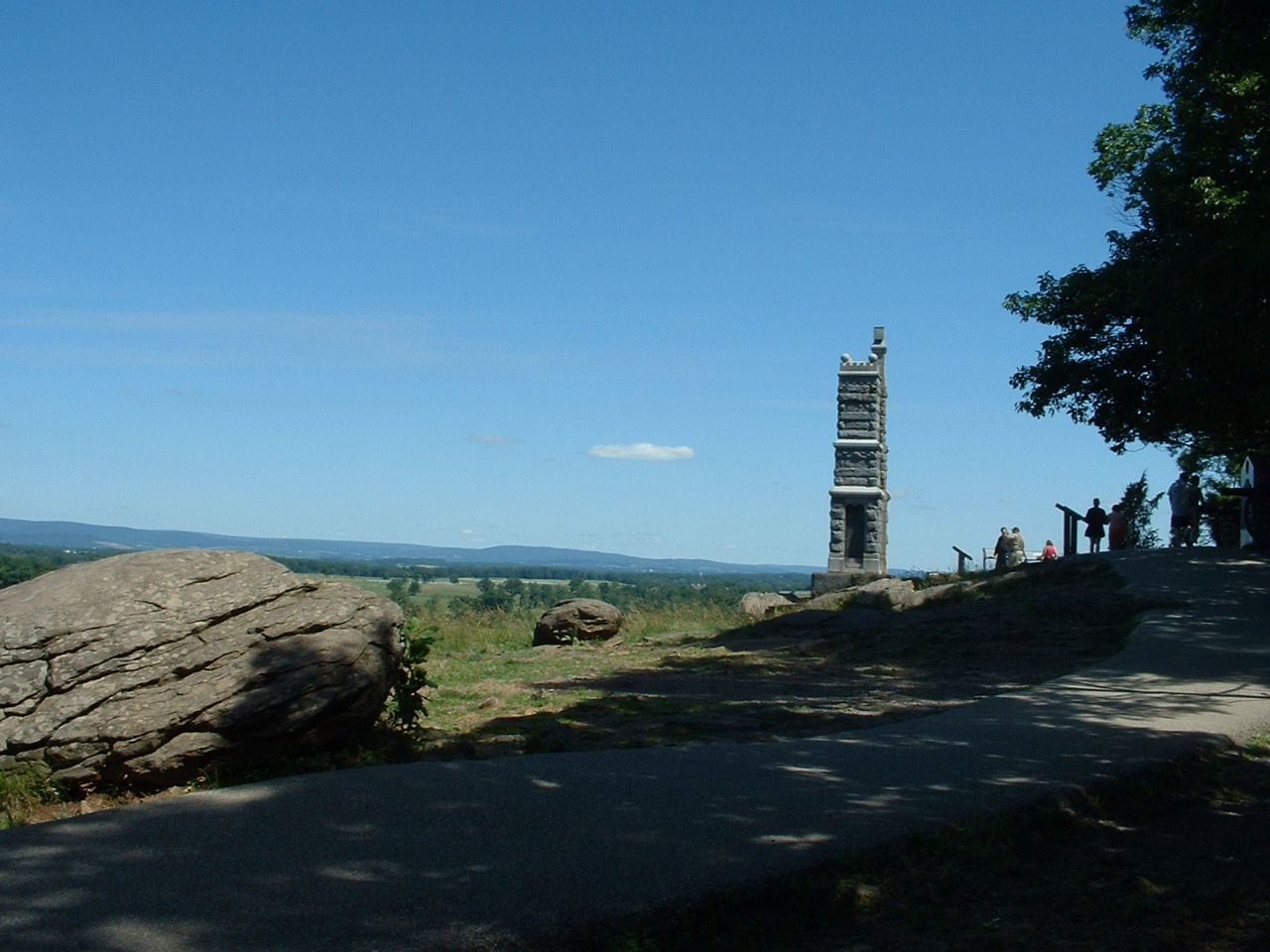
| Little Round Top on left and Big Round Top on right, looking east from Warfield Ridge. James McPherson: "At 4:00 p.m. (July 2, 1863) Longstreet's attack exploded from the woods along Warfield and Seminary Ridges. From right to left, one brigade after another, nineteen thousand rebels (including three brigades of A.P. Hill's Corps) hit the Yankees at the Rose farm, the Wheatfield, Devil's Den, the Peach Orchard, and the Trostle farm. After bitter, costly fighting they captured each of these famous locales. Mounted on his horse while watching the action from his headquarters at the Trostle farm, Sickles felt a sharp pain in his right leg and looked down to see it hanging in shreds from his thigh, almost severed by a cannonball. Although Sickles remained conscious, a rumor began to spread among his troops that he was dead. To forestall a panic, Sickles had an aide light a cigar and stick it in his mouth. He puffed away jauntily as he was carried to the rear on a stretcher. His amputated leg was preserved in formaldehyde at a medical laboratory in Washington, where in later years Sickles would take visitors to see it. We can visit his shinbone today at the Museum of Health and Medicine in Washington." | 91st PA Monument, Little Round Top. The 91st PA was in the 3rd Brigade (Gen. Weed) of the Second Division (Gen. Ayres) of the Fifth Army Corps (Gen. Sykes), of the Army of the Potomac (Gen. Meade). They were camped near Frederick Maryland on the 28th of June. By midnight or 1 AM of the 2nd of July they had marched 55 miles in 3 days, and were near Gettysburg. The Union forces were arranged in a fishhook, with the hook in the north, and the shank going south along Cemetery Ridge. On July 2nd, the Second Division was in reserve, and was moved where the fighting was fiercest. By mid-afternoon they were in the southern part of the battlefield, where the Third Army Corps, under General Sickles, had advanced beyond their assigned position, and was under heavy attack. General Warren, the Army's Chief Engineer, noticed that Little Round Top was undefended, and realizing that its loss would allow the Confederate Army to control the Union Army, General Sykes agreed to send troops. General Warren sent Vincent's Brigade. General Sykes then ordered Weed's Third Brigade there, but General Sickles (commanding the Third Corps) intercepted them and ordered them to support his troops. General Warren managed to divert one regiment (the 140th New York), and when General Sykes learned what had happened, he immediately ordered the other three regiments of the Second Division back to the Little Round Top. Before they arrived, the 140th New York had driven back the Confederate attack. Little Round Top continued under attack from sharpshooters, but didn't again face fighting as heavy. Three enlisted men of the 91st were killed, and two officers and fourteen enlisted men were wounded. (20 officers and 205 enlisted men, excluding pioneers and musicians, were engaged in the battle.) | ||||||||||||||||||||||||||||||||||||||
|
|||||||||||||||||||||||||||||||||||||||
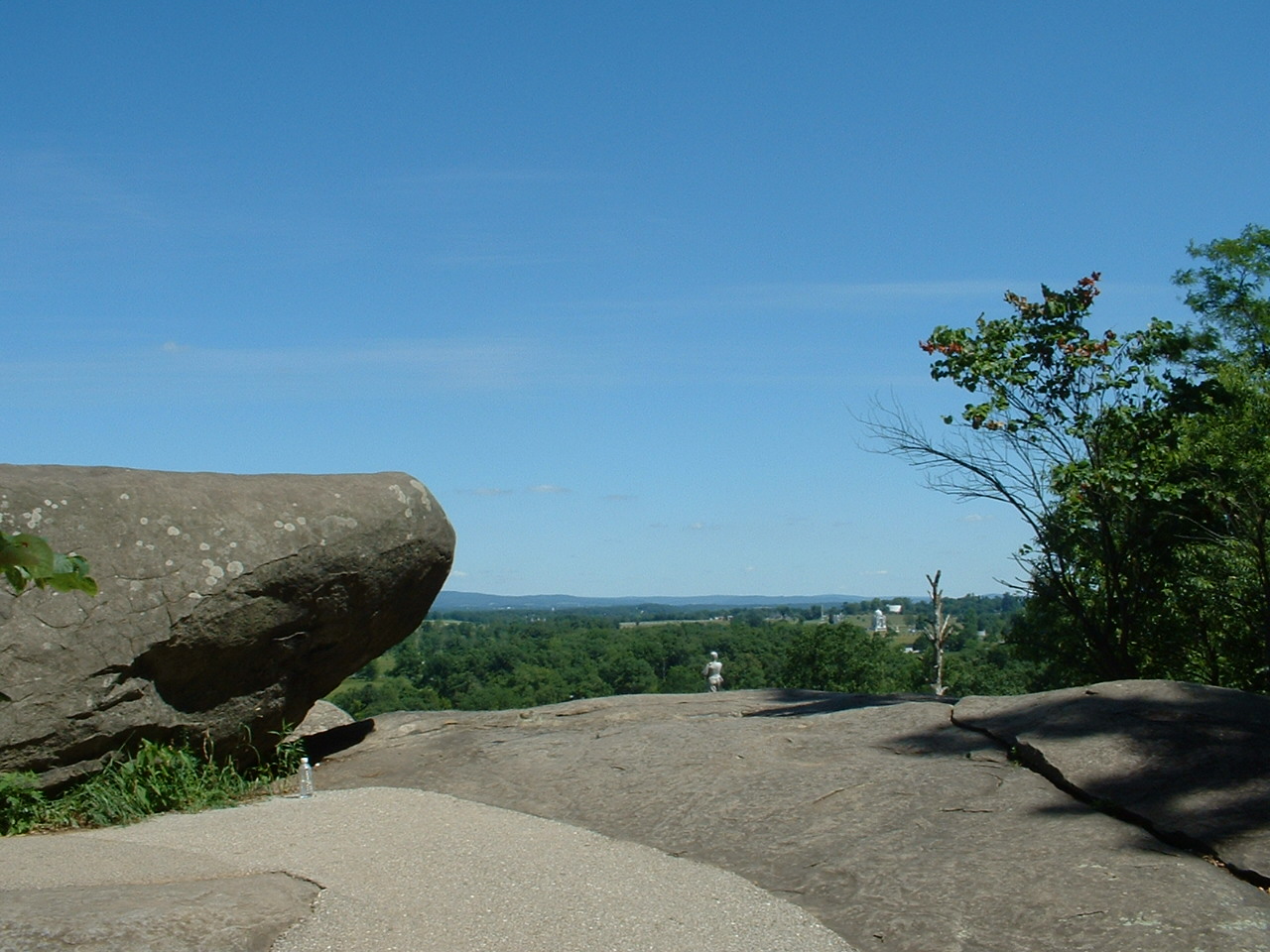
| Summit Little Round Top. I took this picture because there is a famous picture taken right after the battle from the exact same spot. In the center of the picture is the back of the Gouverneur Warren monument, the Union officer who saved Little Round Top, and its strategic overview of the entire battlefield, for the Yankees. In the distance to Warren's right is the large, domed Pennsylvania monument on Cemetery Ridge. That monument is very near the copse of trees and angle of Pickett's charge fame. | |||||||||||||||||||||||||||||||||||||||
|
|||||||||||||||||||||||||||||||||||||||
|
|||||||||||||||||||||||||||||||||||||||
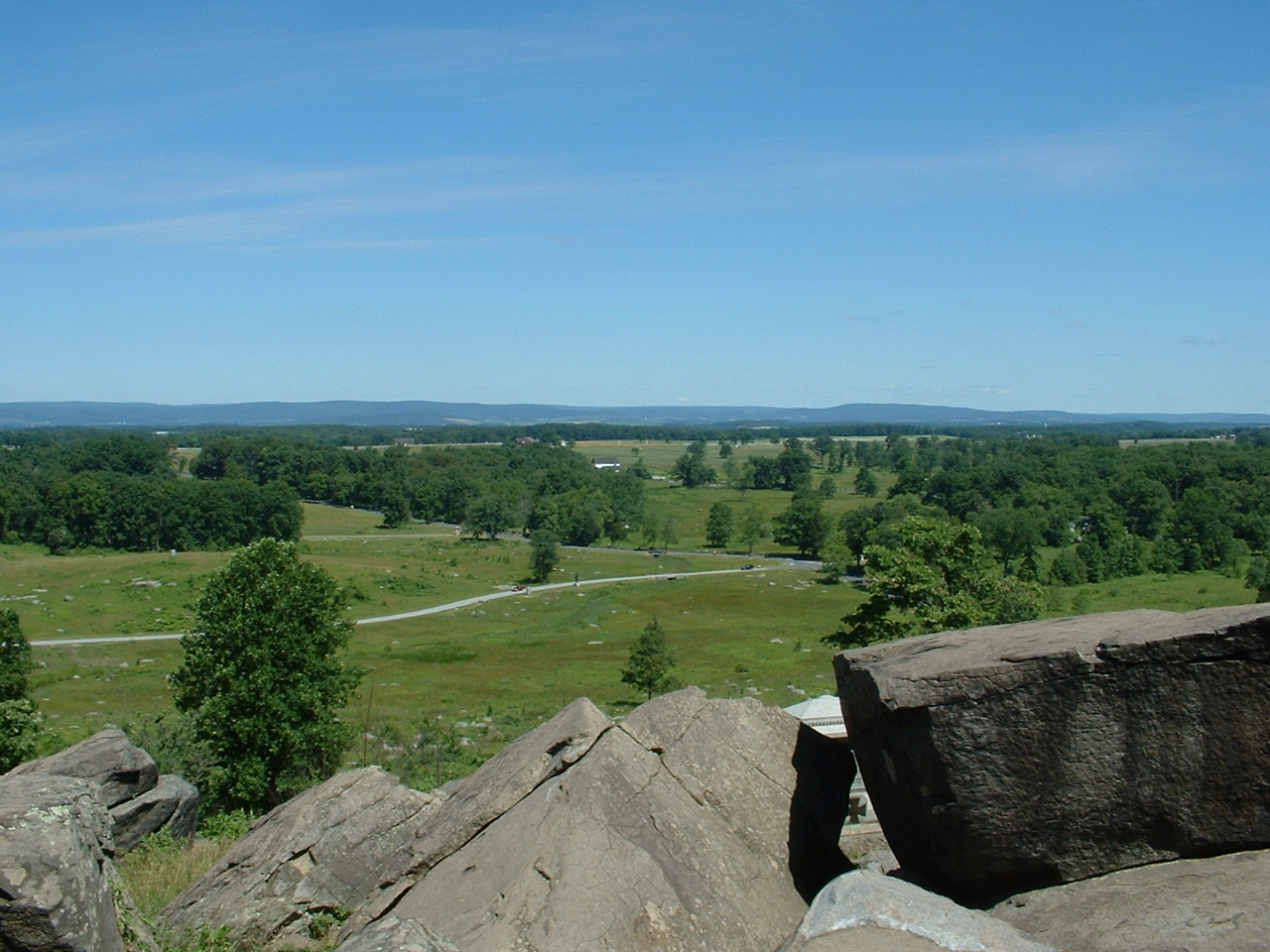
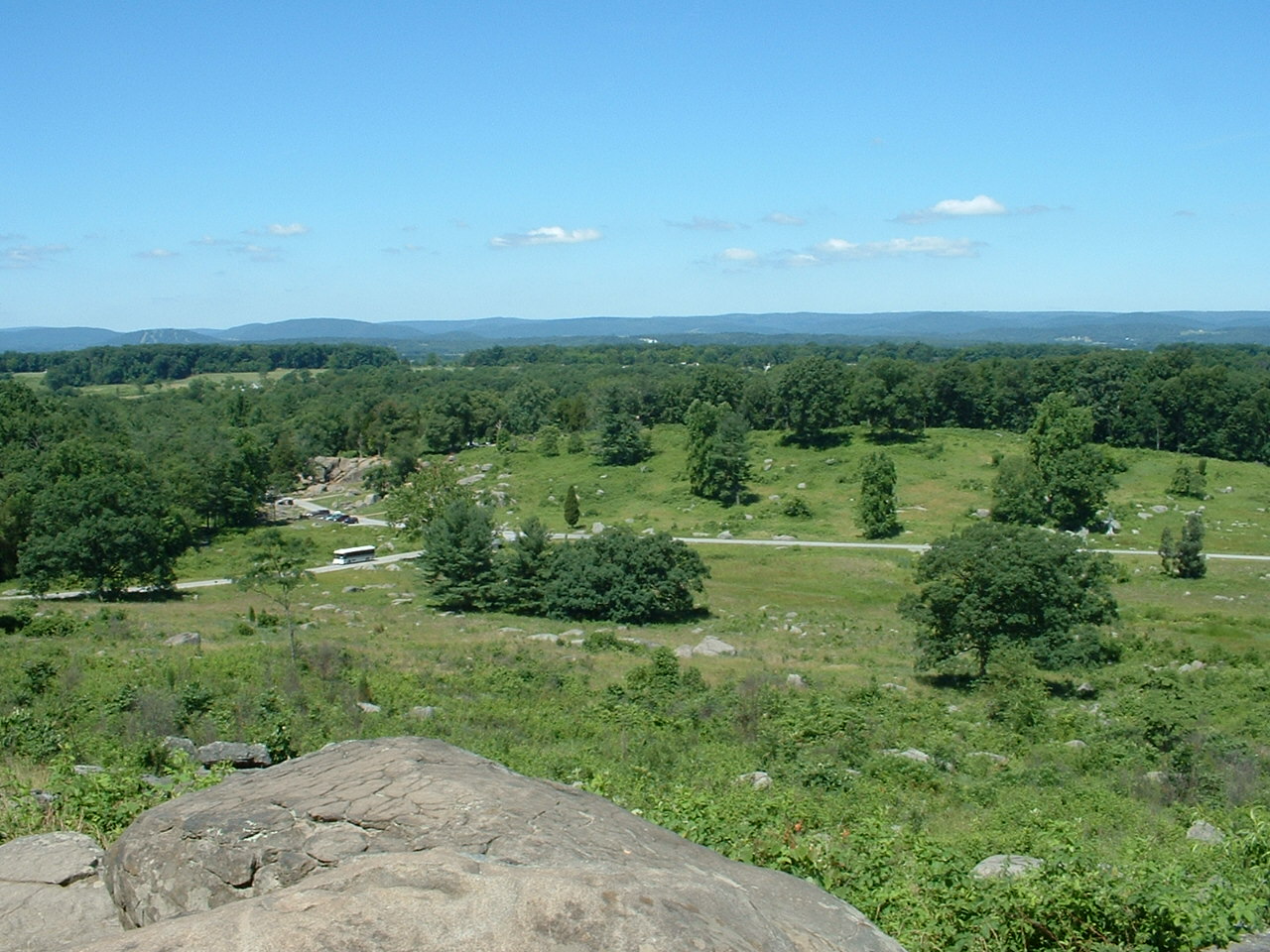
| Little Round Top, looking northwest. The Valley of Death is the rocky area in the center of the photo. Plum Run, a very small stream, runs through the center of it and is reference in many personal accounts of the battle. Wheatfield Road runs up the center of the photo from right to upper left. Directly on the other side of that road are the John Weikert farm (right center) and beyond that the famous Trostle farm (top center). The Wheatfield is hidden by the trees in the left center of the photo. Devil's Den is out of the picture on the left. | |||||||||||||||||||||||||||||||||||||||
| The Devil's Den (left center) and Houck's Ridge (right center). The Devil's Den was an enormous collection of boulders and rocks that were occupied by Captain James E. Smith's 4th NY Battery and BG Hobart Ward's Brigade. Hood attacked Devil's Den with Benning's and Anderson's Brigades. The 1st Texas and 15th Georgia charged Smith's Battery and nearly overwhelmed it when the 124th NY under command of Major James Cromwell led a counterattack. Cromwell was instantly killed and relieved by Col. Augustus Van Horne Ellis who was also killed. The fighting in the Devil's Den was confused and desperate as both sides struggled to occupy the mass of boulders. Eventually, the Confederates managed to capture three of Smith's guns and occupy the Den and the ridge above. (militaryhistoryonline.com) | |||||||||||||||||||||||||||||||||||||||
|
|||||||||||||||||||||||||||||||||||||||
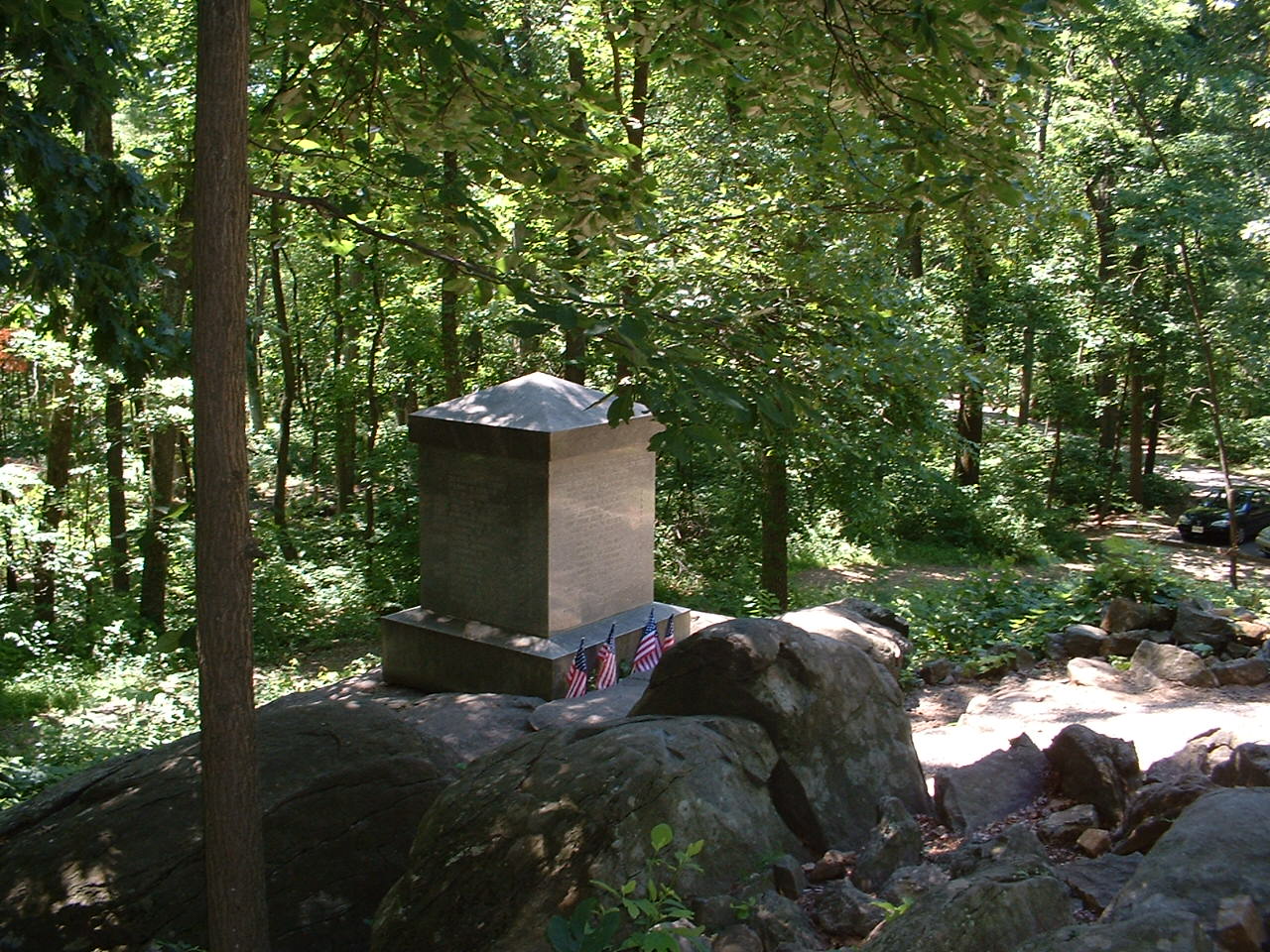
| 20th Maine Monument. From Col. Joshua Chamberlain's Official Report: "Passing to the southern slope of Little Round Top, Colonel Vincent indicated to me the ground my regiment was to occupy, informing me that this was the extreme left of our general line, and that a desperate attack was expected in order to turn that position, concluding by telling me I was to 'hold that ground at all hazards.' This was the last word I heard from him. In order to commence by making my right firm, I formed my regiment on the right into line, giving such direction to the line as should best secure the advantage of the rough, rocky, and stragglingly wooded ground. The line faced generally toward a more conspicuous eminence southwest of ours, which is known as Sugar Loaf, or Round Top. Between this and my position intervened a smooth and thinly wooded hollow. My line formed, I immediately detached Company B, Captain Morrill commanding, to extend from my left flank across this hollow as a line of skirmishers, with directions to act as occasion might dictate, to prevent a surprise on my exposed flank and rear." | |||||||||||||||||||||||||||||||||||||||
|
|||||||||||||||||||||||||||||||||||||||
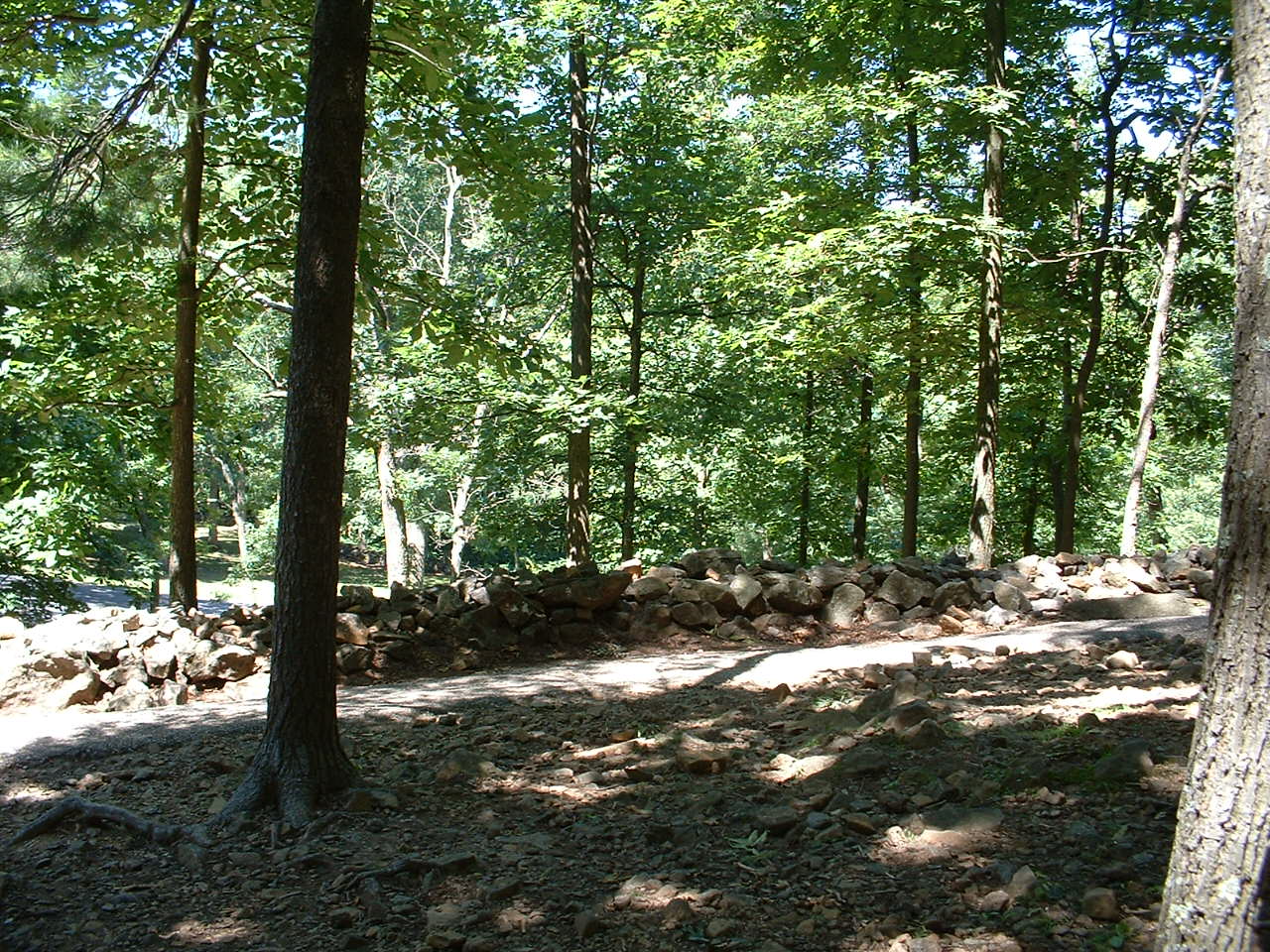
| Center of 20th Maine line looking towards the Confederate advance. From Col. Joshua Chamberlain's Official Report: "The enemy seemed to have gathered all their energies for their final assault. We had gotten our thin line into as good a shape as possible, when a strong force emerged from the scrub wood in the valley, as well as I could judge, in two lines in echelon by the right, and, opening a heavy fire, the first line came on as if they meant to sweep everything before them. We opened on them as well as we could with our scanty ammunition snatched from the field. It did not seem possible to withstand another shock like this now coming on. Our loss had been severe. One-half of my left wing had fallen, and a third of my regiment lay just behind us, dead or badly wounded. At this moment my anxiety was increased by a great roar of musketry in my rear, on the farther or northerly slope of Little Round Top, apparently on the flank of the regular brigade, which was in support of Hazlett's battery on the crest behind us. The bullets from this attack struck into my left rear, and I feared that the enemy might have nearly surrounded the Little Round Top, and only a desperate chance was left for us. My ammunition was soon exhausted. My men were firing their last shot and getting ready to 'club' their muskets." | |||||||||||||||||||||||||||||||||||||||
|
|||||||||||||||||||||||||||||||||||||||
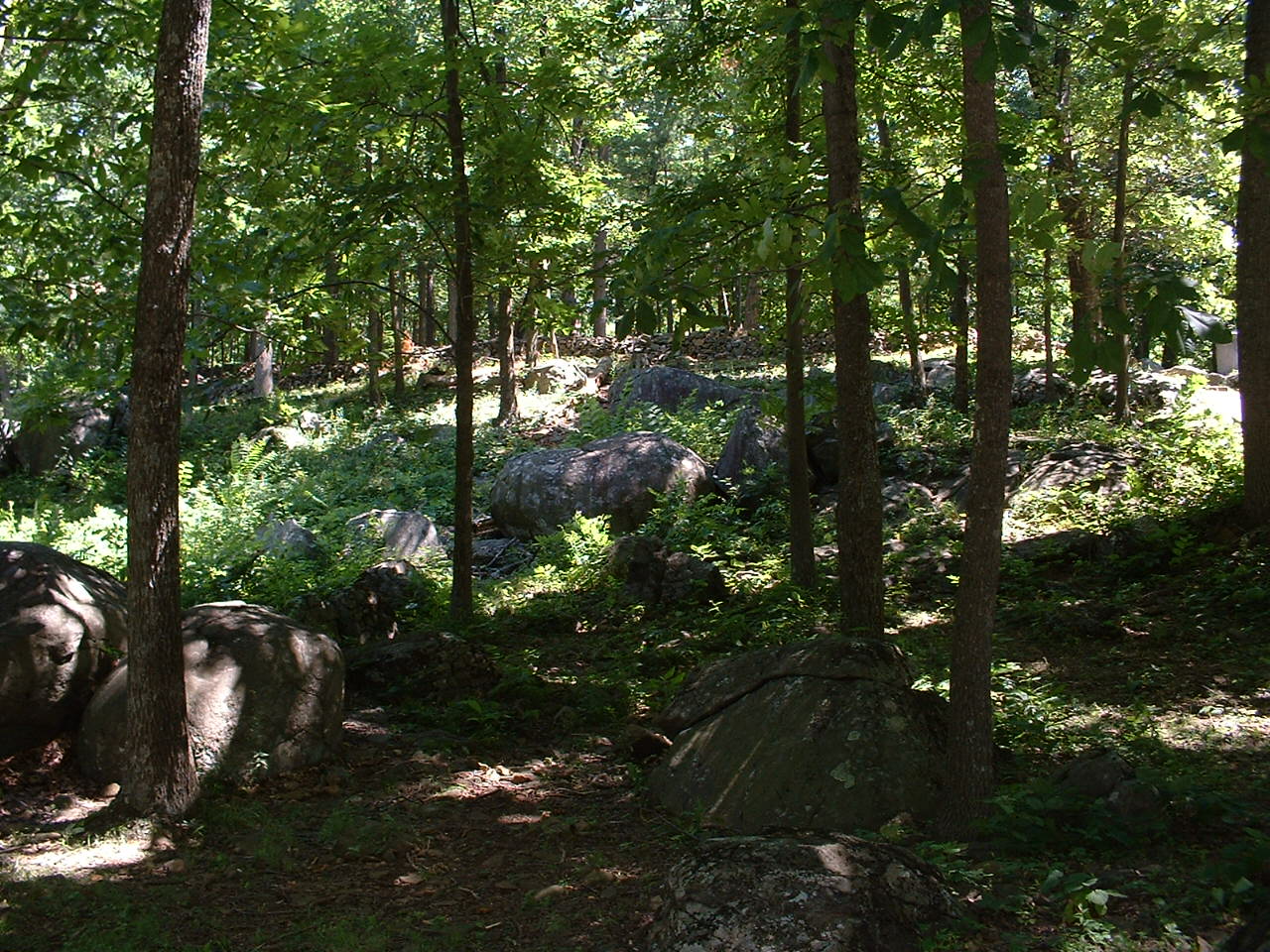
| 20th Maine position as viewed by the Confederates. From Col. Joshua Chamberlain's Official Report: "It was imperative to strike before we were struck by this overwhelming force in a hand-to-hand fight, which we could not probably have withstood or survived. At that crisis, I ordered the bayonet. The word was enough. It ran like fire along the line, from man to man, and rose into a shout, with which they sprang forward upon the enemy, now not 30 yards away. The effect was surprising; many of the enemy's first line threw down their arms and surrendered. An officer fired his pistol at my head with one hand, while he handed me his sword with the other. Holding fast by our right, and swinging forward our left, we made an extended 'right wheel,' before which the enemy's second line broke and fell back, fighting from tree to tree, many being captured, until we had swept the valley and cleared the front of nearly our entire brigade." | |||||||||||||||||||||||||||||||||||||||
| Be sure to sign the GuestBook by clicking here. Click here to continue your tour! |
|||||||||||||||||||||||||||||||||||||||
| E-mail me with your comments and suggestions! | |||||||||||||||||||||||||||||||||||||||
| Page 1 | Page 2 | Page 3 | Page 4 | Page 5 | Page 6 | Page 7 | Page 8 | Page 9 | |||||||||||||||||||||||||||||||