 |
|
|
|
|
|
|
|
|
|
|
|
|
|
|
|
|
|
|
|
|
|
|
|
|
|
|
|
|
|
|
|
|
|
|
Manassas |
|
|
|
For a closer look at each picture, simply click on it. Then click the button at the top left of your browser screen to return to this page. Enjoy! |
|
|
|
 |
|
|
 |
|
|
|
|
|
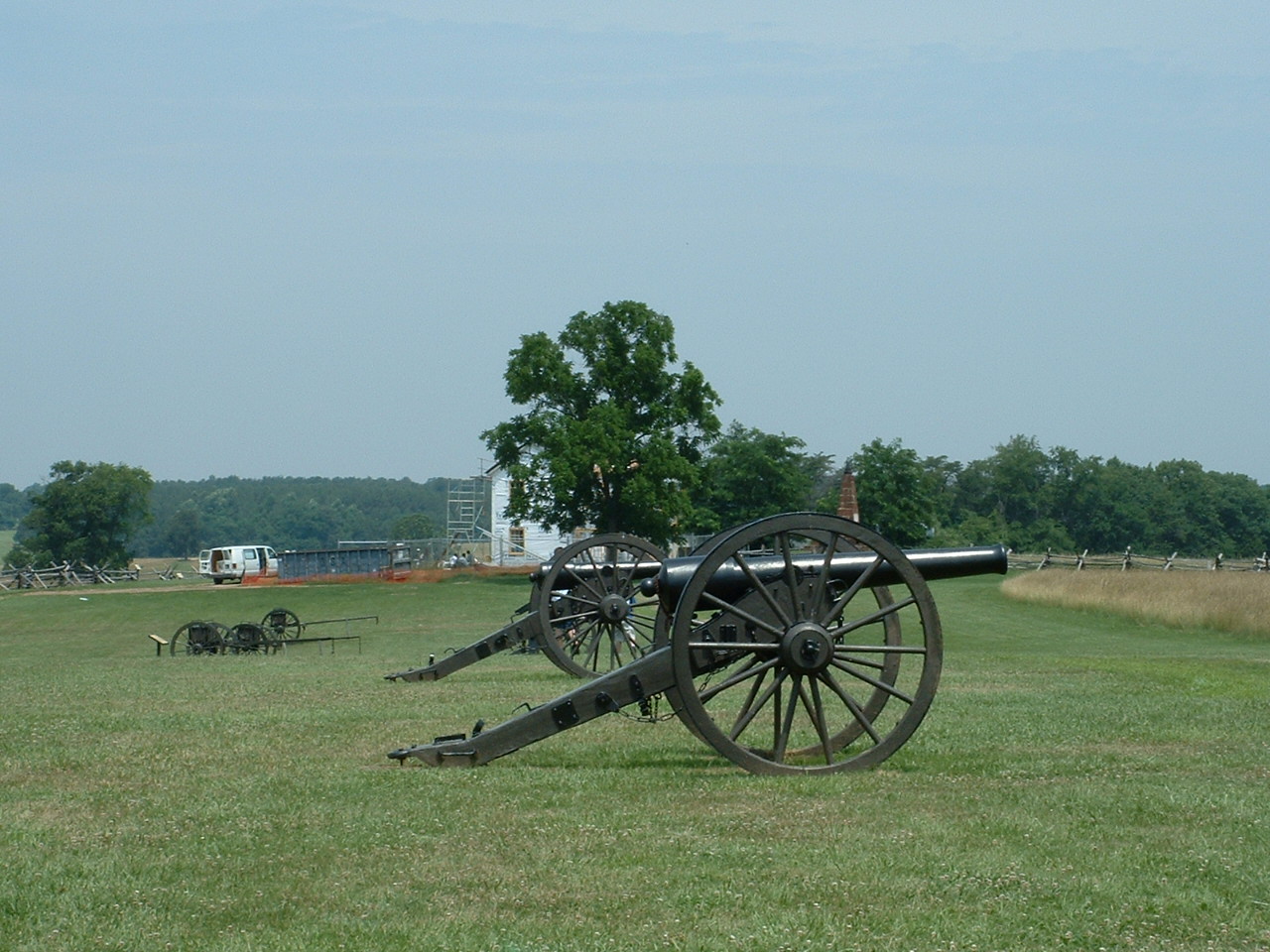
Henry House Hill with the Henry House in the background. They were working on the house the day I was there. Shells were exploding overhead as Ricketts' men dueled Stonewall Jackson's artillery, directly across the field. Sharpshooters' bullets thumped into the wooden limber chests. On the rear slope horses were screaming, dying. Suddenly from the far woods came an eerie, blood-chilling cry -- the rebel yell. Through dense smoke Ricketts could see Confederate infantry starting across the field. Up to that moment the Confederates appeared to be losing the battle, and possibly the war. Here the momentum shifted. At Henry House and other stops on the tour, exhibits reveal how the battle rushed toward the unexpected climax at Ricketts' guns. Captain Ricketts, in his official report, described the fire from Henry House, and then the Confederate charge. "We ascended the hill near the Henry House, which was at that time filled with sharpshooters. I had scarcely got into battery before I saw some of my horses fall and some of my men wounded by sharpshooters. I turned my guns on the house and literally riddled it. It has been said that there was a woman killed there by our guns. We did not move from our position. In fact, in a very short time we were not in a condition to move, on account of the number of horses that were disabled. I know it was the hottest place I ever saw in my life and I had seen some fighting before. The enemy had taken advantage of the woods and the natural slope of the ground, and delivered a terrible fire upon us." (National Park Service) |
|
|
|
|
|
|
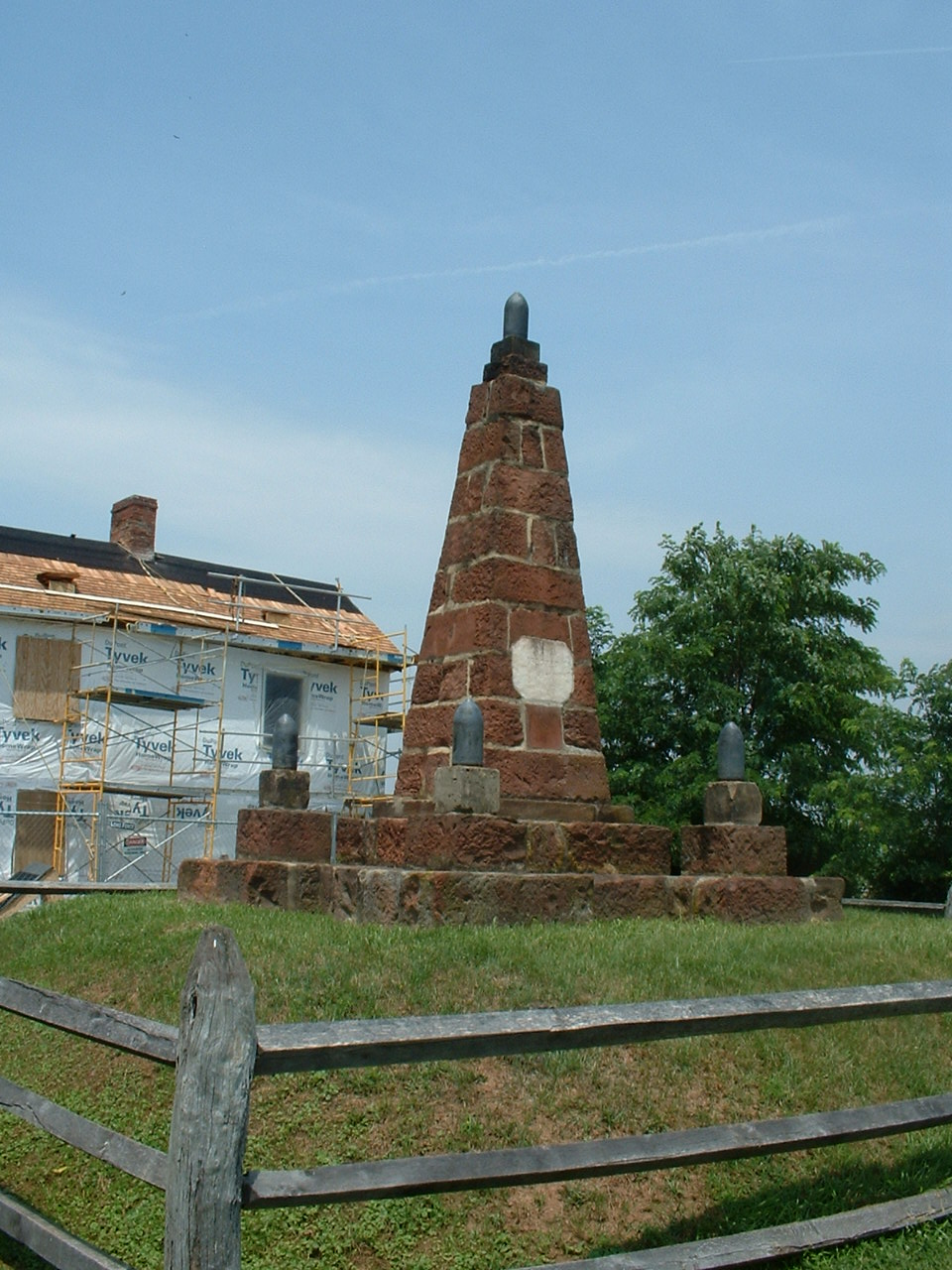
Possibly the first Civil War monument ever constructed. Erected in memory of the Union dead who fell at the battles of Bull Run and Groveton. The monument is of chocolate colored sandstone, twenty-seven feet high, and was erected by the officers and men of General Gamble's separate cavalry brigade, camped at Fairfax Court-House. The monument on the first Bull Run field is situated on the hill in front of the memorable stone house, on the spot where the 14th Brooklyn, 1st Michigan, and 1st and 2d Maine were most hotly engaged, and where Ricketts and Griffin lost their batteries. The shaft is twenty-seven feet high, and bears upon its top a hundred pound shell. On the pedestal at each corner is a shell of similar size. On one side of the shaft is inscribed, "To the memory of the patriots who fell at Bull Run, July 1st, 1861," and on the reverse, "Erected June 10th, 1865." (rmc.library.cornell.edu) |
|
|
|
|
|
 |
|
|
|
|
|
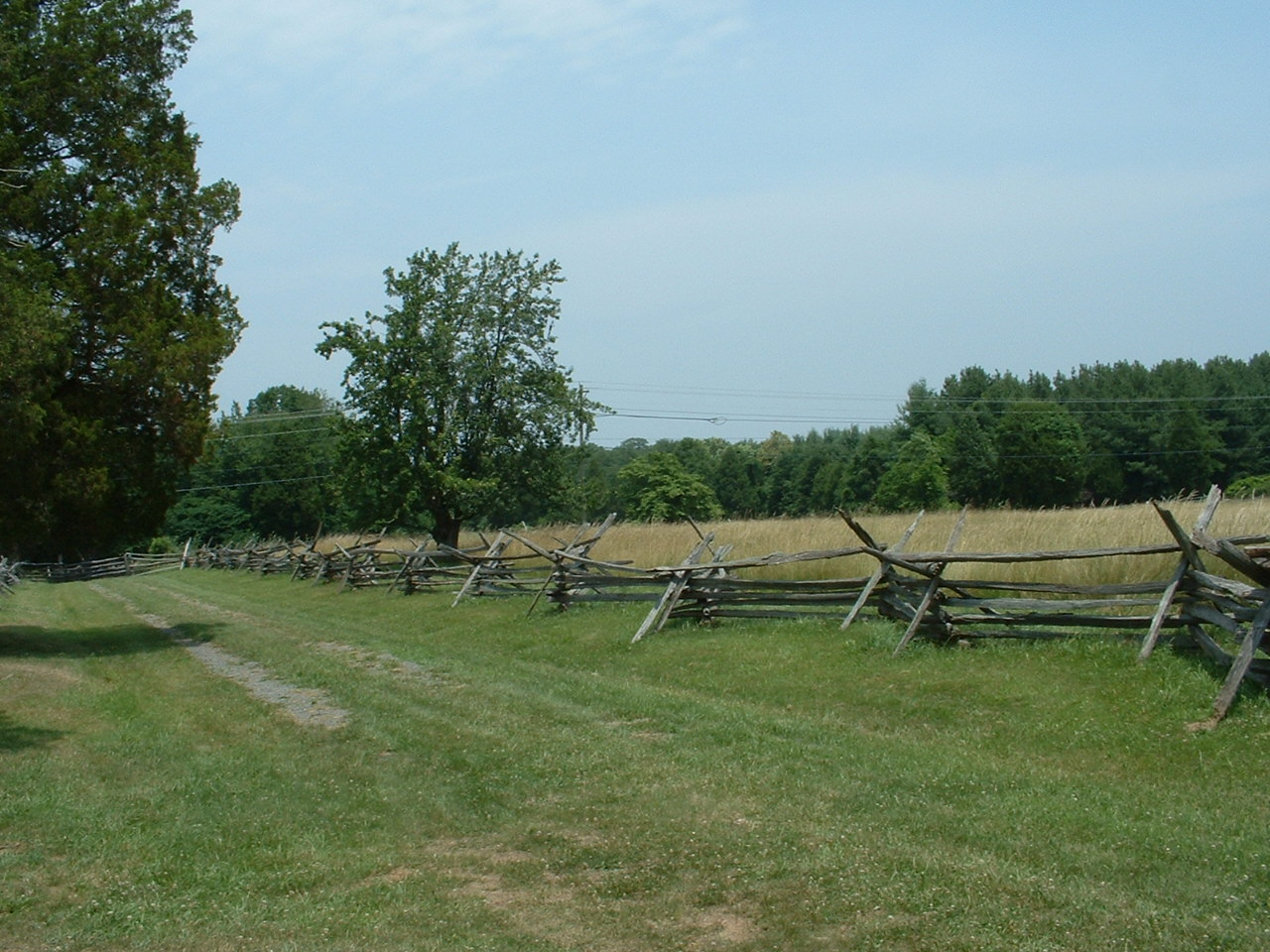
Shot-up Confederate regiments stumbled past, in retreat from Matthews Hill. First along Warrenton Pike, then in Robinson's Lane, Col. Wade Hampton's South Carolinians tried to delay the Union advance. Slowly, with volley after volley of musket fire, the Union wave forced Hampton's Legion back past Robinson House toward the pinewoods. At this point the Confederate Army seemed on the brink of defeat. You are standing at the historic farm lane and fence line. On this battlefield there was not time to build earthworks. Soldiers used every wrinkle of terrain for protection -- firing prone from the road cut, or behind fieldstones and fence rails. Two weeks later one of Hampton's soldiers described the fighting in a letter to the "Charleston Courier": "The Legion was formed in a narrow lane. In front of us could be seen, in large columns, the enemy advancing. Dropping to our knees in a gully we awaited their attack. Soon we were met by a tremendous volley of musketry, whose effect was terrible. Immediately to my left was poor Phelps; a ball passed clean through him, striking me in the leg. In every direction could be heard the groans of the wounded. We in turn poured a volley into the enemy. At this time I made up my mind for the worst; I saw we had a terrible struggle before us." (National Park Service) |
|
|
 |
|
|
|
|
|
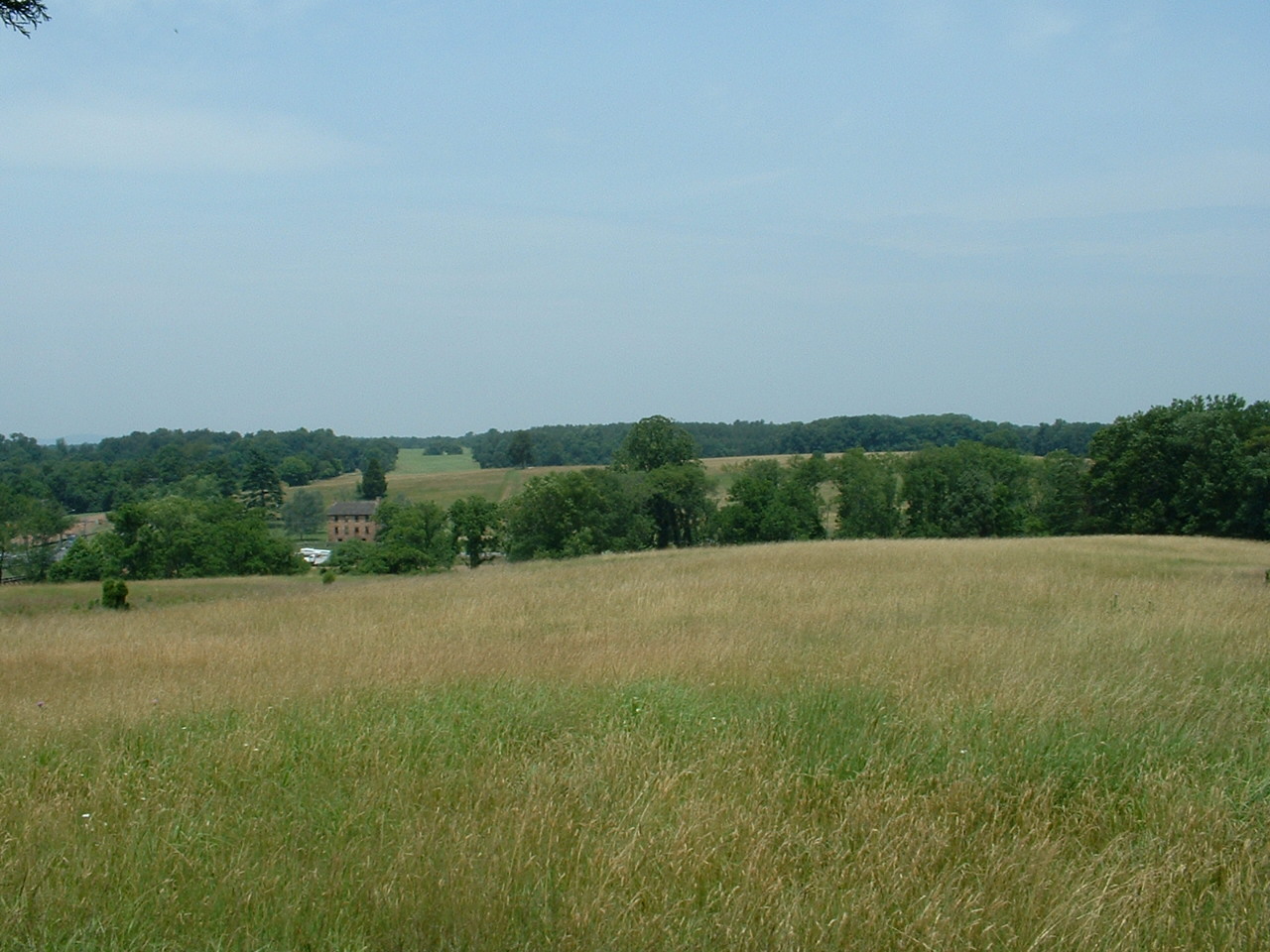
Looking north from the Henry House hill toward the Henry P. Matthew farmhouse...the "Stone House." The Stone House remains one of only three intact pre-Civil War buildings within Manassas National Battlefield Park. The imposing red sandstone structure dominates the historic crossroads of the Sudley-Manassas Road (modern Route 234) and the Warrenton Turnpike (Route 29). The Civil War brought devastation to the cluster of families living near the Stone House intersection. Most families suffered, with their crops destroyed, fences burned, or houses damaged. The Matthews at the Stone House found themselves in the thick of the fighting during the first battle. The battle began a third of a mile north of the Stone House where a brigade of Southerners, hurrying from Stone Bridge, met Union attackers advancing south on the Sudley-Manassas Road. From the shelter of the Stone House, retreating Southerners fired on the advancing Yankees until the 27th New York Infantry drove them from this cover, across the Warrenton Turnpike, and up Henry Hill. Wounded from the fighting sought shelter in the basement of the Stone House. Corporal William H. Merrell of the 27th New York Infantry joined them and observed, "The floor above was also covered with wounded soldiers, whose cries could be distinctly heard." A makeshift red flag appeared on the building to mark the Stone House as a place of refuge and suffering. After the fighting ended, company A of the 28th Virginia Infantry arrived at the Stone House to find 100 weapons and "a large number of the wounded enemy, some dead, and thirty-six men, who surrendered themselves prisoners." Among the prisoners were two Union medical officers, a surgeon and an assistant surgeon. Only the assistant surgeon was allowed to remain and care for the many sufferers as best he could. No evidence exists that any surgical operations took place inside the house. Two primary battlefield hospital sites were located nearby at Sudley Church and the Francis Lewis House, "Portici." During the Second Battle of Manassas, Union commander John Pope established his head-quarters on Buck Hill overlooking the Stone House. (nvrha.com) |
|
|
|
|
|
|
 |
|
|
|
|
|
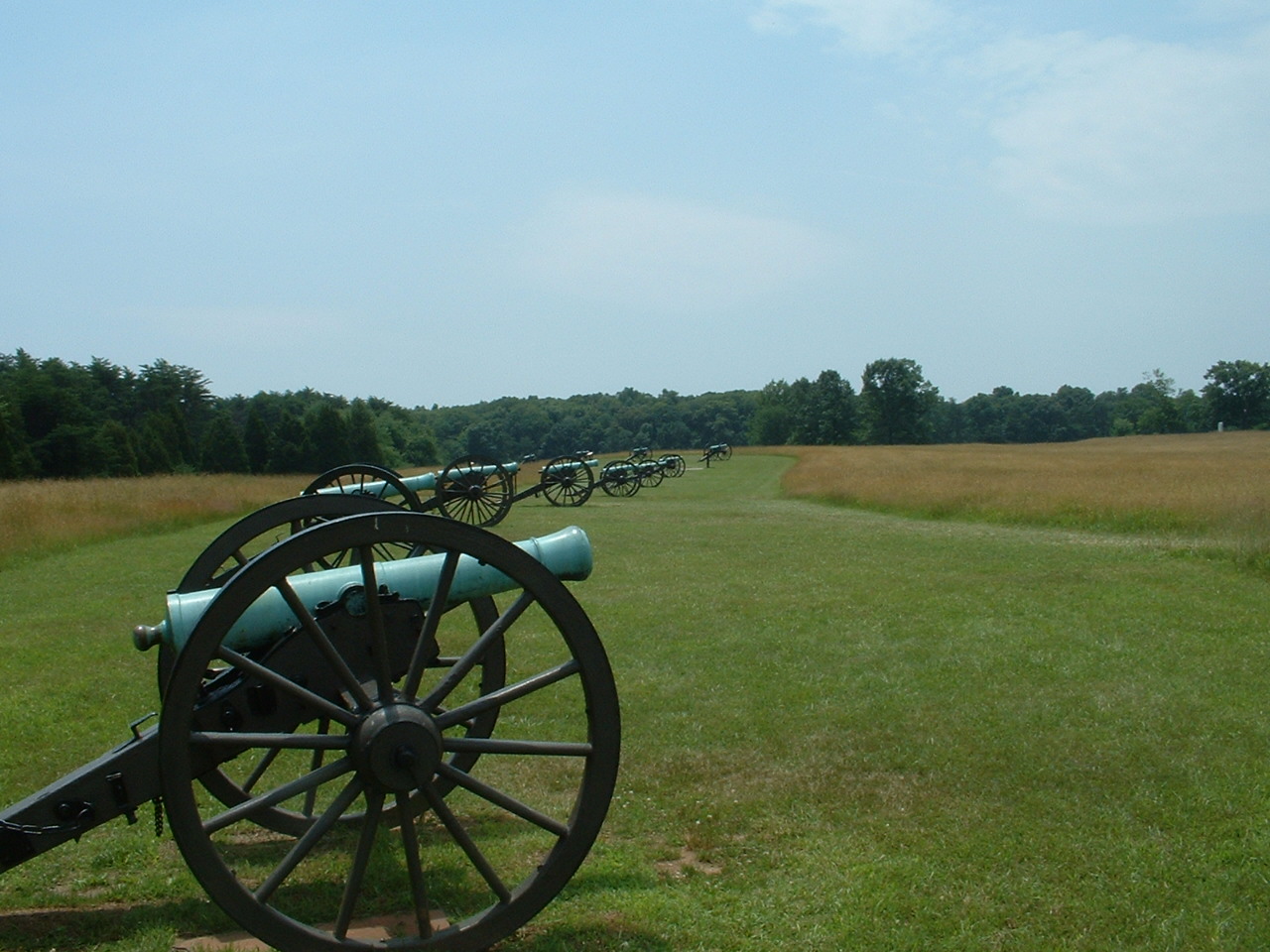
This field was a scene of confusion. Shells were exploding all around. Hot, tired, shot-up during the retreat from Matthews Hill, Confederate units had fallen out of line and were milling about. They felt they'd lost the battle and maybe the war. At that moment Generals Johnston and Beauregard arrived on the field to rally the scattered regiments, and the Confederate line began to re-form. Out of the woods behind you filed fresh reinforcements -- Thomas J. Jackson's Virginia infantry. There at that line of cannon Jackson stood firm. The sight of General Joe Johnston -- wounded three times in previous wars -- gave the battered soldiers new courage. Learning that the 4th Alabama had lost most of its field officers, Johnston personally led those troops forward, keeping the regimental flag at his side. On the brow of the hill Brig. Gen. Barnard Bee was desperately trying to rally his men when he caught sight of Thomas J. Jackson with fresh troops here at the edge of the pine thicket. "Look!" Bee shouted. "There stands Jackson like a stone wall! Rally behind the Virginians!" The nickname spread rapidly through the Confederate Army and throughout the South. "Stonewall" Jackson was on his way to becoming a legend. (National Park Service) |
|
|
|
|
 |
|
|
|
|
|
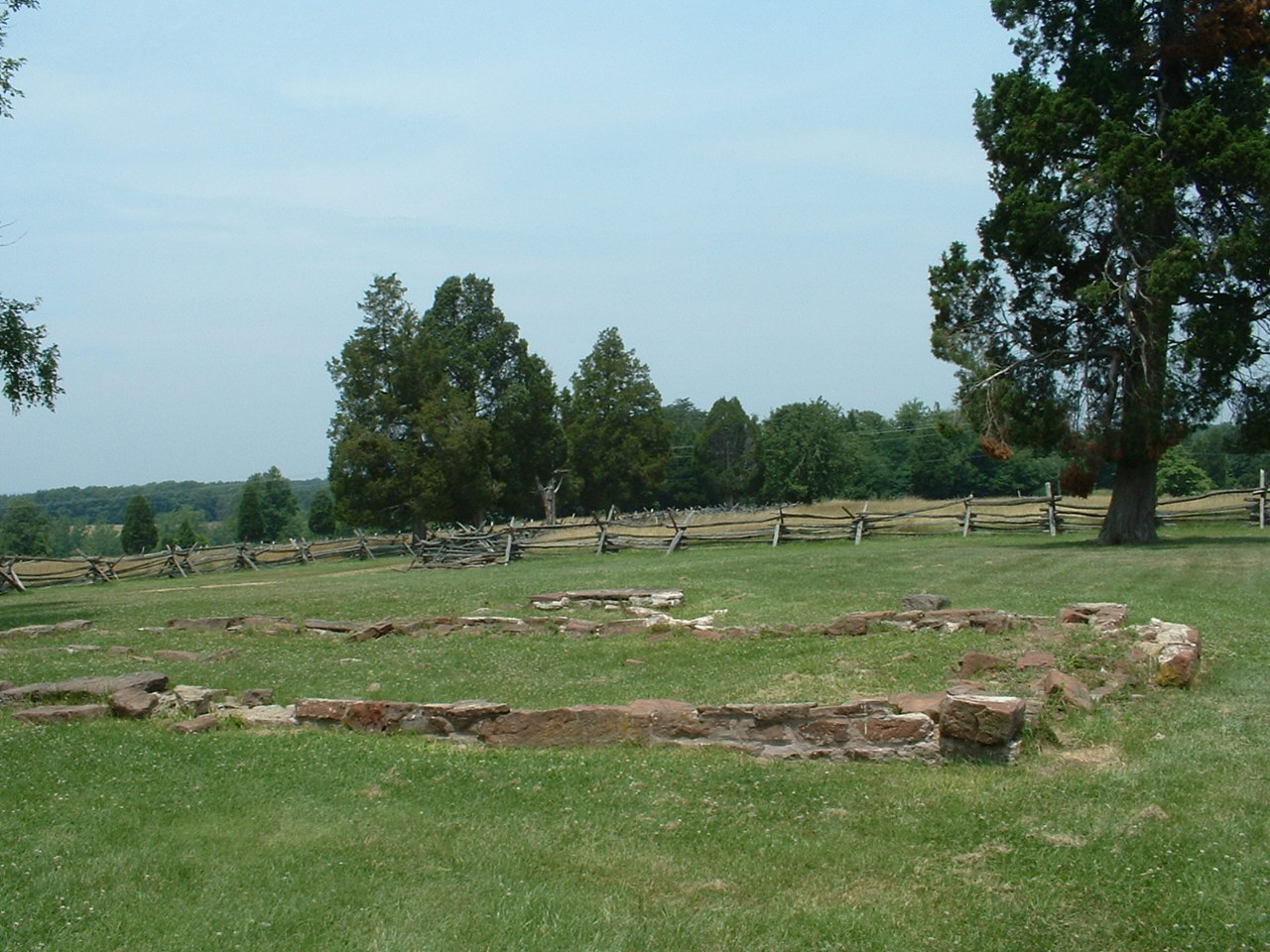
Robinson House. Confederate troops of Hampton's Legion formed in the lane (previous photo) in an ill-fated attempt to stem the advance of Federal forces. Slowly, the Confederates were forced out of the lane into the pine thickets to the rear of the Robinson house. Owned by a freed slave, James Robinson, the house sustained little damage during the Battle of 1st Bull Run, but was sacked by Federal troops after the Battle of Second Bull Run. In 1873, Robinson was awarded $1249 in damages by Congress. The Robinson House survived both Battles of Bull Run and stood for over 130 years until it was destroyed in 1993 by arson. Sadly, today only the foundation remains. (civilwaralbum.com) |
|
|
|
|
|
|
 |
|
|
|
|
 |
|
|
|
|
|
|
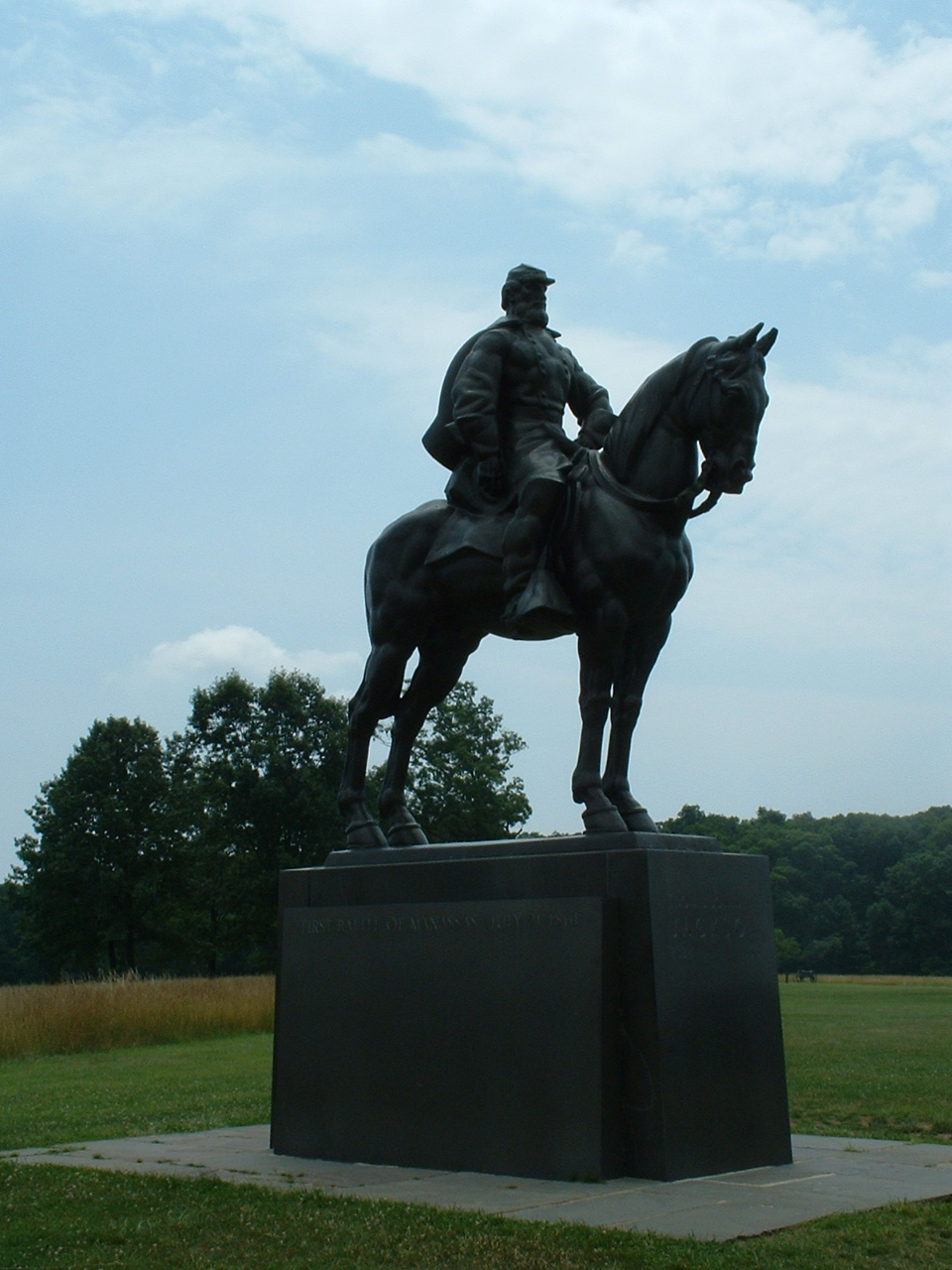
Stonewall Jackson. See the description of his famous stand above. |
|
|
|
|
|
Be sure to sign the GuestBook by clicking here. |
|
|
|
|
|
E-mail me with your comments and suggestions! |
|
|
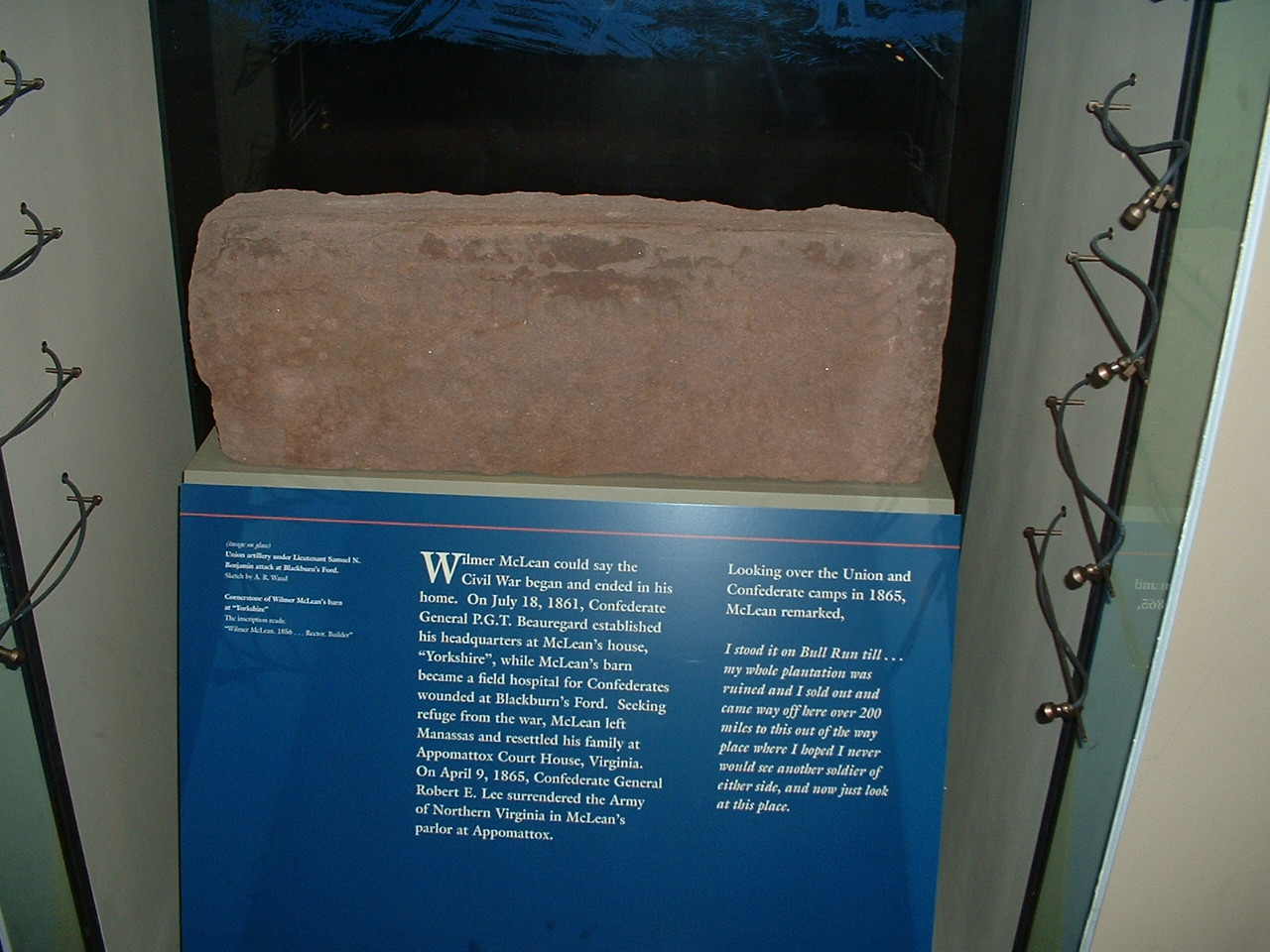
A brick from the Wilmer McLean home in Manassas. Upset over the destruction of his property during the 1st Bull Run, McLean moved his family to Appomattax Court House. It was in his parlor that Lee and Grant met to end the war. |
|
|
|
|
|
|
Take the tour of another battlefield: Antietam Gettysburg |
|
|
|
|
|
Continue your tour by clicking here! |
|