CIENCIAS Y LETRAS
| Portada: |
|---|
| Presentación 2007 |
| Presentación 2008 |
| Becas y Ayudas: |
| Estudiantes |
| Eventos: |
| Congresos |
| Presentaciones |
| Conferencias |
| Seminarios |
| Actuaciones: |
| Ballet |
| Artículos: |
| Opinión |
| Crítica Literaria |
| Crítica Dramática |
| Crítica Cinematográfica |
| Las Lenguas del Mundo |
| Literatura: |
| Novela |
| Relato Breve |
| Teatro |
| Poesía |
| Lingüística: |
| Lingüística Histórica |
| Lingüística Comparada |
| Gramática |
| Sintaxis |
| Sociolingüística |
| Recursos de Investigación |
| La Dibuteca: |
| Perros |
| Otros Animales |
| Retrato |
| Payasos |
| Bodeg�n |
| Humor: |
| Chistes |
| Vídeos | Comunidad: |
| Foros | Contacta: |
| Contacta |
| El Perfume | La Pianista | Vampiras |
| Wonder |
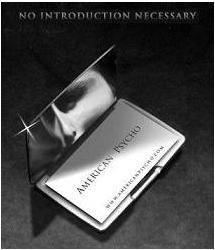
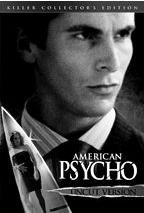
Bibliography: Bret Easton Ellis is one of the most important and subversive contemporary authors in North America. Some of his novels -American Psycho and Lunar Park- have been integrated into the literary movement called Transgressive Fiction, together with other 20th and 21st Century works like Henry Miller�s Tropic of Cancer, William S. Burroughs�s Naked Lunch, Douglas Coupland�s Generation X and Chuck Palahniuk�s Fight Club among others. Quoting Anne H. Soukhanov, a journalist for The Atlantic Monthly, �A literary genre that graphically explores such topics as incest and other aberrant sexual practices, mutilation, the sprouting of sexual organs in various places on the human body, urban violence and violence against women, drug use, and highly dysfunctional family relationships, and that is based on the premise that knowledge is to be found at the edge of experience and that the body is the site for gaining knowledge�. �Word Watch�. The Atlantic Monthly (December 1996): 128. Within this postmodern frame, American Psycho, and also its cinematographic version, have not only marked a whole generation and described another one, becoming a milestone in contemporary culture. American Psycho takes place in the late 80s in Manhattan, being Patrick Bateman, a 26 year old decadent yuppie, its main character. The 1980 were the generation of status seekers in North America. Binge buying and credit became a way of life and �Shop �til you drop� and �You can have it all� were the watchwords. Labels were everything, even (or especially) for their children. Ronald Reagan and George Bush were presidents of the State during this decade, declaring war against drugs and the Constitution celebrated its 200th birthday. Science and technology made terrific strides in the eighties. Large numbers of Americans began using personal computers in their homes, offices, and schools. Families changed drastically during these years. The 80s continued the trends of the 60s and 70s - more divorces, more unmarrieds living together, more single parent families. About education, a 1980 study by UCLA and American Council on Education indicated that college freshmen were more interested in status, power, and money than at any time during the past 15 years. Business Management was the most popular major. An attempt was made to improve the teacher quality by raising salaries slightly. Efforts to censor books tripled in the eighties: The Adventures of Huckleberry Finn, The Grapes of Wrath, and Catcher in the Rye were among books banned in New York State. Roget's Thesaurus banned sexist categories: mankind became humankind; countryman became country dweller. Columbia University, the last all male Ivy League school, began accepting women in 1983. President Reagan endorsed a constitutional amendment to permit school prayer, but it was defeated. And another important field to mention, reflected in the novel, is fashion and trends which influenced young people. The combination of Nancy Reagan's elegance and Princess Di's love of fashion, stimulated a return to opulent clothing styles. Power dressing was in, and Madonna was a big influence on young fashion. All these features about American culture during the 80s are reflected in the book, some of them showing the general trend, how people lived in this peculiar class which were the yuppies. But some others of those features, being degenerated, show how Patrick Bateman, growing up in this same society, becomes a strange figure, a rotten crop, a psycho. The story, as we have said before, is focused on its main character, Patrick Bateman, who acts as a narrator of his own life. He gives very detailed descriptions of his daily routine, his relationships and his concepts about life. We can read his thoughts about the conversations with his girlfriend Evelyn, his workmates and his friends. But his ideas and thought are shocking and even obnoxious to the reader. Violence and murderous instincts never leave his mind, and gore scenes are narrated, but the reader never get to know if they are real or just Patrick�s sick imagination. There is a whole chapter called Morning (pp. 43-51) in which Patrick narrates a morning in his life. He very carefully details his habits as pure rituals, the expensive creams he uses in the shower and to keep his skin smooth, the exercise he does to keeps his body fit, his light and healthy breakfast, the television programme he watches, the newspaper he reads, the expensive clothes he stores in his wardrobe and his way to work. Every single detail of his life has been designed by him in order to, in his own words, fit in. But he incurs in a contradiction, because even when he says all he does is due to social imposition, he shows an unusual praise for each material thing he posses and pays special attention to all the things the people around him posses as well. When he meets somebody, no matter who it is, or how attached he is supposed to be to that person, the only description we get is the clothes they are wearing and its brands. And characters keep on being mistaken in the novel, people call people by different names, because they wear the same clothes and work in the same places. The boundaries of identity are blurry, even for Patrick himself, who even pretends to be other people in order to achieve his goals. Owen has mistaken me for Marcus Halberstam (even though Marcus is dating Cecelia Wagner) but for some reason it really doesn�t matter and it seems a logical faux pas since Marcus works at P&P also, in fact does the same exact thing I do, and he also has a penchant for Valentino suits and clear prescription glasses and we share the same barber at the same place, the Pierre Hotel, so it seems understandable; it doesn�t irk me. (p. 133). As we can see in the former quotation, fashion is crucial in Patrick�s life �he even mentions it as one of his personal features-, and Ellis keeps dropping names on cultural icons of the moment, brands, must-haves, the aims of the characters and probably of thousands of people at that time in North America: J&B I am thinking. Glass of J&B in my right hand I am thinking. Hand I am thinking. Charivari. Shirts from Charivari. Fusilli I am thinking. Jami Gertz I am thinking. I would like to fuck Jami Gertz I am thinking. Porsche 911. A sharpei I am thinking. I would like to own a sharpei. I am twenty-six years old I am thinking. I will be twenty-seven next year. A Valium. I would like a Valium. No, two Valium I am thinking. Cellular phone I am thinking. (p. 121). Probably due to this exclusive world he is involved with, he is an elitist. He does not feel empathy for any human being, less for those who are different from him, different race, different social class, different sexual option or different culture. Black people, homosexuals, Jews, women and anybody under his own social class is despised in his comments. He even kills (or fantasize with killing) a black homeless old man, a transvestite and several prostitutes, following cruel rituals, during the story. Idly, I wonder if Evelyn [his girlfriend] would sleep with another woman if I brought one over to her brownstone and, if I insisted, whether they�d let me watch the two of them get it on. If they�d let me direct, tell them what to do, position them under hot halogen lamps. Probably not; the odds don�t look good. But what if I force her at gunpoint? Threatened to cut them both up, maybe, if they didn�t comply? (p. 175). We dislike Patrick, we feel sorry for Patrick, and we do not want to be Patrick. During the novel, Patrick insists on the fact that he does not feel, he has human aspect but not human feelings, at least this is how he portraits himself. Using this violence and bloody fantasies, Ellis tries to show the reader that this is Patrick�s only way out into peace of mind, because of the superficial real world he lives in, and probably society is to blame if Patrick is not a complete human being, but just a ruthless fit-looking yuppie. He was raised to think that everything that matters is on the surface, and when he grows up and finds out that it actually does not make him happy, he rebels. It is true that the language and the images Ellis uses are unarguable very hard, but I do not think that teasing was his main aim when he wrote this book. I think he is trying to present a reality to the reader, a reader who would mostly be an alien to this reality he is portraying, but who should not deny it. Of course what happens to Patrick is an extreme situation, dehumanization brought to its most incredible boundaries, but I believe Ellis wants us to pay attention to everything that happens around us. Not just the possible alienation we might be suffering by the modern way of life, but also how it is affecting our human side, what we want and why we want what we want. If we apply this to the socio-cultural situation that was taking place in North America, as we explained before, the book has a highly social content. Fashion, pop stars and money were (and are) cultural icons which are imposed into the teenage minds very soon. Success in every aspect of life is the goal, being money its most important one. The American Dream, as it has often been called. When that success is not achieved in any of fields, failure cannot be assumed and brings frustration. Patrick has achieved his goals, and still he is empty. This paradox necessarily leads us to distrust these goals and their usefulness in order to achieve further goals in life such as self-fulfilment and happiness.
|
||||||||||||||||||||