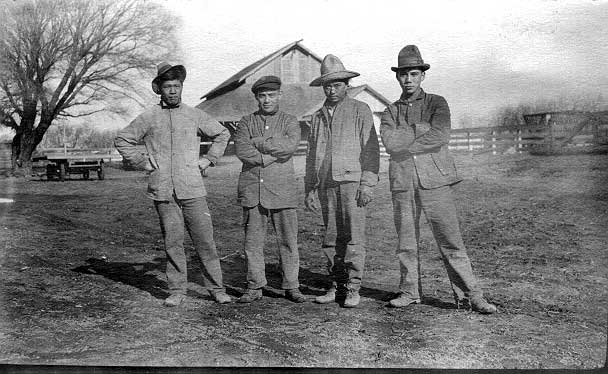
From left: ranch hand , Jue
Chong (39), ranch hand, Sam
Chong
(33)
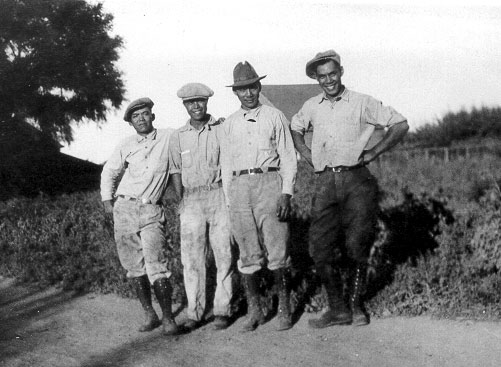
From left: Bing Chong (31),
Jue Chong (39), Tony Miller (34),
Look
Chong (29)
Can any family member provide stories or facts to go with these pictures?
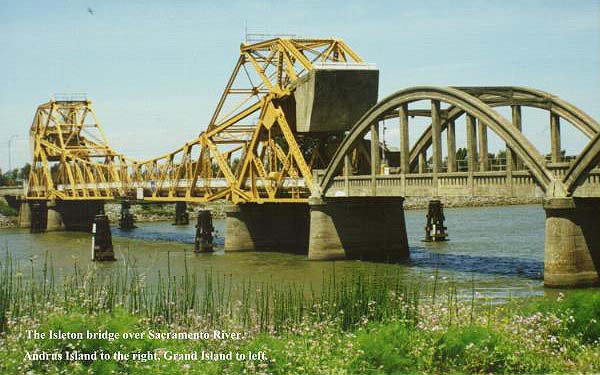
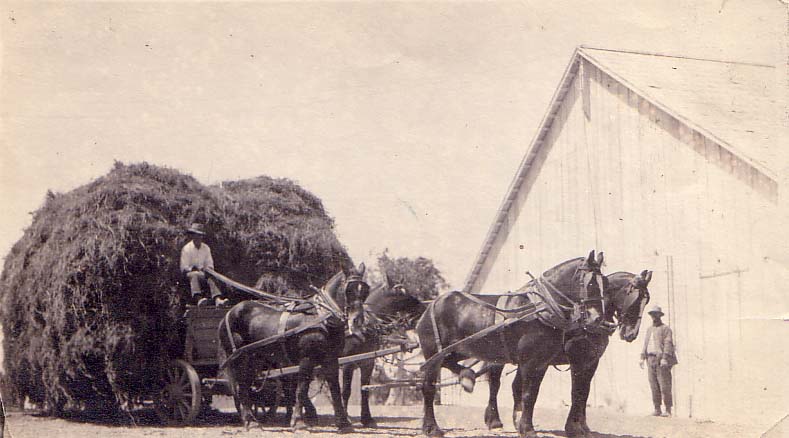
The brothers Jue, Look, Sam, and Bing continued living at the McCarthy Ranch west of Isleton, and just north of the Isleton Bridge, as they had since 1922. Rather than farming, the ranch became their home base for developing their infamous asparagus plow and contracting business with Tony Miller. They plow business was named "Miller & Chong", since they could contract much more business with a white person's name first. The ranch later became the Silva brothers ranch. Silva's wife still lived there in 2001, according to Raymond Anderson of Rio Vista, whose dad Holger Anderson was friends with Jue Chong.
There was a big shed on the ranch where all the brothers fixed their plows, and constantly sharpened the blades for the plow. The shed has since turned around by its new owner, so the sun would not be in their face when working on on the tractors.
Tony Stephen Miller: 3/22/1897 -
8/17/85, 88 years old,
558-50-4937, mother maiden Cardoza
In the 1930's, Look Chong later moved to the Shelley ranch, after Lee moved to Hart Smith Jr ranch, a mile west of Isleton. He married a nice lady, May Yee, who was Dan Yee's sister. His brothers moved to the Wolf ranch around 1936, and when they moved to Sacramento in 1941, Look and May moved onto the Wolf ranch, which they purchased with Bing and Sam's financial help.
Connie saw Lee Chong down in Isleton
quite often in the 30's,
because there
were two or three restaurants and gambling houses down there.  Connie
also visited Look Chong on his ranch, and knew Sam Chong before he got
married.
Connie
also visited Look Chong on his ranch, and knew Sam Chong before he got
married.
Ping Lee of Locke also remembers the Chong brothers being great farmers, and they invented farming implements. And they had an asparagus stick (plow). They got a patent on it. In those days, a Chinese getting a patent was unheard of. It was either the early 30s or late 20s, depression time. Then they stopped growing stuff, and went into plowing for all the ranchers that had asparagus. They cut it all up and replanted (chopped up the roots and ground). Jue Chong died in 1941, the first brother to die?
The Chong brothers were an exception to
poverty shared by most
Chinese in the area. It is almost embarrassing to talk
about being well-to-do,
when everyone else was down and out, including the Ann Chong's Jow
family.
Contrast the Chong experience to Di Hong Jow working on the WPA
and
subsisting on government food. Or Chinese immigrants who could
not
even work for the WPA, since were not citizens; whereas, Di Hong
entered
with false papers claiming he had been born in San Francisco in
1878.
Or those who could barely put food on the table, and living on
sweetened
bread at times. The vast majority of Chinese were
impoverished
in the 1930s.
Connie King of Locke recalls Jue Chong
when she was a waitress in an
Isleton
restaurant, located right next to my mother's house. 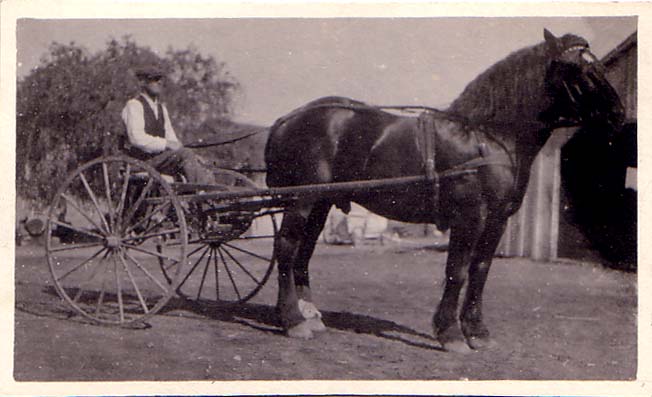 So I got a job
there when I was 14 in 1937, as she had to work. Jue would always
come
in to eat, and she would talk to him a lot. She understood he
died
on Thanksgiving Day 1941. Connie never heard him
swear.
Some of the men swear, he was a gentle person, a very nice personality,
a
nice guy. And he always teased her, and would leave her tips
after
having a bowl of noodle for 15 cents, and a coke, leaving her 10 cents
tip. At first she didn't know what it was a tip, so she give him
back the dime, and he said "no, no that's for you." I said
"what's that for", he said
"it was a tip". I had to ask my boss what is a tip.
After
Thanksgiving dinner, Jue was going to sit in the easy chair and listen
to
the radio and he was gone just like that.
So I got a job
there when I was 14 in 1937, as she had to work. Jue would always
come
in to eat, and she would talk to him a lot. She understood he
died
on Thanksgiving Day 1941. Connie never heard him
swear.
Some of the men swear, he was a gentle person, a very nice personality,
a
nice guy. And he always teased her, and would leave her tips
after
having a bowl of noodle for 15 cents, and a coke, leaving her 10 cents
tip. At first she didn't know what it was a tip, so she give him
back the dime, and he said "no, no that's for you." I said
"what's that for", he said
"it was a tip". I had to ask my boss what is a tip.
After
Thanksgiving dinner, Jue was going to sit in the easy chair and listen
to
the radio and he was gone just like that.
Dorothy Murray said Jue Chong was a nice person. He was slightly shorter than Lee Chong, but very different from Lee, and very different from the others, too. He was very quiet, and did not say much. He worried a lot about this and worried about that. He had ulcers. He was just a different person. Jue's partner Tony Miller was a big guy. No way could they have a Chinese name first, so they named their company Miller & Chong, or the ranches would not hire you. Miller and Chong certainly got the jobs and business.
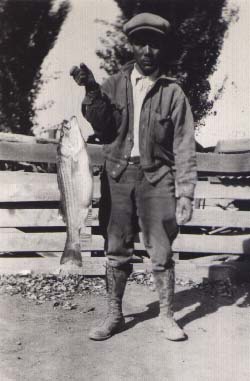
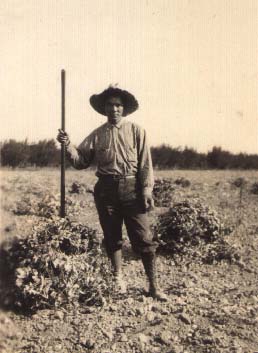
Sam Chong was very mechanically
inclined, and help his brothers
invent and maintain the asparagus plow and its blade design and
mounting configuration. Sam used his mechanical skills to
maintain the asparagus plow and farming machinery. Some time
after becoming a founding partner of General Produce,
he married Rose Hing, and moved to corner home on the southeast corner
of
13th and W Street in Sacramento.
 |
Sam Chong, striped bass fisherman |
Farm horses pulling loaded wagon |
Sam Chong, farm worker |
Dorothy remembers the big house Lee
Chong had in Isleton in the
1930's, also the money great grandma used to hide away in her
purse. The house
was really a mansion built for its wealthy owner. The mansion was
four
stories and stately, and even had a grand ballroom for dancing, with
parquet
floors and high ceiling. Connie King used to visit Violet
Chong
at Lee's Isleton house beginning in 1935. The house was located
at
the south end of Isleton, just as the river road returns to the
levee.
The mansion burned to the ground in the 1950s. Mary Yim and her
mother
lived in a bungalow in the back of the big house. This was Mary
Luke
Yim Folse, or George's cousin on his mother's side.
The big mansion where Lee Chong lived from 1929-38 was on the Hart Smith Jr ranch at 15019 State Highway 160. At the time, the ranch was the third to the west of Isleton along the levee. This was confirmed by Marion Owyang Wong, who had lived two ranches to the west on the G. F. Terschuran property. The mansion was the main ranch of the Hart Fellowes Smith family, whose estate farm was split five-ways in 1923 among his children Garret, Warren, Hart Jr, Laura Doty, and Alice Bryan. Lee lived in the biggest house in the area. The first ranch to the west of Isleton is the Alice Smith Bryan ranch, which is now owned and farmed by August Correia. The Bryan location is on the River Road and has a dirt driveway from the levee which is flanked by a few palm trees. There is a house trailer at the bottom now, but also a few small buildings behind it. Today, except for the Bryan ranch, the other Smith ranches are owned by Silva Farms, Inc. Immediately to the west of the Smith ranches was the G. F. Terschum ranch, where the Owyang family lived, with children Charles and Marion Owyang Wong. The 1923 History Book said Hart Smith had a well-managed farm that was a credit to its owner.
"The Chinese Digest (1935-1940), a weekly newspaper published in English by American-born Chinese, like the Chinese in Walnut Grove, tried to mobilize nationalism and interethic strife to counter racial lumping" (i.e. Chinese and Japanese). The Digest sought to disspell the common stereotypes of the Chinese." ... "To contradict the prevailing stereotypes, the Digest portrayed the Chinese as "average American" who "drives automobiles, shop for the latest gadgets, and speak good English. The Digest clearly projected a vision of Americanism that included the Chinese Americans but excluded Japanese Americans, rendered here as the racialized Other. To validate this socially constructed understanding of American nationalism, the Digest manipulated race." ... "Racial stereotypes commonly used against Chinese Americans were also now adopted to create a certain unflattering image of the Japanese. In one article, contemporary China was described as "internally disorganized by switfooted, ubiquitous little Japanese soldiers in steel helmets. This subtle depiction of the Japanese as subhuman and the unspoken comparisons to isects--like mindlessly obeying ants--is reminiscent of certain stereotypes that plagued the Chinese in America." ref: The Chinese American
Dorothy Murray used to race George Chong down the street in Isleton on
different blocks on roller skates. George would be on one
side and Dorothy on the other side, before Chinese school
started. The people thought they were nuts.  They were pretty good on
skates; she was not
sure who
was better, but they sure had fun. Everybody got out of our
way. That was the funniest thing. Dorothy would go with
George with Charlie Owyang. They got there an hour early, and
they skated like crazy down
Main Street a couple of times. The Chinese School was on the Main
Street.
But they were only ~16 years old. Dorothy lived across the
river
from
Isleton (click map at right) close to the bridge on the McCarthy
Ranch. That house was still there in 2001.
They were pretty good on
skates; she was not
sure who
was better, but they sure had fun. Everybody got out of our
way. That was the funniest thing. Dorothy would go with
George with Charlie Owyang. They got there an hour early, and
they skated like crazy down
Main Street a couple of times. The Chinese School was on the Main
Street.
But they were only ~16 years old. Dorothy lived across the
river
from
Isleton (click map at right) close to the bridge on the McCarthy
Ranch. That house was still there in 2001.
George was already driving then, and had his drivers license. Dorothy always remembers the coupe George had in the 1930's. George, Charlie Owyang, and Dorothy; they were the three dummies. They didn't know anything about Chinese school. And Mary Yim. The four of them had to start from Chinese kindergarten, as they were the last ones to attend Chinese school. They didn¹t learn very much because it was too noisy. There was so many people in one room. They went just for the fun of it. Nothing to do in that stupid town.
At the north end of Chinatown, there
was Japanese town. There
was
a big restaurant there, that was my Sun Kow¹s. It was a nice
restaurant,
but it went out of business because the partners couldn¹t afford
it.
The building is still there, but its used for a storage house.
The
restraurant was located on the Main Street, across the street from the
cannery.
Minnie Mock, Dorothy's oldest sister, used to work there as the cannery
nurse.
Minnie met her husband Ed Mock at the cannery. The Chinese name
was
the red cannery, Huong something. It was in the Japanese
town.
That was a long time ago.
Bill Tom in April 2002: The Chinese people have had a terrible struggle here in the wake of the 1882 Chinese Exclusion Act, followed by the Great Depression of 1929 and then World War II when our young men had to go to war. In spite of all the extraordinary disadvantages and racial prejudices we have had to endure, we all grew up to be upright law- abiding loyal productive citizens that Isleton should be very proud to claim as its citizenries. Our parents and grandparents who created this entire Delta region, though not permitted by law to become citizens or to enjoy the promises of American freedom, liberty and justice, should also be acknowledged with even greater dignity for the sake of their descendents who are yet to comprehend their grandparents' unsung roles in the American dream.
Connie King on 4/1/01: Isleton had three canneries at one time. If you come down from Sacramento., you would reached the bridge first, then you would pass the Bayside Cannery, then you would pass E and A Cannery (stands for Ensher and Alexander), then you would pass the National Cannery, then you would go thru Japanese town, then Chinese town, followed by the White town. I used to work on all 3 canneries. I started to work at 12 yrs. old.
When you go to Ryde, you would pass
Pratt Low Cannery. If you
go
to Locke, you would pass Locke , go toward Vorden Road, you pass
Libby
McNeil Cannery. All the canneries were burned down or torn down.
Marion Owyang Wong on 5/2/02: E & A was a cannery owned by 3 Armenians -- Ensher, Alexander, and Borsoon. They had asparagus ranches in Clarksburg. E & A canned asparagus and tomatoes. Afterwards the cannery was renamed Sungarden Packing Company whose main headquarters was in San Jose. Its believed that the property was still owned by the original owners. Sungarden added peaches to their canning products.

 |
 |
The McCarthy ranch was in the Isleton
school district, and
maintained a separate school for Asians, i.e. Chinese, Japanese,
Phillapinos. Yet, the blacks attended the white school!
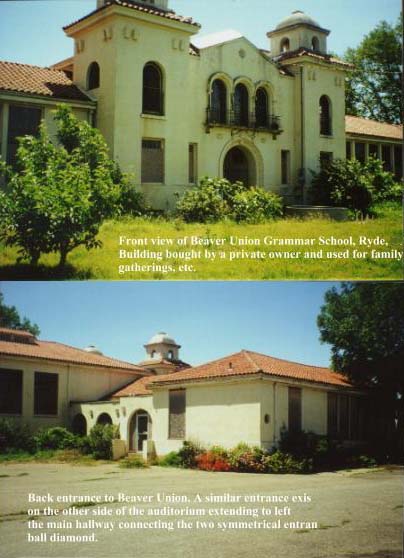
To avoid the segregated Isleton schools, Donald Leong moved for one year to live with his aunt and uncle, Lin and Oy Chan. The house was full of kids, also having Eddie, Tom, Dan, Margie, and Davis Sun. Hence, Donald was able to attended the highly regarded William Land school. Tony Miller urged Bing to move north closer to Ryde, so his children could attend Beaver Union School. Beaver Union school was integrated; whereas, Courtland, Walnut Grove, and Isleton had separate schools for Asians. Bing was living on the ranch near Ryde, the family knew the principal of the Ryde School. She was really nice to the Chong family. She said, "Bing you can bring your kids to my school." So the Chong brothers and Miller moved from the McCarthy ranch to the Phillip Wolf ranch at 14486 River Road, 2.5 miles south of Ryde along the levee. Soon, Donald moved back to his new home at the Wold ranch, which allowed him to attend Beaver Union school. Bing had to drive Donald and his younger sisters Barbara and Shirley a mile to school because the buses wouldn¹t take them since they were Oriental. In 1941, they moved to Sacramento. Beaver Union was located on Road 220, halfway between Hope Landing and Ryde. Beaver Union was also attended by their cousin George Chong, who attended in the 1920's when Lee Chong was on the Beleney Ranch on Leary Road.
Ryer
Island / Grand Island Map
 |
 |
Jue Chong had offerred to assist his brother-in-law Oy Chan start the new company with capital from their highly-profitable asparagus plow business. He recommended to Oy that he close up Tong Sun & Co, since it was losing money as customers could not pay their bills during the economic depression, and other investors were not interested in funding the business. As a result, General Produce was established in May 1933 with four equal partners: Oy Chan, Jue, Sam, and Bing Chong. The business was established under Bing Chong's name, since Oy Chan was going through bankruptcy proceedings at the same time; Eddie Chan was 20 and still a minor. So General Produce was founded with 3/4 ownership by Chong brothers, and 1/4 by the Chan family. However, Oy Chan and his sons were the principals running the actual produce side of the business, i.e. the wholesale buying and selling of fruits and vegetables. In 1934, Oy's three sons and Davis Sun were given one share, split four ways, thereby increasing the partner shares to five. The business was founded at 916 Third St, the same location at Tong Sung Company.
Continued
___________________________
Send comments or materials to
Feedback
