Chong Family History 1880-1890
[home
][1870][1890][1900][1910][1920][1930][1940][Lung
Yuet Tau][Borden][Ryde][Plow]
1880 Census - Yee Chung Runs Store in Borden
 The U.S. Census Report for 1880
showed Yee Chung was living in
Borden, where
he operated his store. The census substantiates the family
testimonies
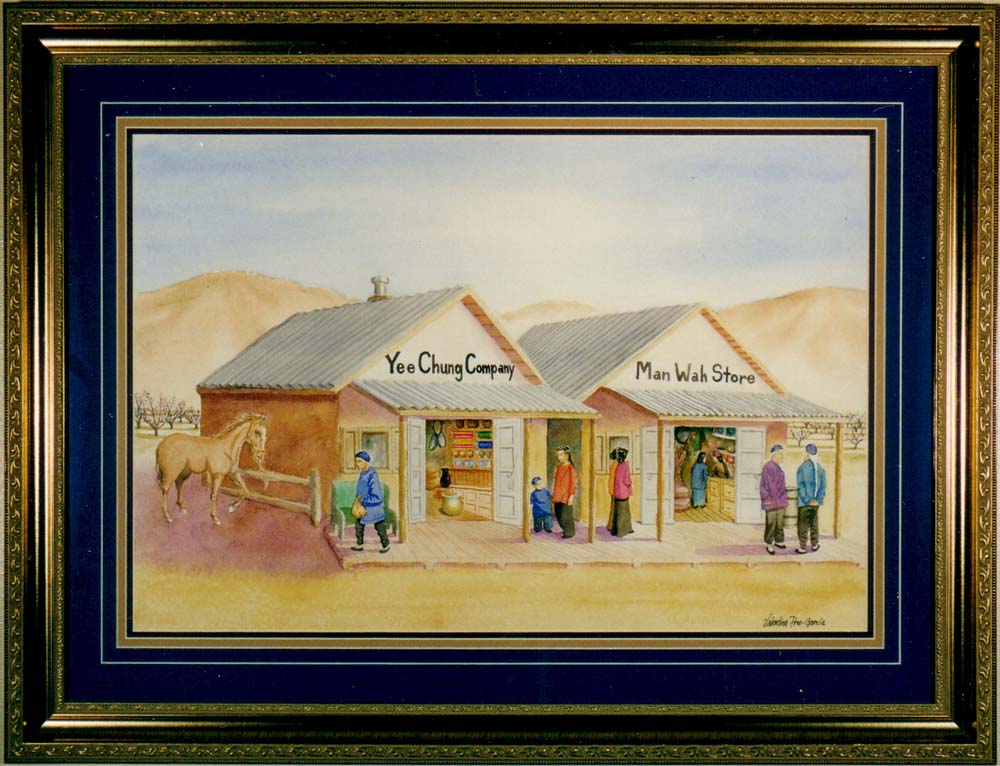
that his store was in Borden, where he operated a general store next to
Man
Wah Chan's store. Indeed, Yee Chung was not a partner with Man
Wah.
He only lived and worked right next door. Yee Chung was unmarried
at
the time, He was listed as 36 years of age, which agrees with his
recorded
age of 58 at death in Madera records. Yee Chung did have a
partner
named Ay Yen, eight years his senior, and 46 years old in 1880.
There
were two other male Chinese living with Yee Chung. Yee Chung
listed
as the head of household, born in January 1844.
The U.S. Census Report for 1880
showed Yee Chung was living in
Borden, where
he operated his store. The census substantiates the family
testimonies
that his store was in Borden, where he operated a general store next to
Man
Wah Chan's store. Indeed, Yee Chung was not a partner with Man
Wah.
He only lived and worked right next door. Yee Chung was unmarried
at
the time, He was listed as 36 years of age, which agrees with his
recorded
age of 58 at death in Madera records. Yee Chung did have a
partner
named Ay Yen, eight years his senior, and 46 years old in 1880.
There
were two other male Chinese living with Yee Chung. Yee Chung
listed
as the head of household, born in January 1844.
Other investigations had intimated that
he was both friend and in
partnership with Man Wah Chan, who was listing as owning four stores in
Borden. Seven years after the 1880 census, he went to San
Francisco to buy and marry
a wife, and start a family and other businesses. In order
to
avoid the wrath of white miners, the Chinese often mined the tailings
from
prior gold mine operations, since the whites did not like competing
with
the Chinese. When the Chinese succeeded in mining the tailings or
previously
closed mines, the whites did not like that either. This was the
source
of much racial strife.
| "The first targets of U.S.
exclusion of
Chinese were Chinese women, then generally believed by authorities to
be prostitutes. The Page Act, passed in 1875, ostensibly
legislated to prevent criminals and
prostitutes in general from entering the United States. In
reality, it was primarily enforced against women from China. The
number of prostitutes
had declined from a high of 1,416 in 1870 to a few hundred by the time
the
1882 Exclusion Act was passed. This suspicion would define the
immigration
experiences of Chines women traveling to the United States throughout
the
era of Exclusion" (1882-1943).
"Immigration officials regarded
most Chinese
women
as "slave girls and prostitutes" imported to work in brothels.
Chinese women who attempted to immigrate not only faced the humiliation
experience of being considered prostitutes, but also found it difficult
to prove that they were legitimately married."
"It was possible, by a rigid
cross-examination
of the women and their alleged husbands, to develop evidence sufficient
to
establish that, if a ceremony were performed at all, it was a mere mock
marriage adopted for the purpose of defeating the Exclusion laws, or
that the man was
already married to another woman before his so-called marriage to the
applicant
had occurred. Thus it has been possible to deport some of these
women
to the country whence they came"
"By 1900, the only Chinese women
who could
legally
enter the United States were the wives and daughters of merchants,
diplomats, and U.S. citizens. Most of the women who managed to
enter the United States did so as the wives and daughters of merchants,
in part because upper-class
women were treated with more consideration and also because merchants
were
the only ones who could afford to finance the immigration of
individuals
who could not go out and work. Although many working-class men
could
support their families back in China in some comfort, few could
accumulate
the funds needed to pay for their wives and daughters to join them in
America."
"During the 1920s, immigration
legislation
became
even more restrictive. In 1921, Congress passed a new law (57
Stat.
601) stating that foreign born wives of U.S. citizens could not
themselves
gain citizenship by derivation. The search for a wife became even
more difficult for Chinese men with the Cable Act of 1922. This
law dictated that any woman with US. citizenship even if native born,
would lose that citizenship
if she married a man who was an alien ineligible for citizenship. After
the
Exclusion Act of 1924, only the wives of merchants and diplomats could
enter
the United States legally". In May 1925, the Supreme Court
upheld
the exclusion of Chinese alien wives of U.S. citizens.
"The gender imbalance among
Chinese in America
left Chinese men with few attractive and available marriage
partners.
In 1920 there were 695 Chinese men to every 100 Chinese women in the
United
States. American born women tended to be few in number and
were
inclined to accept only husbands from wealthier backgrounds. Anti
miscegenation laws inhibited Chinese men from looking outside the
Chinese community for brides. In California the first
anti-miscegenation law was passed in
1872 to prohibit marriages between whites and blacks. In 1906 it
was
amended to include Mongolians, the racial category that included
Chinese.
Not until 1948 was this statute repealed. Moreover, after 1921
any
woman marrying a Chinese man without U.S. citizenship would be stripped
of
hers "
ref: Dreaming of
Gold,
Dreaming
of Home.
In 1930, Congress amended the
1924 act in
response
to negative reaction. The amendement allowed wives of Chinese
citizens to legallly enter the U.S., but only if they had been married
prior to 1924.
Partly from this amendment, the ratio of men to women improved from 7:1
in
1920 to 3:1 in 1940, with Chinese women increasing from 12 to 26%
of
the Chinese population.
ref: The Chinese
Americans.
It is charged against us, that not one
virtuous
Chinawoman has been brought to this country, and that here we have no
wives and children. The fact is, that already a few hundred Chinese
families have been brought here. These are all chaste, pure, keepers at
home, not known on the public street. There are also among us a few
hundred, perhaps a thousand, Chinese children born in America. The
reason why so few of our families are brought to this country is
because it is contrary to the custom and against the inclination of
virtuous Chinese women to go so far from home, and because the frequent
outbursts of popular indignation against our people have not encouraged
us to bring our families with us against their will.
It is charged that the Chinese are no benefit to this
country.
Are the railroads built by Chinese labor no benefit to this country? Do
not the results of the daily toil of one hundred thousand men increase
the riches of this country? Are the manufacturing establishments
largely worked by Chinese labor no benefit to this country? Is it no
benefit to this country that the Chinese annually pay over two million
dollars duties at the custom-house of San Francisco? Is not the two
hundred thousand dollars annual poll tax paid by the Chinese any
benefit? And are not the hundreds of thousands of dollars taxes on
personal property and the foreign miners' tax annually paid to the
revenues of this country any benefit?
It is charged
that all Chinese
laboring men are slaves. This is not true in a single instance .
Chinamen labor for food. They pursue all kinds of industries for a
livelihood. Is it so, then, that every man laboring for his livelihood
is a slave? If these men are slaves, then all men laboring for wages
are slaves.
ref: A
Rebuttal
to Racists.
|
Exclusion Act of 1882
In 1882, the U.S. Congress passed
the Exclusion
Act, which
banned immigration of Chinese. The law would be subject to
renewal
every ten years. Many Chinese sought to obtain entry, prior to
the
law going into effect. The number of Chinese immigrating
drastically
increased from six thousand in 1880 to twelve and then to forty
thousand
in 1881 and 1882, respectively. The heads of the Six Companies in
San
Francisco did send a Memorial
to U.S. Grant,
in which they sought to defend their countrymen against various
accusations.
Leading up to this was the Workingmen's {artu slogan in 1979, "The
Chinese Must Go."
|
year
|
Chinese
immigrants
|
year
|
Chinese
immigrants
|
year
|
Chinese
immigrants
|
year
|
Chinese
immigrants
|
|
1879
|
9.604
|
1895
|
539
|
1911
|
1,460
|
1927
|
1,471
|
|
1880
|
5,802
|
1896
|
1,441
|
1912
|
1,765
|
1928
|
1,320
|
|
1881
|
11,890
|
1897
|
3,363
|
1913
|
2,105
|
1929
|
1,446
|
|
1882
|
39,579
|
1898
|
2,071
|
1914
|
2,502
|
1930
|
1,589
|
|
1883
|
8,031
|
1899
|
1,660
|
1915
|
2,660
|
1931
|
1,150
|
|
1884
|
279
|
1900
|
1,247
|
1916
|
2,460
|
1932
|
750
|
|
1885
|
22
|
1901
|
2,459
|
1917
|
2,237
|
1933
|
148
|
|
1886
|
40
|
1902
|
1,649
|
1918
|
1,795
|
1934
|
187
|
|
1887
|
10
|
1903
|
2,209
|
1919
|
1,964
|
1935
|
229
|
|
1888
|
26
|
1904
|
4,309
|
1920
|
2,330
|
1936
|
273
|
|
1889
|
118
|
1905
|
2,166
|
1921
|
4,009
|
1937
|
293
|
|
1890
|
1,716
|
1906
|
1,544
|
1922
|
4,406
|
1938
|
613
|
|
1891
|
2,836
|
1907
|
961
|
1923
|
4,986
|
1939
|
642
|
|
1892
|
--
|
1908
|
1,397
|
1924
|
6,992
|
1940
|
643
|
|
1892
|
472
|
1909
|
1,943
|
1925
|
1,937
|
|
|
|
1894
|
1,170
|
1910
|
1,968
|
1926
|
1,751
|
|
|
"Chinese immigration into the
United
States: An Analysis of Changes in Immigration Policies", Helen
Chen, PhD dissertation, Brandeis Univ 1980. Impact of the 1882
and 1924 Exclusion Acts on immigration in noted in italics. Table
from "Dreaming of Gold, Dreaming of Home" Madelin Hsu, p. 67
|
Although the law did succeed in
reducing Chinese immigration, and the
overall population of Chinese in the U.S. over the next two decades,
there were many
loopholes in the law. The immigrants would be forced to develop
methods
of circumventing the laws, to gain "lawful" entry to the country.
The
law had an intended effect of preventing the Chinese immigrants from
planting
a stake in the ground, and settling their families in the U.S.
However,
this kept the Chinese from feeling comfortable in their new land, and
often
caused them to retain strong links to their homeland, since the U.S.
could
not be their homeland. This further isolated the Chinese in the
U.S.
from mainstream America, and reinforced the notion among the white
population
that they were different, and not ever become fully American. But
as
more successful Chinese were able to marry or bring over their wives
and
have American born children, there was concern for what role these new
citizens
would play in the nation.
Mrs. Yee Chung Arrives in California

|
|
Based on her 1929 testimonies, Mrs
Leong Yee Chong, or Leong Shee
or Sun Ho, was born in Shek-Kee City, East Lawn Cemetery has
Leong
Chong Shee being born in May 26, 1871. HSD, China. She came
to
America with her mom Jung Shee, when she was thirteen years old, in KS
10,
(1884) and landed at San Francisco on the SS "Dai Goo" (phonetic
spelling). Her mom had one brother and sister, who remained in
China; their names were
not known to the children. She also made a sworn statement that
Leong
Yee Chong also landed in San Francisco, but did not know the
year. Mrs
Chong was unable to write or sign her name, and was limited in her
English.
Her maiden name was the same as her mom's, i.e. Jung Shee.
Grandma
and her mother were one of the lucky 279 Chinese to immigrate to the
U.S.
in 1884, with the succeeding years only 40, 10, and 26. And, the
vast
majority of these were men.
Grandma Chong said she lived in San Francisco for three years, then
moved to Madera in 1887 after she married Yee Chung in San
Francisco. At the time, she is alleged to have been a maid
for a white family. They moved to the small town of Borden, three
miles to the southeast from Madera. When grandma Chong died
at age 88, she was buried at East
Lawn Cemetery in Sacramento.
The Yee Chong Store
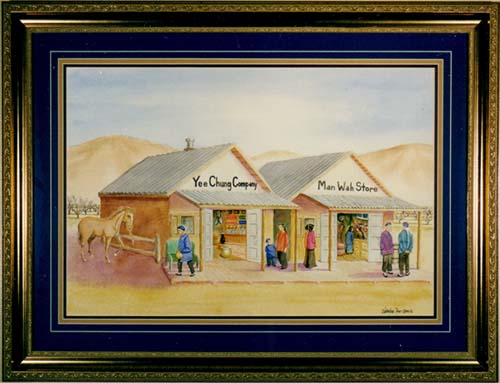
Yee Chung ran the Yee Chung Store in
Borden's Chinatown, selling
general merchandise. The store was in business in 1880
based
on the Borden census, and still in business in 1887 when he married Mrs
Chung. Its estimated the store was in operation beginning 1875 to
at least 1895, but was forced to close with the decline of Borden and
continued migration of its people to Madera. Tax records verified
the stores existence in
1879-81 and 1895. Perhaps a newspaper record will eventually
detail the store's location and closing, and his plans to start orchard
farming. Each store was about twenty feet in width; the lots had
a depth of 160 feet.
Very close to the right (when going in) and across a narrow alleyway
from
the Yee Chong Store was another store called the Man Wah
Store.
There was no building to the left of the store. The small
alleyways
between buildings was common in building construction, and could still
be
seen in the downtown Isleton in the 1950's. The Man Wah family
had
no children. They and the Chong families were the only two
Chinese
families in Borden. All the other Chinese were farm laborers,
cooks,
restaurant owners, laundry services, and household servants.
There were some newspaper accounts that
suggested Yee Chung was a
partner
with Man Wah Chan. However, a Madera Mercury press account
stated that Man Wah died in 1890, and gave Yee Chong as his alleged
partner.
This may or may not be correct, and that Yee Chung may very well have
had a separate store, or perhaps after Man Wah died.
On the other hand, most Chinese
stores were formed as merchant
partnerships, with several or many investors, each contributing a
fictitious $1,000 stake in the business. Most partners were
in name only, to establish place holders for them or their offspring to
enter the U.S. Quite commonly,
there would be ten, fifteen, or even twenty partners in the business,
though
they would never been seen on the premises. The business
would
be used to obtain lawful entry to the U.S. as a merchant, but when they
left
for laborer work, they were potentially exposing themselves to
invalidating
their legal status and subject to deportaion. In other cases,
family
or village members in China would contribute to the business in hope of
return
profits, or by being listed as a partner of an established business,
able
to obtain lawful entry to the U.S. at a later date. Immigration
laws
favored merchants, rather than laborers, so there were advantages to
providing
capital to become a merchant-class partner in a U.S. business.
There
was a huge dispute in Borden because the authorities wanted to have an
autopsy
on Man Wah, which the family refused to allow.
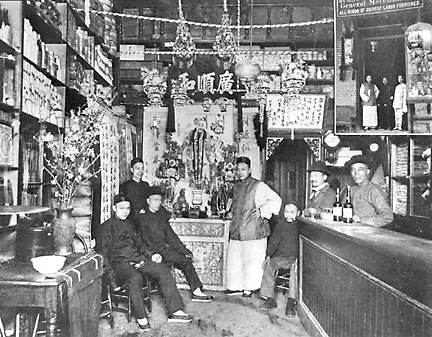 For a picture
of an 1880's Chinese store, see Quong Shun Wo General Merchandise Store
in
Fresno, below right.
For a picture
of an 1880's Chinese store, see Quong Shun Wo General Merchandise Store
in
Fresno, below right.
The Forgotten Field: The Forgotten
People introduction says
"It was told by survivors of that colony (Borden) that Man Wah and
later
his partner Yee Chung, extended credit to the hard pressed residents of
Borden, sometimes when aid from other sources was withheld. Man
Wah prospered sufficiently to import an 'expensive' bride from China
..." Man Wah was a trader who started in the placer mines, and
later opened a store in
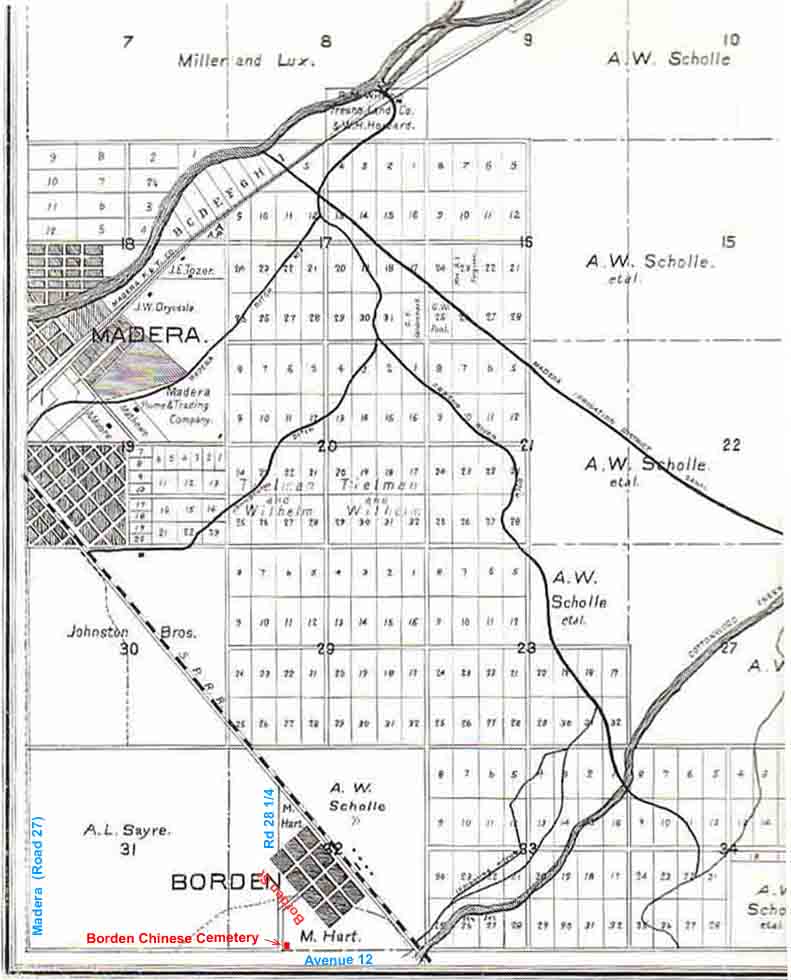
Fresno. Borden attracted a large number of Chinese who helped lay
the
Southern Pacified tracks in 1872. Borden
town was 325 feet to the west
side of the tracks. The Borden
Chinese Cemetery was located
to the rear west of the town. The book also reports Yee Chung was
in
1880 census as a store owner or merchant in Borden. Man Wah owned
four
Borden stores that employed many Chinese. The 1880 census says
there
were four Chinese store keepers in Borden in 1880 but only one in
Madera.
Does that mean Yee Chung operated one of Man Wah's stores, or became a
partner
in one of the stores? With the completion of the wooden flume to
Madera
in the late 1870's, the California Lumber Company was in full swing,
and
Chinese laborers began migrating from Borden to Madera for work.
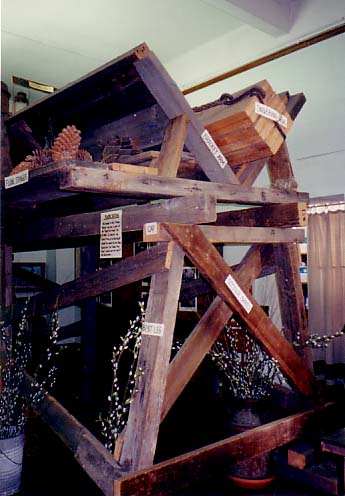 The Flume leads
to Borden's demise
The Flume leads
to Borden's demise
Why was the flume so important in
Borden's history? When the
land owners in the Borden town were approached by the California Lumber
Company, the Alabaman's who created the town made a major
miscalculation. They
asked too much money for the land necessary to construct the lumber
finishing
mill. Instead, the lumber company decided to create their mill
four
miles north of Borden, where land could be purchased cheaply.
Once
the lumber mill was in operation, the Chinese and other Borden
residents moved
to Madera for the lumber and related jobs created by the mill.
Borden's
fate was sealed. Map
showing proximity of Borden, Madera, and the Madera Flume & Trading
Company.
See excerpt from "Flume: pathway to the future", which notes that
Borden
was bypassed because of a rise in the ground made and Madera was a
better
terminating point, and not because of any conspiracy to kill off
Borden.
And Madera is the Spanish word for lumber ... and for those
thrill
seekers riding down the flume, this was the grand-daddy of all rides.
A section of the flume can be seen at
the Madera County Historical
Museum on Yosemite Avenue. Logs were cut and shaped into boards
at
the lumber mill near the forest. The rough lumber was bundled
together
and sent over 50 miles down the flume to Madera, on a bed of
water.
Construction of the flume by the Chinese was quite an engineering feat,
not
only for its long distance, but also designing a wooden structure to
send
the lumber and water continuously downhill across gullys and
canyons.
This required building of large trestles to span the
canyons.
For a better appreciation of the flume, stop by the Madera Historical
Museum
to see a flume section, and pictures of the actual flume.
| Flume:
pathway to the future
, by Sierra Historic Sites Assn
"For more than a half a century
a long wooden
structure not only dominated the life of the town which became
Oakhurst,
but also determined how the County of Madera would grow. Begun in 1874,
the
lumber flume stretched for more than 50 miles from the mountains to the
railroad in the San Joaquin Valley. At the time of its construction, it
was believed to be the longest such flume in the world.
Certainly it was a novel way to
move rough
cut wood from the hills to the flatlands.
Five feet across at top of the
V, the flume
was built in 16-foot "boxes" or sections. During the two years it took
to
build the initial structure, virtually all the production of the
California
Lumber Company mill, primarily cedar, was used. Once construction
progressed
downstream from Sugar Pine, complete prefabricated sections were
floated
from the mill to the construction crews.
At that time, Borden, located on
the railroad
some four miles south of where the town of Madera was to be developed,
was
the population and commercial center of that portion of Fresno County
north
of the San Joaquin River. A small elevation between the Fresno River
and
Borden prevented building the terminus there, however.
Instead the flume followed the
Fresno and
a mill and lumber yard were developed along the railroad. The town was
named
Madera, Spanish for lumber.
"It definitely was a thrill.
Ahead the flume
sloped sharply down and the two sides of the flume seemed to come
together
in the distance as two parallel lines seem to. Looking behind, the boat
was
going fast enough to be ahead of the water. I have no idea how fast it
went,
but believe me, it was fast enough going over some of the higher
trestles."
Others estimated the speed on
steep parts
of that 10-mile stretch of flume as 50 miles an hour. Whatever it was,
it
was a thrill in a V-shaped channel five feet wide and three feet deep."
|
Closed Borden Store for Lack of Business
Mrs.
Chong testified the family closed the Yee Chong Store in Borden in for
lack
of business, saying "there was no business so we closed
up".
By testifying "we", she was validating the stores existence after they
were
married . She did not state the year the store closed, but the
store
was presumed closed after 1895, when the town of Borden was well into
rapid
decline. The last property tax for the Borden store was found
recorded
in 1895, though the store could have remained in operation for several
more
years. Lin recalled in her testimony (hearing) that when her
father's
store closed up the people moved away from Borden to Madera. Yee
Chong
then ventured into orchard farming.
Mordecai Ranch
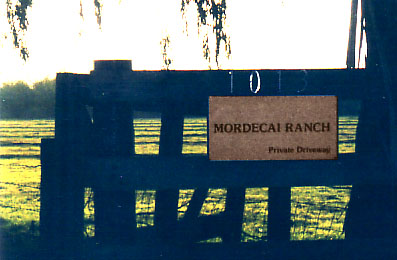 On November 13,
2001, Bill Coate visited the
Mordecai ranch along Madera
Road and just south of Avenue 12½; he had studied the
Mordecai family in
prior research (pronounced More-deck-key).
Coate writes:
"I have stumbled across the iron doors to Yee Chung's store in
Borden.
Not far from the site of the old town of Borden is the Mordecai
ranch.
It has been here since 1868, predating Borden by 4 years. The ranch is
still
in the family, and while explaining our Chinese project to them, I was
informed
that they had the doors to the 'old Chinese store' in Borden. I quickly
replied,
"Which one; there were two.' My host then told me they had two sets of
doors.
We hurried out to their barn, and sure enough, there stood two sets of
iron
doors and window covers. The difference in size makes it obvious that
they
came from two different buildings. I am very sure that we have
the
doors to the stores of Yee Chung and Man Wah Chan."
On November 13,
2001, Bill Coate visited the
Mordecai ranch along Madera
Road and just south of Avenue 12½; he had studied the
Mordecai family in
prior research (pronounced More-deck-key).
Coate writes:
"I have stumbled across the iron doors to Yee Chung's store in
Borden.
Not far from the site of the old town of Borden is the Mordecai
ranch.
It has been here since 1868, predating Borden by 4 years. The ranch is
still
in the family, and while explaining our Chinese project to them, I was
informed
that they had the doors to the 'old Chinese store' in Borden. I quickly
replied,
"Which one; there were two.' My host then told me they had two sets of
doors.
We hurried out to their barn, and sure enough, there stood two sets of
iron
doors and window covers. The difference in size makes it obvious that
they
came from two different buildings. I am very sure that we have
the
doors to the stores of Yee Chung and Man Wah Chan."
"The family who has the doors descends
from the very first permanent
settlers in this area. They were living on their ranch even before the
founding
of the town of Borden (1872). According to the family, after
Borden
was completely abandoned (the Chinese were the last to leave), the
doors
were removed from the adobe walls of the stores and taken to the ranch
where
they are now housed. No one lived in Borden in 1902." When
Bill
Coate escorted Ron and Darryl Chong to the Mordecai Ranch on December
7,
2001, they were shown one pair of rusted steel doors mounted on and
still
in use on the front of the brick, Mordecai guest house. There
were
two other sets of doors stored in the barn, one like the first set, and
the
other much more massive and larger. One steel window was also
saved,
i.e. a rectangular steel plate with hinges, shown in the bottom-most
picture.
Note the L-shape latch made of round bar stock to secure the window.
If you look at the close-up of
the inside of one steel doors,
there are four bullet holes pierced through the 1/8 inch plate steel,
which
was reinforced around the edges to a total thickness of 1/2 inch.
Madera was still in the wild west when Yee Chung ran his store.
Whoever shot
those four rounds must have had intent to harm, as anyone standing
inside
would have gotten pierced, too. Was the shooting racially
motivated?
We do not know. The original Mordecai ranch house burned
down.
The Mordecai's ran to town, and a crew of Chinese was assembled to help
save
their belongings. The house was reconstructed nearly like the
original.

|
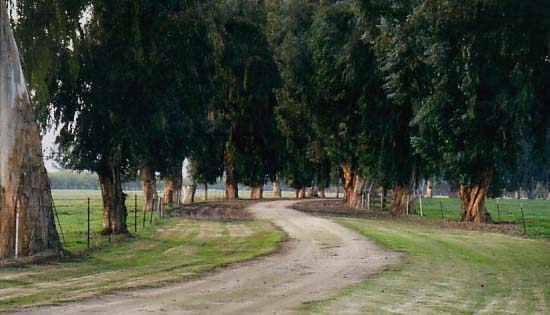 |
Mordecai Ranch, 4 miles SW of Madera,
CA
One of the three sets of doors were
originally on the Yee Chung
Store, and another set on the adjacent Man Wah Store. The doors
were
removed from the old adobe buildings, when the remnants of the Borden
downtown was being torn down. The Mordecai Ranch is the oldest
ranch in Madera still owned by descedants of the original family, which
emigrated from Alabama
in 1868. Yee Chung had farmed orchards on the
Dorn Ranches
, which were located both north along Avenue 10½ and west
between
Road 24½ and 25 with respect to the large Mordecai
property.
If you are traveling south out of Madera on Highway 145, the Mordecai
Ranch
is located ½ mile south of Avenue 11(about¼ mile south of
Avenue
10½) . The ranch house is on the right, immediately after
crossing
Cottonwood Creek.
The beautiful setting and driveway upon
leaving the Mordecai Ranch
is shown in the picture above. The Yee Chung family lived for
many
years in the residence on the D. S. Dorn Ranch, while farming orchards
for
distribution to other cities. Dorn had several ranches located
just
to the north and west of the Mordecai Ranch. Yee Chung's closest
neighbor
was the Osborne family, located a quarter mile distant from their
house. We are not yet located the Yee Chung home ... stay tuned.
Pictures of the Mordecai Ranch and the Doors to the Borden
Chinese Stores
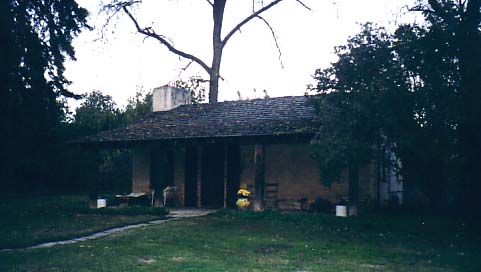
Mordecai Ranch guest house with doors #1
|
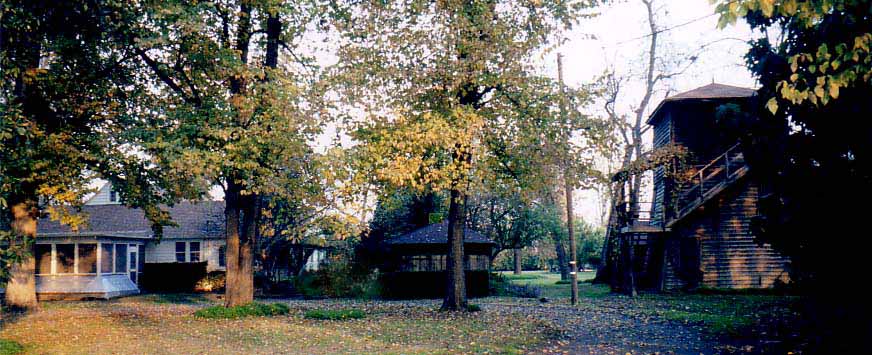
Mordecai Ranch House and Scenery
|
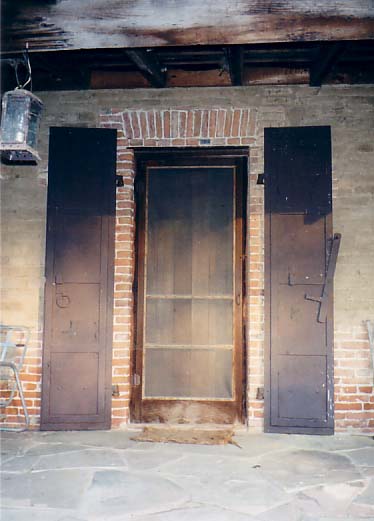
Yee Chung Store doors #1
|
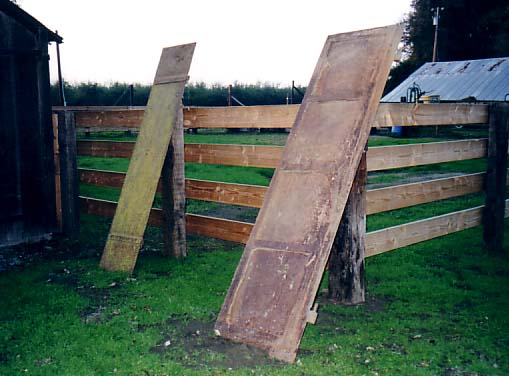
Yee Chung Store doors #2
|
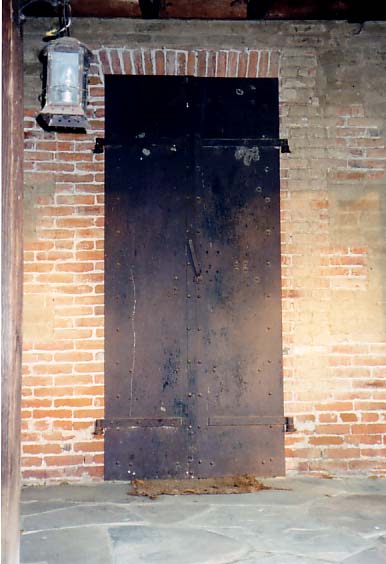
Store doors closed
|
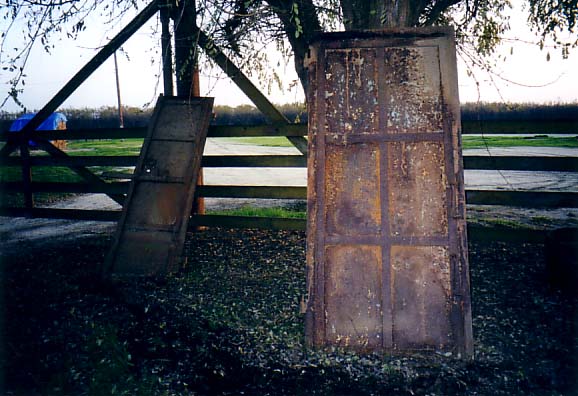
Yee Chung Store doors #3
|
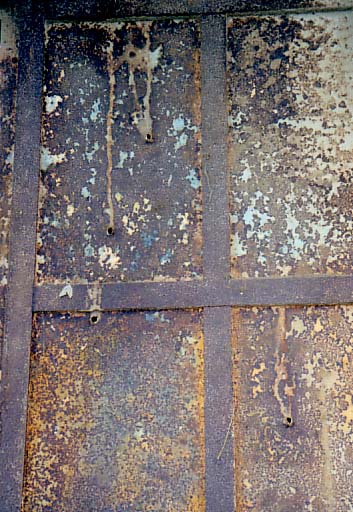
Interior View of 4 Bullet Holes
|
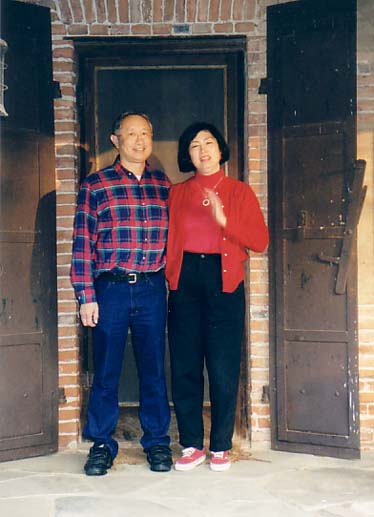
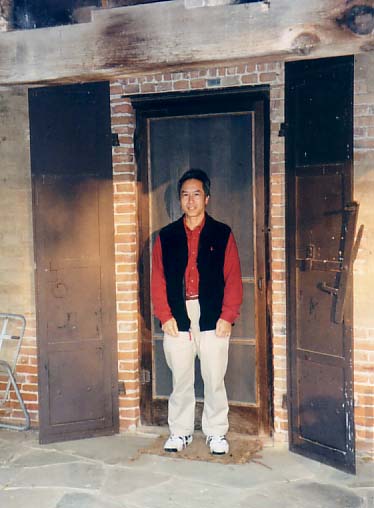
Ron, Judy, and Darryl visit Chung historical
site
|
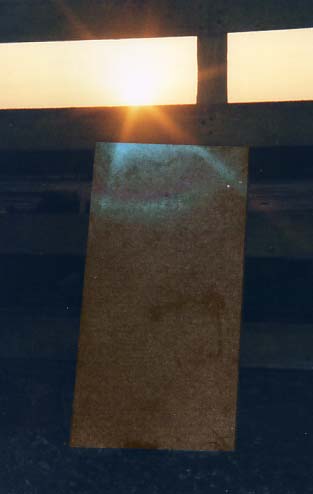
Steel Plate store window
|

Notice the similarity of the Borden store doors
to those on the
Sun Sun Wo Store, built 25 years earlier 1851
in Coulterville
|
1890
Madera-Borden Overview
Madera
West_Ranches_1890_map
Borden_SouthWest_1890_map
[full
]
Borden_South_1890_map
Dorn and
Mordecai
Ranches
Beginning of Madera Chinatown
SEPTEMBER 24, 1884--FRESNO
EXPOSITOR. "The town of Madera
seems to be in a flourishing condition. We note that a new hotel, a new
school, and one or two private residences are in course of
construction. Åbout half a dozen buildings have recently been
completed and an air of prosperity pervades the town. One thing it
wants to do is to move its China population to a point away from the
whites."
From the above article, Bill Coate
surmises we can date the
beginning of Madera's Chinatown from the mid-1880s.
Scott Act of 1888
The exclusion of Chinese laborers was
reaffirmed by another
congressional act on September 13, 1888. Less than three weeks
later, the Scott Act
was passed, which barred re-entry of Chinese laborers to the United
States
even if they had intended to leave the country temporaily. Thus,
20,000
Chinese were trapped outside the United States, even though they
had
re-entry permits. In another case, almost 600 Chinese on board a
ship
in return passage to America were refused re-admission. ref:
Bury
My Bones in America.
Continued
Send comments or
materials to
Feedback