|
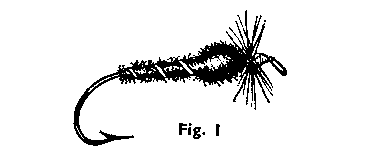
If a nymph is required without wing cases, all is necessary is a hackled wet fly with a dubbing body much thicker at the shoulder so that a distinct bump is formed. Only one or two turns of the hackle for the legs should be used Fig 1.
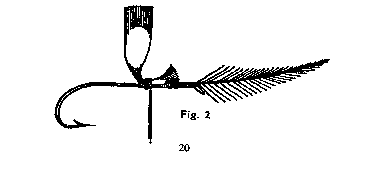
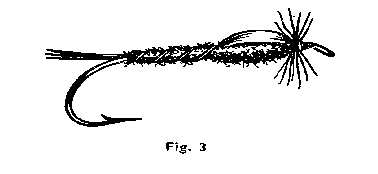
Tie in very small hackle for the legs, and then wind the tying silk to about one-third of the distance between the eye and the bend of the hook. Now tear off a strip of fibres from the Woodcock wing feather and tie in as Fig 2. The fibres should be stroked towards the eye of the hook so as to be out if the way while the rest of the body is formed. Continue winding the silk to the bend and tie in the tail and wire rib. Dub the fur onto the silk and wind it up to the wing cases. Now wind the rib as far as the wing cases, tie it and cut off the surplus. Dub more fur onto the silk and wind it in front of the wing cases to form a thorax. Bring the wing cases down over the thorax, tie in and cut off the surplus. Wind one turn of the hackle, cut off the tip, and finish off with a whip finish. The nymph should look as Fig 3.
A good method of making effective looking mayfly nymphs, is to tie in the wing cases right at the bend of the hook, after the tail fibres have been fixed. The fur body is then wound on, and thickened at the front. The wing cases are then brought down and tied in at the front of the hook. The wire rib is now wound evenly, but fairly widely from the tail end, a large gap behind left where the wing cases proper should hump up. The result is a realistic looking segmented body.
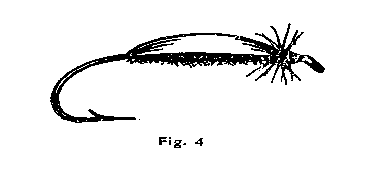
For a beetle, the wing cases should be tied in at the bend of the hook so that they reach from the bend to the eye as Fig 4.
|
|