|
The basic difference in tying a dry fly is that the wings are tied in before the hackle instead of after.
To prepare wings for "double split wings" it is necessary to take two sections from each of the matched quills, so that each wing section is of double thickness.
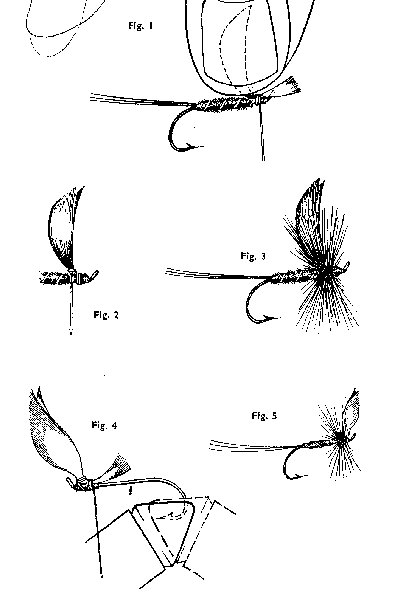
Now tie in the wings, but before releasing the tight grip on the wings after they are tied in, raise the fingers to a vertical position over the body, Fig 1, and take two turns of silk round the base of the wings as near to the body as possible, and one more turn round the shank close to the back of the wings. They will then appear as Fig 2.
It may be now necessary to separate the two wings but this can be very easily be done by the point of the scissors or dubbing needle. Wind the tying silk back to the eye of the hook.
Now take a good stiff fibred cock hackle and tie it in just behind the eye, leaving room to finish off the head. Wind the tying silk back behind the wings, and wind the hackle back to the same position. Wind the tying silk back to the eye and tie off with a whip finish.
To tie in advanced wings.
Make the winging the first operation. Place the hook in the vice the opposite way round, and tie in the wings as described above. This will bring the wings to the advanced position, Fig 4. Make a half hitch, Then turn the hook round to its normal position, and wind the silk to the bend of hook then form the tail, body, hackle, etc., and the finish fly should look like Fig 5.
|
|