|
A dubbing body consists of wool or fur spun on to the tying silk which is then wound round the shank of the hook from the tail to the shoulder.
Points to remember during the spinning of the fur are:
See that the tying silk is well waxed.
Only use a small amount of fur at one time, spread it out over a large area as possible.
Don't roll the silk backwards and forwards on the forefinger, but in one direction only.
Keep the tying silk taut at all times.
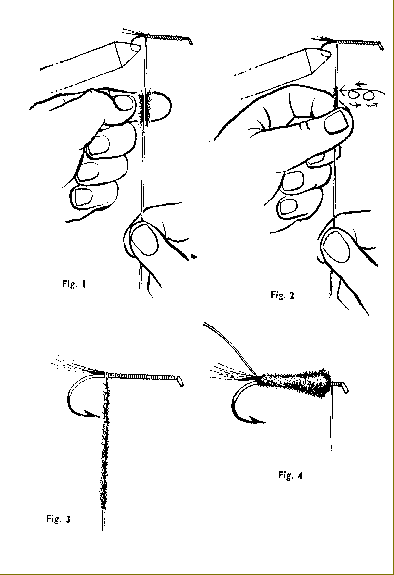
Hold the tying silk taut in the right hand, at an angle to the hook and pulling downwards to the body. Select a small pinch of the fur and spread it on ball of the left forefinger. Now bring the taut silk down on the forefinger as Fig 1. Lower the second finger of the left hand on to the thumb and roll the silk and the fur in a clockwise direction as Fig 2. This will wrap the fur around the silk, add additional fur until a sufficient amount covers the silk. Press the finger and thumb together during the rolling , opening them at the end of each roll.
The dubbing should now look like Fig 3, and is then wound towards the eye of the hook, not forgetting to leave enough space at the end for any wings or hackles you need to tie in Fig 4.
|
|