
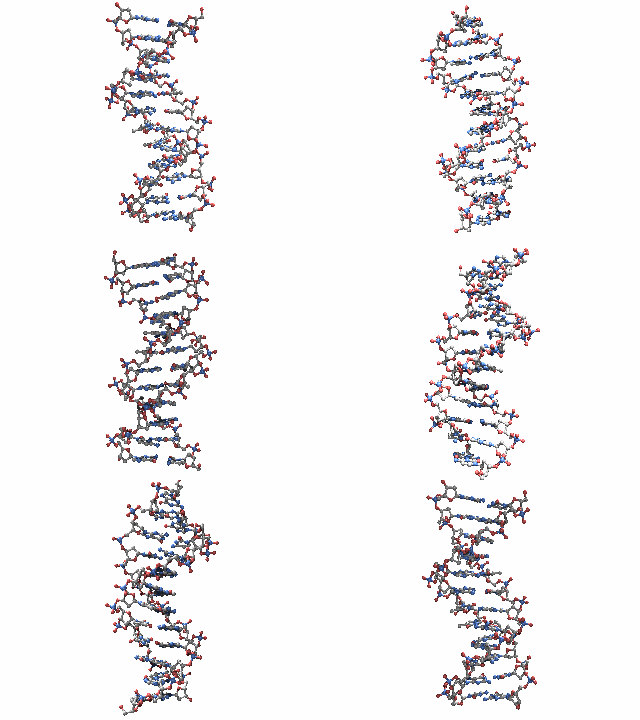


Cases are likely to include area troops
US: Local military defense lawyers are eager to learn how many crime-lab tests being examined for evidence of tampering involve sailors and Marines from bases in San Diego County.
The Army's Criminal Investigation Command said nearly 500 forensic test results from all services dating back 10 years are under review after one of its examiners allegedly faked results. About 119 of those cases pertain to the Navy and Marine Corps.
Defense analysts said this is one of the military's largest cases of alleged DNA evidence tampering.
An Army lab at Fort Gillem, Ga., does forensic testing for all branches of the military.
It is almost certain that some of the cases being scrutinized are from San Diego County, the defense lawyers said.
Camp Pendleton ranks first or second in the Marine Corps for courts-martial, said attorney Jane Siegel, a retired Marine judge who now works as a military defense lawyer in North County.
Siegel also said it is likely that the lab evidence played a key role "because DNA testing has a shock-and-awe effect on juries and is usually only used in serious cases."
Lab-testing issues strike at the credibility of the military justice system and could cause "huge problems" depending on how many - if any - falsified cases are found, said defense attorney David M. Brahms, a former Marine brigadier general and top lawyer in the Marine Corps.
"I don't know how the government could not overturn those cases (in which evidence was falsified). Remember that the government has the burden of proof," Brahms said. "Another trouble will be if the evidence was used to convince a defendant to plead guilty. The biggest problem cases will be the ones that were tried a long time ago. Memories fade, evidence is lost."
Siegel predicted, "A problem like this is going to be kicking around the courts for a long time."
Broader concerns were raised at the Army lab in June after the examiner admitted to faking a DNA test. Later, investigators discovered a problem with the examiner's testing of serums.
The Army has hired a consultant to review 465 cases that the forensic examiner worked on since 1995 at the Army Criminal Investigation Laboratory at Fort Gillem. The cases - ranging from robbery to murder to rape - include 22 cases in which the examiner gave expert testimony.
The Army informed the Navy and Marine Corps about their 119 cases in August. Spokesmen for bases in San Diego County said they didn't have more specifics.
"We are going above and beyond in our investigation because we've gotta be above reproach," said Chris Grey, spokesman for the Army Criminal Investigation Command.
Grey said the Army has asked the Inspector General's Office of the Defense Department to conduct an independent review of the investigation.
An audit by the North Carolina Bureau of Investigation concluded that the Fort Gillem forensic lab met all minimum criteria for a DNA lab, Grey said.
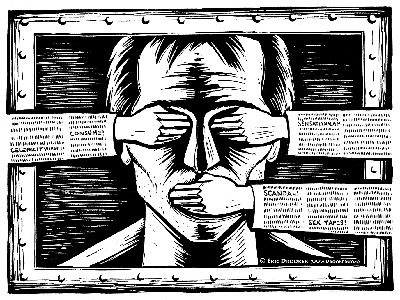
Censorship in the Big House
It was a melee, a riot, a simmering dispute. Despite the nomenclature, coverage of the August 9 prisoner "incident" at San Quentin prison was hardly diversified. 39 prisoners were injured in one of the largest riots since 1982 at California's oldest prison, with newspapers citing tensions between Latino and white prisoners as the root cause.
There were a few differences, though, between this riot and the last demonstrating the changing nature of America's prison system. In 1982, guards fired shotguns in the air to quell the disturbance; in 2005, tear gas was the agent of choice. In the 80s, the prisoner newspaper, the San Quentin News would've covered the riots; in 2005, this newspaper no longer exists.
One of the most dramatic changes within American prisons is the near extinction of the penal press. Award-winning prison newspapers that once reached thousands- even outside of prison walls-no longer exist, and their underground counterparts are few and far between. The situation has become so dire that, according to the author of Jailhouse Journalism James McGrath Morris, "If you talked to a prisoner today, they wouldn't even know these things existed."
The death of the prison press can't be attributed to one law or one warden; instead, it can be traced through shifting attitudes on prisons and their function in society. "There was a period in American history when we really thought we could send somebody to [prison] and make a new person out of them," Morris said. "That's gone." In a country that imprisons over 2 million people-despite a decade-long drop in crime-rehabilitation is an outmoded concept.
The prison newspaper was once seen as a practical tool for rehabilitation. It was viewed as a way for prisoners to occupy themselves on the inside, but more importantly, to gain marketable skills for use on the outside. This led to prison newspaper booms in the 30s and 50s, when over 250 prisoner-run publications flourished.
The prison press also thrived in the 70s when, according to Jim Danky, Librarian of the Wisconsin Historical Society, which is home to the nation's largest collection of prison newspapers, highly politicized prisoners brought "the ethos of the 60s inside with them" and cranked out enough radical rags to fill a library. Among these were The Iced Pig edited by Weatherman and Attica prisoner Sam Melville and the San Quentin News, known for its censored report on bird excrement in the prison cafeteria. The most notable paper of this decade, and perhaps the entire history of the prison press, was The Angolite. Under Wilbert Rideau's editorship, the paper won a Polk award for its intensive coverage of prison rape. Unlike other papers, The Angolite skirted official censorship by obtaining the support of the warden, who hoped that the presence of an independent prison newspaper would bring prestige and stability to the Louisiana prison.
But this hands-off approach was unique to Angola. As The Angolite was publishing groundbreaking pieces, prisoner-journalists throughout the country were encountering the "Son of Sam" laws which were designed to keep them from publishing their work in outside publications. A central provision states that, "The inmate may not act as reporter or publish under a byline." Though the law did not directly affect prison newspapers, it sent a message to officials that contrarian prisoner opinions needed to be heavily censored.
H. Bruce Franklin, Rutgers professor and author of Prison Writings in 20th-Century America, believes this sudden crackdown on prison journalism was a reaction to the success of newspapers in unifying prisoners and engaging outsiders. Ultimately, the goal was (and still is) information control, according to Franklin: "The worse the conditions in prison, the more necessary it is to keep people from knowing how bad the conditions are." Franklin believes that prison officials take measures to prevent prison newspapers from covering routine abuses and, in some cases, torture. "They will do everything in their power to make sure people are unaware of this," he says.
For the most part, efforts to silence prisoners have been successful. Yet, some prisoners would rather face continuous torment than have their voices muffled. Through hand-written newsletters and freelance articles, prisoners continue to act as journalists even though their writings make them targets for harassment by prison staff.
Until his 1997 execution, Bobby West published news briefs from his death row cell in Huntsville, Texas, sometimes delaying print dates because guards destroyed his research material. Dannie Martin's article on the prison AIDS epidemic in the late 80s for the San Francisco Chronicle led to numerous legal battles and time in solitary confinement. But this retaliation against Martin only further demonstrated the relevance of his Chronicle pieces, eventually leading to the publication of his articles in the book Committing Journalism: The Prison Writings of Red Hog
Paul Wright faced numerous censorship attempts when his then-fledgling monthly Prison Legal News (PLN) spoke bluntly on labor exploitation in American prisons, among other issues, detailing the usage of low-paid prisoners to bolster the profits of private corporations like Starbucks and Victoria's Secret. Wright completed his sentence and now edits the paper from the outside, making it easier to challenge the frequent bans of PLN. With 15 years and 18 issues behind it, PLN is the longest running, independent prison newspaper in the country.
Even as prisoners find ways to report, their resources are slim and, in stark contrast to the past, they don't have a large outsider audience; the demand to know what happens inside American prisons is scarce. This lack of communication might be welcome to some, but it creates further tension between communities that must eventually reunite in the free world. "If you deprive some people of the right to speak freely, who are the real victims of this? Who are the real losers?" Franklin asked. "Not so much the people that don't have the right to speak. The real losers are the people who could potentially hear what these people have to say."
Leah Caldwell lives in Austin, Texas. She can be reached at: [email protected]
COUNTERPUNCH
http://www.counterpunch.com/caldwell11152005.html
Related:
