
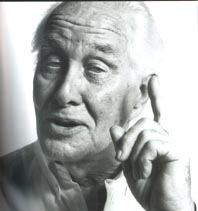


By Loyd Wells posted 31 October 05
UK: Home Secretary Charles Clarke has rejected a plea by Great Train Robber Ronnie Biggs to be released from prison on compassionate grounds.
The ailing 76-year-old has been informed his bid to leave HMP Belmarsh high security jail in south east London on the grounds of his persistent poor health has been turned down because his illness is not deemed terminal.
In a letter to the former fugitive, the National Offender Management Service said Mr Clarke had decided Mr Biggs is not "severely incapacitated so as to satisfy the criteria for compassionate release".
The prisoner was told that: "Whilst noting your frailty and the slow deterioration in your condition, (Mr Clarke) is not persuaded that your condition merits the truly exceptional step of releasing you early on compassionate grounds."
Biggs, who has recently suffered minor strokes and heart attacks and contracted MRSA, was originally jailed for 30 years for his part in the infamous raid on a Glasgow to London mail train on August 8 1963, when a 15-strong gang made off with £2.6 million in used bank notes.
He escaped from Wandsworth prison in a furniture van after just 15 months and later lived a life of exile in Brazil.
Biggs was detained when he voluntarily returned to the UK in 2001.
Medical reports prepared for the appeal said Biggs often needs a tube to assist in his feeding and has difficulties speaking.
However, doctors said he can walk short distances and is being adequately cared for within the prison system.
Related:
By Alan Travis posted 31 October 05
4m admit taking class A substances
Prison officers responsible for smuggling into jails
Nearly 4 million people in England and Wales have tried class A drugs - including heroin, cocaine, ecstasy, LSD and magic mushrooms - at least once. The annual British Crime Survey drug findings show that 11 million people, aged between 16 and 59, say they have tried some illegal drug at least once, with 3.5 million saying that they have taken them in the past year.
The figures show that since the launch of the government's drug strategy in 1998, overall use in England and Wales has remained broadly stable. Class A abuse, the most serious, has increased, mainly due to a surge in cocaine use up until 2000, despite the government's now-abandoned target of cutting class A abuse by 25%.
Fresh Home Office research also confirmed the extent of abuse in prisons yesterday, and suggested that prison staff were one route for drugs to get in. The study found that smuggling by uniformed or civilian staff was thought to be "substantially increasing" the availability of heroin and cannabis behind bars.
The figures show a fall in cannabis use in all age groups since the law was relaxed over the past 12 months.
But 9 million people say they have smoked cannabis, 1.75 million of them in the past month.
The picture for class A drugs has been stable over the past year, but there has been a fall in cocaine use and a rise in use of hallucinogens, particularly magic mushrooms.
Two million people say they have tried mushrooms, possibly because, until this summer, the class A drug could be bought legally.
Despite media coverage warning of a crack cocaine epidemic, only 239,000 people have tried the drug, against 1.8 million who have had cocaine. There are said to be about 16,000 regular crack users. It is estimated 200,000 people have used heroin; 21,000 in the past month.
Among young people (aged 16 to 24) the BCS estimates 45% have tried illicit drugs at least once, 26% in the past year and 16% in the past month. A million young people, or one in eight, have used a class A drug.
More generally, cannabis was the most commonly used drug, followed by cocaine, which is now more popular than ecstasy. There is also significant use of amyl nitrate, also called poppers, and amphetamines by young people.
Further Home Office research by the Institute for Criminal Policy Research at King's College London shows that heroin, cannabis, non-prescribed medication, and crack cocaine were all in circulation at the six prisons studied.
Main routes of entry were social visits, mail, new prisoners, drugs thrown over the perimeter, and contact after court appearances.
More than half the prison officers and ex-prisoners questioned said staff were responsible for smuggling - the fourth most commonly mentioned route.
"Many of the staff who were interviewed acknowledged that such trafficking goes on, and could substantially increase the amount of illegal drugs available in an establishment," said the report.
At one prison a member of staff had been convicted of supplying drugs and sentenced to seven years.
Once an officer has been persuaded to bring in contraband, he or she is vulnerable to blackmail, the report said.
Related:
By Erwin James posted 31 October 05
UK: As head of prisons for England and Wales, Martin Narey tried to improve life for people on the inside. One of those inmates was Erwin James, then serving a life sentence. Now, as Narey leaves his job after a career spanning three decades, the two men meet and discuss the many problems still facing Britain's jails
'Can I get you something to drink? Tea? Coffee?" I'm sitting at a small conference table at the back of Martin Narey's bright and spacious office in the heart of the new Home Office in London. Narey, wearing a smart striped shirt and matching tie, is friendly and courteous, almost disconcertingly so.
"Er, coffee please," I say.
Though this is the first time we have met, Martin Narey and I go back a long way. He joined the prison service as a fast-track prison governor in 1982. Two years later, I was sentenced to life. It would have been impossible to believe then that one day I would make this visit as a journalist or that the man with overall responsibility for all the prisons in England and Wales, second only to the home secretary, would be making me a cup of coffee.
As he makes my drink, I glance around at the pictures on his walls. Most are photographs, taken during his career, but pride of place goes to a huge painting on canvas. "That won first prize at the Koestlers," he explains as he hands me my mug of coffee. The Koestler Awards is a national arts competition held annually for prisoners and patients of special hospitals. The picture is of a group of prisoners and visitors facing each other across a row of tables. I would guess it acts as a reminder of the essential meaning of prison to all who enter the room. "Judge Stephen Tumin bought it and presented it to me as a gift," says Narey. "It will be going with me when I leave."
After a career in the prison service that has spanned three decades, Narey will soon be hanging his painting in a different office. Appointed as chief executive of the children's charity Barnardo's, his new post will be added to a heady list of career achievements - director general of the prison service, honorary doctorate from Sheffield Hallam University, gold medal from the Chartered Management Institute, permanent secretary and first ever chief executive of the merged probation and prison service (the National Offender Management Service , or Noms). Narey has been responsible for a budget of several billion pounds, a staff of around 50,000 and the lives of more than 77,500 prisoners. Not bad for a boy who was one of nine children born to working-class parents and who describes himself as having been a "waster" at the Middlesbrough comprehensive where he got "absolutely crap" A-levels.
That Narey should come across as a decent bloke is appropriate, given he is the man who introduced the "decency agenda" into prisons. I remember well his speech to a prison service conference in 2001 when he threatened to resign as director general because he was "not prepared to continue to apologise for failing prison after failing prison". It was the first time during my 20 years inside that I had heard someone at the top acknowledge that the prison experience could be deeply harmful to prisoners. From the distance of a prison landing it was hard to tell how sincere he was, but it sounded good and generated new hope for a lot of people inside.
Ever since the Conservative government largely ignored the recommendations of the Woolf report into the Strangeways riot in 1990, it seemed to those inside that prisons had been neglected by those in power. Over the years, I saw how overuse and limited investment kept the prison system from ever achieving any significant positive impact on the lives of most of those in its custody. Here, it appeared, was someone who wanted to change things. He was motivated by what he saw when he first joined the prison service and had to work on the landings of Lincoln prison as a uniformed officer.
"Lincoln stank," he says. "It was filthy, overcrowded, three to a cell slopping out. I saw prisoners in the segregation unit routinely slapped, it was constant low-level abuse. It was a horrible, horrible place. If you wanted to do any good you had to do it by stealth. The POA [Prison Officers' Association] ran the place. Assistant governors were derided. I can remember getting a real load of abuse for being seen carrying a Guardian."
Beyond having the wrong type of newspaper under his arm, Narey has rarely been seen to make mistakes. But the latest figures again show prisons holding record numbers and the system stretching to bursting. How does he feel about that? "If I've got one regret as I leave this job after seven years, it's that this morning 16,000 men woke up in prison conditions which are simply gross. Overcrowding just saps away any good we might be able to do. My personal view is that we do not need to lock up 77,000 people." He looks at the tape recorder and says emphatically: "Although I possibly did everything I could to make prisons better places, the fundamental problem is that we lock up too many. We have to reduce the prison population."
This is not what Charles Clarke is saying. While, as home secretary, David Blunkett had planned to cap prison numbers at 80,000, his successor has said there is no need. Narey announced his resignation as Noms chief last July - is a lack of warmth between him and Clarke the reason he is leaving? "Not at all," he says, "Charles and I had a glass of wine just the other night."
With so much going against it, then, is he of the view that prison doesn't work? "Well, it's unfashionable to say it, but I still think that in the right circumstances, it can work. It can be a refuge from drug abuse. It can give people a chance to get their lives in order. If someone has to go to prison, if we can take them in, give them some education, demonstrate to them that they are not stupid, make them employable. And then if we can perhaps find them a job and a home, I think that could change some lives for the better."
What about children in prison? "I think we lock up ludicrous numbers of children in this country, nearly 3,000. If we could conceive of children's prisons, not as prisons but as secure colleges, and see them as a residential experience where we could concentrate on the individual and try to sort their lives out, then they might go out with a chance."
Narey's tenure as head of prisons has not been without controversy. In 2002 he was accused of treating Jeffrey Archer unfairly when he ordered him back to a closed prison after the former peer had attended a dinner party while on a community visit. "Archer behaved appallingly," he says when I remind him. "I defended the fact that we let him go to his mother's funeral un-cuffed and again later when we let him work at the Theatre Royal from his open prison."
His attitude changed when Archer was photographed in an Italian restaurant having lunch with a prison officer and a police officer. The next day the prison officer resigned, after 30 years of service. "I believe Jeffrey Archer invited that photographer to get a story to help publicise his book," he says, "and in doing so wasted the career of a good officer."
I ask about the special powers invoked to prevent Maxine Carr, the former girlfriend of the Soham killer, Ian Huntley, from being released on an electronic tag. Was that fair? "Carr was treated appallingly in relation to anyone else who might have committed the same crime," he says. "But if we had let her out using home- detention curfew, there was a danger that it would gravely have undermined public confidence in it. We let out over 100,000 people on HDC and we've got to have the public's backing. I spent a lot of time worrying about the press reaction to her release. Her own release plan was breathtakingly naive. She was planning to go and live with a relative. By the time she was released we had managed to find her a safer place."
Preventing prison suicides has been one of Martin Narey's preoccupations over the last few years. He thought in-cell television would reduce the number of self-inflicted deaths in prison but sadly that has not been the case. The rate of such deaths remains at an average of around two per week. Last year's total equalled the previous record of 95.
I ask him how he felt about David Blunkett's comment that he was going to "crack open a bottle of champagne" when Harold Shipman was found hanged in his cell in 2004. "I was distressed and terribly disappointed. I don't think he honestly meant it, but it was a shocking, dreadful thing to say."
Will he feel liberated when he leaves this office for the last time? "At the moment I'm feeling a little sad. Every day brings messages from people wishing me well, including from ex-prisoners," he says, nodding at the cards littering his desk. "Look," he says, "I've been doing this for 23 years. It's seven years since I became DG; no one has done the job for that long. I start at 6am and I'm rarely home before 8.30pm to 9pm. Despite my haggard appearance, I'm only 50. I can't do this for another 10 years so I'm going to do something very different."
So that's a yes, then? "Yes, it will free me up a little. You can't be in this job and not support the home secretary. You work for politicians. That's the deal. We have a civil service that has to serve the government of the day. And yes, that means that I have to argue and justify things with which I haven't always agreed, and I don't have to do that anymore.
