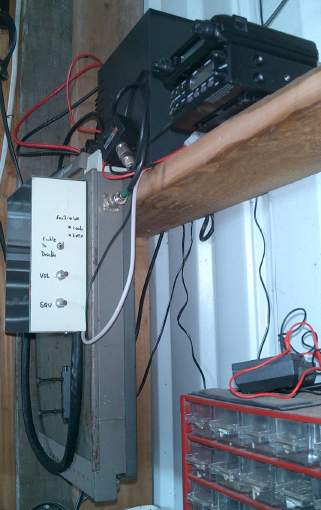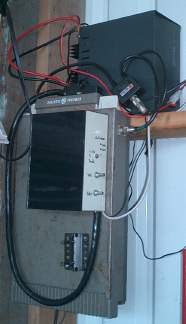
147.180 +600 kHz 82.5 Hz Cape D Receiver
147.180 +600 kHz 82.5 Hz Naselle Receiver
147.180 +600 kHz 82.5 Hz Megler Repeater
147.180 +600 kHz 82.5 Hz Warrenton Receiver
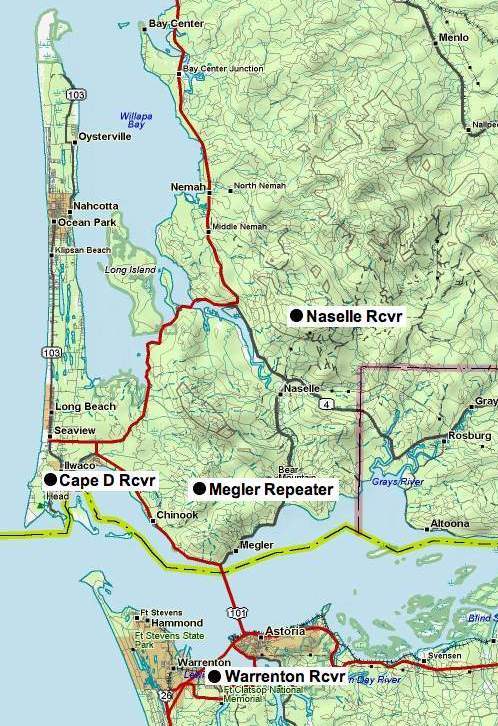
The Cape "D" receiver overlooks Cape Disappointment State Park from 300 feet, providing hand held coverage in the park, as well as Ilwaco and Seaview.
The Warrenton receiver is located in downtown Warrenton, and fills Hightway 101 along the north shore of the River and the back side of Astoria.
The remote receiver at the 2000-foot Naselle site, enhances coverage to the north on Hwy 101 and east on Hwy 30.
North Cove 145.310 Repeater
In addition, there is a second remote receiver at the Naselle site that works with the North Cove repeater. To use this receiver, transmit a 114.8 Hz PL tone (instead of the usual 118.8 Hz tone) while tued to the 145.310 North Cove repeater.
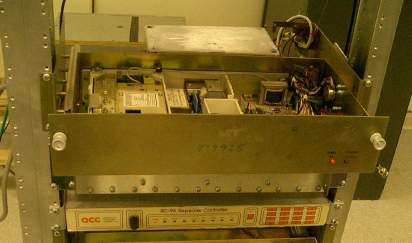
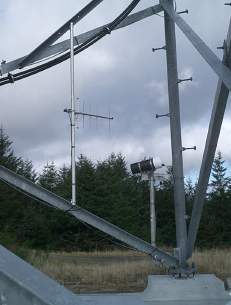
Many repeaters run higher power than a typical user, so the signal you hear is stronger than the signal you are generating. Add to this the fact that typically, a repeater receiver is hearing your transmission through a duplexer and filters that absorb some of your signal, and it's easy to see that your signal at the repeater is weaker than the signal you are hearing from the machine. This is particularly true if you are using a low power hand held.
Since most repeaters use CTCSS ("PL") tones, it is important that the tone arrive cleanly at the receiver. In areas of "multipath" the signal may become distorted, causing the PL tone to be mutilated enough that the decoder can't recognize it as a valid tone, and drops out.
The answer is multiple receivers, so you always have at least one that receives you loud and clear.