 |
 |
 |
 |
 |
 |
 |
 |
 |
 |
|
 |
 |
 |
 |
 |
 |
 |
 |
 |
 |
 |
 |
 |
 |
 |
 |
 |
 |
 |
 |
 |
 |
 |
 |
 |
 |
 |
 |
 |
 |
 |
 |
 |
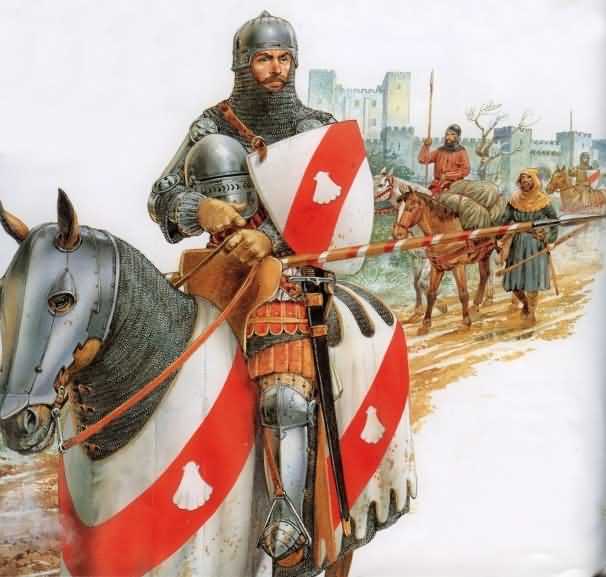 |
| Warriors and Arms In peacetime a castle was guarded by just a small garrison of men. A typical garrison had about 12 soldiers armed with longbows and crossbows. Sometimes, local men who owed their lord military service would also be put on guard duty. They were usually poorly equipped so the castle armourer had to make sure that there was always a supply of arms. Ordinary soldiers would fight on foot, they were protected by a simple padded tunic or by bits of armour they had found on the battlefield. Most fought with a knife, a halberd (a blade fixed to a long pole) or maybe a sword. The knights could afford better, a knights sword, horse and armour could cost as much as a peasants lifetime wages.In battle a knight used his lance to knock his enemies off their horses. But his most treasured possession was his sword. |
 |
 |
| In times of war, a king would call on his lords and their knights to fight. Each knight had to provide his own armour and warhorse. Kings often hired mercenaries-professional soldiers who did not owe loyalty to a particular lord-to make up a stronger fighting force. Deadly weapons The most frightening sound in battle was the hissing flight of steel tipped arrows. A skilled bowman could hit a target 90 metres away and fire up to 12 arrows a minute. Crossbows were even more accurate, but slower to load. |
| Weapons used by both attackers and defenders. Some were made for the knight, others belonging to the peasantry were usualy found on the battlefield, in who,s interest it was to upgrade their weapons at every opportunity |
 |
 |
 |
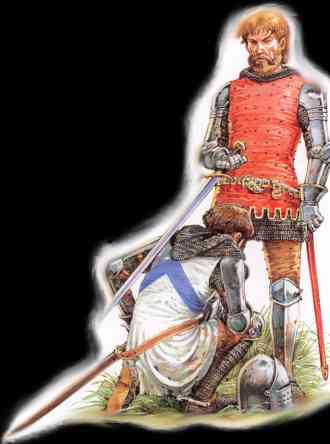
| After breakfast the ceremony called dubbing would begin. The lord tapped the man on the neck with a sword, followed by a sharp blow with the hand. He was then presented with his own sword, usually a gift from his father or the lord himself. Finally the newly made knight returned to the chapel for a blessing from the priest. |
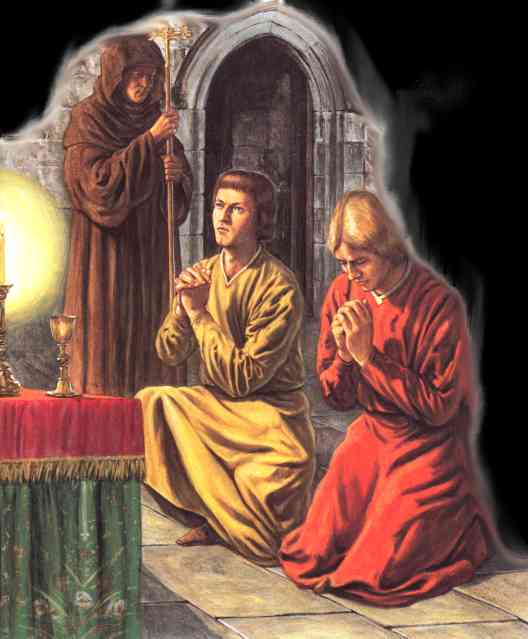
| The knight's vigil The evening before becoming a knight, a young man was bathed and shaved. Esquires dressed him in simple robes and he was led to a chapel where he spent the knight in prayer. His night-time vigil over, the young man was dressed in the finest clothes and sent to the great hall, where his family and friends would be waiting to greet him. |
 |
| Becoming a knight Knights were the most important fighting men in the middle ages. The first knights appeared in the 1700s after a new invention arrived in Europe from Asia. This was the stirrup-a footrest which helped soldiers fight in the saddle and charge the enemy.Soon, cavalry became the most important part of the army, and knights became more and more powerful. |
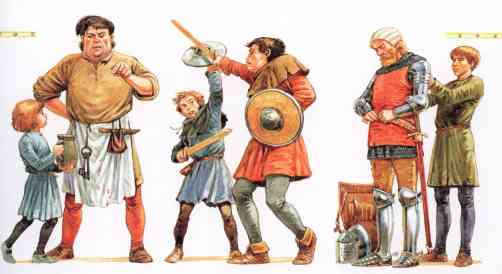
| The page served in the great hall, so that he learned good manners. He spent long hours practicing his swordplay, using a wooden sword. An esquire helped his knight prepare for battle. If an esquire had been especially brave in battle, he was knighted on the battlefield. |
| The page At the age of seven a boy who was going to be a knight went to live with a noble family as their page. He served at meals, helped the lord dress in the mornings and learned how to ride and fight. At the age of 14 the page became a knight's esquire. He was expected to follow his master into battle, and look after his horses and armour. Most esquires had become knights by the time they were 21 years old. |
| There was more to knighthood than fighting, there was also chivalry. At first this word meant horsemanship, but by the 1100s it came to mean a whole way of life. Knights were expected to be brave and honourable, to protect the weak, and to respect women. Tales on ancient chivalry became very popular in the Middle Ages, but even so, many knights failed to live up to these high standards |
 |
 |
 |
 |
| Armour The first knights were protected by a Hauberk. Over the top, they wore a surcoat which stopped them getting too hot in the sun. The Hauberk was made of chain mail-small metal rings which were linked together. In the 1300s, mail coats became shorter and metal plates of armour were added to protect the chest, knees, thighs and arms. By the 1400s, the whole body was covered by a suit of plate armour.A suit of armour weighed about 20 to 25 kilograms. Even though it looked difficult to move around in, it was quite flexible and a knight could easily manoeuvre in battle. Plate armour offered much more protection than chain mail against the cuts and blows of a sword or mace. But it was still no defence against the lethal power of a steel tipped crossbow bolt or a well aimed longbow shaft. |
 |
| Use the back button to return to homelife, or the forward button to visit besieged |
| CASTLE WARRIORS |
 |