 |
 |
 |
 |
 |
 |
 |
 |
 |
 |
|
 |
 |
 |
 |
 |
 |
 |
 |
 |
 |
 |
 |
 |
 |
 |
 |
 |
 |
 |
 |
 |
 |
 |
 |
 |
 |
 |
 |
 |
 |
 |
| HOMELIFE |
| Home life In early castles, life was far from comfortable. The wind whistled through wooden shutters in the windows and most people slept on benches or on rough mistresses,oops mattresses in the great hall. But by the 1200s, castles had well furnished bed chambers and living rooms, heated by large open fires and lit by candles. The better rooms had glass windows and plastered walls hung with fine tapestries. Floors were covered with sweet smelling herbs or rush matting. |
 |
 |
 |
| 1- The wardrobe The top room in the lord's tower was used by the lady's personal servants. Linen and cloths were stored in large chests. |
| 2- Master bedroom This had rush mats on the floor and richly decorated walls. A lady in waiting could sleep on the truckle bed which was pulled out from under the main bed. |
| 3- The solar This was the lords private living room. After a hearty meal he might retire here for a game of chess. |
| 4- Basement A trapdoor led from the solar room to the basement. Weapons,coins and other valuables might have been kept here. |
| Reading and writing Few people in the Middle Ages knew how to read or write. There were not many schools and most children never went to one. Boys had more oppotunity to learn than girls, |
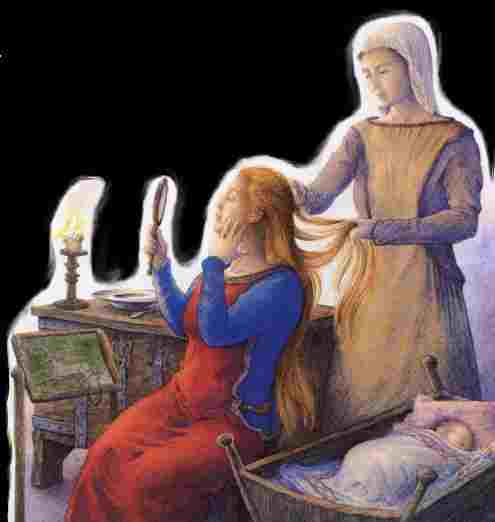
| The lady, the wife of the lord, usually played an important part in running the castle. She organised servants and entertained visiting noblewomen. When the lord was away, she might inspect local farms or organise supplies and repairs to the castle. Even so, it was still a mans world, Women were believed to be inferior to men and, in some areas, they could not own land or make a will.From the age of six or seven, the children of nobles were often sent to live in another lord's castle. Boys became pages and learned to fight. Girls learned how to manage a household. Many marriages between nobles were arranged when the children were still in their cradles, and most lords and ladies were married by the time they were fourteen. |
 |
 |
| Entertainment Travelling musicians called jongleurs often visited castles to entertain guests. Lords and ladies also liked to play music, sing and compose poetry themselves. Listening to storytellers' tales of romance and chivalry, embroidery and games of chess were other popular pastimes. |
 |
| Bath time Only the richest people could enjoy a soak in a hot bath. Wood for heating the water, cloth to line the tub, and bath oils all had to be paid for. King John of England bathed once a month and it cost him five pence each time. (A labourer had to work a whole week to earn this amount.) |
 |
| Rats, rats, rats Rats were everywhere, in the kitchens, in the cellars, in the stables�.. Rats destroyed stores of grain and spread diseases. They carried the fleas which spread the deadly sickness called the plague. |
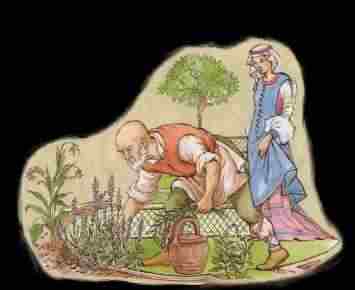 |
| Herbal remedies In the Middle Ages, doctors often used herbs to treat patients. Confrey was meant to help broken bones mend more quickly. Yarrow was applied to flesh wounds to help stop bleeding. |
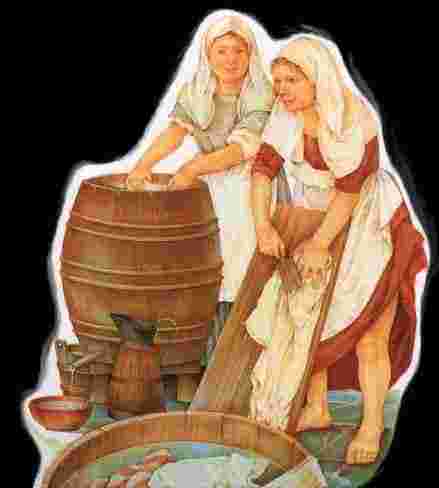
| Apart from ladies-in-waiting, laundresses were the only other women to work in the castle. The rest of the jobs were done by men and boys. Folded bedding was put into barrels and liquid soap poured through them. They were then pounded with a wooden bat to remove the dirt. Soap was made from olive oil and scented with herbs from the 700s in southern Europe but was not widely available in northern Europe until much later. Often soap was made locally from animal fat, wood ash and soda. |
 |
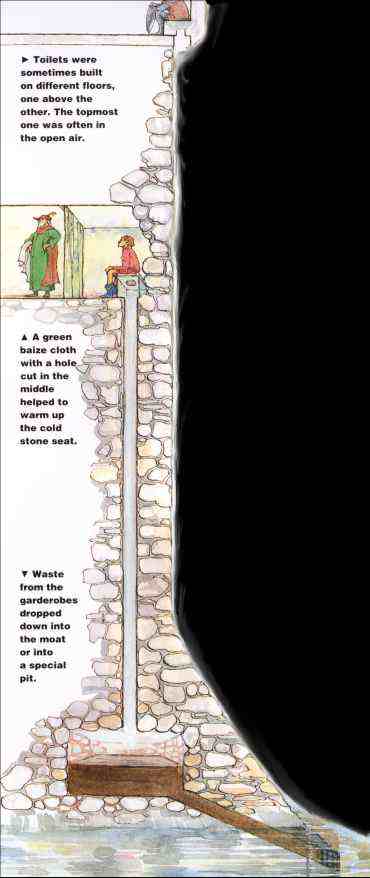
| Clean and healthy People in the Middle Ages were much less fussy about living in smelly and dirty places than we are today. A castle's toilets were little more than holes with stone seats, few rooms had running water, and baths were an expensive luxury. Every now and then the castle was cleaned from top to bottom. Wisely the lord and lady would leave for a week or two while the whole building was aired, scrubbed and swept. The horrible job of cleaning the cesspits below the toilets was done by men called "gong farmers". Between 1347 and 1351 a plague known as the Black Death killed about 25 million people in Europe and Asia. People knew nothing about the germs which spread disease. Young women died giving birth and young men died of wounds they received in battle. But if people escaped these disasters, they often lived to a ripe old age. |
 |
 |
 |
 |
 |
 |
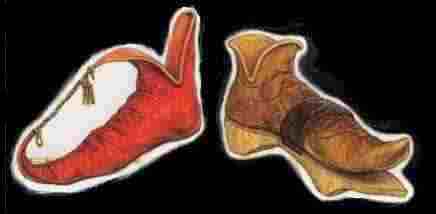
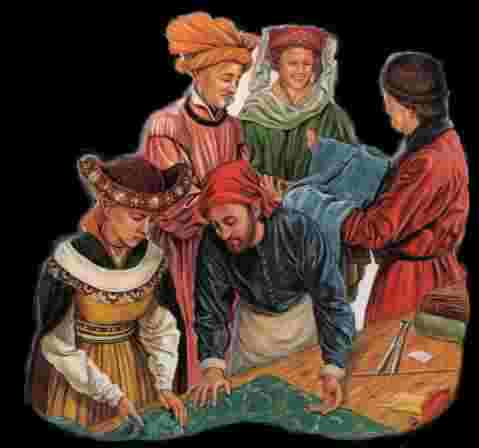
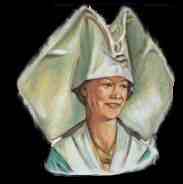
| Trendsetters In the early 1400s, the well dressed nobleman might wear a hat with a tail called a "liripipe" which draped over his shoulder (1). In the 1450s knee length clothes lined with fur (2) became popular with the nobles while merchants wore longer robes (3). Women's dresses often had long trains which had to be looped over the arm (4) and hats were very tall (5). Short tunics and pointed shoes (6) were all the rage with the most fashionable young men. |
| 1 |
| 2 |
| 3 |
| 4 |
| 5 |
| 6 |
| Women often hid their hair beneath head-dresses. Some of these were shaped like animal horns and others like butterflies wings. The "steeple hat" could be nearly a metre tall. It needed a wire frame to support it.Some men's shoes were so pointed that they had to be tied back. Others had wooden platforms for walking through muddy streets. |
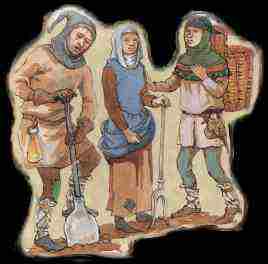
| Working cloths Peasants could not afford to buy fancy cloths. Instead they wore simple tunics and shifts, woollen stockings, cloaks, straw hats and caps. With frequent repairing these clothes could last for many years. There were no shops selling ready made cloths so the rich paid tailors to make the latest fashions. |
| Fashion was very important in the Middle Ages. Just as kings built castles to impress people, the wealthy dressed in rich costumes to impress each other. On important occasions noblewomen wore jewels and gold chains and brightly coloured clothes. Colours had different meanings. Blue meant you were in love, yellow meant anger and grey meant sadness. In the early Middle Ages, the rich wore fairly simple cloths. But from the 1100s fashions became more and more elaborate. Just like today, fashions, including hats, shoes, hairstyles, tunics and coats varied from years to year. Laws banning outrageous dressed were passed in many parts of Europe in the 1200s and 1300s but they were usually ignored. |
| Click forward to move on to warriors or the back button to return to the kitchen page |
 |