 |
 |
 |
 |
 |
 |
 |
 |
 |
 |
|
 |
 |
 |
 |
 |
 |
 |
 |
 |
 |
 |
 |
 |
 |
 |
 |
 |
 |
 |
 |
 |
 |
 |
 |
 |
 |
 |
 |
 |
 |
 |
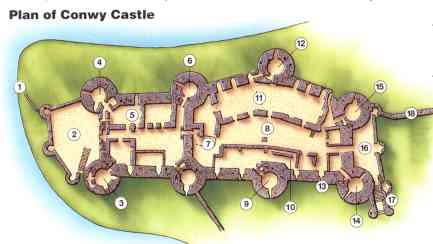
| Castle residents While the lord was in residence, he inspected his lands, met his castle officials to make sure everything was running smoothly, passed judgement on prisoners, and entertained guests with hunting,feasting and perhaps a joust. A lord with several castles spent only a few months a year at each. The rest of the time he might be at the kings court or fighting overseas.Because of the danger of fire, the kitchen had its own separate building in the courtyard. It was usually connected to the great hall by a covered passageway called a pentice. Because of the distance it had to be carried, food was often stone cold by the time it reached the table. Conwy castle had its own prison at the bottom of the prison tower. In most castles,prisoners were usually locked up in cellars. Prisons were sometimes called oubliettes, from the French oublier meaning to forget. Many castles had their own well tended gardens for growing herbs and vegetables. The garden at Conwy castle was in the east barbican. |
 |
 |
 |
 |
 |
| 1-Watergate. 2-east barbican. 3-chapel tower. 4-kings tower. 5-kings chamber. 6-storeroom. 7-well. 8-pentice. 9-kitchen tower. 10-kitchen. 11-great hall. 12-prison tower. 13-garderobe. 14-northwest tower. 15-southwest tower. 16-west barbican. 17-gatehouse. 18-town wall. |
| In times of peace, only a few soldiers were needed to patrol the castle walls and the hourds were taken down from the battlements. The castle was quiet for much of the year, but when the lord arrived for one of his visits or the king came to stay, the castle was filled with the hustle and bustle of everyday life. |
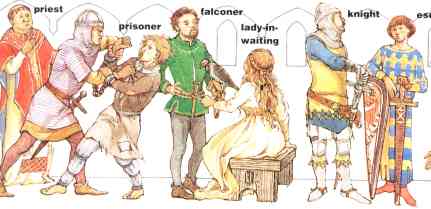
| While the lord was away, the constable was put in charge of the castle. He was a knight and often one of the lord's relatives. The constable appointed other castle officials, such as the steward who looked after the castles finances and supplies. |
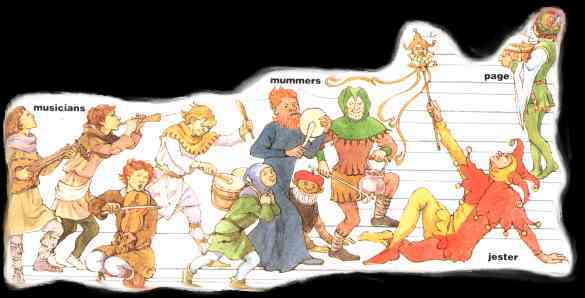
| The lord brought a huge household with him, perhaps swelling the number of residents from 20 to 200. His household would include a priest, soldiers and a host of servants. Fellow lords would also come to stay. Then there were the entertainers-jugglers, jesters, minstrels and travelling actors called mummers. |
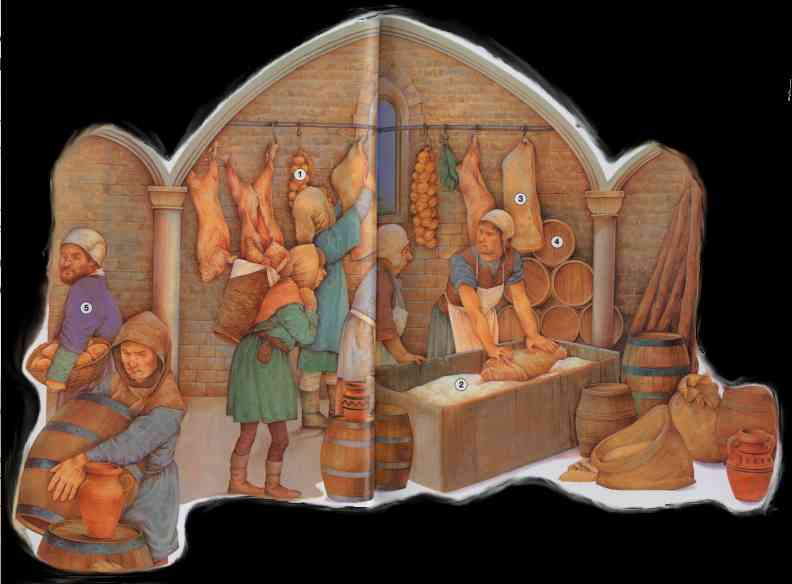
| Food and drink Most castles kept only a small amount of food in storage all year round. But when the king or lord visited, the courtyard would ring with commands and curses and the clatter of rolling barrels. Servants filled the cellars and storerooms with sides of salty bacon and heavy sacks of grain and flour. The steward would check old supplies to make sure that the grain for making bread had not gone mouldy, or the wine had not turned sour. |
 |
 |
 |
| Mushrooms and onions(1) were often threaded on long strings and hung up to dry |
| Meat was salted in a salting box (2). Then it was hung on hooks (3) or stored in barrels (4) |
| Most large castles had a pantler (5), who looked after the food supplies stored in the pantry(fron the french word painetterie, meaning bread store). |
| Preserving food Although castles stone cellars were cool, it was impossible to keep food for long. Most meat was therefore smoked or heavily salted so that it would last through winter. Vegetables were dried or pickled. Sometimes layers of fruit and meat were stored together in barrels. The fruit juices soaked into the meat and helped to preserve it. This is where the word "mincemeat" (the sweet fruit mixture put into pies at Christmas) comes from. White meats Milk from sheep, goats and cows, and the cream butter and cheese made from it, were called "white meats". The creamiest part of the milk was made into butter or soft cheese for the lord and his family. Servants had to make do with a thick, hard cheese made from the rest of the milk. Sometimes this cheese was so tough it had to be smashed into pieces with a hammer before it could be eaten. |
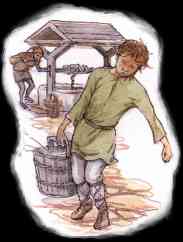
| Well water Every castle needed its own supply of water-especially if it was to survive a siege. Deep stone lined shafts were dug to underground springs and the water was raised I buckets using a rope and windlass. Sometimes water was channelled straight to the kitchen. |
 |
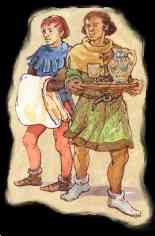
| Special jobs Some jobs carried great honour and importance. The butler looked after the castles supplies of wine, and the ewerer made sure that the lord's tablecloths and napkins were always clean. Both these jobs were done by noblemen who were chosen by the lord. |
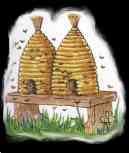
| Some castles kept honey bees. Honey was used to sweeten food and drink. It was also the main ingredient in mead- a strong alcoholic drink popular during the Middle Ages. |
| Larger castles had their own fishponds, orchards and vine-yards, as well as gardens which supplied vegetables and herbs. Cattle, sheep and pigs were kept on surrounding farmlands. The lords hunting parties also brought back deer, wild boar and pheasants from the forests for special feasts. |
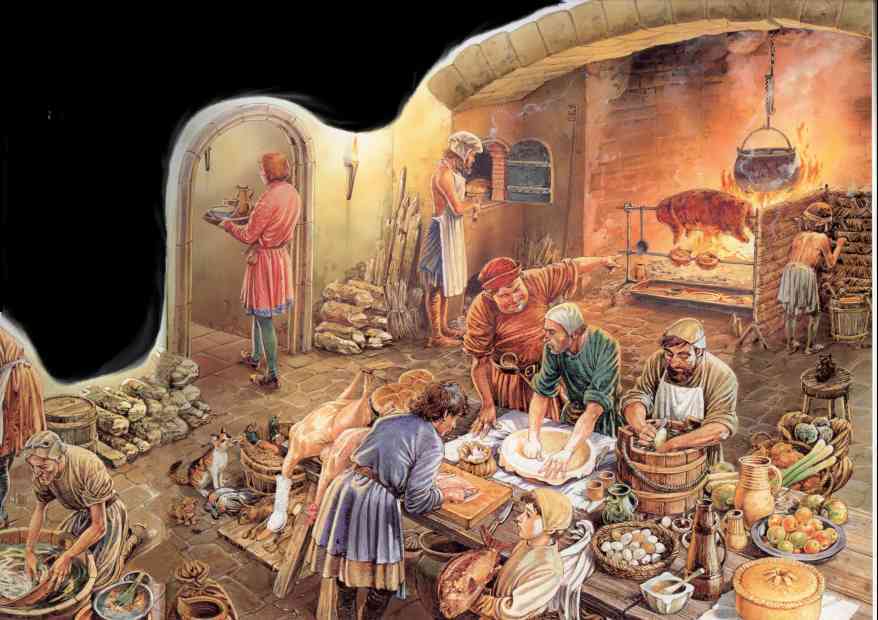 |
| The kitchen When the lord was away, the castle kitchen became quiet. The constable might eat alone in his private room, and a small garrison needed only basic meals. However during the lord's visit, the kitchen buzzed with activity. The cook bellowed orders and the undercooks chopped vegetables, plucked poultry and pounded meat until it was tender. The worst jobs in the kitchens, such as cleaning the cauldron or fetching the water from the well, were done by young boys called scullions. |
 |
| Cauldron cooking All kitchens had at least one big cauldron which was slung on a hook over an open fire. Cauldrons were used for stews soups and sauces. Sometimes they were packed with several dishes, all to be cooked at once. (1)-Eggs, (2)-chicken, (3)-fish, in sealed pottery jars, puddings in cloth bag (4), and a slab of bacon (5). |
| The warmest part of the kitchen was in front of the blazing hearth. Here, a scullion called a turnspit had the hot job of turning a long pole on which meat was skewered for roasting. A dome shaped oven for baking bread was usually built into the hearth. I t was heated with blazing brushwood and stayed hot for hours. Food was not only spicy,. It was coloured with vegetable dyes and sometimes gilded with gold. Parsley was used for green, saffron for yellow and sandalwood for red. |
| Use the forward button to move on to HOME LIFE or the back button to return to Castles |
| KITCHEN AND HALL |
 |
 |
 |
 |
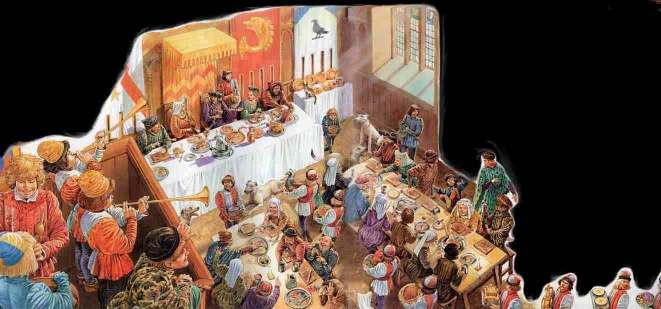
| On special occasions magnificent banquets were held in the great hall. The lord, his family and the most important guests sat at the high table, which was raised above the other diners and covered with a tablecloth of fine linen. A gold or silver boat shaped ornament called a nef was placed in the middle of the table and was used to hold the lords napkin. |
| After a fanfare of trumpets sounded, a procession of servants brought in the dishes. Guests might be ordered soups and jellies, ells and lampreys, roast goose or swan, huge pies and fruit tarts. The food was served up in dishes called messes which were shared between several people. Honoured guests had their own messes and ate off gold or silver plates. Everyone else used a trencher-a big slice of stale bread which soaked up the grease from the food. Leftovers were saved for the poor people waiting at the castle gates. |
| An aquamanile held water for washing hands before each meal. The water was poured through a hole in the top. |
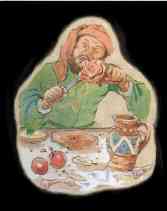
| At meals, there were rules about how to behave when eating. Just like today, it was thought rude to talk with your mouth full or to munch noisily as you ate. Guests with good manners would share cups of wine and offer food from their own plate to a neighbour. Gusts ate with knives or spoons. Forks were not used until the end of the middle ages. |
 |