 |
 |
 |
 |
 |
 |
 |
 |
 |
 |
 |
|
 |
 |
 |
| There are a multitude of historic sites on Anglesey, and being fortunate enough to live here, I get to visit them all. I will start this part of my site with the more well known places on the island, then include some not so well known in and around North Wales for the more adventurous visitor. |
 |
 |
| Barclodiad y Gawres A site that should and probably is,known to every visitor to Anglesey with the slightest interest in what lies beneath the facade of modern living. |
 |
 |
| The Burial chamber is located on the Anglesey coast, on the A4080, Parking is easy and the site is well sign posted. Firstly the local folklore; the tomb was created by a giantess, who was carrying the huge boulders in her apron. The weight was too much for the apron strings and the stones fell to form the cairn. Hence the translation, The Giantess�s Apronful. Now the facts; This is a Neolithic tomb set on a Cliffside overlooking the Irish sea, and was excavated in 1952-53.Within the central tomb are large stones, decorated with zigzags, lozenges, concentric circles and spirals, found to be similar to tombs in Ireland. Also within the chamber were found traces of fire and shells confirming its use for ritual purposes. Amongst the findings was a fire that had a "stew� poured over it before being covered by pebbles and limpet shells, the stew contained wrasse, whiting, eel, frog, toad, grass snake, mouse and hare. The cremated bones of two men were discovered in the SW chamber, and the remains of two polished bone pins, thought to be cloths fastening have been carbon dated to 2400-2500 BC. |
| Bryn Celli Ddu Bryn Celli translated means"the mound in the dark grove". A large mound containing a passage grave. |
| Built over an earlier stone circle henge, which appears to have been abandoned before another group of people moved in and built their own monument on top. But whose bank and ditch can still be seen. Found beneath a stone slab was a piece of blue clay and in a pit below that a human ear bone. The chamber has a long passage leading into a stone chamber, which holds a pillar with carvings. Just as a matter of interest, on my many visits to this site I have found various modern items of Celtic type worship, which shows even in this modern age, the site is still used for certain beliefs. Near the burial chamber is another upright stone decorated with carvings usually found in Brittany. |
| Din Dryfol At first glance an unimpressive site, that is until you let the serenity of the location take over, Then you can imagine times long gone. |
 |
 |
| Located 2 miles north of Bethel, just off the B4422. The remains of a long chambered burial cairn. It consists of several large upright stones from which the capstone has collapsed and quite a few apparently "robbed", or at least missing. This is another site with various building stages. It was a multi-chambered tomb and may have been as great as 200 feet in length; Finds from the site include pottery and flint |
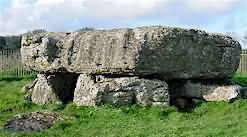
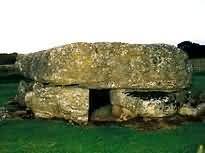
| Lligwy burial chamber Neolithic burial chamber dominated by a huge capstone weighing around 25 tons. |
| Consisting of eight uprights, which support a huge capstone. Excavated in 1908 with finds ranging from the late Neolithic age through to the early Bronze Age. Finds include remains of several men, women and children, animal bones, flint tools, shells, pottery and a bone pin. Entrance through a small chamber. There are two other sites of interest nearby, a medieval church and a fortified homestead thought to be last occupied around 16 centuries ago. |
 |
 |
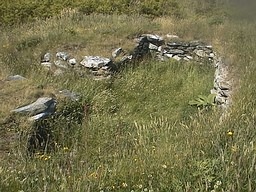
| Ty Mawr Hut Group An Iron age settlement of 20-50 huts covering 18 acres. Inhabited until the Roman era, but thought to have been used over a very long period. |
 |
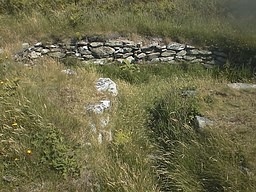 |
| Excavations 1978-1982 show that the buildings are not all from the same period, but range over more than a thousand years, there seem to be 8 homesteads consisting of round houses, stores, and workshops. They were partly buried with low stone walls and roofed with thatch. Finds of grinding stones point to the use of grain, There were also finds of querns, mortars, spindles, pottery and coins from the Roman period. |
| The following are sites of various descriptions and importance located around North Wales in general. |
| St Asaph Here Britain�s smallest cathedral sits on a hill. Today it disguises its stormy past. Founded in AD560 by St Kentigern, it was sacked by Henry 111`s forces in 1245, then destroyed during Edward 1`s conquest thirty-seven years later. Finally it was burnt down in 1402 during Owain Glyndwr`s rebellion before restoration. The cathedral holds several treasures including the Celestory windows (1403) and a first edition William Morgan Bible from 1588 that was used at the 1969 Investiture of the Prince of Wales |
| Bodelwyddan a `marble church`, which is in fact white magnesium limestone and was, built in 1856. Across the road is Bodelwyddan Castle, a Victorian construction that contains a collection of around two hundred paintings on permanent loan from the National Portrait Gallery |
| Bodryhddan Hall Home to the ancestors of Lord Langford and dating from around 1696. On display you can see the Charter of Rhuddlan and the panels around the fireplace are from the chapel of a ship of the Spanish Armada, which foundered off the coast of Anglesey. |
| Abergele Just outside the town is a mock Norman castle, Gwrych, built in 1814 and formerly the seat of the Earl of Dun Donald. It is now a holiday centre and its attractions in summer include medieval jousts and banquets. Behind and higher up the hill are the caverns of Cefn-Yr-Ogo. |
| Chapel of St Trillo Located at Rhos on Sea this is a small chapel which stands on the spot reputed to be were Madoc ap Owain Gwynedd set sail in 1170 to eventually set foot on the North American continent, 322 years before Columbus made his discovery! |
| The Great Ormes Head Two miles long, one mile wide and 679 feet high, its name `Orme` is thought to have originated from an Old Norse word for sea monster. It has a tramway going to the top constructed in 1902 and its 520 feet make it the longest in Britain. Also on the Orme is evidence of Roman mine working and settlement, St Tudno`s Church built in the 15th century, and restored in the 19th |
| Llanrwst Here you will find a chapel, which houses the coffin of Llywelyn, the Great. Below lies the Tudor Gwydir Castle The seat of the Wynn family. And in its grounds is a cedar tree planted in 1627 to commemorate the wedding of Charles I. An arch also in the grounds was built to celebrate the ending of the War of the Roses. Inside is a secret room once hidden by a wooden panel and the ghost of a monk is said to wander the tunnel leading from it. |
| Llanfaes In 1237 Llywelyn the Great founded a monastery here over the tomb of Joan, his wife and daughter of King John. The tomb is now in St Mary�s church in Beaumaris. During Edward I`s reign the inhabitants were forcibly removed to settle in Newborough on the east side of the island. During the Second World War flying boats were built at the factory by the village. |
| Castell Aber Lleiniog Situated just outside Llangoed, if you follow the river downstream it will bring you to the site. Originally the site of a timber castle built around 1090 by Hugh Lupus, Earl of Chester, who along with Hugh the Proud, Earl of Shrewsbury exacted harsh cruelties on the Welsh. Magnus, King of Norway, later killed him during an attack on the castle. The ruins of a Bailey, which was constructed later, can still be seen. Close by is the site of a battle where in 809, the Saxons were briefly victorious over the defending Welsh. |
| Plas Gwyn An 18th century Georgian mansion near Pentraeth. Close to the house is the Three Leaps, three stones that commemorate a traditional contest between two lovers for the hand of a girl. The one who could leap furthest, in this case an individual named Howel won the contest. The stones mark his efforts whilst the loser was said to have died of a broken heart. |
 |
 |
 |
 |
 |
 |
 |
 |
 |
 |
 |
 |
 |
 |
 |
 |
 |
 |
 |
 |
 |
 |
 |
 |
 |