 |
 |
 |
 |
 |
 |
 |
 |
 |
 |
|
 |
 |
 |
 |
 |
 |
 |
 |
 |
 |
 |
 |
 |
 |
 |
 |
 |
 |
 |
 |
 |
 |
 |
 |
 |
 |
 |
 |
 |
 |
 |
 |
 |
 |
 |
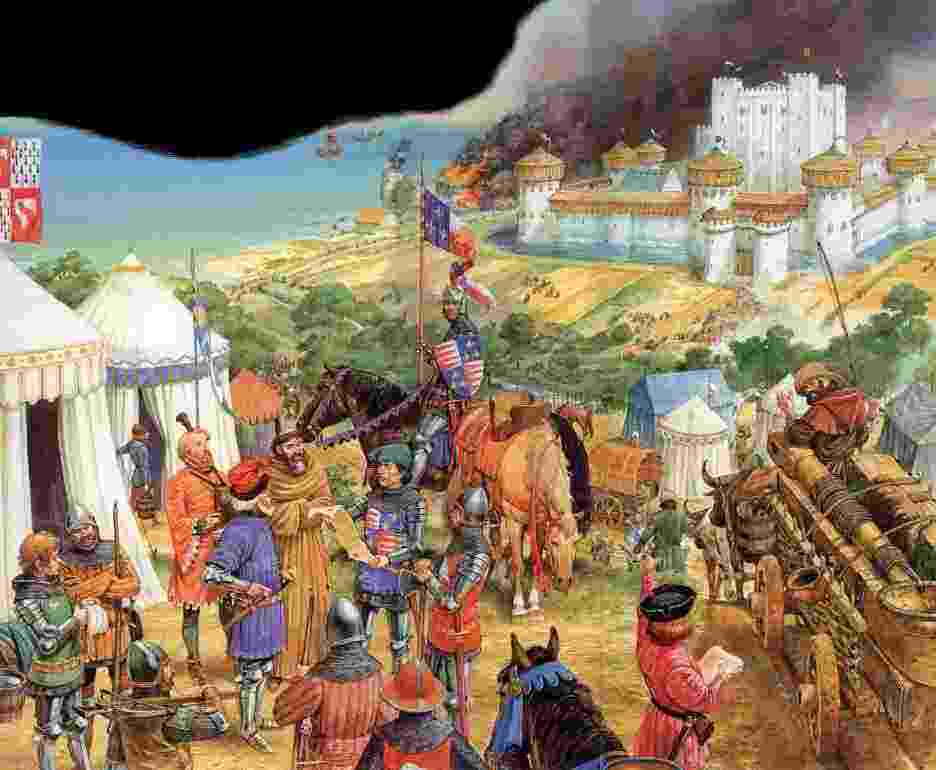
| Besieged An enemy commander who wanted to capture a castle and the land around it had to plan his tactics carefully. Before beginning a siege, he took a good look at the countryside. Could the castle be easily surrounded? Where were its weak spots? Where would the siege weapons be most affective? |
| BESIEGED |
| Before settling down to a long siege, the commander might try to bribe the garrison to let him in, or poison the castles water supply. The commander's troops would then surround the castle, burn down the homes of the local people and cut off the castles supply lines. Wagons pulled by oxen would bring up the parts of the siege engines so that they could be assembled nearer the castle walls. A herald from the castle might come to discuss the terms of fighting.If the castle could not be taken quickly, the attackers aimed to starve the castles garrison until they had to give in. In fact, few castles held out to the bitter end. The constable might only have to defend the castle for 40 days. If his lord or his king had not sent help by then, the constable could surrender with honour. |
| (1)-Taking shelter Crossbowmen and archers protected from the castles defenders fire by large wooden shields called pavises. |
| 1 |
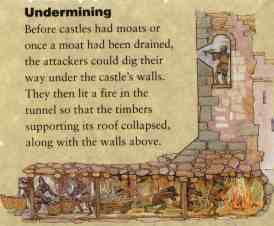
| (2)Filling the ditch The ditch left after the moat had been drained was filled and boarded over so that the siege machines could be wheeled right up against the castle walls. |
| (3)Battering ram The soldiers pushing the battering ram against the gates were protected by a wooden frame covered in wet animal hides. |
| 2 |
| 3 |
| 4 |
| 5 |
| 6 |
| 7 |
| (4)Belfry The belfry tower allowed the attackers to make a direct assault on the battlements. |
| (5)Trebuchet This giant catapult was powered by a heavy counterweight. A sling at the other end hurled rocks against the walls. |
| (6)Mangonel The mangonel was another kind of catapult powered by twisted ropes. |
| (7)Cannons Cannon barrels were raised or lowered on a heavy wooden beam. |
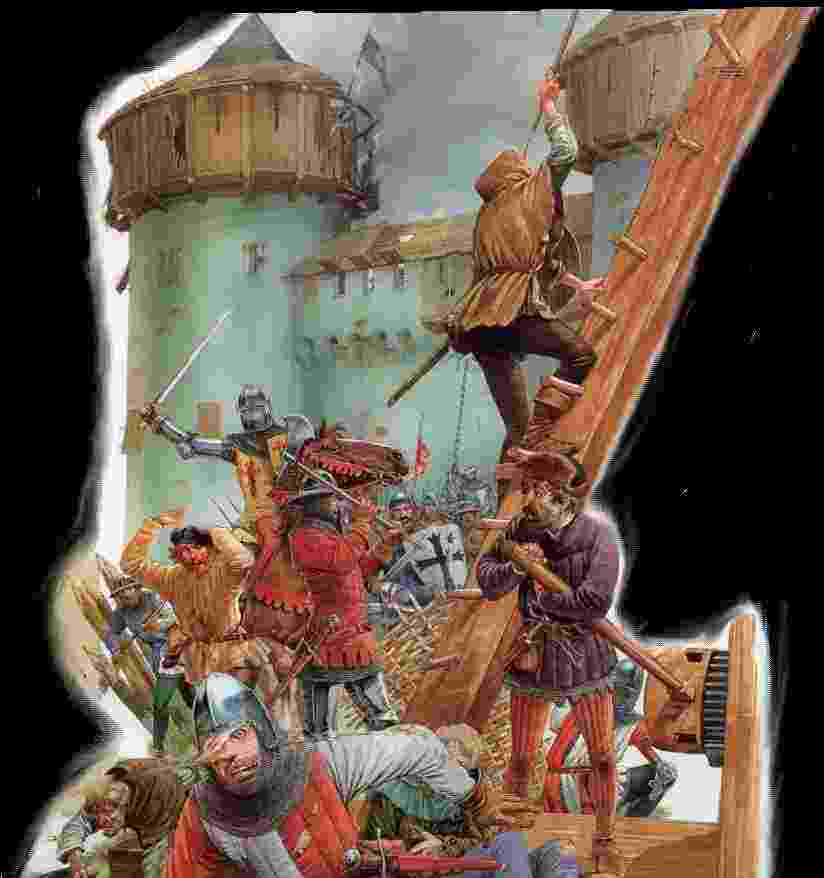
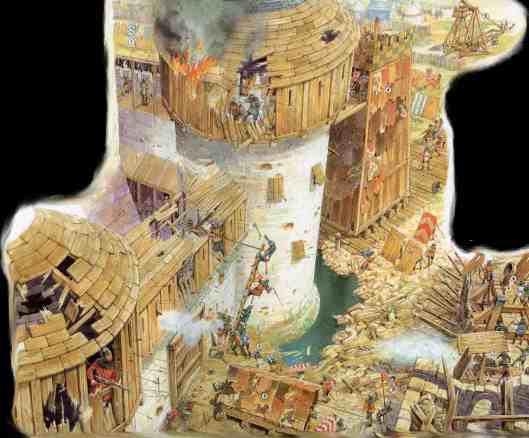
| Under attack The battle is now on. The enemy has assembled their siege weapons- the trebuchet and the mongonel- and has been hurling boulders and flaming missiles at the defenses. The moat has been drained and filled with brushwood and earth. Soldiers clamber up a long scaling ladder that has been thrown against the wall, and the belfry has reached the battlements. The defenders shelter behind the wooden hourds or take cover in the embrasures behind the arrow loops, and return fire. |
 |
 |
 |
| When a castle or town was captured, it was usually looted and every soldier expected a share of the spoils. Ransoms could be huge. In 1193, the Holy Roman Emperor, Henry VI, demanded 150,000 marks (about �15 million in today's money) for the release of the king of England, Richard the Lionheart. |
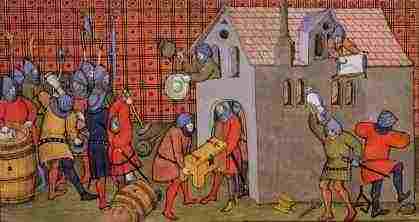
| End of a siege The weeks passed slowly. The attackers are tiring and the troops begin muttering that they are wasting their time. If they haven't been able to batter down the walls, perhaps they can bribe their way in with gold? The castle defenders have their own problems. Food supplies are running low and water is strictly rationed. But then the defenders luck changes a lookout spies glinting armour on the horizon. Help is less than a day away. A band of defending knights and footsoldiers gather behind a small door called a pastern, suddenly, the door bursts open and the soldiers pour out. Their aim is to wreck the siege machines and to kill the soldiers who work them. The enemy soldiers, taken by surprise, are now trapped, for the relieving army is advancing behind them. |
| And so ends life in a castle. If you wish to know more on any subject on my pages, please sign my guestbook and leave your suggestions. |
 |
| Use forward button to continue onto princes or the back button to return to warriors, |