MY 11 TRISECTION APPROXIMATION METHODS Pg. 127
|
THE PLANIMETER SOLVES GOAT'S PROBLEM
|
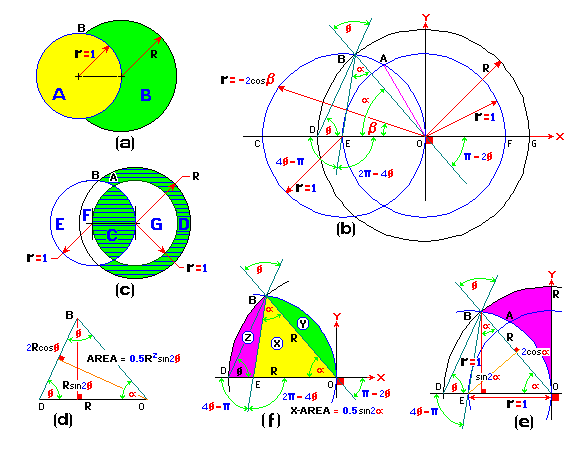
R = 2cosa || a = cos-1 R/2 || Rsin2Æ = sin2a || 2Æ = p - a || pi = p =  |
|---|
FIG. 28
|
|---|
|
1.
|
In FIG. 28.a a goat is tethered to a leash
in yellow area A and eats
|
|---|
|
|
|
|---|
|
|
the equivalent of area A = pi*r2
= p*1 = 3.14159265359 square
|
|---|
|
|
|
|---|
|
|
units of grass per day. How much longer does the leash, R units,
|
|---|
|
| Pg. 128
|
|---|
|
|
have to be in order for the goat to eat the same amount when
|
|---|
|
|
|
|---|
|
|
tethered at the circumference of the old circle, in order to optimize
|
|---|
|
|
|
|---|
|
|
its eating area; so that yellow area A equals green area B?
|
|---|
|
1.
|
In FIG. 28.b above: draw any suitable straight line CDEOFG.
|
|---|
|
|
|
|---|
|
2.
|
At pt O draw a suitable circle with radius r = OE = OF = 1 unit.
|
|---|
|
|
|
|---|
|
3.
|
At pt E draw another unit circle with radius r = OE = CE = 1 unit,
|
|---|
|
|
|
|---|
|
|
intersecting the previous circle at pt A, as shown in FIG 28.b.
|
|---|
|
|
|
|---|
|
4.
|
Assuming the correct radius R > r = 1 draw another circle with
|
|---|
|
|
|
|---|
|
|
centre O intersecting the circle CBAO at pt B and line CDEOFG
|
|---|
|
|
|
|---|
|
|
at pts D and F. [IDEALLY: area A = area B = p*r2 = p]
|
|---|
|
|
|
|---|
|
5.
|
Let OB = OD = OG = R units. [2 > R > 1 is approximation]
|
|---|
|
|
|
|---|
|
6.
|
From FIG 28.b one can easily draw FIG 28.c to represent the
|
|---|
|
| Pg. 129
|
|---|
|
|
areas in question. Thus area E + F + C = C + G = G + D = p
|
|---|
|
|
|
|---|
|
|
and thus area C = area D which is solveable, explained below.
|
|---|
|
|
|
|---|
|
7.
|
Each section FIG 28.c, FIG 28.d, FIG 28.e and FIG 28.f
|
|---|
|
|
|
|---|
|
|
represents FIG 28.b in FIG 28 above.
|
|---|
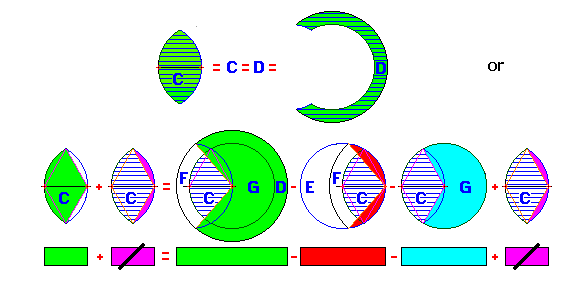
FIG. 29
|
|---|
|
1.
|
Using CALCULUS and LA GRANGE for each of the coloured
|
|---|
|
|
|
|---|
|
|
areas in FIG. 29 above (representing FIG. 28.b and FIG. 28.c
|
|---|
|
|
|
|---|
|
|
above) one gets the following integral formula for the radius R of
|
|---|
|
|
|
|---|
|
|
the new leash.
|
|---|
|
|
|
|---|
|
|

|
|---|
|
| Pg. 131
|
|---|
|
|
|
|---|
|
|
|
|---|
|
|
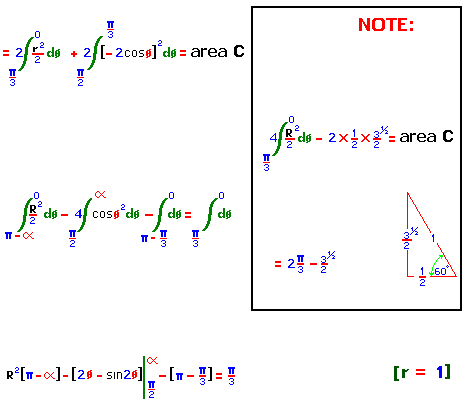
Since R = 2cosa
[from FIG. 28.e]
|
|---|
|
|
|
|---|
|
|
and since sin2a = 2sinacosa
[from CRC TABLES]
|
|---|
|
|
|
|---|
|
|
therefore R2(p - a) + 2a - sin2a - 2p = 0
|
|---|
|
|
|
|---|
|
|
or R2(p - a) - Rsina + 2a - 2p = 0
|
|---|
|
| Pg. 132
|
|---|
|
|
Since a = p - 2Æ thus sina = sin(p - 2Æ) = sin2Æ
[see FIG. 28.d]
|
|---|
|
|
|
|---|
|
|
therefore 2ÆR2 + Rsin2Æ - 4Æ = 0
|
|---|
|
|
|
|---|
|
|
Thus the roots of the quadratic equation are:
|
|---|
|
|
|
|---|
|
|
R = - sin2Æ/4Æ +/- [(sin2Æ)2 + 32Æ]½/4Æ
|
|---|
|
|
|
|---|
|
|
For one solution the irrational part equals zero:
|
|---|
|
|
|
|---|
|
|
therefore sin22Æ + 32Æ2 = 0
|
|---|
|
|
|
|---|
|
|
and therefore sin2Æ = +/- 4Æ(- 2)½
|
|---|
|
|
|
|---|
|
|
thus R = - sin2Æ/4Æ = (- 2)½ = 2½i
|
|---|
THE SHORTEST SOLUTION IN LAGRANGE:
|
|---|
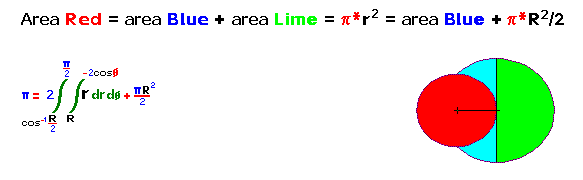
FIG. 30
|
|---|
|
|
From which one also gets: 2ÆR2 + Rsin2Æ - 4Æ = 0
|
|---|
|
|
|
|---|
|
|
which also gives: R = - sin2Æ/4Æ = (- 2)½ = 2½i.
|
|---|
|
1.
|
Again in FIG. 28.c areas (E + F + C) = (C + G) = (G + D) = pi = p.
|
|---|
|
|
|
|---|
|
2.
|
Thus area C = D
and area (E + F) = G.
|
|---|
|
|
|
|---|
|
3.
|
Areas F + C = F + D = pR2 - pr2 = p(R2 - 1).
|
|---|
|
|
|
|---|
|
|
[2 > R > 1 is approximation & r = 1]
|
|---|
|
4.
|
From FIG 28.b/d isosceles DDBO:
[CRC TABLES]
|
|---|
|
|
|
|
|---|
|
|
a.
|
The 2 sides OD = OB = R and let base ÐODB = ÐOBD = Æ.
|
|---|
|
|
|
|
|---|
|
|
b.
|
The base lenght DB = 2RcosÆ and Height = Rsine2Æ.
|
|---|
|
|
|
|
|---|
|
|
c.
|
The area DDBO = OD*Height/2 = .5R2sine2Æ.
|
|---|
|
|
|
|
|---|
|
|
d.
|
Let ÐDOB = a.
[ sinÆ = Rsin2Æ/2RcosÆ ]
|
|---|
|
5.
|
From FIG 28.b/d/e isoscele DEBO: [CRC TABLES]
|
|---|
|
|
| Pg. 134
|
|---|
|
|
a.
|
The 2 sides EO = EB = r = 1 and base ÐEOB = ÐEBO = a.
|
|---|
|
|
|
|
|---|
|
|
b.
|
The base length OB = R = 2cosa and Height = sine2a.
|
|---|
|
|
|
|
|---|
|
|
c.
|
The area DEBO = OE*Height/2 = .5sine2a = .5Rsinea.
|
|---|
|
6.
|
Also in FIG. 28.a/b/c/f area A = p = area B =
pR2 - 2(x + y + z) = pi.
|
|---|
|
7.
| [The area of a slice of pie of a circle is the radius
squared times half the angle - theorem]
|
|---|
|
|
|
|---|
|
|
Thus twice area (X + Y) = r2*(4Æ - p) = 4Æ - p
|
|---|
|
|
|
|---|
|
|
and twice area DEBO = area X = sin2a = Rsin2Æ
|
|
|
|---|
|
|
and thus twice area Y = 4Æ - p - Rsin2Æ
|
|
|
|---|
|
|
also twice area (Z + X) = R2a = R2(p - 2Æ).
|
|---|
|
|
|
|---|
|
|
Therefore twice area (X + Y + Z) = area (C + F) = p(R2 - 1) =
|
|---|
|
|
|
|---|
|
|
R2(p - 2Æ) + 4Æ - p - Rsin2Æ
|
|---|
|
|
|
|---|
|
|
and again 2ÆR2 + Rsin2Æ - 4Æ = 0
|
|---|
|
|
|
|---|
|
|
which again gives R = - sin2Æ/4Æ = (- 2)½ = 2½i
|
|---|
|
|---|
|
|---|
|
Imaginary formulas always facinated me and
here I had one right in my
|
|---|
|
|
|---|
|
own lap. It facinated me so much so that I had to try to use it. So here
|
|---|
|
|
|---|
|
it is with the help of sinh x = (ex - e-x)/2;
knowing that the
|
|---|
|
|
|---|
|
planimeter uses ex
and that my limits are 1 < R < 2; I played |
|---|
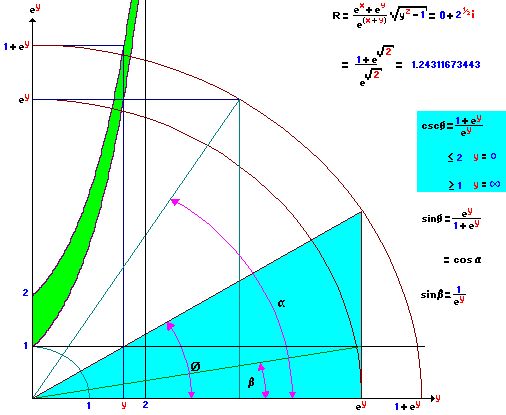
FIG. 31
|
|---|
|
with my diagrams (see FIG. 31 above) and
arrived at the formula below,
|
|---|
|
|
|---|
|
giving R = 1.24311673443
- even the planimeter agrees with me!
|
|---|
|
1. Starting with R = x + yi = 0 + 2½i
|
|---|
|
|
|---|
|
2. Using limits 1 < R < 2
|
|---|
|
|
|---|
|
3. Investigating Hyperbolic formulas which are:
|
|---|
|
|
|---|
|
sinhy = (ey - e-y)/2
& coshy = (ey + e-y)/2
|
|---|
|
|
|---|
|
4. I noticed that:
|
|---|
|
|
|---|
(1 + ey)/ey > 1 with y=¥
& (1 + ey)/ey < 2 with y=0
|
|
|---|
ie. 1 £ (1 + ey)/ey £ 2
or R (1 + ey)/ey
|
|
|---|
|
5. Thus creating R = x + yi = 0 + 2½i =
|
|---|
|
|
|---|
|
= [(ex + ey)/e(x + y)
](y2 - 1)½ =
|
|---|
| Pg. 137
|
|---|
|
= [(e0 + e2½)/e(0 + 2½)
](2 - 1)½ = (1 + e2½)/e2½ =
|
|---|
|
|
|---|
|
=1.24311673433
|
|---|
|
|
|---|
|
The planimeter
agrees with this value rather than with
|
|---|
|
|
|---|
|
NEWTON'S
approximation method value of 1.2451215
which is a
|
|---|
|
|
|---|
|
differance of 8 thousands - every computer gave a different value!
|
|---|
|
|---|
|
|---|
NOTE:
|
|
|---|
|
The formula could also have been (ex + ey)/e(x + y)
|
|---|
|
|
|---|
|
= (e0 + e2½)/e(0 + 2½) = (1 + e2½)/e2½ = 1.24311673433
|
|---|
|
|---|
|
|---|