MY 11 TRISECTION APPROXIMATION METHODS Pg. 78
|
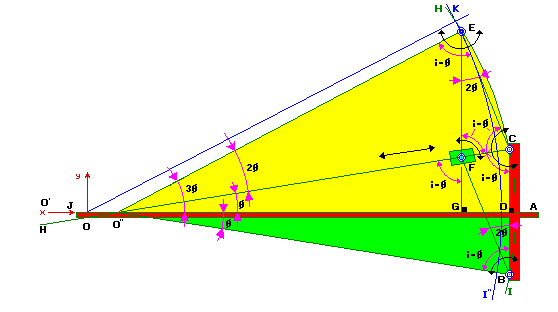
FIG. 14
|
|---|
|
NOTE: similar to SLIDER TRISECTION, FIG. 1 on Pg. 1.
|
|---|
|
|
|
|---|
|
1.
|
In FIG. 14 above ÐKOA = 3Æ and is the angle to be trisected.
|
|---|
|
|
|
|---|
|
2.
|
With a suitable radius R = OK and pt O as center draw an arc KI,
|
|---|
|
|
|
|---|
|
|
see FIG. 14, above.
|
|---|
|
|
|
|---|
|
3.
|
Slide side JD of CUPID'S BOW'S arm along the X-axis or arm
|
|---|
|
| Pg. 79
|
|---|
|
|
OA of ÐKOA until its two stationary pts C & B lie on and
|
|---|
|
|
|
|---|
|
|
concur with arc KI.
|
|---|
|
|
|
|---|
|
4.
|
Slide slider F along HC until pt E lies on and concurs with
|
|---|
|
|
|
|---|
|
|
arc KI, as with pts C & B.
|
|---|
|
|
|
|---|
|
5.
|
Assume the 1st attempted intersected line HFC with line OA.
|
|---|
|
|
|
|---|
|
|
is pt O', to the left of pt J, which meant that the arc KI was too
|
|---|
|
|
|
|---|
|
|
flat and a smaller radius was required.
|
|---|
|
|
|
|---|
|
|
NOTE:
|
|
|
|---|
|
|
Else a new pt K'' must be choosen so that OK'' > OK on the arm
|
|---|
|
|
|
|---|
|
|
of ÐKOA and all the previous steps 3 to 6 must be repeated.
|
|---|
|
|
|
|---|
|
|
Remember that pt E must be on the line OK unless
line O''E is parallel to line OK.
|
|
|
|---|
|
6.
|
Create pt O'' to the right of pt O; and with the smaller radius
|
|---|
|
|
|
|---|
|
|
O''K and center pt O'', draw arc KI'' as shown in FIG. 14 above.
|
|---|
|
| Pg. 80
|
|---|
|
|
NOTE:
|
|
|
|---|
|
|
If a smaller radius is needed after step 8 than create pt O'''
|
|
|
|---|
|
|
halfway between pt O and pt O'', etc.
|
|---|
|
|
|
|---|
|
7.
|
Repeat steps 4 to 7.
|
|---|
|
|
|
|---|
|
8.
|
When pts C, B, and E lie on the current arc "KI" and line HOFC
|
|---|
|
|
|
|---|
|
|
and line JOA intersect at the current center pt "O" (not necessarily
|
|---|
|
|
|
|---|
|
|
pt O or O' or O'' or O''') all conditions are met and thus:
|
|---|
|
|
|
|---|
|
|
ÐEOA = 3Æ is trisected by ÐCOA = Æ, as required.
|
|---|
|
|
|
|---|
|
|
NOTE:
|
|---|
|
|
|
|---|
|
i.
|
If one drew a circle center O'' with radius R'' = O''B = O''C = O''E
|
|---|
|
|
|
|---|
|
|
= O''K the arc KI would be KECB, as shown in FIG. 14 above.
|
|---|
|
|
|
|---|
|
ii.
|
Each of the pts E, C, B, and F are hinges forming a RHOMBUS
|
|---|
|
|
|
|---|
|
|
of solid wires, which form a machine linkage; hinges or pts C and
|
|---|
|
| Pg. 81
|
|---|
|
|
B are fixed to CUPID'S BOW; and the hinge at pt F also slides
|
|---|
|
|
|
|---|
|
|
along the solid wire HFC, which must pass through the current
|
|---|
|
|
|
|---|
|
|
center pt O of arc KI giving radius R = OK = OE = OC = OB.
|
|---|
|
|
|
|---|
|
iii.
|
The black line JOGDA id considered the x-axis of the angle
|
|---|
|
|
|
|---|
|
|
being trisected.
|
|---|
|
|---|
|
|---|
|
|---|
|
|---|
NOTE:
|
|
|
|---|
|
|
Assuming the current center pt O (not necessarily pt O or O' or O''
|
|---|
|
|
|
|---|
|
|
etc.) and the current arc KECBI are ideal and the line HOFC and
|
|---|
|
|
|
|---|
|
|
the line JOA intersect at the ideal pt O;
all fitting exactly on
|
|---|
|
|
|
|---|
|
|
CUPID'S BOW;
as shown in FIG. 14 above (with O = O'').
|
|---|
|
|
|
|---|
|
1.
|
Draw any suitable right angled DODC on straight line OD and
|
|---|
|
| Pg. 82
|
|---|
|
|
let Ð COD = Æ.
|
|
|
|---|
|
2.
|
Duplicate DODC about side OD to create DODB with Ð BOD =
|
|---|
|
|
|
|---|
|
|
ÐCOD = Æ, as shown in FIG. 14 above.
|
|---|
|
|
|
|---|
|
3.
|
Duplicate DCOB about side OC to create DEOC with
|
|---|
|
|
|
|---|
|
|
ÐEOC = ÐBOD + ÐCOD
= 2Æ, see FIG. 14, above.
|
|---|
|
|
|
|---|
|
4.
|
Drop a perpendicular from pt E to intersect the line OGA at pt G,
|
|---|
|
|
|
|---|
|
|
and call its intersect with line OFC at pt F.
|
|---|
|
|
|
|---|
|
5.
|
Join pts F & B, pts E & C, and pts C & B, with a straight line.
|
|---|
|
|---|
|
|---|
NOTE:
|
|
|
|---|
|
|
Current center pt O'' shown as pt O for legibility, as shown in
|
|---|
|
|
|
|---|
|
|
FIG. 14 above.
|
|---|
|
|
|
|---|
|
1.
|
In similar 'right angled' Ds, DODC & DODB:
|
|---|
|
| Pg. 83
|
|---|
|
|
Since Ð ODC = 90o = i and Ð DOB = Æ
|
|---|
|
|
|
|---|
|
|
then Ð DBO = 90o - Ð DOB = i - Æ
|
|---|
|
|
|
|---|
|
|
DOCE & DOEC are isosceles since sides OK = OE = OC = OB = R
|
|---|
|
|
|
|---|
|
|
thus ÐDBO = i - Æ = ÐOCD = ÐOCE = ÐOEC
|
|
|
|---|
|
2.
|
[When an isosceles D subtends another D at its base, the 2nd. D is
|
|---|
|
|
|
|---|
|
|
also isosceles and a similar D with both sides equal to the width
|
|---|
|
|
|
|---|
|
|
of its base and both apex Ðs are equal to each other - THEOREM].
|
|---|
|
|
|
|---|
|
|
In similar 'right angled' Ds, DOGF & DODC:
|
|---|
|
|
|
|---|
|
|
Since Ð OGF = Ð ODC = 90o = i
|
|---|
|
|
|
|---|
|
|
and Ð FOG = Ð COD = Æ = Ð DOB
|
|
|
|---|
|
|
and thus Ð COB = Ð COD + Ð DOB = 2Æ
|
|---|
|
|
|
|---|
|
|
also Ð OFG = 90o - Ð FOG = i - Æ = Ð EFC
[construction & intersection]
|
|---|
|
|
|
|---|
|
|
And since Ð EFC = Ð OCE = i - Æ
|
|---|
|
| Pg. 84
|
|---|
|
|
Therefore DEFC & DFCB are isosceles.
|
|---|
|
|
|
|---|
|
|
also all sides are equal CE = CB = CF = FE, construction
|
|---|
|
|
|
|---|
|
|
of CUPID'S BOW,
and form a parallelogram or rhombus machine
|
|---|
|
|
|
|---|
|
|
linkage at all times, as shown in FIG. 14 above.
|
|---|
|
|
|
|---|
|
3.
|
In DFEC:
|
|---|
|
|
|
|---|
|
|
Ð FEC = 180o - 2Ð ECF = 2i - 2(i - Æ) = 2Æ
|
|---|
|
|
|
|---|
|
|
And similarly in DFBC:
|
|
|
|---|
|
|
Ð FBC = 180o - 2Ð BCF = 2i - 2(i - Æ) = 2Æ
|
|---|
|
|
|
|---|
|
|
Thus making both triangles similar triangles.
|
|---|
|
|
|
|---|
|
|
and Ð EOB = Ð EOC = Ð FEC = Ð FBC = 2Æ
|
|---|
|
|
|
|---|
|
4.
|
In figure Ð EOBA:
|
|---|
|
|
|
|---|
|
|
Ð EOD = Ð EOC + Ð COD = 2Æ + Æ = 3Æ.
|
|---|
|
|
|
|---|
|
5.
|
Thus Ð EOA = 3Æ is trisected by Ð COD = Æ as required.
|
|---|
|
|---|
|
|---|
|
|---|
|
|---|
|
|---|