MY 11 TRISECTION APPROXIMATION METHODS Pg. 1
|
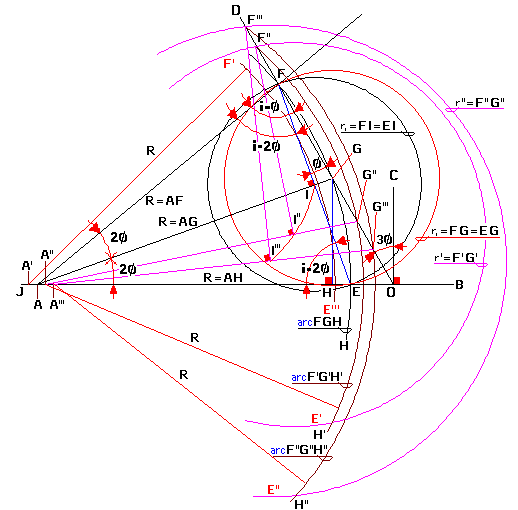
FIG. 1
|
|---|
NOTE: angle º Ð
; triangle º D
; pi º p
; pt º pt
|
|
1.
|
Draw any suitable straight line JOB
with a suitable perpendicular,
|
|---|
|
|
|
|---|
|
|
drawn up from pt O on line JOB to pt C,
as shown in FIG. 1 above.
|
|---|
|
| Pg. 2
|
|---|
|
2.
|
Draw a straight line OD so that ÐDOC = 3Æ,
see FIG. 1 above.
|
|---|
|
|
|
|---|
|
3.
|
Starting with pt A'
and a large enough radius draw an arc F'H'
|
|---|
|
|
|
|---|
|
|
clockwise from pt F' on line OF'D across line JOB, see FIG. 1.
|
|---|
|
|
|
|---|
|
4.
|
With the same radius R = A'F' slide the center suitably forward,
|
|---|
|
|
|
|---|
|
| along line JOB, to create centres A'' and A''' with arcs F''H'' and
|
|---|
|
|
|
|---|
|
| F'''H''',
respectively, so that they cross line OG''G'D at pt G' and
|
|---|
|
|
|
|---|
|
| and G'', respectively, as shown in FIG. 1 above.
|
|---|
|
|
|
|---|
|
|
NOTE:
|
|
|
|---|
|
|
This might take a few attempts to get it right.
|
|---|
|
|
|
|---|
|
|
Ignore pt G''' it does not exist, since arc F'''H''' is below the line
|
|---|
|
|
|
|---|
|
|
OD. Ideally pt G lies more than half way up the line FGO: since
|
|---|
|
|
|
|---|
|
|
GO2 = GE2 + EO2 + 2*GE*EO*cosÐAEF [from CRC TABLES], thus GO > GE = FO/2
|
|---|
|
|
|
|---|
|
|
One could start with G'O = F'G' producing A' reducing a few steps.
|
|---|
|
| Pg. 3
|
|---|
|
5.
|
Join pts A' andG' with a straight line.
|
|---|
|
|
|
|---|
|
6.
|
Similarily draw straight lines A''G'' and A'''G''', etc., see FIG. 1.
|
|---|
|
|
|
|---|
|
7.
|
Drop a perpendicular from pt F' to meet line A'I'G' at pt I'.
|
|---|
|
|
|
|---|
|
8.
|
Similarily drop a perpendicular from pt F'' to meet line A''I''G''
|
|---|
|
|
|
|---|
|
|
at pt I'', as shown in FIG. 1 above.
|
|---|
|
|
|
|---|
|
9.
|
With centre G' and radius r' = G'F' draw a clockwise arc F'E' from
|
|---|
|
|
|
|---|
|
|
pt F' on line DF'G'O to cut arc F'E'H' at pt E', see FIG. 1 above.
|
|---|
|
|
|
|---|
|
10.
|
Similarily with centre G'' and radius r'' = G''F'' draw a clockwise
|
|---|
|
|
|
|---|
|
|
arc F''E'', from pt F'' to cut arc F''E''H'' at pt E''.
|
|---|
|
|
|
|---|
|
|
NOTE:
|
|
|
|---|
|
|
The ideal condition for the pt A to be perfect: the pt E must lie
|
|---|
|
|
|
|---|
|
|
on the line JEOB and the radius r = GF = GE.
|
|---|
|
|
|
|---|
|
|
By inspecrion pts E', E'' and E''' are well off from line JOB.
|
|---|
|
| Pg. 4
|
|---|
|
|
Graph I'''I''I' must pass thru pt I & E'''E''E' must pass thru pt E.
|
|---|
|
|
|
|---|
|
|
If the ideal pt G has not been found, steps 1 to 10 must be redone.
|
|---|
|
|
|
|---|
|
11.
|
With centre pt G and radius r = FG = GE draw a circle to cut line
|
|---|
|
|
|
|---|
|
|
JEOB at pt E.
|
|---|
|
|
|
|---|
|
12.
|
Join pts A and F with a straight line.
|
|---|
|
|
|
|---|
|
13.
|
Join both pts F & E and pts A & G with a straight line and call
|
|---|
|
|
|
|---|
|
|
the intersection pt I, see FIG. 1 above.
|
|---|
|
|
|
|---|
|
| NOTE:
|
|
|
|---|
|
|
Line AIG is the right bisector of chord FIE because of similar
|
|---|
|
|
|
|---|
|
|
isosceles triangles D AFG and D AEG: same radius R = AF = AE
|
|---|
|
|
|
|---|
|
|
= AG and radius r = FG = GE, thus ÐGAF = ÐGAE.
|
|
|
|---|
|
14.
|
Let ÐGAF = ÐGAE = 2b. Thus ÐFAE = ÐGAF + ÐGAE = 4b
|
| Pg. 5
|
|---|
|
15.
|
Since Ð EFG is the exterior
angle of the isosceles triangle D EAF
|
|---|
|
|
|
|---|
|
|
subtended at the center pt A of the circle FGE; it is 1/4 of ÐFAE,
|
|---|
|
|
|
|---|
|
|
thus ÐEFG = ÐFAE/4 = b.
|
|---|
|
|
|
|---|
|
16.
|
In isosceles triangle D EAF:
|
|---|
|
|
|
|---|
|
|
ÐAFE = ÐAEF = (180o - 4b)/2 = 90o - 2b = i - 2b.
|
|---|
|
|
|
|---|
|
17.
|
In triangle D EFO:
|
|---|
|
|
|
|---|
|
|
Since ÐFOE = ÐAEF - ÐEFO = i - 2b - b = i - 3b = i - ÐDOC.
|
|---|
|
|
|
|---|
|
|
but ÐDOC = 3Æ thus b = Æ.
|
|---|
|
|
|
|---|
|
18.
|
Thus ÐEFG = Æ trisects ÐDOC = 3Æ.
|
|---|
|
|---|
|
|---|
|
|---|
|
|---|
|
|---|
|
1.
|
[Arcs and chords of the same length on the same
circumference subtend the same
|
|---|
|
|
|
|---|
|
|
angle
at the center of the circle - theorem]
|
|---|
|
|
|
|---|
|
|
Since chords FG = GE, R = AF = AG = AE, thus Ð GAF = Ð GAE.
|
|---|
|
| Pg. 6
|
|---|
|
|
Let Ð GAF = Ð GAE = 2b and Ð FAE = Ð GAF + Ð GAE = 4b.
|
|---|
|
|
|
|---|
|
2.
|
Since D AEF
is isosceles with the same radius R = AF = AG = AE
|
|---|
|
|
|
|---|
|
|
then Ð AEF
= (180o - Ð FAE)/2
= (180o - 4b)/2
|
|
|
|---|
|
|
= 90o - 2b = i - 2b
|
|---|
|
|
|
|---|
|
|
And in D AIE & D AIF: Ð AIE
= 180o - Ð EAG
- Ð AEI
|
|
|
|---|
|
|
= 180o - 2b
- ( 90o - 2b) = 90o = i = Ð AIF.
|
|---|
|
|
|
|---|
|
|
Therefore D AIE & D AIF are 'right angled' Ds.
|
|---|
|
|
|
|---|
|
3.
|
[The exterior tangential angle
at the base of an isosceles triangle, subtended at the centre
|
|---|
|
|
|
|---|
|
|
of a circle,
is 1/4 the size of the interior angle - theorem.]
|
|---|
|
|
|
|---|
|
|
Thus Ð EFO = Ð
FAE/4 = 4b/4 = b.
|
|---|
|
|
|
|---|
|
4.
|
In D AFO: the exterior Ð FOB = Ð FAO + Ð AFE + Ð EFO
|
|
|
|---|
|
|
= 4b
+ ( 90o - 2b) + b = 90o + 3b = i + 3b.
|
|---|
|
|
|
|---|
|
|
But Ð FOB = Ð COB + Ð DOC = 90o + 3Æ = i + 3Æ
|
| Pg. 7
|
|---|
|
|
Thus Ð DOC = 3Æ = 3b and thus Æ = b and
|
|---|
|
|
|
|---|
|
|
thus Ð EFO = Æ trisects Ð FOC = 3Æ as required.
|
|---|
|
|---|
|
|---|
|
|---|
|
|---|
|
|---|