MY 11 TRISECTION APPROXIMATION METHODS Pg. 8
|
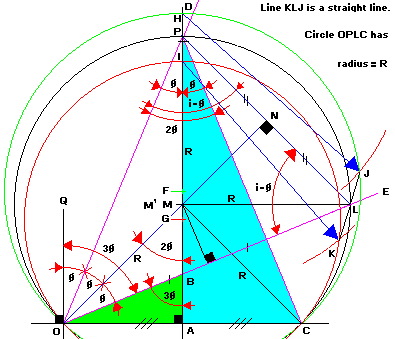
FIG. 2
|
|---|
|
1.
|
Draw any suitable 'right angled' D
OAB with Ð
OAB = 90o
|
|---|
|
|
|
|---|
|
| and Ð
ABO = 3Æ, as shown in FIG. 2 above.
|
|---|
|
|
|
|---|
|
2.
|
Extend line
AB a suitable distance to pt D, and extend line OB a
|
|---|
|
|
|
|---|
|
|
suitable
distance to pt E, see FIG. 2 above.
|
|---|
|
| Pg. 9
|
|---|
|
3.
|
Extend line OA to pt C so that line OA = AC and OB = BC.
|
|---|
|
|
|
|---|
|
4.
|
Locate 2 suitable pts F & G about ¼ inch above and below
|
|---|
|
|
|
|---|
|
|
estimated center pt M'. Try BE = AB.
|
|---|
|
|
|
|---|
|
| NOTE:
|
|
|
|---|
|
|
All steps 1 to 12 should be done at least twice to locate center
|
|---|
|
|
|
|---|
|
|
pt M' on line AM'D produced.
|
|---|
|
|
|
|---|
|
5.
|
With center pt F and a radius of length R1 = OF = FC draw a
|
|---|
|
|
|
|---|
|
|
complete circle cutting line AHD produced at pt H.
|
|---|
|
|
|
|---|
|
6.
|
With center pt H and a radius of length r = OC cut an arc to inter-
|
|---|
|
|
|
|---|
|
|
sect the previous circle OHJC at pt J near line OE, see FIG. 2.
|
|---|
|
|
|
|---|
|
7.
|
Similarly with center pt G and a radius of length R2 = OG = GC
|
|---|
|
|
|
|---|
|
|
draw a complete circle cutting line AID produced at pt I.
|
|---|
|
|
|
|---|
|
8.
|
With center pt I and a radius of length r = OC cut an arc to inter-
|
|---|
|
| Pg. 10
|
|---|
|
|
tersect the previous circle OIKC at pt K near line OE, see FIG. 2.
|
|---|
|
|
|
|---|
|
9.
|
Join pts K & J with a
straight line and call its intersection with
|
|---|
|
|
|
|---|
|
|
line OLE produced pt L. [Idealy this gives: M'L = M'O = M'C]
|
|---|
|
|
|
|---|
|
| NOTE:
|
|
|
|---|
|
|
Graph KL'J' is really a thin hysteresis or SINE curve!
|
|---|
|
|
|
|---|
|
10.
|
Draw the 'right bisector' of line OBL to cut line AM'D at pt M'.
|
|---|
|
|
|
|---|
|
| NOTE:
|
|
|
|---|
|
|
Idealy this leads to: R = ML = MO = MC & Ð MOL = Ð MLO
|
|---|
|
|
|
|---|
|
|
and Ð MLO = Æ trisects Ð OBA = 3Æ.
|
|---|
|
|
|
|---|
|
|
TO CONTINUE WITH THE DRAWING.
|
|---|
|
|
|
|---|
|
11.
|
With center pt M' and radius R' = OM' = M'C draw a complete
|
|---|
|
|
|
|---|
|
|
circle cutting line APD at pt P.
|
|---|
|
|
|
|---|
|
12.
|
With center pt P and a radius of length r = OC, cut an arc to inter-
|
|---|
|
|
|
|---|
|
|
sect the previous circle OPL'C at pt L' near pt L
|
|---|
|
| Pg. 11
|
|---|
|
| NOTE
|
|
|
|---|
|
|
When pts L' & L coincide, the ideal condition exists:
|
|---|
|
|
|
|---|
|
|
r = OC = PL = DJ = IK and R = MP = ML = MO = MC.
|
|---|
|
|
|
|---|
|
|
Isosceles D OLP = D POC, Ð POL = Ð OPC = 2Æ and Ð MOL = Æ
|
|---|
|
|
|
|---|
|
13.
|
Join and bisect pts L' and L at pt L'' and redo steps 1 to 12.
|
|---|
|
|
|
|---|
|
14.
|
Assuming pt L is ideal now:
bisect line PNL at pt N.
|
|---|
|
|
|
|---|
|
15.
|
Join pts O and N with a straight line
and call the intersection with
|
|---|
|
|
|
|---|
|
|
line AMD pt M. Line ON 'right bisects' line PL, see proof below.
|
|---|
|
|
|
|---|
|
16.
|
[Arcs and chords of the same length on the same
circumference subtend the same
|
|---|
|
|
|
|---|
|
|
angle at the opposite circumference - theorem]
|
|---|
|
|
|
|---|
|
|
Let Ð POL = ÐOPL = 2Æ.
|
|---|
|
|
|
|---|
|
|
In D OPL & D POL:
|
|---|
|
|
|
|---|
|
|
DOPL is isosceles since sides OP = PL, thus in DOPL: since side
|
|---|
|
| Pg. 12
|
|---|
|
|
OP is common, Ð POL = Ð OPL = 2Æ, and r = OC = PL it is
|
|---|
|
|
|
|---|
|
|
isosceles too. Thus AP and ON are both bisectors and
|
|---|
|
|
|
|---|
|
|
thus Ð OPA = Ð APC = Ð PON = Ð LON = Æ.
|
|---|
|
|
|
|---|
|
17.
|
Thus Ð LON = Æ and trisects Ð OBA = 3Æ, as required.
|
|---|
|
|
|
|---|
|
| NOTE:
it is amazing how accurate this approximation formula is.
|
|---|
|
|---|
|
|---|
|
|---|
|
|---|
|
1.
|
Assuming all pts O, C, P & L are precisely located.
|
|---|
|
|
|
|---|
|
2.
|
[Arcs of the same length on the same circumference subtend the
same angle at the
|
|---|
|
|
|
|---|
|
|
opposite circumference - theorem]
|
|---|
|
|
|
|---|
|
|
In DOPC & DPOL:
|
|---|
|
|
|
|---|
|
|
since r = OC = PL thus Ð OPC = ÐPOL.
|
|
|
|---|
|
|
Let Ð OPC = ÐPOL = 2b.
|
|
|
|---|
|
|
since Ð OAD = 90o and OA = AC then AD is the 'right bisector'
|
|---|
|
| Pg. 13
|
|---|
|
2.
|
of OC and thus D OPC is isosceles.
|
|---|
|
|
|
|---|
|
|
Since OP is common, r = OC = PL and Ð OPC = Ð POL = 2b
|
|---|
|
|
|
|---|
|
|
then D OPC = D POL and thus D POL is isosceles too.
|
|---|
|
|
|
|---|
|
3.
|
since OA = AC and Ð OAP = Ð PAC = 90o, by construction,
|
|---|
|
|
|
|---|
|
|
therefore AD is the 'right bisector' of the base OC of D OPC.
|
|---|
|
|
|
|---|
|
|
Then in D OPA & D CPA:
|
|---|
|
|
|
|---|
|
|
since PA is common, therefore DOPA = DCPA
|
|---|
|
|
|
|---|
|
|
thus Ð OPB = Ð BPC = Ð POL/2 = 2b/2 = b.
|
|---|
|
|
|
|---|
|
4.
|
In D OPM:
|
|---|
|
|
|
|---|
|
|
since radius R = MP = MO it is an iscoceles D,
|
|---|
|
|
|
|---|
|
|
and therefore Ð MOP = Ð OPM = Ð POL/2 = b, and
|
|---|
|
|
|
|---|
|
|
the exterior Ð OMA = Ð MOP + Ð OPM = b + b = 2b
|
|---|
|
|
|
|---|
|
5.
|
In D OPB:
|
|---|
|
| Pg. 14
|
|---|
|
|
the exterior Ð OBA = Ð OPB + Ð OMA = b + 2b = 3b
|
|---|
|
|
|
|---|
|
|
but Ð OBA = 3Æ = 3b and thus Æ = b.
|
|---|
|
|
|
|---|
|
6.
|
[Arcs or chords of the same length on the same
circumference subtend the same angle
|
|---|
|
|
|
|---|
|
|
at the opposite circumference
and again twice this angle at the centre - theorem]
|
|---|
|
|
|
|---|
|
|
In D OPC & D POL: since arc or chord OC = OL,
|
|
|
|---|
|
|
ÐOPC = ÐPOL = 2Æ and ÐOMC = ÐPML = 2ÐOPC = 4Æ
|
|---|
|
|
|
|---|
|
7.
|
In D MNP & D MNL:
|
|---|
|
|
|
|---|
|
|
since MN is the 'right bisector' of PL, PN = LN = PL/2 = OC/2,
|
|---|
|
|
|
|---|
|
|
and Ð PNM = Ð LNM = 90o, by construction MN is common,
|
|---|
|
|
|
|---|
|
|
and R = MP = ML; therefore, they are simimlar Ds.
|
|---|
|
|
|
|---|
|
|
Thus ÐPMN = ÐLMN = ÐPML/2 = 4Æ/2 = 2Æ
|
|---|
|
|
|
|---|
|
8.
|
In D POL & D PMO:
|
|---|
|
|
|
|---|
|
|
ÐPMO = 180o - ÐMPO - ÐMOP = 180o - 2Æ = 2i - 2Æ.
|
|---|
|
| Pg. 15
|
|---|
|
8.
|
Line ON: ÐPMO + ÐPMN = 2i - 2Æ + 2Æ = 2i = 180o.
|
|---|
|
|
|
|---|
|
|
Thus line ON is a straight line and is
the right bisector of line PL
|
|---|
|
|
|
|---|
|
|
of D POL, thus making it an isosceles triangle with ÐBOM =
|
|---|
|
|
|
|---|
|
|
ÐMOP = Æ trisects ÐOBA = 3Æ as required.
|
|---|
|
|---|
|
|---|
|
|---|

|
|---|
|
|---|