|
|
|
|
  




 
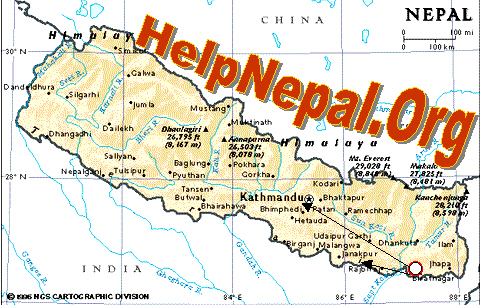
Chapter II ( I ) SITUATION ANALYSIS ON HIV/AIDS IN EASTERN NEPAL1. Introduction : - The eastern development region has their zones, Mechi, Koshi and Sagarmatha. There are 16 districts in this region. Out of 16 districts five are in Terai region while other 11 districts are in hill region. The problems of HIV/AIDS infection and its spread in Terai are mere than in the hill region. This due to cross borders prostitution illegal sales of drug at the border and loose administration as well. 2. Necessity of Situation Analysis A situation analysis puts the HIV epidemic in its social, economic and cultural context in a give Region/Country. It looks at who is infected or is vulnerable to infection and tries to explain why. It looks for explanations not just in people's behavior, but in the social, economic and cultural situations which under lie that behavior. A situation analysis looks especially at situations that may be relevant to HIV, the factors that favor or impede its spread, and the factors that favor or impede achieving the best possible quality of life for those living with HIV and their families. Since the analysis explains the current situation, it helps to identify opportunities for changing that situation. 3. Location of Study: Eastern Region. 4. Starting date : September 1, 2000 5. Duration : - 15 days 6. Objectives : To carry out the survey with a view to present an overall picture of social, economical, political, cultural and structural factors that make people vulnerable to the epidemic HIV/AIDS. · To find out main factors that spread HIV/AIDS · To point out or indicate the priority areas for future program (demography, education, communication, political social and economic factors, governance and human rights) 7. Activities carried out under the project. (a) Identification of institutions in the area of HIV/AIDS, IDUS AND CSWS. () Collection of information on above mentioned areas through I. Available documents and formal data II. Round table discussion with GOs, NGOs and INGOs (Secondary Data) (c) Focus group discussion with I. IDUS, PLWHAS & CSWS II. Community members of the society (Target group) (Primary data collection) (d) Compilation, tabulation and analysis of data. (e) Interpretation of analyzed data and result (f) Problems faced (g) Suggestion / recommendations. 8. Activity: Identification or institutions in the area of HIV/AIDS, IDUS & CSWS The following institution has been found involved in above-mentioned areas. Table: 1 List of institution working in the field of HIV/AIDS prevention.
Activity B: Collection of information on above-mentioned areas (IDUS, PALWHAS & CSWS) Round table discussion with concerning authorities was organized and necessary information on HIV/AIDS were recorded as a base for primary data collection and also for desk review. In round table discussion the main actors from GOs, NGOs and INGOs were involved. The main aim of this discussion was to taker/collect data/ material for desk review and discusses main findings, conclusions and recommendations. This meeting was organiged conclusions and recommendations. This meeting was organized twice at Biratnagar. There were good supports an atmosphere of welcome in meetings. Activity C : Focus group discussion for primary data collection . Focus group discussion with IDUS, CSWS & PLWHAS
Focus Group discussion with community members from Priority areas (Field Report) Target Group: Truck drivers, drug addicts, social workers.
The key informants for focus group discussion were divided into three categories, IDUS, CSWS & PLWHAS. They were approched and interview taken in various places as suitable to them. They were asked to know possible number of HIV/AIDS, IDUS & CSWS work of GOs, NGOs & INGOs in the area and methods regulated by them. The primary data collection was also taken by faking interview with suspected people social workers and youths having high-risk behaviors. For this purpose 8 vulnerable sites were selected and 410 people were interviewed Result: - The round table discussion with GOs, NGOs, & INGOs was encouraging. The participation of members was 100%. Generally information given by them was not uniform. However, some of the common answers included that the drug problem was serious and HIV prevalence was increasing. Most of them felt that poverty, unemployment sharing of syringes, girls trafficking and cross-border prostitution and illegal sales of tidijesic injection were the main causes of HIV/AIDS spread in Nepal. Most of them believed in the incensement of HIV/AIDS was in geometrical ratio. It was guessed that there were 12000-15000 drug addicts in eastern region and 80 % of them used Tidigesic injection by sharing common needles. The number of PLWHAS in eastern region was estimated as 10,000 – 12,000. The focus group discussion with IDUs (7) indicated that most of them were unmarried and belonged to middle class family and lived in joint family. The age group varied from 18-29 years. All the drug users started using drug at the age of 16 and started with Phensidal. At present most of them are using tidijesic injection with common, unsterilized needles. Focus group discussion with PLWHAS was amazing in the fact that they were careless for.If out of 7 PLWHAS one was married. Their health status was poor. They belonged to middle class family. They were frustrated and physically weak. They knew the mode of HIV infection. They were socially discarded. They were not capable to treat themselves. They didn't know about the counseling services and health care programe. All PLWHAS had multiple sex partners. Result of Blood samples tasted for HIV in Feb. 1998 (RAR Survey)
The above data indicates that on an average 38-39 % IDUS have HIV+ in their blood and virus of hepatitis C and B also. Focus group discussion with CSWS(7) showed a clear cut back ground and reasons of prostitution, Poverty, unemployment, illiteracy and divorce were the main reasons of prostitution. Most of the sex-workers had multiple male sex-partner who were found to be truck drivers, helpers, factory labors and riksha pullers. Safer sex practice was found to be nil. Most of the male sex-partners were alcoholic and belonged to low-grade family. Most of the CSWS were found to be unknown about AIDS & STDS. Focus group discussion with target group at 8 sites of Morang, Sunsari & Jhapa district was encouraging and helping. Most of the members (60%) of target group were found to be unknown about HIV/AIDS & STD, their mode of transmission and hazards in the society. 40 % of the target group were found to be aware of HIV/AIDS and they estimated the number of HIVs in eastern region might exceed 15,000. PROBLEMS · Difficulty in organizing focus group discussion with IDUS, CSWS & PLWHAS. · Difficulty in getting correct answers from above clients. · Difficulty in finding real data regarding HIV/AIDS, IDUS & CSWS. · Female participation in focus group discussion is nil. · No coordination among local NGO's, INGO's & GO's. · No multi-sectorial integration of HIV/AIDS prevention activities. Challenges / Threats · Lack of education in women folk. · Lack of health services in women folk. · Increasing number of IDUs every year. · Increasing number of HIVs even after the implementation of prevention programme. · Lack of rehabilitation centre. · Lack of actual data on HIV/AIDS and STDS. · Lack of extension program for prevention of HIV/AIDS in the country. · Problems of girls trafficking. · No social acceptance for HIVs. · Wrong concept against HIV/AIDS. · Lack of coordination among NGOs, INGO's & GO's. Areas to be addressed · Cross border prostitution and drug abuse . · Trafficking of girls. · Democracy, good governance, women empowerment & poverty alleviation. · Political commitment Suggestions / Recommendations. The following suggestions are made to combat with the fetal disease, HIV/AIDS engulfing the entire country. 1. HIV/AIDS education : (Safer Sex, Condom use, Safe injection, Peer education & STDS. HIV/AIDS, mode of infection, preventive measures, awareness) 2. Counseling : (Detox Counseling, pre & post counselling, family counselling, individual counselling, referrals) 3. Primary Health Care Services : (General medicines, referral services, general dressing of burns & abbesses) 4. IEC Distribution : (HIV/AIDS, STDs, Condom and safer sex, HBV/HCV, overdose safer injection) 5. Prevention Materials distribution : ( Condom, Bleach) 6. Treatment & rehabilitations: (Detoxification, Meditation, Yoga, Vocational trainings, psycho-socio-religion, and therapy work therapy. Conclusion and Comments: To sum up ways and means adopted for prevention activities on HIV/AIDS seem to be inadequate and not well managed. The Government commitment is manifest. NCASC is however facing many problems. Through DACC has been set up in most of the districts of Nepal to bush up HIV/AIDS prevention program but budgetary constraint lack of communication between the center and districts has retarded the progress. DACCs have not been actively mobilized, as resource allocation to the districts has been poor. Resource constraint is acutely felt address the need of various sectors including training, counseling and care and support program STD services and condom promotion activities have not been able to penetrates into the majority of the areas especially in the backward areas of Terai and remote hilly areas. Health workers and NGO's need proper training for HIV/AIDS & STDs management & care. Poverty, illiteracy, ignorance, socio-culture barrier, cross border prostitution, illegal sales of drugs and migration etc can be attributed as such factors, which have increased the dimensions of our problems. In view of similar epidemiological trends found in SAARC countries, the need to establish same kind of Sub regional center with in one of these countries is greatly by felt. Knowledge information and experiences can be shared among the member countries through the center and mutual help & cooperation can be shared to prevent drug abuse and HIV/AIDS infection in this region. ( II ) PEER EDUCATION PROGRAM IN SCHOOL OF SIRAHA AND SAPTARIINTRODUCTION
The officials figures for HIV/ AIDS in
Nepal show that there are ...cases of HIV as Taking all these points in to consideration an agreement between NCASC and Help Group had been made on October, 3, 2000 to carry out PEER EDUCATION programme in ten schools of Sirah and Saptari districts Eastern region Nepal. 1. Plan of action: NEP RHR 002 2. Product Title and No / Activity No. 3. Title of the project: PEER EDUCATION TRAINING IN SCHOOL 4. Value: Siraha Saptari 5. Starting date and Duration Saptari: November 19-29,2000 Siraha December 3-13, 2000 6. Objectives - To train 150 Peer Educators on HIV/AIDS/STD prevention in 5 schools in the district -Specific Objective: -To impart knowledge on HIV/AIDS/STD -To brief out human reproductive organs and sexuality. -To discuss how HIV/ AIDS/STD is not transmitted. -To discuss the methods of prevention of HIV/AIDS/STD -To discuss the sole of a Peer Education 7. Project Activities A. Re-conscience Survey - Visiting Saptari and Siraha district, organizing meeting with District Education officers, selection and identification of participant High school and students. B. Managing necessary stationeries. C. Preparation of HIV/AIDS (flip, chart, posters,) and handouts. D. Selection of resource persons and administrative staffs. E. Executing Peer Education Training among selected students. F. Monitory G. Evaluation / follow up. 8. Methodology - Two days PEER EDUCATION Training had been conducted in five schools of one district. In one district five batches of training were conducted. One batch consisted of thirty participants, teen students from class VIII ,ten student from class IX and ten students from class X. Thus the total numbers of students that received training in one district (Saptari) became 150 in another district (Siraha) also 150 students received training on Peer Education. A tentative schedule for Peer Education Training had been developed on the basis of training curricula mentioned in the proposal. (Table 8.1) . Four trainers had been appointed to run the training activities. Each trainer prepared handouts of his/ her lecture. On the first day of training all participants had been registered, introduces to each other, trainers and administrative staffs. After introduction session on Peer Education training had been started and ended by 5.30 pm. During the training session trainers used flip charts posters for teaching participants. Trainers also prepared lesson plans of each lecture for meaningful utilization of allocated time. To effective, role-plays games and groups work etc. were arrange. 30 participants were divided in to five groups each containing five members and one teem/group leader who presented the evaluation report of the whole session of the training day. The team leader of group 5 had prepared final evaluation of the training. Next day reviewing the first day session in the first hour to refresh and make participant active and enthusiastic started session. 8.1 Syllabus / Agenda - Introduction to HIV/AIDS/STDs, modes of transmission, methods of preventive system, sexuality, implications of HIV/AIDS on community, and role of Peer Education. (PE). 8.2. Peer Education Training in schools (10) -Date: November-19, December-13, 2000 (2057-08-28) -Location: Government 's High schools (Saptari –5, Siraha 5) - Participants / Training=30 -Duration of each training: 2 days -Total number of training =10, Total number of training days
-Total number of participants: Saptari=150, Siraha = 150 TRAINING SCHEDULE
Closing Ceremony Closing Ceremony had been arranged on the second day of each and every training. The eastern Director for health was involved as a chief guest in most of the closing ceremonies. Other invited guests were, CDO, Chairperson, D.D.C. Education Officer, Medical Officer, Headmasters and other social workers. The purpose of closing ceremony was: Ø to high light the importance of Peer Educators in Prevention of HIV/AIDS and STDs.' Ø to encourage participants for disseminating information's about HIV/AIDS among their friends, families and communities. Ø to provide incentive by distributing certificate to participants (Students). The name, designation and address of the invited guests are given below.
9. Organizing Steering Committee (Technical Advisory Group) Two steering Committee Consisting of the following three members had been formed for technical advice and overall, planning and management of Peer Education Training 10 school. Two meetings of steering Committed had been organized prior and one after the completion of project activity. List of steering Committee members (Saptari)
List of steering Committee members (Siraha)
Monitoring: Monitoring is the process of supervising program activities to know whether the activities have been directed towards the target objectives or not. Also to solve problems that arise during the programme period. In the present contest each day training activity had been monitored by the Chair person of Help Group and problems that came up during training session had been solved by two-way dialogue between participants and organizer. Evaluation: It is defined as the comparison of the situation before and after a development programme has operated within it for a predetermined period. Conducting pre had done it and posttest before and after the training session is over. Twenty objective questions of 100 marks had been asked both in pre and posttest examination. Average mark obtained in pre test and posttest had been compared and the knowledge gained was calculated (Table 1)
10. Achivements : Ø A total of 300 Peer Educators on HIV/AIDS/STDs in 10 schools in two districts Saptari and Siraha because capable to work as a Peer Educator. Ø Through Peer Educators HIV/ AIDS/ STDs Prevention message can be disseminated among the youth group of school and out of schools. 11. Problems and Suggestion Problems Ø Lack of understanding and inter communication among schoolteachers and students. Ø 5-7 students in each training had shown little interest on training programmed. Suggestion Ø Peer education training should be also arranged for campus students of first and second year. Ø Schoolteachers should be also involve in Peer education training. Ø Peer education training should be given in almost all high schools of municipality and sub metropolis. 12. Resource Persons Mrs Bishnu Sharma (Chair Person, Help Group , Biratnagar)
PARTICIPENT'S SCHOOL'S NAME District : Saptari 1. School Name : K. A. Secondary School , Rajbiraj 2. School Name : Nagendra Memorial Secondary School , Boriya 3. School Name : Sarbodhaya Higher Secondary School, Kanchanpur 4. School Name : G. B. Janta Secondary School, Phatepur. 5. School Name : Budhilal B. M. Higher Secondary School, Bhagawat Pur District : Siraha 1. School Name : Pashupati Secondari School, Lahan 2. School Name : Janata Secondary school ,Sukhipur, Siraha 3. School Name : Chandra Secondary School, Siraha 4. School Name : Janta Secondary School, Chandra Lal Pur, Choharba, Siraha 5. School Name : Janta Higher Secondary School, Ashan Pur, Golbazar, Siraha (III) AIDS DAY 2000 On December 1,2000 AIDS day was organized by Help Group at Biratnagar Submetropolis. A crowd of 1000 people (Students, teachers, government officers and general public) participated in the program. The procession started at 7.30 am from Madhumara, marched through the main market and returned to the starting point where chief guest C. D. O. of Morang District addressed the crowd and suggested to leave risky behavior that could invite HIV/AIDS. ( IV ) Interaction program with IDUsØ Date :- Paush 26, 2057 Ø Location : - Help Group Office, Madhumara, Biratnagar. Ø Chief guest : Mr. Aeron Peak, HIV/AIDS Expert, Thailand. Ø Other VIPs : Mrs. Sujata Rana, HIV/AIDS Expert, U. S. A. Ø Other Patticipants : Mrs. Bishnu Sharma, Chair Person, Help Group Mr. Shaligram Kumar Thapa, G. Secretary, Help Group Ø Target Group :- 20 IDUs from Biratnagar town. *Agenda · Situation of IDUs at Biratnagar. · IDUs and HIV/AIDS. · Problem faced. · Measures adopted to prevent drug abuse and HIV/AIDS. · Programs needed in future. ( V ) Interaction Program with Gos, NGOs and NGOsØ Date :- Paush 27, 2057 Ø Location : - Hotel Swagatam, Biratnagar, Morang Ø Chief guest : Mr. Aeron Peak, HIV/AIDS Expert, Thailand. Mrs. Sujata Rana, HIV/AIDS Expert, U. S. A. Mr. Lokendra Rai, FHI Other Invited Guests. · C. D. O. Morang. · Director : Plan International, Biratnagar. · Co-ordinator: Action AID, Biratnagar. · Dist. Chairman : Morang NGO's federation. · Mrs. Bishnu Sharma, Chair person, Help Group, Biratnagar. · Mr. Shaligram Kumar Thapa, G. Secretary, Help Group, Biratnagar. · District Health Officer, Biratnagar, Morang. · Representative, D. D. C., Morang. *Agenda 1. Situation of IDUs & HIV/AIDS in Biratnagar, Submetropolis. 2. Activities carried out for Harm reduction 3. Problem faced. 4. Effect of drug abuse on family, community and the society. 5. Suggestion for future program. ( VI ) Educational Program on Harm Reduction from Drug Abuse1. Project title : Educational program on Harm reduction from drug abuse. 2. Location : Two Secondary School of Biratnagar, Submetropolis. 3. Target Group : Students of Class 8, 9, and 10 4. Target Number : 60 Students, 30 from each school. 5. Date : Falgun, 11 and 14, 2057 6. Duration : 1 day for one school, total : 2 days 7. Objectives : Ø To aware students of 8, 9 and 10 about different types of drug (Nature and types of drug available) Ø To tell them about harmful effects of drug abuse, Ø To describe the hazardous effects of drug abuse on personal health, family members and communities and Ø To describe about preventive measures of drug abuse. 8. Methodology · Head masters of the targeted schools were contacted and dates of the above mentioned programs were fixed. · A tentative schedule of the different activities was prepared. · 30 students (Boys and girls) from class 8, 9 and 10 from each school were selected to participate in the program. · Flip charts were used for teaching with a view to make learning situation effective. · Group discussion was arranged for active participation of the students. Achievements· Students of grade 8, 9 and 10 knew about the nature and harmful effects of drug abuse. · They understood the roles of students in preveting drug abuse. · Students got motivated to extend and spread the preventing measures of drug abuse among their friends. · Teachers realized the importance of drug abuse education among students. ( VII ) Harm Reduction Program On Secondary School's Student and Industries Labour Introduction : It is estimated that there are near about 40,000 drug addicts in Nepal. The number of drug addicts is increasing every year and it has been noticed that most of the drug addicts are IDUs. The main sources of HIV infection from one person to another are drug addicts, particularly IDUs who share syringes for injecting drugs (tidijesic) through veins. Effect of drug abuse is very bad on personal health, family members and communities. Most of the drug addicts are not productive i.e. they are3 not capable to work and the family has to bear his all expenses. Peer pressure, ignorance, opern border, curiosity frustation, unemployment are some of the main causes that provoke one to become drug addicts. The survey conducted by Help Group in Mangshir 2057, indicates that there are nearly 5000 drug addicts in Biratnagar submetropolis. Most of them belong to middle class family and age group between 17 to 30. 80 % of these drug addicts are IDUs. They use 2ml of tidijesic through vein once or twice a day. Antibody test result is alarming . 39% of IDUs have been found to be HIV Positive in their blood. These HIV infected drug addicts might increase the number of HIV positive people in Biratnagar. It is therefore, high time to take a proper step which could minimize the number of drug addicts. The present report contains objectives, needs methodology, impacts of drug education among high school teenagers and also factory workers. Such type of education should be conducted in most of the high schools. Closing Ceremony Industrial Labour. Date : 2057/11/13 Inaguration Ceremony of drug abuse education among factory workers. · Chief guest : Binod Gyabali, C. D. O., Morang. · Chairperson of the ceremony : Mrs Bishnu Sharma, Help Group · Welcome speech : Mr Rabin Dahal, Help Group Others Guest : · Senior Aids Coordination officer : Mrs Usha Koirala, HIV/AIDS Unit, DDC, Morang · Chair person, Mr. Susil Dhanabat, Morang Industrial organization. The onaguration ceremony of drug abuse education among factory workers of Biratnagar submetropolis held on 13th of Falgun, 2057 at Help Group Office, Madhumara – 11, Biratnagar. On this occasion the chief guest Binod Gyabhali, C.D.O. of mornag District high lighted on the roles of NGO's in prevention drug abuse from the society. Mrs Bishnu Sharma, Chairperson of Help Group Organization spoke about effect of such type of education in minimizing drug abuse from the society. She further said " Open border is the main cause of illigal drug business. The number of drug addicts is increasing and most of the drug addicts are IDUS which invite HIV/AIDS. On the occasion Mrs Usha Koirala, HIV/AIDS Co-ordinator, DDC, Morang also spoke about the danger of HIV infection from IDUS. Closing Ceremony on janpath Secondary School Inaguration Ceremony of drug abuse education among students of secondary school. Janpath Secondary School, Biratnagar. Date ; 2057/11/11 · Chief Guest : District Education Officer, Mr. Jagdish Aryal. · Chair Person of the ceremony : Mrs Bishnu Sharma · Welcome speech : Mr Rabin Dahal Other Invited guests · Mrs Usha Koirala, HIV/AIDS Co-ordinator, DDC, Morang · Mr Mukund Prasad Dhakal ; Head Master, Janpath Secondary School, Biratnagar. Inaguracting the opening ceremony Mr. Jagdish Aryal, District Education Officer, Morang stressed on the implementation of such education in other secondary schools also. Mrs Bishnu Sharma presented the approximate data of drug addicts in Nepal and the chances of transmission of HIV/AIDS from one drug addict to other normal person/addicts. Mrs Usha Koirala said " IDUs are the main causes of HIV/AIDS spread in must be conducted in other schools also" The head master, Mr M. P. Dhakal of Janpath Secondary School also spoke in that occasion. Closing Ceremony on Mills Secondary School Inaguration Ceremony of drug abuse education among students of secondary school. Mills Secondary School, Rani, Biratnagar. Date ; 2057/11/14 · Chief Guest : S. P. Mr. Arjun Jang Shahi, Eastern Regional Police Training Centre, Biratnagar - 20 · Chair Person of the ceremony : Mrs Bishnu Sharma · Welcome speech : Mr Rabin Dahal · Designated Head Master Mr. Chandra Kumar Shrestha. · Social Worker : Mr. Nabin Thapa On this occasion the chief guest Mr. Arjun Jung Shahi, higlighted the importance of such education among teenagers of high school. The chairperson of Help Group Mrs. Bishnu Sharma presented the data of drug addicts in Nepal. The total number of drug addicts in Nepal ranges from 40,000 – 50,000 and most of the drug addicts have been found to be IDUs. The main source of HIV infection. The designated Head Master Mr. Chandra Kumar Shrestha & Social worker Mr. Nabin Thapa spoke on that occasion. ( VIII ) Counselling Services · Starting Date : December 30, 2000 to Till Now · Target group : A) People Living with HIV/AIDS (PLWHAs) B) People Living with High Risk Behaviors (IDUs and Commercial Sex workers (CSWs) Objectives : · To provide psychosocial support to those already affected by HIV and their families. · To bring changes in behaviors of clients having high risk behaviors that initiate HIV infection. · To prevent further spreads of HIV infection. Methodology Counselling services were provided to the clients and their family members by councilors every day through Sunday to Friday from 10:00 AM to 5:00 PM. The counselling services included psychosocial support, healthy behaviour, encouraged them to leave injecting drug and leave risky behaviour (unsafe sex) and lead a respectful responsible life in the society. · Pre and post test counseling. · Pre test counseling. · clients interested for HIV test were convinced motivated and explained about benefits and drawbacks of HIV test. · 69 interested clients were selected for HIV test. · Blood samples were taken from each individual and sent to National Center for AIDS and STD control Teku, for HIV test. Post Test Counselling · It was started immediately after the availability of the test result i. e. since Dec. 30, 2000. · Clients found to be HIV negative were encouraged not to engage in further high-risk behaviours (Using drugs by common needless, unprotected sexuality etc.) Options such as use of methadone and buphnorphene tabs instead of tidijesic injection were suggested. Uses of condoms were recommended for safer sex behaviours. · To date (Jan, 5, 2000) 20, HIV negative clients were suggested to change their risky behaviours. · Out of 69 clients 27 were found to infected with HIV. To date (January 5, 2000) Forty HIV positive clients were counselled regularly for proper advice to decrease stress and not to transmit the disease to others. Achievement : The following achievements have found · Change in behaviour of HIV –ve clients. The total number is 60 i.e. they left using common needle for injecting drug. · They started using sterilizing needles. · They started using condoms for safer sex behaviours. · Also they decreased the dose of drug consumption per day. Problems and Suggestion Problems · The various problems that have to be faced by this organization during the program period are difficult to change behaviour. · Irregularity in Meeting and Late in meeting · Unnecessary discussion · Crazy for money. Suggestion : The following suggestion are made in counselling services. · Skill orientation should also be given to IDUs to make them self reliant. · Counselling services to IDUs is very necessary to save them from HIV infection and other blood bone diseases. · Counselling services to PLWHAS and their families has to be continued and intensified to prevent the rapid spread for HIV/AIDS in Nepal. 13. Training programme on HIV/AIDS & STD Control.
Part – I HIV /AIDS orientation to rural volunteer female health workers, Sudenies and CMAS 1. Title of the Project :- HIV/AIDS orientation training to rural female volunteer workers, Sudenies and CMAs 2.1 Introduction : This report is an out come fo two days orientation training on HIV/AIDS organized for community volunteer female health workers and Sudeny (Local female, mostly involved in delivery cases) at Morang and Sunsari district. The report also includes details of street drama displayed at different VDCs, 12 from each district were selected to provide orientation training and display street drama. The total number of trainees particiapted in the program is ............. financial assistance for this program was provided by Plan International Biratnagar. Planned in three chapters the report containes two annaxes Seven tables and 15 photographs. Both districts Morang and Sunsari lie in the Eastern Terai of Nepal. These two districts adjoin Indian Border (Bihar), where drugs are sold to Nepalese youths. These youths use/share unsterilized needles for injecting drugs through veins. This has increased the possibility of rapid spread of HIV/AIDS from one individual to another RAR survey conducted by Help Group at Biratnagar sub metropolis in 2000 indicates that 40% IDUs have AIDS viruses in their blood and 38% have hepatitis C similar situation does exist at Sunsari District (NCASC 1999 A.D.) keeping view the epidemic is engulfing large members of people in the district, Help Group has carried out several activities (orientation Advocacy intervention, Capacity building, skill development training counselling etc) that can prevent rapid spread of HIV/AIDS. Since these activities were not conducted for local female health volunteers and Sudanese which play an important role in basic health care and management at rural areas, the need of HIV/AIDS prevention programme for these technical personnel's has been greatly felt. The official figures for HIV/AIDS in Nepal shown that there are 1836 cases of HIV as of April 2001. Data from surveillance centre and other reporting of HIV indicate that the virus is moving from risk groups to other less vulnerable sectors like house wives and children, indicating a fourth wave in the progress of epidemic. In a country like Nepal with limited resources this situation can set in negative process that may erode hard won gains in health and development. Acknowledging this, HMG/Nepal and the civil society have started to develop strategies to address the challenges posed by the epidemic. The reported cases of HIV/AIDS in Nepal are increasing with the increase in the efficiency of the government, particularly for the National Centre for AIDS and STD Control (NCASC) surveillance system and blood testing facility in the country. The present reported figures may not demonstrate anything about the magnitude of the problem in the country, but the fact that the trend is increasing and the estimated figure of HIV/?AIDS has reached 30000 be finitely rings an alarm bell. It is estimated that the number might cross 50000 by the year 2002. 2.2 Location : 12 VDCs from Sunsari District and 12 VDC from Morang 2.3 Target Group/Beneficiaries : Rural female volunteer health workers and Sudenies and CMAs. 2.4 Total Number of participant : 2.5 Total number of trainings : 2.6 Training days : Two days for each training 2.7 Total program period : days : 2.8 Starting date : June 11, 2001 A. D. (Jestha 29, 2058 B. S.) 3. Objectives : Main Objectives of the programme : · Decrease situation of HIV/AIDS in Nepal, South East Asia and the World. · Explain what HIV/AIDS means · Explain modes of tramission of HIV/AIDS. · Explain concept of high risk behaviour. · Discuss the issue related to women and AIDS · Explain the major social and economic consecquences of HIV/AIDS · Identify major difficulties in HIV/AIDS prevention activities · Describe the preventive major of HIV/AIDS · Explain the syndromic treatment of common STDs. 4. Agenda : Meaning of HIV/AIDS and STDs mode of transmission syndromes and implications of HIV/AIDS, issue related to injecting drug users (IDUs and common STDs treatment) 5. Activities that have been carried out during the project period. · Identification of participants and enlisting their names, · Management of the training hall, necessary furnitures · Mangement of teaching materials and stationeries · Selection of trainers · Preperation of training schedule · Execution / implementation of training programmes · Monitoring and Evaluation · Reporting 6. Methodology : · Two days training on HIV/AIDS had been organized for each group. Each group consited of 30-35 participants (Social female · health volunteers and Sudenies) from two to three VDCs. Twelve (12) VDCs were selected from Sunsari district and 12 VDCs from Morang. Names and number of VDCs had been recommended by Plan International, Biratnagar. · Trainers used flip charts, poster and printed materials for teaching. · The details of training methedology has been given in table 1. · Each day training was summarized and review by trainers at the end of session. · To make the training more effective group discussion was arranged . Each group consisted of one team leader and 5-6 members. At the end of the session team leaders had to describe what they learnt and comment on training activities of the day. Table : - 1Training Schedule
7. Resource Personnel's : Table : 2 Resource Person Involved in training :
8. Name of VDCs, Location of training centre, Date of training, trraning days types of participants and their numbers Table : 3 DISTRICT : SUNSARI
Table : 4DISTRICT : Morang
9. Monitoring and Evaluation : I) Monitoring : It is the process of supervising programme activities to know : i. Whether the activities have been executed in scheduled time is not whether the activities have been directed towards the fixed objectives or not. ii. In the present context the monitoring of each day training was done by the Chair Person of Help Group and programme officer nomited by Plan International. J) Evaluation : It is defined as the comparison of the situation before and after a development programme has operated with in it for a predetermined period. In the present context the evaluation trainees was done by conducting pre and post test examination. Marks obtained in both test were compared and the knowledge gain was calculated (tabes) Table : 5 – Evaluation test report:
10. Achievements : Ø The capacity of the local female volunteer health workers, Sudenies and CMAs in understanding the challanging threat of HIV/AIDS has increased. Ø They have became able to extend the message of Hiv/AIDS prevention measures in the rural commuity. Ø They can conduct workshop on HIV/AIDS and AIDS and STDs to find out suitable effective control measures of HIV/AIDS spread. Ø Coordination among FVHWs, Sudenies and CMAs has increased to provide momentum on district level HIV/AIDS and STDs control programme. 11. Problem, Lessonlearnt and Suggestions : 11.1 Problem faced : Ø Irregularity o fparticipants in the training session Ø Demand for daily allowances by participants Ø Difficulty in supersvising/monitoring the programme due to monsoon which made road muddy. Ø Lack of clearity regarding the role of VDCs towards this program. Ø Lacke of coordination between agencies working in the areas of HIV/AIDS Ø Demand for materials such as hend globes, aprons and scissorste by participant. 11.2 Lesson learnt Ø Local CBOs can be effective partner in collaboration Ø It has become easy to launch programmes due to coordination with the cahairperosn of the VDC at the village level and with field based programme officer of Plan International. Ø In order to reach all the target froups at the VDC level, cooperation the VDC Chairperson is crucial. Ø Cross-border collaboration, especially in the bordering areas, is an important way to address the problem. 11.3 Suggestion / recommendation : Ø There is a need to form an executive committee at the VDC more effective. Ø Local CBOs working in the area of prevention of HIV/AIDS needed to be made more capable. Ø Programmes aimed at controlling girl trafficking should be launched. Ø A two – way coordination between VDC and other agencies working i the area of HIV/AIDS needed. Ø More focus should be paid on behavioural change of people. Ø The programme office at the center should continuously proved latest information on HIV/AIDS and STDs to the district offices. Ø Target areas such as Biratnagar Sub metropolis adjoining Indian border, Itahari municipality, Jhumka, Urlabari and Kerabari need to be selected for a strong long lasting programme. Part – II Street Drama for awareness 1. Title of the Project :- Street Drama for awareness on HIV/AIDS 2. Project District : Sunsari 3. VDCs : 12 4. Beneficiaries : Community members of above mentioned VDCs 5. Total number of drama : 12 6. Duration of drama : 2 hours at one place 7. Justification : Street drama is a very popular method of communicating information to the rural people where majority of the community members are illiterate. The street actors and actors present scenes on HIV/AIDS, girls trafficking, child welfare drugs abuse atc. The messages are will received by every segment of society and have proven very motivating in changing behaviors. 8. Objectives : Ø To aware community members about the mode of transmission HiV/AIDS. Ø To impart knowledge on the effect of HIV./AIDS on individual, family and the community. Ø The educate on the safe-sexuality. Ø To describe the symptoms of HIV/AIDS. Ø To describe the protective measures of HIV/AIDS spread.
9. Methodology : A professional art group 10-12 members had been hired to demonstrate show at the targeted VDCs. Before exhibition of the final show artists had been aware of the objective of the show.
The Show Scene included : Ø What is HIV/AIDS ? How it gets transmitted from person to person ? Ø What are the symptoms of HIV/AIDS ? Ø What is the effect of HIV/AIDS on the socioeconomic condition of the community ? Ø What are the preventive measures of HIV/AIDS ? Ø Only one show of two hours had been demonstrated at each VDC. A tentative schedule for show had been prepared to make the dram effective and meaningful.
10.Monitoring and Evaluationj : Daily Monitoring had been done by the Chair Person of Help Group and field based programme officer of PlanInternational . Evaluation had been done on the basis of performance of Artists. 11. Achievements : Rural people of 12 VDCs of Sunsari district got motivated and understood about incurable disease HIV/AIDS. They learnt protective measures of HIV/AIDS and its mode of transmission. They understood how drug addicts get infected with AIDS viruses through sharing of unspecialized needles. Also they know about the transmission of AIDS viruses from HIV infected mother to children. Nearly 5000 rural people get benefit from the show of street drama. SELECTED REFERENCES : 1) AIDS in South East Asia, 1992 2) AIDS Prevention : What MUCH/FP service provides need to know WHO/SEARO, 1992, New Delhi 3) The HIV/AIDS pandemic : 1994 Overview. WHO, 1994 Genevas. 4) Basic Information on HIV/AIDS. WHO/WPRO, 1991, Manila 5) Second (Multisectorial) median term plan (1993 – 1997) for AIDS prevention in Nepal. Ministry of Health, National AIDS prevention and Control project, 1993, Kathmandu. 6) Subedi B. K., Shrestha C. D., Guruvacharya V. L. HIV infection / AIDS in Nepal. a brief analysis INMA, 1992 Vol 30, 171-174 7) Subedi B. K., Guruwacharya V. L. Sexual behaviour patten in Nepal J. Ind. med. 1993 8) Subedi B. K., Guruwacharya V. L. management of HIV/AIDS. SACTS, 1995 Kathmandu. 9) Participatory planning and management of HIV/AIDS. Annual progress Report 1998. Ministry of Health HMG/ N. 10) Subedi Dr. B. K. Trainers guides on HIV/AIDS orientation 1997. NCASC, Ministry of Health HMG/N. 11) Situation Analysis on HIV/AIDS in Eastern Region of Nepal 2000, Help Group for Creative Community Development, Biratnagar, Morang, Nepal. ANNUAL REPORT FYSICAL YEAR (F.Y.) 205 7/2058(July 2000 – July 2001) In the year 2057/2058, the organization has undertaken several activities / Projects by mobilizing its own resources and with financial support from donor agencies. Table 1 represents the projects that have been undertaken in the year 2057/2058 B.C. ( July 2000 – September 2001) Table 1 : Projects undertaken in the year 2057
Professional Internation Training, Workshop/ Seminar Attended by Help Group 1. Duration: Sep. 21-1919, Kathmandu Course : The Colombo plan Drug Advisory program Developing substance Abuse prevention strategies Utilizing Community Resources Institution : Colombo Plan Kathmandu Participant's name : Chair person Mrs. Bishnu Sharma Acharya
2 . Duration : March,18-2,2000, Kathmandu Course : Assessment of HIV preventions Among Drug users Institution : AIS society of the Philipines, Kathmandu Participant's Name : Chair person Mrs. Bishnu Sharma Acharya
3. Duration : April, 9-13-2000, Jersey UK Course : 11th International Conference on the reduction of Drug related harm Institution : Jersey, Channel Islands, British Isles Conference Participant's Name: Chair person Mrs. Bishnu Sharma Acharya
4. Duration : April 9-2000, Jersey UK. course : First Ihara Congress on woman and drugs Institution : Network on women and drugs, jersey, channel. Conference Participant's Name : Chair person Mrs. Bishnu Sharma Acharya
5. Duration : September 1, 2000 to 20, 2000, Japan course : 7th Internation Course on AIDS prevention and Care in Asia Institution : Japanese Foundation for AIDS prevention Japan Participant's Name : Programme coordinator Mrs. Bhagabati Manandher
6. Duration
: 5
days Dec. 13-17 2000, course : Seminar on explores holistic approaches to health care for people living with HIV/AIDS Institution : INEB Bangkok Participan's Name : Programme coordinator Mrs. Bhagabati Manandher
7. Duration : 1 – 5 APRIL, 2001 NEW DELHI, INDIA course : 12th INTERNATIONAL CONFERENCE ON THE REDUCTION OF DRUG ELATED HARM. Institution : 12th INTERNATIONAL CONFERENCE ON THE REDUCTION
8. Duration : 5-10 October 200, Australia course : The 6th International Congress on AIDS IN Asia and Pacific Melbourne, 5-10 October 2001 Institution : ICAAP Inc in Australia Participant's Name : Chair person Mrs. Bishnu Sharma Acharya ` ` ANNUAL REPORT FYSICAL YEAR (F.Y.) 2056/2057(July 1999 – July 2000) In the year 2056/2057, the organization has undertaken several activities / Projects by movilizing its own resources and with financial support from donor agencies. Table 1 represents the projects that have been undertaken in the year 2056/2057 B.C. ( July 1999 – July 2000) Table 1 : Projects undertaken in the year 2056/2057
FINANCIAL DESCRIPTION (F.Y.057/058)
To see year 1999/2000's progress report click here...
Copyright © 2000, All right reserve Web maintained by Janaki Pant Latest Update August 2001 | ||||||||||||||||||||||||||||||||||||||||||||||||||||||||||||||||||||||||||||||||||||||||||||||||||||||||||||||||||||||||||||||||||||||||||||||||||||||||||||||||||||||||||||||||||||||||||||||||||||||||||||||||||||||||||||||||||||||||||||||||||||||||||||||||||||||||||||||||||||||||||||||||||||||||||||||||||||||||||||||||||||||||||||||||||||||||||||||||||||||||||||||||||||||||||||||||||||||||||||||||||||||||||||||||||||||||||||||||||||||||||||||||||||||||||||||||||||||||||||||||||||||||||||||||||||||||||||||||||||||||||||||||||||||||||||||||||||||||||||||||||||||||||||||||||||||||||||||||||||||||||||||||||||||||||||||||||||||||||||||||||||||||||||||||||||||||||||||||||||||||||||||||||||||||||||||||||||||||||||||||||||||||||||||||||||||||||||||||||||||||||||||||||||||||||||||||||||||||||||||||||||||||||||||||||||||||||||||||||||||||||||||||||||||||||||||||||||||||||||||||||||||||||||||||||||||||||||||||||||||||||||||||||||||||||||||||||||||||||||||||||||||||||||||||||||||||||||||||||||||