


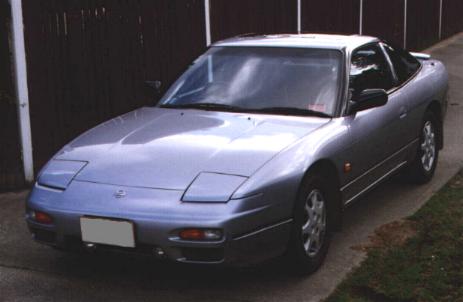
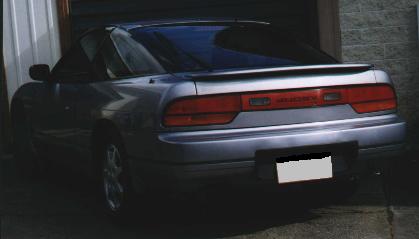
Cars must be made safe before they are made fast, I have learnt this from experience. It's fun doubling the power output of a car until you try to stop and the brakes aren't up to the task.
After changing the cheap hard compound tyres to Bridgestone G Grid II's there was little that could be done to the wheel handling without getting some 17" rims and low profile tires, as I have been unable to find a set that I like and that fit my budget, the mags and tyres will have to remain standard for a while.
Since I am trying to maintain a "Sleeper" profile for the car I won't be lowering the car at all in any great hurry. Further handling modifications will be done as much as possible without changing the ride height as viewed from the exterior.
Next stop is the modifications Programme. This will be a fully detailed explination of all the changes made to my currently standard car, I will be happy to share any details with those who ask..
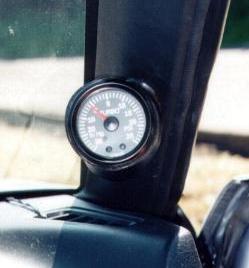
A bench mark must be obtained to corretly assess any modifications.
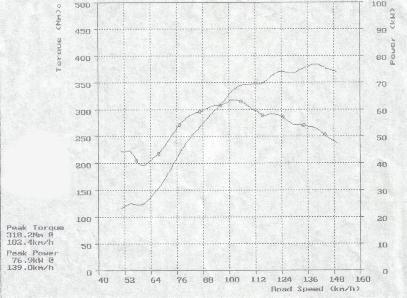
Test results below.
Peak Torque = 318.2Nm
Peak Power = 76.9kw
Clearly shown are the power drops as the rear wheels stepped out and lost traction on the rollers, the test involves a rolling start in 4th gear at around 50 km/h and a run up to 150km/h.
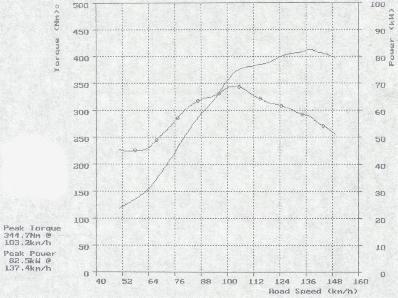
The second test was done only 4 days later on a warm and sunny day, the peak output's were up by about 10% all round.
Peak Torque = 344.7Nm
Peak Power = 82.5kw
There are still a couple of power drops but only the first drop is related to wheel spin and the second is related to the engine tuning.
This suggests the Conversion ratio from the rear wheels to fly wheel in fourth gear is 37% which seems very high yet puts the flywheel kw's at 130, which is the standard factory settings for the CA18DET motor. The Torque readings are also very high for such a low power output.
I will not be not putting the car on the dyno again until further modifications have been done.
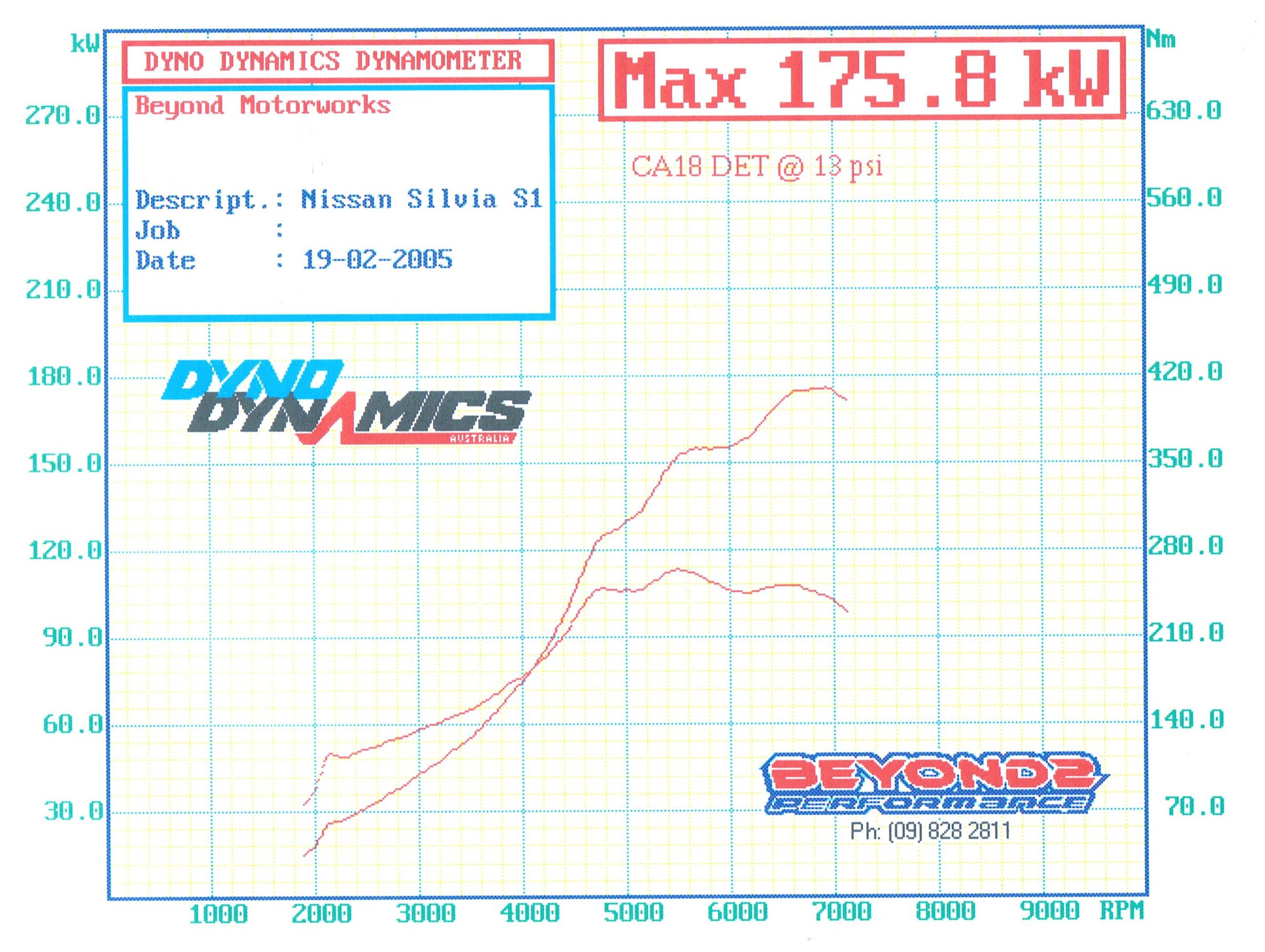
I'm very pleased to show a very big jump in Hp at the wheels, yet a little supprised to see such a drop in torque after the Hp has more than doubled..
Peak Torque = 266Nm down from 344.7Nm
Peak Power = 175.8kw well up from 82.5kw
The conversion rate from the flywheel to the rear wheels in fourth gear is about 27% which puts the flywheel kw's at about 241kw which is a significant improvement on the standard factory settings for a CA18DET motor.
Since I am unable to locate an accurate calculation for the power loss from engine to wheels, the above % will always be subject to debate. All the Dyno Operators I have spoken with (approx 5) agree that 80kw - 85kw is a normal reading for a factory spec motor, then 82.5kw approx at the wheels would be correct for the factory 130kw of my CA18DET motor. This does not corrospond correctly to the 27% but I have been told that the power loss reduces as the overall power increase.
The power output will increase a small amount when the fuel starve is corrected, this is likely to be no more than 10rwkw.
After driving the car with a rough idle for almost a year and with poor compression in one cylinder, I decided to take the car in for a thorough engine check.
Upon pulling the head off the following was found:
1. Carbon build up had blocked one exhaust valve open.
2. The head gasket had split.
3. #4 Piston was cracked.
4. #3 Piston almost had a hole burnt through the middle.
5. Most of the rings were split or damaged.
Being very disappointed at hearing the news and with great differculty finding factory parts, I had to decide weather or not to fit forged pistons or continue the look for some factory ones. The factory pistons priced in at around $1800 supplied with rings, while a set of forged pistons with HT pins and rings was less than $1000. Obviously it would be a waste of time spending twice as much on a lesser product.
Total Engine Rebuild Time
With the pistons falling apart I decided to do a full engine rebuild again, this time using all the race spec internals I can get my hands on. The price has come in at around $9,000 for the whole job but the parts list is as follows:
- Forged Pistons 0.5mm oversized
- Cylinder rebore
- HT bolts and pins
- Shot Peened Rods
- Full engine balance, flywheel, clutch, pistons, crank.
- Polished Crank
- 1.2mm metal head gasket
- Full head Port & Polish including inlet manifold
- Valve oversize bore
- 4 Angle valve & seat cut
- Heavy Duty Valve Springs
- Race Cams - 9.5mm @ 165deg inlet & exhaust
- Custom adjustable cam gears
- Custom oil catch can
- Adjustable Fuel Pressure Regulator - Monza
- Plumb back BOV - Monza
- Walbro 500hp intank fuel pump
Including already fitted items
- GTiR 444cc injectors
- Modified GTiR FMIC
- Fully custom 63mm IC piping and 80mm intake piping
- Custom Boost Controllers with anti-lag valve
- S15 T28 ball bearing turbo
- Custom stainless steel 3" dump pipe
- 2 1/2" mandrel bent exhaust
- Z32 afm
- K & N pod filter
- Twin electric fans set on 85degC thermo switch
I will update the parts list when I get the car is finished.
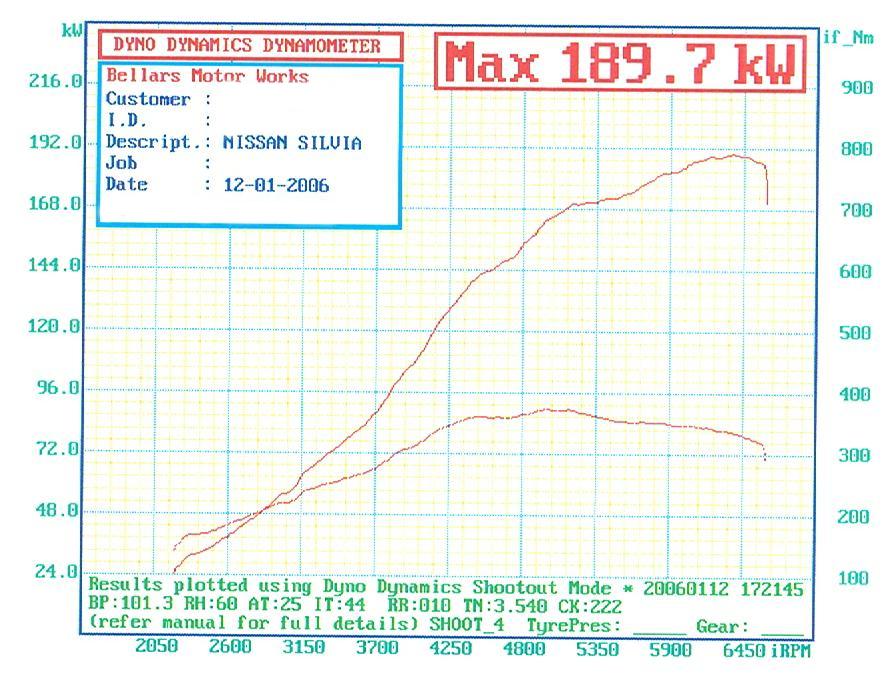
The tuning still has a bit to be done with the adjustable cam gears, but the current numbers stack up as shown on the left.
At the wheels
Peak Torque = 377nm
Peak Power = 189.7kw
The air temperature was reasonable high during tuning so there may be a small increase on a colder day.