  Overseas military bases
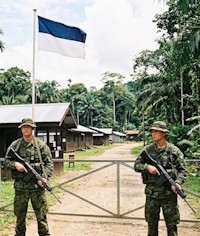 Both the Frilandic and the Hiverian armed forces have overseas military bases (not to be confused with overseas territories). These are located outside the territory of these countries and usually serve strategic and/or logistical purposes. Similar to an embassy, the land on which the base is located remains the property of the host country. The land is loaned or leased through an international treaty. On the base, the law of the country using it is applied, and the host country may not enter without permission.
Below is a list of Frilandic and Hiverian overseas military bases. Kumanga Ntanga military base Harstaþ Nuþanga (Fri) Kituo cha kijeshi cha Ntanga (Kum) The largest overseas base of the Frilandic armed forces is located on the grounds of the Kumangan army base Ntanga. It provides facilities for land, air, and naval forces and consists of two runways, part of the port, and an extra-secure section called Laugfugalþurp ("Flamingoville" / Kum: Kijiji cha Flamingo). This houses not only military buildings but also a village of the same name for Frilandic personnel and their families, including a shopping center, schools, post office, religious center, library, clinic, fire station, (military) police station, bar, restaurant, and other amenities. Additionally, the base stimulates the local economy through large purchases of food, building materials, and fuel. The base is home to the Afrikaferhaup ("Africa Battalion" / Kum: Kikosi cha Afrika), consisting of 1,000 permanent military personnel and a varying number of additional staff. The number of Air Force and Navy personnel is 400 and 200 respectively, but is highly dependent on operational requirements. In addition, there are 1,700 family members, approximately 100 Frilandic civilian personnel and a similar number of Kumangan civilian personnel. After the Second Kumangan Civil War, Friland and Kumanga decided to enter into military cooperation to prevent a recurrence of the horrors. Part of the agreement was the reconstruction of the Kumangan government army with financial support and training from Friland, and a joint fight against terrorism. To this end, Friland would be granted a military base on Kumangan territory. The Frilandic autonomous region offered land, the airport, and the port of Berginstad, but this was politically sensitive because Kumanga feared that Frilandic influence in this region would become too great as a result. After having used numerous temporary locations, a permanent location near the city of Ntanga, in the far south of the country, was ultimately chosen. The renovated base was opened in 2026. 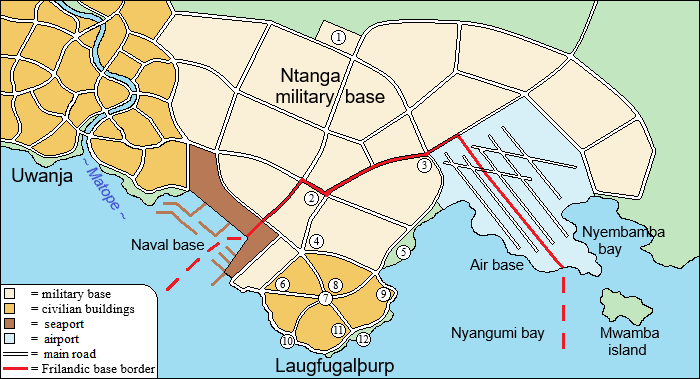 Numbered places 1. Radar facility: built by Friland but owned by Kumanga. Manned by both Kumangan and Frilandic personnel. 2. Military hospital: treats military personnel as well as civilians living on the base. 3. Fire station: primarily serves the Frilandic part of the base but also collaborates with Kumangan fire stations. 4. Military police post: responsible for law enforcement on the base. 5. Religious center: consisting of a Ferna Sed temple, an ecumenical chapel, and a prayer room for other religions. 6. Fat Dragon Bar (Fri: Taphus þa Diga Drak / Kum: Kafe Joka Mnene): popular bar, referring to the owner's nickname. 7. Storwulf Square (Fri: Storwulfrum / Kum: Mraba wa Storwulf): named after prime minister Storwulf Gremssun, through whose efforts this base was established in 2026. 8. Bazaar Shopping Center (Fri: Kaupmedstod þa Basar / Kum: Kituo cha ununuzi cha Soko): covered shopping center with a supermarket, hairdresser, and shops selling clothing, shoes, electronics, (home) accessories, and other necessities for the residents of Laugfugalþurp. 9. Post office: operated by the Haimiska Sandungsambaht (National Postal Service) and mainly used for sending and receiving packages. 10. Mabuwasi Library (Fri: Mabuwasi Boksamnung / Kum: Maktaba ya Mabuwasi): named after former Kumangan president Kwame Mabuwasi, who played a significant role in the Second Kumangan Civil War. 11. Princess Gunþhild School (Fri: Jungfro Gunþhildskol / Kum: Shule binti mfalme Gunthild): small school that offers both primary and secondary education. Named after princess Gunþhild. 12. Hawthorn Restaurant (Fri: Ethus Hagþurn / Kum: Mkahawa wa Mchwa): serves dishes from both Frilandic and Kumangan cuisine, although you can also go there for a simple snack. Other places Laugfugalþurp ("Flamingoville", Kum: Kijiji cha Flamingo): village under Frilandic military administration. The Frilandic soldiers stationed at the base live here with their families. Matope ("Muddy river", Fri: Maþbak): tributary of the Wimbi. Mwamba ("Rocky island", Fri: Baukan): small island that pilots use to determine the correct approach route, hence the Frilandic name Baukan ("Beacon"). Nyangumi bay ("Whale Bay", Fri: Nijangumiflo / Kum: Ghuba ya Nyangumi). Nyembamba bay ("Narrow Bay", Fri: Nijembambaflo / Kum: Ghuba Nyembamba). Uwanja (Fri: Hwandja): village that is part of the municipality of Ntanga. Many Kumangan soldiers live here with their families. Maldives Camp Gawiþa Gawiþalegar (Fri) Keymp Gaveedha (Dhiv) Camp Gawiþa, the Frilandic "military base" in the Maldives, is merely a small plot of land with a few buildings. It consists of storage facilities, staff quarters, a medical post, a prayer room, a canteen, and a small shop. The site is situated on the artificial island of Hulhumalé, at the corner of Nirolhu Magu and Samugaa Magu. It lies close to the seaport and Velana International Airport, where Friland holds berthing and landing rights. The number of military personnel at the base varies considerably, but on average there are about 100. These are primarily specialists, guards, and personnel from the Air Force and Navy. The group as a whole is called HLOMAL, which stands for Hloþan en Maldiwan ("Troops in the Maldives"). A small number of family members and civilian personnel also reside there. Due to the enormous distance between Friland and its overseas territory Tagaloa, the need arose for a permanent intermediate station where aircraft and ships could go for fuel, supplies, and maintenance, among other things. The Maldives, which already granted Friland berthing and landing rights, was willing to lease a piece of land for a small military base. Agreements were also made regarding the exchange of knowledge and joint training with the Maldivian armed forces. However, Camp Gawiþa primarily serves a logistical function. The base was opened in 2004 and is named after the then Queen Gawiþa. 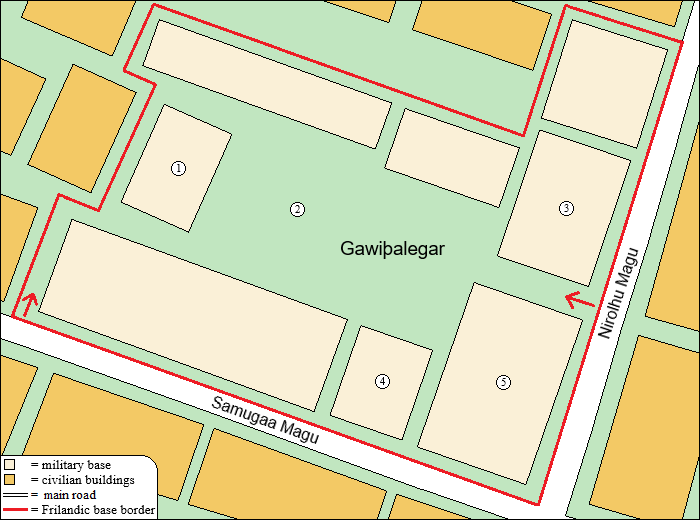 Numbered places 1. Canteen: serves standard food and dishes from Frilandic cuisine. For more exotic food, one must venture outside the base walls. 2. Baibalaa Square (Fri: Baibalarum / Dhiv: Baibalaa maidhaaneve): named after the sport kabaddi, which is called baibalaa in the Maldivian language Dhivehi. After Frilandic soldiers learned this sport from the local population, it is regularly played on this square. 3. Imran's shop (Fri: Imrans kauphus / Dhiv: Imraange fihaaraeve): the small shop of local resident Imran Hassan, where one can go for toiletries, household items, cards, as well as for sending and receiving packages. 4. Prayer room: at the time the base opened, openly practicing a faith other than Islam was a sensitive issue in the Maldives. This room was therefore given a neutral name and furnishing, although the most practiced religions on the base are Ferna Sed and Christianity. 5. Medical post: treats military personnel as well as civilians living on the base. East Tagaloa Strongfort Starkfasten (Fri) Olo Fou (Taga) Starkfasten is located near the strategically situated town of Malosi in East Tagaloa. It provides facilities to the Army, the Intelligence Service, and the Police. Reportedly, the paramilitary group Altusa is also active there. To the south of the base is a residential area for Frilandic personnel and their families, called Hitgurdhau ("Tropical Heights" / Taga: Maualuga o le Teropika). There are about 400 soldiers at the base, but that number fluctuates. This group is called HLAUDA, which stands for Hloþan en Aust-Dagalau ("Troops in East Tagaloa"). There are also about 100 Frilandic and East Tagaloan police personnel and an unknown number of intelligence service employees working there. In addition, there are 1,300 family members and 120 Frilandic and East Tagaloan civilian personnel. Fort Starkfasten was built by Frilandic marines during the Tanuvasa uprising in 1911. In 1915, it was transferred to East Tagaloa, after which it was used by local rulers. From 1978 to 1983, it served as the headquarters of the UN peacekeeping force IFET. In 1988, Friland and East Tagaloa signed an agreement in which Starkfasten would become an overseas military base for, among other things, training local personnel, exchanging knowledge, and combating terrorism. Starkfasten is also required to employ a minimum number of staff and entrepreneurs from Malosi to support the local economy. The base was thoroughly renovated and put into operation in 1995. 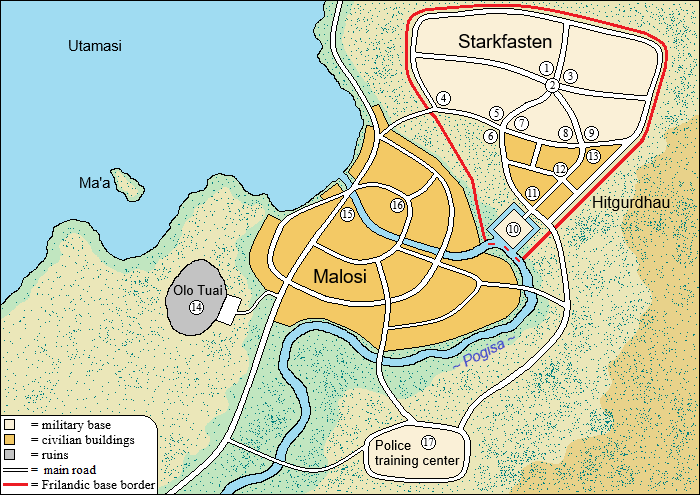 Numbered places 1. Military police post: responsible for law enforcement on the base. 2. Five-way intersection (Fri: Femffurk / Taga: Ala e lima): small square with helicopter landing pad. 3. Fire station: serves not only Starkfasten but also collaborates with the Malosi fire department. 4. Military hospital: serves both Starkfasten and civilians from Malosi and the surrounding area. 5. Post office: run by the East Tagaloan Auaunaga Meli i Sasa'e (AMS or "Eastern Postal Service") and mainly used for sending and receiving packages. 6. Religious center: consisting of a Ferna Sed temple, ecumenical chapel, and prayer rooms for other religions. 7. Sergeant Hardis Library (Fri: Swaiutar Hardis Boksamnung / Taga: Faletusi a Satini Hardis): named after Sergeant Hardis Wurmsduhter (1947-2020), who built up an extensive collection of books in Frilandic, English, Tagaloan, and Maluan in Starkfasten. Today, the collection is also available digitally, and the library primarily serves as a meeting and gathering space. 8. The Oasis Shopping Center (Fri: Kaupmedstod þa Wostbrun / Taga: Nofoaga Fa'atauga O Le Oasis): indoor shopping center with a supermarket, hairdresser, and shops selling clothing, shoes, electronics, (home) accessories, and other necessities for the residents of Hitgurdhau. 9. Loage Bar (Fri: Taphus Lowage / Taga: Pa a Loage): the bar of Loage Lemalu, known for his home-brewed coconut beer. 10. Old Starkfasten (Fri: Ald Starkfasten) / Taga: Olo Fou): built in 1911 and the origin of the current military base's name. Today it is a museum. Remarkably, the Tagaloan name Olo Fou means "the New Fort" to distinguish it from the even older Polynesian fort Olo Tuai, which means "the Old Fort". 11. Earth Oven Restaurant (Fri: Ethus þa Erþufan / Taga: Faleaiga o Umu): serves dishes from Tagaloan and Maluan cuisine, which guests may prepare in a traditional earth oven (umu) if they wish. 12. Chicken Square (Fri: Honanrum / Taga: Sikuea Moa): named after the chickens sold here at the Saturday market. 13. Signpost School (Fri: Markstangskol / Taga: A'oga Fa'ailoga): small school offering both primary and secondary education. 14. Olo Tuai ("the Old Fort" / Fri: Malþurpsburg): old Polynesian hill fort, built in the 12th century as a fortified temple and converted into a fort with palisades and earthen ramparts in the 19th century. The fort can be visited for a fee. 15. Museum of Malosi (Taga: Falemata'aga o Malosi / Fri: Malþurp Utstallung): museum about the history of Malosi. Work by local artists can also be viewed here. 16. Casino Hotel Malosi (Taga: Faletalimalo Kasino Malosi / Fri: Spilhal-Gasthus Malþurp): hotel with a small casino on the ground floor, especially popular with military personnel and tourists. 17. Police Training Center: the main training center of the East Tagaloan police, which works closely with Starkfasten. Other places Hitgurdhau ("Tropical Heights", Taga: Maualuga o le Teropika): residential area under Frilandic military administration. The Frilandic soldiers stationed at the base live here with their families. Ma'a ("Stoney island", Fri: Stainighulm): small island. Malosi ("Powerful", Fri: Malþurp): strategically located town that originated near the historic Polynesian fort. Pogisa ("Murky river", Fri: Gisar): river. Utamasi ("Dolphin bay", Fri: Marswinflo): bay. Mauritania Camp Friendship Camp de l'Amitié (Fr) Mukhayam Alsadaqa, مخيم الصداقة (Ar) Camp de l'Amitié is a modest army base, consisting of storage facilities, staff quarters, a medical post, training center, religious center, bistro, supermarket, and a heliport. The location is situated about 200 kilometers east of Esrayette in the town of Akjoujt in the Mauritanian region of Inchiri. The base is located on the N1, near Akjoujt Airport, where Hiveria holds landing rights. There is also a larger Mauritanian Army base nearby; the Centre d'Instruction de l'Armée Nationale (CIAN), also referred to by its colonial name Fort Repoux. The number of military personnel at the base depends on operational requirements, but on average there are about 200. This mainly concerns personnel from the Army and Air Force, but also specialists. This group is called FHM or Forces Hiveriennes en Mauritanie ("Hiverian troops in Mauritania"). Personnel from the Gendarmerie, police, and customs are also stationed at the base, as well as civilian personnel and family members. The base has existed since 2015 and is the result of a treaty between Hiveria and Mauritania to combat illegal migration to Esrayette and to jointly combat (cross-border) terrorism. Hiveria also contributes to the training of Mauritanian helicopter pilots. 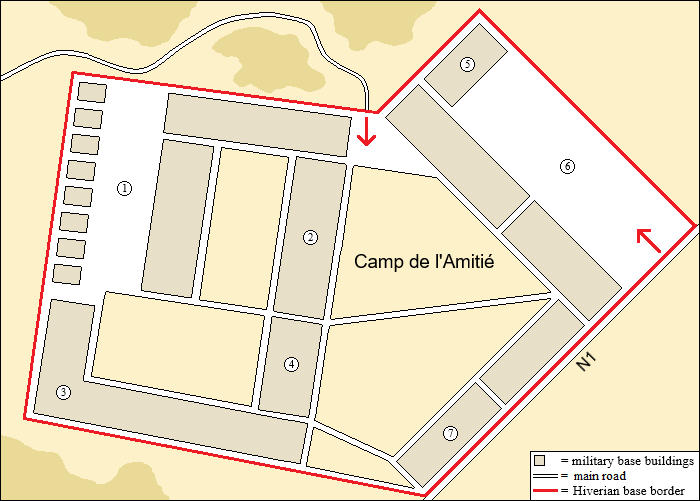 Numbered places 1. Heliport: landing pads with concrete hangars. 2. Medical post: primarily treats military personnel but also collaborates with the nearby hospital. 3. Training center: Mauritanian helicopter pilots are trained here. 4. Bistro The Little King (Fr: Bistro Le Petit Roi / Ar: Hanat Saghira Almalik Alsaghir, حانة صغيرة الملك الصغير): serves simple dishes from Hiverian cuisine, but also Mauritanian dishes such as couscous and thieboudienne. 5. Rochefort Supermarket (Fr: Supermarché Rochefort / Ar: Subar Markit Rushfur, سوبر ماركت روشفور): small supermarket with post office. 6. Fleury Square (Fr: Place Fleury / Ar: Sahat Fluri, ساحة فلوري): named after the then vice president Émile Fleury. The square is primarily used as a parking lot. 7. Religious center: this building consists of an Islamic prayer room and a "center of silence", where other religions can be practiced.  |