




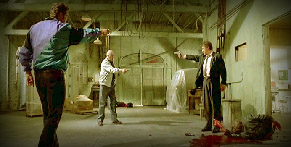


1. Master shot: the camera does not move, and is a flat image of the entire scene
2. Establishing shot (Extreme Long Shot [ELS]): the master shot at the beginning of a scene to designate setting
3. Full shot (Long Shot [LS]): a subject or character from �head to toe�
4. � or Hollywood shot: subject or character from head to knees
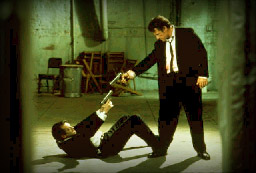


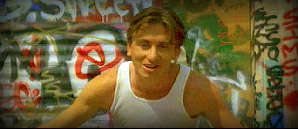
5. Middle-shot (MS): subject from the waist up
6. Close-up (CU): subject from the bust up, or face, used for �fresh reactions�
Fact: 80% of shots are close-ups (Hines 87)
7. Extreme Close-up (ECU): shot that emphasizes specific features on a subject
Advice: �Depending on where the camera was and the distance between the lens of the camera and the screen, it would take on different characters� (Robbins, Dead Man Walking).

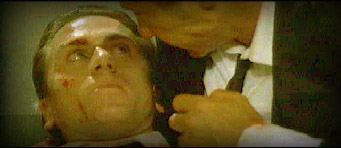

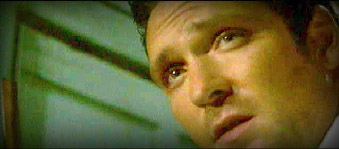

Advice: Would be best to place one subject at a 90 degree angle and the other at 45 degrees to create diversion (Harmon, 64).
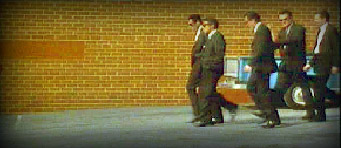
9. Walking two-shot: characters move together, must step out with the foot closest to the camera and know their marks
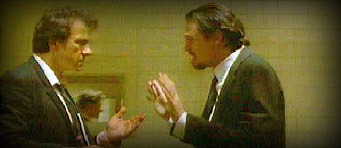
10. Standing two-shot: mostly necessary through dialogue exposition
11. Over�the�Shoulder (OTS): �over the shoulder of partner(s)�
12. Reversal: the same framed shot, without the same subject matter
13. Telephone conversation: mostly using MS or CU�s, actors must seem to face each other by, for example, having one character in New York look left while the other in Miami looks right which talking to each other on the phone. (Harmon, 59-67)
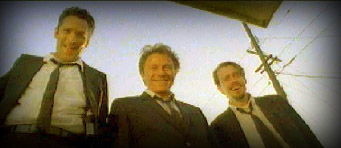
14. Low angle: camera is placed below the subject to make them appear tall or enlarged
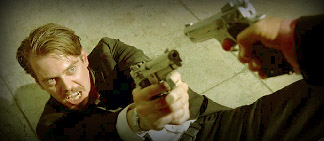
15. High angle: camera is placed above the subject to make them appear small or unaware
2. Panning�making a �horizontal� move from left to right or vice versa
Advice: �Panning or tilting the camera while making a zoom takes off the curse of pure zoom moves� (Hines).
3. Tracking�moving the camera with the subject, forward or backward
Advice: lead the subject with the camera, don't follow the subject and leave room behind them
4. Cutaway�transitioning from �one subject to the next�
5. Zoom�instead of moving the camera towards a subject, the image is just magnified from a distance.
Advice: �Zoom in with a dolly in; zoom out with a dolly out� (Hines)
6. �Pull In/Out"�moving the camera towards or away from a subject to achieve different emotional attachments to a scene (Harmon, 67�73)
Advice: �A zoom�out gives appearance of 2-D material; whereas movement of the camera toward the subject matter transports the viewer or carries the viewer� (Hines, 50).
There are many definitions and rationales to what each camera move means, such as: �Camera movement should be motivated by the action and should not call attention to itself,� according to Hines, but for exceptions such as Federico Fellini�s 8 1/2, the camera is a �major character (with) the absence of any real sound,� and does attract attention from the subject on screen.
� www.gonemovies.com/WWW/WanadooFilms/Misdaad
JohnBadly � http://www.pg.ru/dogs/dogs.html