 |
|
|
|
|
|
|
|
|
|
|
|
|
|
|
|
|
|
|
|
|
|
|
|
|
|
|
|
|
|
|
|
|
|
|
|
|
|
|
|
|
|
|
|
|
|
 |
|
|
|
 |
|
|
|
 |
|
|
|
|
|
|
|
|
|
 |
|
|
|
 |
|
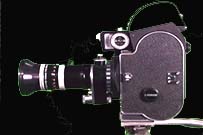
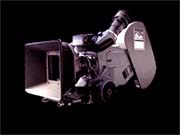
The camera is the eye of cinematographer, and encompasses the type of camera, lens, and film. Other attachments such as boom microphones or lights can be added if they wish. Today the debate over digital video or film makes a difference over the order of recording. Cameras go back decades, and have been presently steadily increasing in quality and form. Canon, Panavision, Kodak, Nikon, Fuji, Hitachi, and Sony being the leading sponsors. |
|
|
|
|
 |
|
|
|
|
|
|
For most sequences, two cameras are set up (if the money allows) to capture two types of action:
A= camera frames the wider, master angle and
B= camera is tighter, close-up angles (Hines, 127).
The audience easily ignores this because they are so engaged in the story. Even sports records are taken to capture the action across a field, court, or pool, and then use another camera from a different angle that captures the reaction of the athlete for details. This takes exact coordination and skill, but when the scene gets rough and dangerous, "it is time to rent 3 cameras," (Harmon, 35). The use of three or more cameras guarantees any special effects that can only be done once or twice is captured by various angles to edit seamlessly together while still getting the audience as close as possible. �Every single camera,� says DP Dante Spinotti, �has to do with the emotional state of the character, at that stage of the story� (Spinotti, par 2). Elliot Davis, who has been criticized for his loose camera work on �I Am Sam� and �Thirteen� defends his judgement says that he draws from the �form follows function theory� that responds to the sensibility in the scene rather than annotated procedures (MovieMaker.com). |
|
|
|
|
 |
|
|
|
|
|
 |
|
|
|
|
|
 |
|
|
|
|
|
 |
|
|
|
|
|
|
 |
|
|
|
|
 |
|
|
|
|
|
 |
|
|
|
|
|
 |
|
|
|
|
|
|
|
|
 |
|
|
|
|
|
|
|
|
|
|
Super 8mm
8mm is much like this |
|
|
|
|
|
|
|
|
|
|
16mm |
|
|
|
|
|
35mm |
|
|
|
|
|
|
|
|
|
|
|
|
When a cinematographer determines the "look" of a film, they take into consideration frame rate, which is the speed each frame is driven past the aperture (or projector), also known as fps (frames per second). 24 fps is the standard speed for the average film including sound, but "the regular filming speed for no sound is 18 fps regardless of format" (Highlander Film, par 7). From this comes momentum that can be seen as slow or fast. Slow motion is run at a higher fps that 24, so that when it is projected at a normal film rate, there are more frames for the action and can create overly dramatic effects. Of course, this also uses large amounts of film and should only be done with a well-balanced budget. In "El Mariachi", Robert Rodriguez used a slower film rate at about "16 fps" in order to save on film, but is also created a faster projection, which generated a comedic sequence. |
|
|
|
|
 |
|
|
|
|
|
 |
|
|
|
|
|
|
There are also a number of different shutter shapes, angles, and speeds. The shutter is the flat piece that slips between each frame to define the time allotted each one. �A standard shutter angle,� says Hines, �is between 170�180 degrees� but can vary from 0�230 degrees. F and T-stops are the next regard, both in terms of the iris function. An F-stop has more to do with the measurement between the "lens internal diameter. . .to the focal length of the lens," whereas a T-stop is measuring the light that passes through the lens and recorded on film (Hines, 77). The numbers that are given to T-stops are inverse of the expected outcome; the higher the number, the less light is let in and the lower the number, the more light is let in. Think of it as a part of your eye: when the iris contracts, less light is let in and when it expands, it is usually in a dark situation and more light is seen by your mind. The camera can control these features, which can come in handy when trying to over or underexpose an image to give a surreal effect or trick the audience into thinking it is night when you are really shooting during the day. In �The Road to Perdition�, Director of Photography, Conrad Hall, �decided to work wide open (frequently at T1.9), because that created the somewhat softer palette I wanted to achieve without many points of focus� (qtd. in Fisher, par 13). When faced with certain problems such as low-light situations where you are either 1. Not allowed to set up lights or 2. Don�t have the outlets to set up lights, the best solution would be to use a low T-stop (when the camera allows it), which is known as increasing the exposure. |
|
|
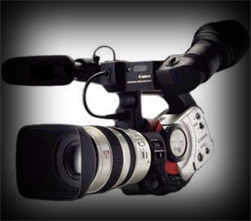
Whenever you have any type of equipment, it is important to keep it in good working order, especially when it comes to the intricate camera. Nitpicky things like �dust, dirt, sand, hair, emulsion buildup, scratches. . .and excessive oil/grease,� (Hines, 146) can be the determination whether or not they camera functions properly. Most problems occur with film chips or the film gate, both which propel the film. Think of this as opening the hood of a car and finding the belt loose. Like a car, the film must ride on rails (only film has sprockets), rolled over many devices, and kept tight by a pressure plate, but can come loose. This occurs when a piece has fallen out of place or damaged, as is with film. Digital cameras have just as much to do with care as film cameras, but are not dependent on film gates or chips. A person should know how to work the camera or at least read the manual before operation, for even the slightest item overlooked can throw the camera out of proportion. For example, the Canon XL1's video slot must be closed before the cover is closed over it, and the batteries must not touch metal objects, (which is why they come with a cover). Ellen Kuras decided to use the Sony VX1000 instead of the Canon XL1 �for different reasons, primarily because of the way the zoom lens and the focus operated� (MovieMaker.com). |
|
|
|
 |
|
|
|
|
|
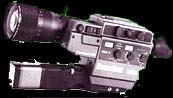
The Canon XL-1 camera is digital video, complete with microphones, digital zoom, and lighting effects |
|
|
|
|
|
The one thing that digital and film cameras definitely have in common is their resistance to weather. There are various cameras for extreme terrains�, but even for simple shots, a camera and all equipment �should be placed, for a reasonable time before shooting, in the temperature/humidity environment in which they will be used.� This regulates adaptation, and prevents such physical reactions like condensation. Of course this advice can only be used in slight differences, but �when shooting in extreme hot or cold locations, special lubrication must be used on all moving parts. In extreme cold all lubrication may have to be removed from all moving parts� (Hines, 146). |
|
|
|
Pictures Courtesy of:
http://www.garyolsen.com/GoClarke/Videoaudio/XL-1.jpg � Canon
http://www.videoimageprod.co.uk/cine_video.html
http://www.snowmotion.com/bolex/bolexsbm004.jpg
http://www.filmshack.com/rentals.html |
|