





Time Magazine 2003 � Polygram Film 1995
� http://www.xanga.com/home.aspx?user=BigNastee
|
|
|
|
|
|
|
|
|
|
|
|
|
|
|
|
|
|
|
|
|
|
|
|
|
|
|
|
|
|
|
|
|
|
|
|
|
|
|
|
|
|
|
|
|
|
|
|
||||||||||||||||||||||||||||||||||||||||||||||
|
||||||||||||||||||||||||||||||||||||||||||||||
|
||||||||||||||||||||||||||||||||||||||||||||||
|
||||||||||||||||||||||||||||||||||||||||||||||
|
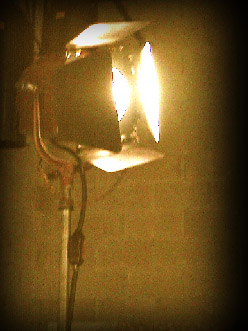
The general basis of lighting, especially in theatre, is called a three-point lighting system. One side of the face is lit from a 45-degree angle to exemplify interior flat tones, and the other angled side will highlight with �sunlight� or �moonlight� using mixed colors, which are created by using colored gelatin sheets called �gels.� These are placed in front of the light so that when projected, the object highlighted takes the color of the gel. The last light is called a �backlight�, which is, of course, placed behind the character to give them depth, or, a three-dimensional appearance. Without three-point lighting, a character becomes �flat� on stage or on screen. Sometimes, this is the case when blending in the extras with the scenery, unless the DP wants a specific look, or tone. Antique films had very general rules when it came to lighting a scene: for one, woman were always backlit and the characters were always the brightest object on screen, whether it looked realistic or not. Another is that soft focus was often used in dramas to beautify the characters instead of defining them. The current technique still uses the same belief, but different methods with soft lights, gels, and exposure. | |||||||||||||||||||||||||||||||||||||||||||||
|
||||||||||||||||||||||||||||||||||||||||||||||
|
||||||||||||||||||||||||||||||||||||||||||||||
|
||||||||||||||||||||||||||||||||||||||||||||||
| The basic lighting setup consists of at least key and backlights. Backlights can be created by bouncing light off backgrounds or walls if the equipment or setup does not allow it. They give breadth to the character�s form and add highlights to the hair and shoulders. Pink Floyd�s �The Wall� �gave the whole thing a single backlit source with minimal amount of film and let the image work for itself,� which added more alienation than comfort. Keys are main lights usually placed at a 90 degree angle to the subject. More complicated setups include diffusers, which either have a filter placed in front of them or are faced away from the subject with an umbrella or reflected surface that bounces the light back to the subject. | ||||||||||||||||||||||||||||||||||||||||||||||
|
||||||||||||||||||||||||||||||||||||||||||||||
|
||||||||||||||||||||||||||||||||||||||||||||||
|
||||||||||||||||||||||||||||||||||||||||||||||
|
||||||||||||||||||||||||||||||||||||||||||||||
|
||||||||||||||||||||||||||||||||||||||||||||||
| This gets rid of hard, unwanted shadows, but can also smoothly binds the bodily features together. Portraits usually have standardized lighting plots to soften and accentuate the face, but dramatic lighting for film can hide the face in shadows. Gels, reflectors, scrims, walls, patterns, and the environment all have an effect on the lighting setup. Physics tells us that when a filter is placed one on top of another, the filter will block (or stop) the other hue from entering. In art, the primary colors are red, yellow, and blue, but in cinematography the primary colors are cyan, yellow, and magenta and the secondary colors are red, green, and orange. The waves are stopped by the filter and so create a different image when recorded on the silver-halide film. Color manipulation is known as �optical filters� and �can be used in front of or with gels behind the taking lens,� in the categories of �color compensators, color temperature balancers, color tonal modifiers, light suppressors, and special effects� (Hines, 144). Because the sunlight emits waves recorded as blue at 5600 degrees Kelvin or candle and fire light registers as a yellow�orange near 2000 degree K, a cinematographer must decide what type of film to use to compensate for the light (Hines, 75). Tungsten light (which is red�orange at 2800�3200 degrees K) with tungsten film gives natural perception, but natural light with tungsten film is viewed as having an orange tint on screen. Some of the last scenes in �Dead Man Walking� took �an extra three hours to light with two cameras� in order to capture the intense, emotional presentation by the actors on the first try. �In the midst of the scene you get a warm, orange light in the prison,� says director Tim Robbins, �as opposed to the bright white on Matt (character played by Sean Penn).� In order for that scene to work, it was the light, not the film, which had to be directed. Light manipulation is considered �neutral density� and includes �diffusion, fog, star, polascreen, and prepared surface� (Hines, 144). Many of these effects are also used on theatre stages to create backdrops with patterns or ambiance using dry ice or misters. | ||||||||||||||||||||||||||||||||||||||||||||||
|
||||||||||||||||||||||||||||||||||||||||||||||
|
||||||||||||||||||||||||||||||||||||||||||||||
| A cinematographer must decide what type of film to use to compensate for the light. | ||||||||||||||||||||||||||||||||||||||||||||||
| The two types of light are polarized and unpolarized light, the former being of scattered, �random� photon emission and the latter is individual photons �aligned in the same direction� (Highlander Film, par 5). This simply means that it is the difference between a flashlight and a laser. This is where lighting setups come in. Some lights can be set up to bounce light off a wall and onto a subject or thrown against a wall and absorbed by the color or material (keep in mind that the darker the color, the more light is absorbed). Many lights are controlled by barn doors, which are flaps on the side of a light (usually black) to point the light one way or another. To give a simple, yet natural, tone to a scene using artificial lights, a scrim (a light, near transparent material which filters, but also softly reflect light) is placed in front of the lights so that a hard beam is not shooting down on the subject. This can turn a night scene into day (with enough lights) because it gives the illusion of diffused light that sun or moonlight emits. �Snow Falling On Cedars� cinematographer, Robert Richardson, has the light source as a large, intense ray �bounced from a great distance off of a 20" x 20" canvas frame� (Richardson, par. 5). In the Pink Floyd�s �The Wall�, �one large arc. . .gave. . .a wonderful, strong shadow,� against a colored wall which was easily morphed in animation during post-production because of it�s austerity. �Initially I lit that room with just Pink and the TV,� says director Alan Parker, �then I boosted the lighting strongly� (�The Wall�). | ||||||||||||||||||||||||||||||||||||||||||||||
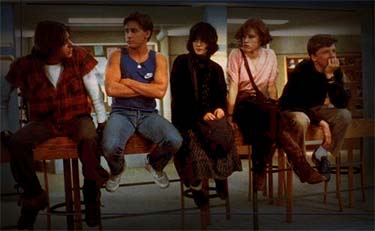
| If you want to look at lighting in simple terms, think of it as Comedy and Drama. Dramas are lit dramatically with varied hues and angles to capture just the right emphasis on specific objects or persons. Comedies light blazing and bluntly, whether they be television or feature films. Yet there is still organization for lighting plots, as in �The Breakfast Club�, which DP Thomas del Ruth worked on. Known for illuminating dramatic sets like �Charmed�, �ER�, �Jag�, and �X-Files�, Ruth began his career by adding a genuine touch to the environmental setting. There was supposed to be more of a �natural light look rather than the traditional bright light look associated with comedies,� in �Breakfast Club�, but it is undeniable that if you switch channels on television, you will be able to discern the category of the piece (with the exception of documentaries). Even so, DP Thomas Ackerman acknowledges the fact that comedies are not all light and bright. �Guess what?,� he says, �Comedies have dark scenes. There are scary moments� (MovieMaker.com). It goes to show how the film barriers of stereotypes are constantly being broken in all genres and appearances. | ||||||||||||||||||||||||||||||||||||||||||||||
|
||||||||||||||||||||||||||||||||||||||||||||||
| All major characters in "The Breakfast Club", each strongly lit with their environment and lack dramatic shadow | ||||||||||||||||||||||||||||||||||||||||||||||
| Cinematographer Richard Henkels helped create a public service commercial in Pennsylvania by first concocting a style. They had to get a visual timeline into the piece, so many of the shots had to fit the time period. One scene that takes place in the 1970's was researched using old �Dating Game� examples. �They were really keen on backlight silhouettes when introducing people,� he says, �Or with the host, they would time up with a very strong, intense spotlight� (Tran, par. 11). It is this dedication that cinematographers must have in order to get a controlled, artistic result. There is not just a simple decision of turning on and off a light and changing it�s color. Judgments can be made in pre-production or even on set, but there must be a clear concept of the script in that scene in order to conduct a wise crew. �The light was always interpreting and expressive,� says �I Am Sam� editor, Richard Chew, �It wasn�t just a passive bystander,� who was able to cut scenes which conveyed �Sam�s� emotional struggle easily by DP Elliot Davis� decision to use multiple cameras and color scheme progression. | ||||||||||||||||||||||||||||||||||||||||||||||
| "The light was always interpreting and expressive. . .It wasn't just a passive bystander." | ||||||||||||||||||||||||||||||||||||||||||||||
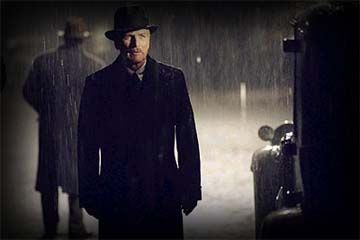
| The camera also has to correspond with the lighting, which is where the Art Director and Costume Designer come in. Most films do costume tests, which put the character in different silhouettes and film them using various light setups. This can be done on a stage or on set, the latter usually incorporating all the elements together. Conrad Hall �played with hard light smashing down on the fedora hats people wore (in �Road to Perdition�), and got wonderful slashes of light on faces in the shadows of brims.� In �American Beauty� Hall says he �did things like put a lamp on each side of a frame, with everything in the middle. This was to focus on the characters and to put them in a kind of constrained frame� (Kodak, par. 1). | ||||||||||||||||||||||||||||||||||||||||||||||
|
||||||||||||||||||||||||||||||||||||||||||||||
| One of the darkest scenes in the film, Road to Perdition, which encompassed throwing light through rain and onto street objects | ||||||||||||||||||||||||||||||||||||||||||||||
| When formatting a scene with hue, the cinematographer must even out the odds between characterization and dialogue. �Dead Man Walking� began with the �coldness of greens and blues�to a bright and warm feeling.� The movie develops from a man�s ignorance of a crime committed, to the passionate truth called forth by a fervent nun. Roger Deakins, the Director of Photography, used many scenes with the victim�s families as a chance to �create a sense of warmth inside the house(s)� that the victim�s used to live in. Tim Robbins, the director, did not want the audience to feel that they had to identify a protagonist and antagonist, so he let Deakins �add depth and warmth� behind doors and through windows for the families instead of isolating them as bitter and defective. �In the first discussion with a director you go with your own vision of what the film can be and then see if that�s in sync with the director�s,� suggests Deakins (MovieMaker.com).Throughout the movie there are fundamental, artistic methods that filmmakers use to emphasize a subject. As we�ve seen, the lighting can control the value, but another form commonly used in contrast (either in the objects or color). Like a black spot on a white canvas, Robbins framed certain scenes by giving �the background. . .an idea of nurturing and then a contrasting conversation,� and then �bright, sunny days to contrast with the subject.� This is the easiest way to incorporate irony or attention, by placing an object (or idea) in a situation that you normally would not imagine. When dealing with contrasting color, opposites attract most brilliantly on screen, as long as they don�t distort the creative format. Such as a yellow bird against a blue sky or what they did in �The Matrix� was put a woman in a red dress against a sea of monotonous grayscale suits. Of course when you don�t have a color film, like �The Elephant Man�, or �Casablanca�, the light has to work for you. | ||||||||||||||||||||||||||||||||||||||||||||||
|
||||||||||||||||||||||||||||||||||||||||||||||
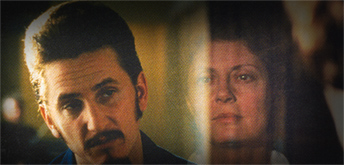
| In �Dead Man Walking� cinematographer Roger Deakins used the physical barrier to create a simulated two-shot by sending backlights against Sean Penn�s character, Matt, which in turn highlighted Sarandon�s character and reflected onto the glass blockade. When the reversal shots came about, Matt was hidden in shadows, and the clever variety of lighting spoke directly to the fa�ade of the character. Director Tim Robbins praised the lighting sequence, saying Deakins �is very shoed in the way he lit this. If he had lit both equally, it wouldn�t have worked as well� (�Dead Man Walking�). | ||||||||||||||||||||||||||||||||||||||||||||||
| Windows work especially well for reflections, and Roger Deakin's visually represented the characters in a two-shot without having to physically put the actors together | ||||||||||||||||||||||||||||||||||||||||||||||
| Yahoo! Movies �20th Century Fox 2002 Time Magazine 2003 � Polygram Film 1995 � http://www.xanga.com/home.aspx?user=BigNastee |
||||||||||||||||||||||||||||||||||||||||||||||