 |
|
|
|
|
|
|
|
|
|
|
|
|
|
|
|
|
|
|
|
|
|
|
|
|
|
|
|
|
|
|
|
|
|
|
|
|
|
|
|
|
|
|
|
|
|
|
|
 |
|
|
|
 |
|
|
|
 |
|
|
|
|
|
|
|
|
|
 |
|
|
|
 |
|
A built�in, or attachment, to a camera is the lens. The typical lens type used presently are wide angles, normal (or standard), and telephoto. These are named after the focal length, which is the distance between the center of the lens to the image formed on film (Hines). The farther away the lens, the more the image is constricted to that point of view. |
|
|
|
|
 |
|
|
|
|
|
|
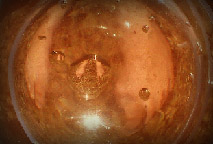
1. Wide angle lenses can also be known as �fish�eye� because of their distorted perspective, but that is only in the extreme. These span over 180 degrees, so they include peripheral vision, but normal wide angles only have 20�35mm focal lengths. Nikon has recently produced a 6mm lens that can reach up to 220 degrees, which is extremely round rather than rectangular on film.
2. Normal lenses are between 45-55mm and produce an image on film that is similar to the human eye�s perspective.
3. Telephotos �have twice the focal length of the normal lens� and the image �on screen. . .will be twice the size.� This usually focus on certain images and blur other details, which is why extreme telephoto lenses are used on heat waves across open plains. (Hines and Harmon, 93 and 170) |
|
 |
|
|
|
|
|
 |
|
|
|
|
|
|
|
1 |
|
|
|
|
|
|
 |
|
|
|
|
|
|
|
|
|
|
|
|
|
|
 |
|
|
|
|
|
 |
|
|
|
|
|
|
|
 |
|
|
|
|
|
|
|
2 |
|
|
|
|
|
|
 |
|
|
|
|
|
|
|
|
|
|
|
|
|
|
|
Complimentary objects to these three lenses are:
A. �Doublers�placed behind the lens to extend the focal length (i.e. from 20-100mm to 40�200mm range) but also require additional exposure.
B. Diopter�a weak lens. . .used in front of a standard taking lens in order to focus on very close objects. |
|
|
|
 |
|
|
|
|
|
|
 |
|
|
|
|
|
|
|
 |
|
|
|
|
|
3 |
|
|
|
|
|
|
|
|
|
|
|
|
|
|
C. Split diopter�selectively enhance. . .focus on close foreground objects while maintaining focus on objects in the background not covered by the diopter.� (Hines, 143, 144) |
|
|
|
|
 |
|
|
|
|
|
|
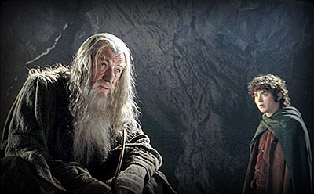
There is also the technique of �forced� or �foreshortening� perspective, where the positioning of the objects regulates the viewpoint, and not the lens itself. Peter Jackson used this to his advantage in the �Lord of the Rings� when placing actors or objects closer or farther from the camera, and so the actors were not even looking at one another, but were five to six feet apart, though it gave the impression that one person was small while the other was larger.
As stated earlier, a lens can get a shot �without putting the camera crew in jeopardy� (Hines, 112), but it can also create effects for the cinematographer that are more complacent with the plot. In �Road to Perdition�, Conrad Hall used �mainly Primo Prime lenses and occasional zooms, used when Hall wanted a longer focal length to isolate a character or object in a scene� (qtd. in Fisher, par.14). According to Hall, spherical lenses are more preferable for packing and create various results with lights. |
|
|
|
|
 |
|
|
|
|
|
Although both actors are over five feet, the distance of the subject tricks the eye into believing one is extremely shorter |
|
|
|
|
|
|
With filmmaking, it is always the creators, not the books, which have the final say on all choices, including lens. Beno�t Delhomme decided to �use two lenses: the 20mm and 24mm. . .I never go extreme with wide or long lenses,� on the film �What Time Is It?�, whereas on �Fargo� Roger Deakins �shot a lot of that film on a 40mm,� which he says is a longer choice for the directorial Coen brothers (MovieMaker.com). |
|
|
|
Pictures Courtesy of:
Sam Avila � 2004
The Lord of the Rings � New Line Cinema 2001 |
|