 |
|
|
|
|
|
|
|
|
|
|
|
|
|
|
|
|
|
|
|
|
|
|
|
|
|
|
|
|
|
|
|
|
|
|
|
|
|
|
|
|
|
|
|
|
 |
|
|
|
 |
|
|
|
 |
|
|
|
|
|
|
|
|
|
 |
|
|
|
 |
|
The Cinematographer, or Director of Photography (DP), is the graphic artist of cinema. Lights are shifted and manipulated to get a pristine image on the film, which has it�s own technical aspects. According to William E. Hines, member of the Society of Cinematographers, and author of the book, Operating Cinematography for Film and Video, defines a Director of Photography as the one person �responsible for placement of lighting units, control of direction, quantity, intensity and quality of overall lighting and setting camera movement, lens configuration, and filtration and exposure� (Hines, 33). The intricate execution of lighting plots and tests has all to do with attitude and mood when considering the genre. In most pieces of work, the lighting should blend into the background and go unnoticed, but only to the point that it makes an impact on the viewers� perception of a character or scene. John Toll (Braveheart, The Thin Red Line, The Last Samurai) believes that �cinematographers know more than anyone about how their films are supposed to look, even years after they have been released,� (MovieMaker.com). Toll is rightly put to it, for he won two consecutive Academy Awards in 1994 and then again in 1995, something many filmmakers only dream of achieving. |
|
|
|
|
 |
|
|
|
|
|
 |
|
|
|
|
|
 |
|
|
|
|
|
|
In early cinema, the Cinematographer was also known as the Camera Operator, Loader, and completed the tasks that assistants are given today. In bigger budget films, Loaders are responsible for each film roll, whether that be recording the �exposed and unexposed� film or loading the cans into the camera. The assistants are technically accountable for setting up the equipment and adjusting the settings to the DP�s requests. They must �prepare each slate for each take,� which is the black and white clapper you see on raw footage before the scene starts (Hines). On each slate is stated the Production Company, Title of the Film, current Date, the Director, Cameraman, and Interior or Exterior as well as Day or Night scene being shot, with or without sound, scene and take numbers, any special frame rate, shutter angle, and/or any special effect. (Hines, 147)
According to William Hines, conceiving a shot involves six considerations:
�1. Subject matter�matter and movement in context of setting
2. Camera position�appropriate angle
3. Lighting�coverage, intensity, quality, balance/contrast
4. Equipment�accessories and support
5. Optical selection and settings
6. Camera movement�
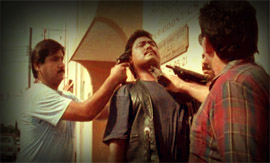
These judgments are based on the script, which is interpreted mainly by the actors and director, but includes the cinematographer�s opinion in order to precipitate a definite quality. The decision of �ambience,� including a �quiet, noisy, fun, no-nonsense, or grim set,� is decided upon �during pre-production (Hines, 171). In Robert Rodriguez�s �El Mariachi�, a red gel was placed over a light off to the side whenever an antagonist was around in order to generate a specific attitude on a character. He would work fast and choppy when shooting action sequences, and hardly took more than a few takes. Limited on time and actors, Rodriguez got many top-notch performances from amateur friends by putting himself in all production shoes, and so was shooting scenes around the actors by himself or with one other person. This left the actors feeling comfortable, and not as pressured to perform �professionally.� In moments of plot realization, Rodriguez would use a wheelchair as a dolly (a moving track which gives a smooth camera illusion), and achieve an effect that most studios pay thousands to rent, including cranes and other vehicles (�El Mariachi�). |
|
|
|
|
 |
|
|
|
|
|
 |
|
|
|
|
|
 |
|
|
|
|
|
 |
|
|
|
|
|
 |
|
|
|
|
|
 |
|
|
|
|
|
|
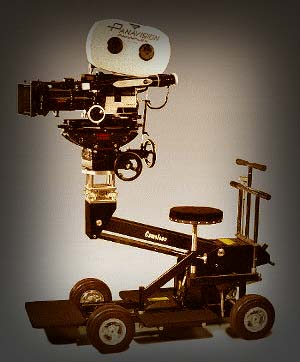
Many people marvel at certain sequences in films, whether they are swooping landscape views, brilliant detaching underwater scenes, or virtually advancing explosions. One of the most intriguing, yet grueling tasks is the locations� which cinematographers are placed in. National Geographic has gained exceptional notoriety for the vast photography taken around the world in the deepest of caves or the farthest of planets. For many years, the historical and environmental documentation of our world has placed photographers in dangerous situations and equipment, none more than documentaries. Narrative films also have the ability to awe the audience with their shots, but are more secure and planned than spontaneous documentaries. When you think of all the ways a shot is created, the list may surprise and astound you. According to Hines, a camera operator can work with anything from studio equipment such as �tripods, pedestals, dollies (either tripods with wheels or set on tracks which are long rails set on plywood or boards that act much like train�tracks to achieve a smooth, moving, camera). . .cranes, body�mounted stabilizer,� to operation on more common objects such as, �camera insert cars, motorcycles, bicycles, automobiles. . .ships, speedboats. . .surfboards, barges, submersibles. . . sleds, skates, helicopters, kites, gliders,� (Hines, 67) or even animals, like horses, elephants, or camels. Sometimes cameras themselves are mounted on objects or contraptions to get a desired shot. One scene in Pink Floyd�s film, �The Wall,� required a shot concerning a state of confusion and ecstasy. From this came a �swinging pendulum effect,� that gave an appearance of repetitious decent. �We�d been very busy on interiors and were succeeding well. . .� said DP Peter Biziou, �and so we ended up building this rig very quickly� (qtd. in �Behind the Wall�). |
|
|
|
 |
|
|
|
|
|
Camera dollies are used to propel the camera forward in one smooth motion. They can either have wheels on it, as this one, or they wheels will be secured to rails. |
|
|
|
|
|
The source of inspiration for each shot is so delicate and detailed, that the viewer is drawn into an alternate time and place full of sensations, and one cannot discard it without having been molded by the impact, whether positive or negative. Erudites that have doused themselves with literature can understand the importance a novel can have on a reader. Every page becomes instilled in their hearts, and even a word can invoke an eruption of emotion. Hines describes filmmaking as an analogous feature to literature, in that �one scene equals a paragraph. . .pictured elements equals letters, vowels, consonants. .frames equal words. .sequences equal chapters. .(or) acts. . .(and) motion pictures equal plays or books. . .� and that the, �visual syntax is the arrangement of pictured elements�. Framing also incorporates many artistic formats, such as balancing a picture with objects on one side, as opposed to a character on the other. A cinematographer must either set up the camera or tell the operators how a shot should be composed so that one subject does not overpower the other. Some basic facts for normal filming are to lead the subject, not vice versa, so that if the subject is walking from left to right, they are on the left side of the frame and not the right. �You have to be on top of your game,� says Hines, �play it right by deciding what to do on every shot.� Because our society�s basis is English, which reads from top left to top right and so on, �the subject in high left is more prominent.� High angles and long shots produce an subjective effect on the character or object, and low angles and close-ups or mid-shots give the viewer an objective, or materialistic idea about the subject. In Northfolk M. David Mullen tried to �push the edges of the frame,� by deciding to �go very low angle and get as much sky in the shot as possible, go very high angle and get as much ground as possible� (qtd. in Nash, par 8). |
|
|
|
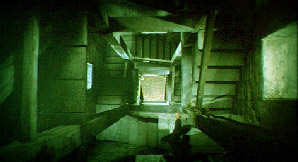
Of course these are always the basis of a setup, but does not always apply to what the director or cinematographer requests. Most films are striving to achieve a clear and concise focus on the picture, and follow these �rules� as a code instead of conduct. The truth is that filmmakers are constantly devising new and improved methods for a shot, and the idea of perfect shot is always changing. Alfred Hitchcock gave birth to the �Vertigo� shot, from the same movie, which pulled into a subject while tracking out. It gives a surrealistic mood that dozens of films have used since then. |
|
|
 |
|
|
|
|
|
Hitchcock was well known for his stylistic shots and characters,, especially in favorites like "Vertigo", "Psycho", and "Rear Window" |
|
|
|
|
|
�There�s the technique,� says cinematographer Elliot Davis of �I Am Sam�, �but I�m not thinking about that because I�m responding to what�s happening in front of me.� This is a theory of many DP�s, especially in documentaries, where there might not be a second chance or enough time to get a shot exactly the way it was planned. There is also a sense of response that the crew might be expecting from an audience, which can be achieved by the way a scene is shot. Quentin Tarantino took a handful of risks by shooting extremely drawn-out master shots, and counted on the curiosity of the mind to keep the viewer interested. In one of his first films, �Reservoir Dogs�, Tarantino placed cameras in separate rooms when filming a scene, or moved the camera in simple, but intriguing framing. One scene deals with a character describing a fictional account of a police encounter to fellow crooks in order to gain their trust. Tarantino swung the camera 360 degrees around the character as he told his story in front of a crook, and then cut to the fabricated setting. It is this trade that makes movies so deeply psychological. �Bloody Sunday� shakes the camera so much, that it is difficult at times to discern where or who you need to focus on. It is gritty and chilling, but sticks to it�s purposeful camera moves that stick the viewer in the middle of the action and makes one a part of the scene. �The faster you move,� says �El Mariachi� director, Robert Rodriguez, �the less your movie will cost� (Rodriguez). Because the use of the camera is so diverse, there is a general conviction among filmmakers that �cinematographers should be able to explain how they see things� (Ackerman). If a cinematographer looses their grip on the story line, the visual concept will become confusing and abstract. Action sequences are the swiftest form of cinematography, and should indefinitely be planned as an edited scene that progresses logically, even when you�re on a tighter budget. |
|
|
|
"The faster you move, the less your movie will cost" |
|
|
|
|
|
 |
|
|
|
|
|
Screen shot from "El Mariachi" |
|
|
|
|
|
Pictures Courtesy of:
DVDReviews � http://dvdreviews.dvdboard.de/el_mariachi.html
Premier Studio Equipment � http://www.premierstudioequipment.com/Products/Cameleon/Cameleon.html
Alfred Hitchcock Filmography � http://www.tcf.ua.edu/Classes/Jbutler/T112/HitchcockFilmography.htm |
|