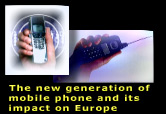
MOBILE MARKETING AWAITS STABLE RISE
Wireless, pocket size data terminals are stabilizing their position as a marketing channel.
The intoxication of the first rise and the time of doubt that followed are passed. Mobile marketing started as a single campaign trial. Now the mobile is taken into the overall marketing plan alongside other channels. The mobile is well included in next year’s plan says the chair of the SSML (the Finnish Direct Marketing Federation) mobile work group, Eeva-Liisa Ylälahti.
In March 2002 twenty three percent of Finns between the ages of 15-65 who have a cell phone received text message advertising, according to a study by Mobile Marketing Tracking. The share of women and men receiving a message was equally large. One third of the under 35 year age group received a message. Mobile advertising had also come to the older age groups, 19% of the 35-39 age group received it and 18% of the 50-64 age group.
Consumers’ experiences of cell phones as a buying channel are positive. Every fifth household had bought using the cell phone during 2001. Northern and southern under thirty Finnish men were the most active. Logos and ring tones were the most bought product group and the average purchase was 10 euros. The information was disclosed in a study of buying channels made by the Finnish Direct Marketing Federation (SSML). (Research International, May 2002).
Marketing people believe that mobile advertising is best suited for event marketing (12%), reaching target groups (10%), activation/ ordering (10%), marketing of certain products (8%), reaching youth (7%), for fast situations (6%), mobile equipment advertising (4%), and for reminding (3%). A study by Suomen Gallup Web also found that of the 200 largest advertisers only 4% had made mobile advertising by last October, but 22% of those answering planned to carry it out. This study will be carried out again in 2002
Text message marketing always assumes a person’s advance consent.
The marketer can ask for consent via an agreement, home page, or text message.
If consent is requested via text message, the consent request may not contain
marketing. On the other hand the marketer’s obligation to obtain advance
permission only pertains to marketing: messages relating to customer care
(for example information about delayed flights or interruptions in customer
service) can be sent without consent. A firm has the right to forbid marketing
directed to its mobile connections in B to B marketing.
The article was published in the magazine of the Finnish Direct Marketing
Federation mailed for the members.
Consumers' experiences of cell phones as a buying channel are positive. Every fifth household had bought using the cell phone during 2001. Northern and southern Finland were clearly over represented in the buying group and the more active were, as expected, the under thirties. Last year men bought more than women using a cell phone or WAP. Logos and ring tones were the most bought product group and the average purchase was 10 euros. The information was disclosed in a fresh study of buying channels made by the Finnish Direct Marketing Federation (SSML). Research International, commissioned by the Finnish Direct Marketing Federation, studied consumer experiences, opinions, buying intentions, and impressions of retailing done with the help of direct marketing's different sales methods. In the study 2004 people were interviewed concerning, among other things, purchases made with the help of cell phones or WAP in 2001. In all, 393 consumer households, 19.6% of those interviewed, had bought using a cell phone or WAP last year. Logos and ring tones made up 97.5% of the bought product groups. The purchase value was 20 euros or under in almost all cases (85%). Six percent reported values of 21-50 euros, one percent made purchases of 80-110 euros, and the same one percent reported purchases of 151-250 euros. In the occupation distribution, students and schoolchildren were as expected in the lead (those having purchased 30%, the whole sample distribution 13%), but also workers were of the more active purchasers by cell phone (29% / 23%). Over half of the mobile buyers, 51%, belonged to the age group 18-29 years (22% of the entire sample was this age group), 30-39 year olds were 21% (whole sample 15%), and 19% of purchasers via cell phone were 40-49 years old (whole sample 18%). The experiences of mobile purchasers were on the whole good, very and fairly positive experiences were all together 65%. Those saying they had fairly or very negative experiences were only 8%. Intentions for further purchases were in the same class, 64% would very or fairly certainly purchase in the future. The article was published in the magazine of the Finnish Direct Marketing Federation mailed for the members.
Nokia: new advertising methods
New advertising methods, which Nokia has used lately, were presented in the Finish business magazine in the end of year 2002. Also a finish advertising agency Contra was presented in the article. Contra has planned many of Nokias advertising campaigns. According to the article Contra has used many extraordinary and modern methods to catch customers attention. 1. example: Cannes mobile conference In February 2002 famous mobile conference was held in Cannes where all the mobile producers presented their products trying to get us much attention as possible. This conference is very famous among mobile business people and of course all the managers who make decisions of mobile purchases in the companies are interested in the happening. Last year the situation in the conference seemed very bad in the beginning: the French mobile producer Alcatel had reserved almost all the advertising resources of the massmedia, outdoor advertising in the city and big screens in the air station. The finish advertising agency Contra decided to do something else. They put many big white fashion dolls with phosphorus green hands all over the city. One doll sat in street caf�, one stood in the street corner and one in the conference area. Finally the dolls wellcome people to the Nokia gala area. The dolls changed places for three days and the conference visitors and the citizens were surprised and wondered what's happening. In the end they found out: Nokia was behind this performance and the message of the green hands was : it's in your hand.. Contra had hired French and British art students to carry the dolls all over the conference area. Nokia got a lot of attention and publicity in media and among conference visitors. 2. example : advertising in the happenings In order to catch young peoples (15 - 25 years old) attention Nokia arranges yearly a snow skating happening in one of the European cities. Last year the happening was in Marseilles. (Surprisingly there was enough snow in Marseilles!) For the happenings Nokia builds a gigantic snowskating track in the center of the city. In the happening there are young peoples favourites: djs and snow skaters. To get to know, who they are, Contra interviews young people beforehand. To the same audience Nokia gives an opportunity to attend a multimedia game. In three weeks time a million players in 28 countries attend to this game. They get hints in the www campaign pages and through e-mail. Playing is free and the purpose of the game is to advertise Nokias new mobile game phone. The first mobile game phone N-Gage was launched in the beginning of the year 2003. 3. example: advertisements to desiders Nokia wanted to advertise their 3g-mobile netsystem. They wanted to catch those peoples interest who make the technical purchases of the mobileoperators. All the competitors used a lot of money to make Hollywood-made advertising films. Nokia decided to do something else. Contra and Nokia found out who make the decisions and they found 60 managers. They also found out where they lived and worked. Contra put the advertisement posters near to their jobs (the managers could see them through the window in their working place) or along the way to their jobs. For example they put huge advertisements on the walls of buildings under construction.
After the campaign 40 % of the target group remembered Nokias campaign and only 5 % remembered the campaign of competitor who had put the most money.
4. example: Marketing study among young people
Contra gave photophones (mms mobilephone) to four art students in London in order to find out how young people use these photomessages.
The results of the test: No youngster used the photophone to ask their mother " Is this the right kind of a detergent box I was supposed to buy?" Instead they used the photomessages to tell stories to each others: real stories or imagination put on the stage. The photos were like diaries or post cards. The youngsters also saved and collected photomessages. Contra made a book of the photos and the material is used as a marketing study.
Article in the finnish newspaper Helsingin Sanomat in January 2003
Nokia used 1,17 milliard (billion) euros to the advertising and promotion last year 2002. Compared to year 2001 the sum was 38 % higher. At the same time the turnover went down a bit: from 31,2 milliard euros to little over 30 milliard euros.
Nokia advertised for over a billion euros
The advertisement and promotion costs of Nokia, the world largest mobilephone
maker, were over 1,17 billion € last year.
Compared to 2001 the advertisement expenses grew 38% from 849 million euros.
The advertisement costs of Nokia grew last year at the same time as the
company's turnover fell 4% from 31,2 billion euros to 30 billion euros.
Nokia's marketshare of the mobilephones is round 40% and it can invest more
money on building the brand than its competitors.
The growth of advertising expenses can be a sign that the mobilephone markets
are matured.
To get some sort of a picture of the size of Nokia's advertisement costs
you can compare it to the turnover of Amer, the Finnish sports equipment
maker and marketer. Both of them are the size of a billion euros. Amer has
about 4000 employees.
Nokia's brand was the 6th most valuable in the world. The most valuable
brand was Coca Cola, Microsoft and IBM were on the second place.
Source: Finnish newspaper, Helsingin Sanomat January 2003
Marketing strategy
(How they express it themselves):
1)Main idea:
People can make their own cordless world in their own way with communication
technologies
2)Target:
Strengthen own position as a leading system and device supplier
Nokia' s idea of how they can reach the targets:
1)To be the first cordless communication solution offerer
2)To create personal communication technology
3)To promote open cordless architecturies which make possible united and
global cordless services marketing strengthen well-known trademark
4)To expand business and marketing position globaly
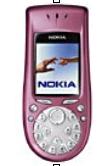
Nokia´s homepages
(This is what students think about them)
1)Pages are
l clear
l logically arranged
l soft colours
2)People can move forward easily using the links
3)Pages are compatible with Nokia 's image
Partners
Some examples:
1)Club Nokia Winter Tour
l go round Finnish ski slopes with Salomon
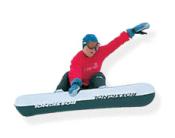
2)Nokia Snowboard Fis World Cup
l arranged in Italy
l here you can read more http://www.nokia.it/eventi/snowboard_worldcup/home.asp
Advertising channels
-TV
-Radio
-Magazines
-Internet
-Retailers
-Outdoor advertising
NEWSPAPERS AND MAGAZINE
Social and Psychological Aspects of Advertising Communication
Communication has a fundamental role in our social life, it’s
the means through which we enter into contact with the others and everything
else around us.
As for this, advertisement has to:
- attract customer’s attention;
- stimulate his curiosity and his interest;
- arouse his desire, driving him to buy the specific product.
The language used in advertisement is universal, because it has to be understood
by everyone.
As to hoardings, the message of the advert has to be direct.
The head line represents the most evident part of the verbal component of
the ad; it has to be immediate and incisive, clear and not too long; it
has to draw reader’s attention without necessarily giving a lot of
details about the product.
Hoardings are located in strategic point, just because they have to be visible
to everyone.
But we haven’t always the time to read what it is written on a hoarding;
therefore the visual, which represents the image or the graphic part of
the advert, covers a fundamental importance in this type of advertisement
as for its immediacy, for its capacity to attract, in a short time, customers’
attention .
As for this reason, companies usually use images of exceptional testimonials,
like famous stars or wonderful girls. The eye wants its part too.
With magazines the matter changes …
Having much more time to spend reading, it is given a lot of importance
to the body copy, the part in which features of the advertised product are
described in detail.
For example, Italian magazines advertisements, concerning telephony, are
often ironic, since it is to be pleasant reading them.
Even for this reason, in an advert about mobile phones they usually offer
alternative services together with the product, like internet, video games,
etc. as valid and enjoyable alternatives of spending your spare time. For
this reason, in fact, features like technical details are often taken for
granted and left out.
In England, on the contrary, lots of importance is given to the economical
aspect of the product, pointing out description of the costs, discounts
and tariffs offered.
Testimonials are rarely used and so we are usually given the picture of
the product (a mobile phone, in this case) with a detailed description of
its technical features.
ENGLAND:
In the foreground they usually offer discounts on cellular prices, like
primary reason of a possible purchase on occasions like birthdays, anniversaries
etc.
Publicity shows as obvious and useful the presence of video-games or reminders
together with the proper function of the mobile itself.
ITALY:
Publicity points out the aesthetic image and the presence of well-known
TV personalities.
What mostly strikes is the beauty and charm of male and female testimonials.
ITALY and ENGLAND in comparison
Both the two countries use short incisive catch-phrases related to future
technological applications of mobiles and parallel utilities (Internet).
Fun and originality are at the basis of rings, logos and personalized sms.
ON TELEVISION:
A massive presence of mobile commercials is to be noticed in Christmas time or holiday periods, while all the year long the same TV presenters sponsor mobile phones in high audience rating programs.

PICTURE STORIES
Fewer photographs, fewer testimonials, advertising prefers drawings
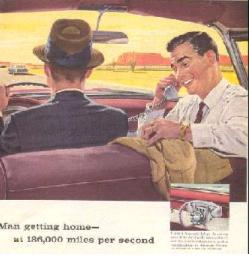 In
avant-garde editing drawings are a consolidated reality. Also fashion has
recently discovered the appeal of hand or computer drawings.
In
avant-garde editing drawings are a consolidated reality. Also fashion has
recently discovered the appeal of hand or computer drawings.
Fashion designer Coccapani has replaced top-model Claudia Schiffer with
Julie Verhoeven’s drawings, while the advertising campaign of Stella
McCartney is carried out by the pencil of Peter Saville. The photographer
Nick Knight in the tenth anniversary of “Dazed & Confused”
has realised a fashion reportage were photos almost turn into drawings.
This trend is now also spreading into advertising.
Americans were the first but also Europeans are now beginning to turn to
drawing advertising getting rid of photographs and testimonials.
“Drawings and illustrations are the recovery of manual work and originality.
We go back to a more physical and warmer atmosphere” explains Paolo
Ferrarini, researcher of the “Future Concept Lab”.

“The body has become the focus again, defeating the fear of the passage
to the Third Millennium, the fear that technology would crash men and make
them all the same”.
On the contrary these new advertisements are unique and original and are
well in line with the target of the product.
Every brand represents a different story: the elegance of French ladies
of Kiraz that advertise CANDEREL sweetener , funny situations for IMPULSE
deodorant , science-fiction cartoons for vodka SKYY. “ The drawer
himself becomes testimonial of the brand name through his illustrations”
says Mr. Ferrarini, “ in turn companies almost become patrons presenting
not simple products bit little works of art”