|
Helpful Books on the Bible
The commentary on the New Testament presented here does not refer to
any scholarly materials, because such studies enrich our understanding of the Bible
but are not necessary. We can see for ourselves that the church in
Jerusalem and Paul disagree about what should be required of Gentile
converts and that the gospels differ factually and in the way each proclaims the good news. It is obvious that the Bible was written by
human
beings to express their faith and understanding. The New Testament may
reveal to us the word of God, but it is not "the words" of God.
Faith, Belief, and
Religion
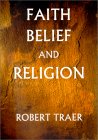 The
New Testament is all about faith, but says almost nothing about belief. Do
you know what this means and why it is important? Faith and belief are not
the same. We are called to be faithful, not "belief-ful." The
Christian proclamation is that we are saved by faith, not by our beliefs. The
New Testament is all about faith, but says almost nothing about belief. Do
you know what this means and why it is important? Faith and belief are not
the same. We are called to be faithful, not "belief-ful." The
Christian proclamation is that we are saved by faith, not by our beliefs.
We are not saved by following the rules and rituals of
Christian religion, but by living faithfully. How is Christian faith like
faith in other religious traditions? Despite different beliefs, Christians
have much in common with other people of faith. To order click on the book cover.
Quest for Truth
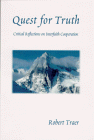 Should
Christians cooperate with people of other religious traditions? Yes, in
working for a more just and peaceful world. Should churches participate in
interfaith activities and organizations? Yes, when these activities and
organizations enable all of us to live together more faithfully. Should
Christians cooperate with people of other religious traditions? Yes, in
working for a more just and peaceful world. Should churches participate in
interfaith activities and organizations? Yes, when these activities and
organizations enable all of us to live together more faithfully.
Should interfaith cooperation encourage dialogue about
what is true for all people of faith? Yes, if this quest includes
self-critical reflection and mutual respect. The goal of interfaith
cooperation should be repentance and forgiveness. To order click on the book cover.
Faith in Human
Rights
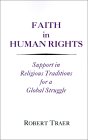 Do
Christians support human rights? Contemporary Christian teaching does,
although not all Christians have or do. Catholics and conservative and
liberal Protestants embraced human rights in the last half of the 20th
century. Is there support in other religious traditions? Yes, at least in
contemporary teachings. Do
Christians support human rights? Contemporary Christian teaching does,
although not all Christians have or do. Catholics and conservative and
liberal Protestants embraced human rights in the last half of the 20th
century. Is there support in other religious traditions? Yes, at least in
contemporary teachings.
There is also "secular faith" in human rights,
and secular and religious advocates for human rights struggle together.
This collaborative alliance for human dignity is rarely noted but worth
understanding. To order click on the book cover.
Human Rights
Essays
on religious support for human rights written by Robert Traer in the 1990s.
Religion May Be Rational
When my fifteen year old daughter asked me if religion was
superstition, here is how I responded to her question.
Publications by
Robert Traer
Books, essays on religion, faith, and human rights.

Statement
of Faith by Rev. Robert Traer
I trust in the God I know through scripture and "the music of the
spheres."
My beliefs about God have changed over the years, even as the teachings
of the church have changed. Yet, I know and proclaim: "God is love, and
those who abide in love abide in God, and God in them." (1 John 4:16)
Scripture testifies that in Jesus "the Word became flesh."
(John 1:14) I call him Christ, because I know no greater manifestation of
God's grace.
The Spirit, like the wind, "blows where it wills." (John 3:8) I
sense the presence of God in the church, in others, and in all creation.
I "live and move and have my being" (Acts 17:28) within the
witness of scripture and teach that God's will is revealed in the Christian
Bible for those with "ears to hear and eyes to see." (Mark 8:18)
But I also argue that scripture is not the literal, inerrant or infallible
word of God.
The sacraments of baptism and communion manifest the faith of the church
and call us to life "in Christ." (Romans 12:5)
The church is the "body of Christ" (1 Corinthians 12:27) in the
world. We are its members, and we all have "gifts of the Spirit"
(1 Corinthians 2:14) to contribute to its ministry. The church witnesses to
God's reconciling work in the world through worship, teaching and mission.
The Apostles Creed is not a test of our beliefs, but the testimony of the
church to the God in whom we trust — the God we know through the biblical
witness. To remind us that the Creed is a statement of faith and not a list
of required beliefs, it would be best to say "I have faith in God . .
." or "I put my trust in God . . ." for this is what the
original Greek means.
Creeds and confessions state the church's understanding of Christian
faith in a particular place at a particular time. As a young man, I was
inspired by "The Confession of 1967" to seek ordination for
ministry in the Presbyterian Church.
With Paul I proclaim we are saved by the grace of God, which we know in
Christ. We enter "eternal life" now (Romans 6:23) not by keeping
the law or by having the right beliefs, but through "faith, hope and
love." (1 Corinthians 13:13)
Palm Sunday, 2000
Biographical
Information on Rev. Robert Traer
Robert Traer is an ordained minister in the
Presbyterian Church (U.S.A.). He has a Ph.D. from the Graduate Theological
Union in Berkeley, California, a J.D. from the School of Law of the
University of California at Davis, a Doctor of Ministry degree from the
Divinity School of the University of Chicago, and a B.A. from Carleton
College in Northfield, Minnesota. He and his wife, Nancy Traer, have been
married more than thirty years and have five children, including two adopted
daughters from Asia, and three grandchildren. Dr. Traer was the General
Secretary of the International Association for Religious Freedom from
1900-2000. He is presently serving as Interim Minister of St. John's
Presbyterian Church in Berkeley, California.
|

