HOME
author calendar names chief appearance village Lewis&Clark origins family sisters
ponies council wwtown cayuseindians letters 1856
The Battle
of
Walla Walla
December 7 - 10 1855
Frenchtown Washington Territory
The Battle of Walla Walla actually started long before it started.
It started when settlers decided to squat on Indian land without giving much thought to the Indians they were squatting on.
That perhaps those Indians might not like to have squatters on their legally, morally owned lands. Land settlers didn't pay for, just squatted on and immediately became theirs.
There would have been hell to pay, if the Indian settlers had settled on whiteman lands.
But Indians were the enemy in their own land. They were only heathen savages with no human rights, no human wants, no human desires.
It was said at that time "a dead Indian was a good Indian". What would they say to "a dead white was a good white". But whites never saw themselves as the bad guy, they always wore the white hat.
1853
The Indians were already holding councils of what to do about the large continual influx of white settlers unto their lands and they were also getting more hostile at having their lands stolen.
In the spring of 1855, Gov. Isaac Stevens came to the Walla Walla Valley to treaty with the Walla Walla, Cayuse, Yakama, and Nez Perce Indians.
The council began May 29 to June 11, 1855 on the south side of Pa'sha(Mill Creek) beside the old Indian trail going from Tuqualle(Tucannon) River to the Cayuse village of Way-e-let-pu, the home of the Wallawalla Valley Cayuse.
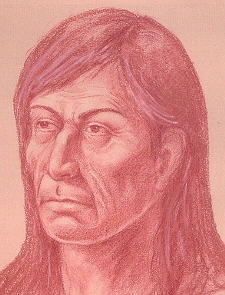
The Walla Walla Chief Peupeumoxmox had a nice presence, very tall, very well built, athletic. He would accept no gifts, as he was afraid he would sell land by accepting them.
When Stevens told the Indians that he was thinking of putting the Walla Walla, Cayuse, Spokane, and Nez Perce on one big reservation in Nez Perce land, these Indians erupted hostilely to the idea of all being put on one reservation on Nez Perce land.
The Cayuse became very angry, vocal and gave a very hostile uproar to the idea of being put on Nez Perce land. They were not going to Nez Perce land! At the time the Cayuse were hating the Nez Perce for selling their land and being buddies with Stevens.
Spokane Garry and the Spokane didn't want to be put on Nez Perce land either, they wanted a reservation in their own homeland.
Because Cayuse hostile feelings carried weight with the other Indians, Isaac Stevens decided to make a 3rd reservation in Cayuse land.
Cayuse Steachus/Stickus wanted his camp at the mouth of How-ta-me (McKay Creek) and old Chief Camaspello wanted his camp at the headwaters of Utalla(Umatilla River near Tollgate) to be in the reservation and their people might be more inclined to sign their treaty.
Stevens proposed a 3rd reservation from mouth of Howtame to Umatilla River headwaters among the spurs of the Blue Mountains to the headwaters of Howtame Creek.
The 3rd reservation was not large enough for all Walla Walla, Umatilla, Cayuse Indians. The Umatilla River was already farmed by Umatilla River Cayuse, leaving no water or land for the Wallawalla farms as they were to get equal land on the reservation. The Cayuse had already spread themselves out along the river in Whitman times, taking up river claims like the other Cayuse along the Walla Walla River, to be ready to claim their land when the time came.
There was not enough bunchgrass land for their thousands of ponies and cattle. There was not enough land to feed their families. Too many Indians, not enough land to go around with Walla Walla, Umatilla, Wallawalla Valley Cayuse, Umatilla Cayuse, Grand Rond Cayuse.and all their stock together on such a small reservation.
When Stevens told Peupeumoxmox he had to go to a reservation, he felt as if he had been blown away like a feather and his heart cried. What should he do? He was not to be penned like a pig and fed by the whites.
He was not selling his homeland the Wallawalla Valley. He didn't want to go on the Cayuse reservation as often they didn't get along. He wanted a reservation in his own land and Indians wanted no further white settlement unto their lands.
Joel Palmer said alittle good grass in WallaWalla valley and alittle good grass in Umatilla valley and alot of wasteland in between. The Cayuse wanted the wasteland in between for their ponies.
Spokane Garry told Stevens if he would make the reservation larger, from the Umatilla River to the Walla Walla River, the Walla Walla and Cayuse would be happy and more inclined to sign their treaties if they each had part of their own homeland.
Stevens told Spokane Garry to have the Cayuse check out the bunchgrass area and if it was not large enough he would make it larger.
Because of the Cayuse hostilities, Nez Perce Council Chief Lawyer moved his lodge beside Stevens as he said he had uncovered a plot by the Cayuse to rise up and kill Stevens and all white men there.
Peupeu called Lawyer out, called him a liar, that no Chief would okay such a plot.
Soldier Lawrence Kip had heard of no Cayuse plot of wiping out the whites.
Joel Palmer -- "Lawyer was a teller of tall tales to make himself look good in Stevens eyes. Considered Lawyer unreliable, to ingratiate himself with the whites or to provoke even more bloodshed and he liked his importance amongst the whites".
Stevens -- "A hatred between Nez Perce and Cayuse had sprung up. The Nez Perce took great pride in their unwavering devotion and friendship to the whites and were very fond of talking alot, contrasting their course with that of the Cayuse whom they hated".
Lawyer took great pride that he had foiled their plot.
However, it was believed Lawyer didn't move his lodge to protect Stevens, but to protect himself from the enormous wrath of the other Indians, for Lawyer's continued support of Stevens and agreeing to sign away Nez Perce land. Also, for getting Stevens to make him head chief over Head Chief Looking Glass.
Lawyer asked Stevens for the large reservation not taken by the other 3 tribes to be given to the Nez Perce alone, which Stevens gave him. A very large reservation for the Nez Perce alone.
But in the end, much to their surprise, the Nez Perce were to find out, that to a whiteman an Indian was just an Indian, and they were just another Indian.
Stevens was getting tired of all this, it was time for Indians to sign their treaties.
Stevens gave incentives for Indians to sign. Peupeumoxmox was given his own land at Chimna peninsula for a trading post near the mouth of Yakama River, along with other items.
The Indians still refused to sign. In flustration of not getting cooperation in signing their treaties Stevens said, "Tell the chiefs if they do not sign this treaty, they will all walk in blood knee deep".
The Indians having heard the same thing in the Cayuse War, in order to protect their people felt they had no option but to sign.
Peupeu told Yakama Kam-i-ahkin and Cayuse We-ah-te-na-te-ma-ny if they didn't sign they might not get any land at all. That soldiers would come and run them off. Kill them if need be. Then they would have no land. He wanted a definite line drawn that whites could not cross. That land was for Indians alone and their future children. If they did not sign treaty the whites would take all the land. Indians would be without any land and what would they do then.
The Cayuse had been threatened by bloody knees before and they would not sign away their lands.
Weahtenatemany said he would be like a wolf without a home, without a home he would die. He told Stevens "I can not take the whole country and give it to you. I will show you, the lands that I will give you".
Peupeu said to him, "If you do not sign, you will be dead without land".
Peupeumoxmox said it was better to sell land and move to reservation that was lined off away from whites instead of continually fighting and ending up with nothing. To sign and have something, then not to have anything at all.
The Walla Walla and Yakamas signed their treaties June 9th.
The Cayuse refused their consent to treaty. They would not sign unless they got their Blue Mountain haunts where they lived and hunted and wintered.
Stevens concluded he would have to give them their mountain haunts if he wanted them to sign. Since the Cayuse would not sign their treaty till they got their Blue Mountains, they were assured by Stevens of their Blue Mountain home.
The Nez Perce signed and then the Cayuse were last to sign their treaty on June 11th.
However, the final Cayuse treaty by Congress would cut their reservation in half and the Cayuse did not get their Blue Mountains as promised or as original signed treaty was written.
Joel Palmer ---- "They have sold us all their country except their reservation land, that they have reserved for themselves, that is to be kept in its entirety for them and their children. That the reservation lands belong to the Indians and their future children. No whites were to be on reservation, it belonged entirely to the Indians. The Whites have gotten their lands, the reservation is for the Indians".
(((That means if reservation is cut up into claims, the whole reservation belonging to the Indians is all cut up into Indian claims, accordingly for those Indians. The whites owned no reservation land and had no claim to it. One whiteman could take a claim of 160 acres, 640, 1000, 5000, 10,000, 25,000. It took l6 Indians to get 160 acres of their own land!!!)))
The signing of the treaties with the confiscation of their lands brought an extreme hostile feeling to the Indians. When Peupeu returned home from council his people were angry with him that he had signed away their common land without their consent and they would abide by no treaty.
The Indians were getting so little of their own land and the whites were getting so much. With millions of acres the whiteman wanted them all. The Indians could starve and good riddance.
The other Indians felt the same, not wanting to give away their ancient lands to the whites. The Klickitats had not been included in the treaty council, but had their lands taken.
The general feeling of all Indians were the same, that they were being run over by the large influx of foreigners who had no legal rights nor moral rights to Indian lands either by purchase or conquest, but only by their squatting and aggressive take over.
The Indians wanted war against whites while white numbers were still small enough to drive out of Indian Country.
However, it was the whites going to run the Indians out, if they had to kill them all by one way or another. Americans have killed more of their own native people, but they are first to point fingers at other countries for the treatment of their natives, but they point no fingers at themselves.
The West Coast Indians were angry at the way Stevens had gotten them to sign. Some Chiefs said they had not signed their treaty. They did not like that the whites had taken so much good land and left them with so small reservations, bunching Tribes up together in other Tribes lands. Indians didn't understand treaties not spoken in their own language and did not know what Stevens secretaries were writing down.
There were many hostile meetings going on between Indians on both sides of the Cascades that summer of 1855.
Kamiakin and Nisqually Leschi came to Wallawalla Village that summer and Leschi gave rousing speeches that carried much weight with all the Indians, that if they didn't attack the whites while they were few they would soon be too many to fight.
1855 was summer of much discontent amongst the Indians as more hostile feelings towards whites increased. Stevens put in newpaper ad that Indian land was open to settlement, even though treaties had not been okayed by President or ratified by Congress. Because of Stevens actions some whites said treaties were null and void.
Peupeumoxmox would not give up Wallawalla Valley and he closed Cayuse land to all traffic from Columbia River to Tuqualle(Tucannon)River. All roads coming in and going out were closed. No one was to go in or out of Cayuse land.
The Chief wanted all settlers out of the Wallawalla Valley, they could pass thru as usual but they could not stop and they could not cut timber for homes. The Indians didn't want to fight but no white was claiming the valley and Peupeumoxmox was not going to reservation.
October 6, 1855
Major Haller marched into Yakama Country to investigate the murder of Yakama Indian Agent A.J. Bolon and the killing of gold miners who had molested Indian women.
There was a skirmish at Yakama between Major Haller and the combined Klickitat, Yakama, Kittitas Indians.
Yakama Chief Kamiakin assembled Yakama Indians to reinforce the Klickitat to meet the soldiers. They were joined by Chief Owhi and the Kittitas. These Indians were determined to fight before they gave up their lands and they would kill their women and children before they gave them up to the bloody Americans with their well known passions. The Indians numbered around 1500, could raise 2000 and would not give up their arms under any condition.
Major Haller retreated back to The Dalles and the Indians considered it a major victory and made their way to Wallawalla.
Dalles Indian Agent Nathan Olney hearing problems had arisen in the Wallawalla Valley, that Peupeumoxmox was on the warpath and gathering Indian forces from Wallawalla Nation, went to Old Fort Walla Walla to size up the situation. He told Hudson Bay Trader Sinclair to leave Fort and throw all guns and ammunition into the Columbia River as all indications showed that Peupeumoxmox was getting ready for war and just waiting for all the braves to return.
Although no whites had been killed, harmed or threatened or Chief had shown aggression to anyone, on October 12 Olney ordered all settlers out of the Wallawalla Valley whether they wanted to go or not.
The settlers met at Whitman Mission as a group and left for The Dalles on the 15th.
Peupeumoxmox would not see Olney and did not get $500 from him. Told Olney to come see him which Olney didn't do. He said Chief was angry with Stevens for the way he talked at Council and the Chief would see Stevens when he returned from Blackfoot Council. The Wallawalla didn't want to go to Cayuse reservation and Cayuse didn't want Wallawalla on their reservation as it was too small for all the Indians and all their ponies and cattle combined.
Olney told the Cayuse there would be new talks of reservation boundaries making it larger for stock. Wallawalla would be excluded from Cayuse reservation as Wallawalla wanted their reservation on their own land(in Washington) and would take no other. They said Cayuse land not well defined and the Cayuse found their land had been sold by another Tribe in their intermingling areas.
Indians wished treaties renegotiated or be put aside. They did not want to move into other Indians land. They wanted the right to choose their own reservations. The buyer seemed to be doing all the dictating of terms, instead of the seller.
The War was brought on by the fast influx of whites, taking any land they wanted without regard to the rightful owners and the treaties without Indians approval, were the final blow.
The Indians wanted no white settlers taking their lands and they were not prepared to live in some other Indian's territory. They had always lived in their own territories and all had abided by that.
October 30, 1855 -- November 1855
Major Rains marched into Yakama Country to take up where Major Haller left off. After a 4 day skirmish with some Indians and the burning of Ahtanum Mission, Rains returned to The Dalles.
General Wool was on the side of the Indians and thought Indians needed protection from the whites invading their country and he ordered no settlement into the Walla Walla Valley. Wool wanted military posts established in Yakama and Walla Walla Valleys to protect the Indians from the white settlers. Wool censured Rains for calling for volunteers and accused the Governor of dishonest motives in not working with the Indians in their grievances against the treaties. Stevens was all for wiping out the Indians and taking Walla Walla Valley for white settlement.
Oregon Governor ordered Major Chinn in command of about 150 men, dispatched to the Walla Walla Country.
At Wells Spring, Chinn was told his force was too small to come up against the Cayuse and the notorious Chief Peupeumoxmox combined Indian forces of the Wallawalla Nation. That other Tribes had joined the Chief and that 1000 Warriors had taken a very strong definite position.
The burning and pillaging of Old Fort Walla Walla was the first indication of war by the increasingly hostile Indians.
Major Chinn delayed his march to the Walla Walla Country going instead to Utilla Indian Agency(at Echo,Ore.). He found the agency burnt by the DesChutes on their way to join the Wallawalla. Camping beside the agency, Chinn built Fort Henrietta.
At this time the Oregon Mounted Volunteers were badly off with scant clothing, poorly armed, thin blankets, few tents, few supplies, and poor broken down horses. All the Volunteers had was a hatred for the Indians and an acute eagerness to wage a war of destruction on them all and get rid of them for good.
The volunteers could see signal fires, but no Indians. A guard reported the sighting of a large force of Indians and investigating, the soldiers found an Indian design nearby. The design consisted of one large circle surrounding five smaller circles and a heart within. The heart represented the Highest Chief of the Nation, and the Indians were united under the leadership of War Chief Peupeumoxmox. Inside the 5 small circles were placed 4 sticks, 3 sticks, 2 sticks, and 1 stick inside the heart. The design was interpreted to mean: 400 Cayuse, 400 Yakama, 300 Klickitat, 200 DesChutes, 200 Palouse, 100 Wallawalla & Umatilla, were joining the Wallawalla.
Peupeumoxmox or Yellowbird had been chosen War Chief as he had more experience and aggressiveness. He was not to be blown away like a feather and his authority was absolute.
November 29
Major Chinn small force at Henrietta was joined by Capts. Cornoyer, Wilson, Munson and Lt. Col. James Kelly taking command, making a force of around 400 soldiers.
As new soldiers had come along The Dalles road Indian smoke signals passed from peak to peak charting their progress to the Indians, saying "little company there 2 days".
December 2
Sending scouts out to make sure the enemy was not watching to send a smoke signal of their arrival and leaving 25 volunteers to guard Henrietta, Kelly, Chinn and around 350 volunteers moved out around 4pm hoping to reach Old Fort Walla Walla and surprise the Indians before sunrise. However, blinding snow, followed with continual rain, very dark, bitter cold, ground frozen hard, caused the soldiers to string out. All night they wandered over trackless monotonous open plains, suffering the cold greatly.
December 3
Come early light found them farther from the Fort then was planned, taking them till near noon as they spread out along the Wallawalla River. The mouth of the river was thickly lined with tall willows and bushes, giving the only greenness to the entire sand covered land. Not a living thing was to be seen in its stillness.
The soldiers went to investigate the Old Fort. It had been ramsacked, pillaged and burnt. They found a cache of whiskey and a brass Howlitzer.
That evening Kelly reorganized all commands.
December 4
Some soldiers mounted up and went out to surrounding hills where was seen a large group of Indians watching them.
When soldiers approached, the Indians fled keeping well out of gun fire. The soldiers spent an interesting day chasing Indians from sand dune to sand dune across the open flat rolling hills, firing on them to scatter them in all directions.
The soldiers were having alot of fun until the Indians returned their fire. With bullets whizzing around their heads, the soldiers decided the fun was definitely over. The Indians told them they were friendly and didn't want to fight.
December 5
Early next morning Col. Kelly took 200 men, Olney and his Dalles Indians, on the stronger horses and taking no food proceeded across the sandy sage covered hills to find the location of the combined Indian camp with the express view of attacking it. Kelly had not come to talk, he had come to fight!
Major Chinn took 150 men with the tired out horses, food and supply pack train, hospital wagon and moved down the Mission road to the mouth of Tushay(Touchet)River. Finding cattle along the way, they made camp 1 1/2 miles from its mouth in an open flat.
Shortly around 3pm, Kelly's command while resting their horses, saw 100 or so Indians coming over the hills about a mile away galloping full out. The soldiers galloped full out towards them, thinking it was a fight.
The Indians stopped and several Indians, including the famous War Chief and leading subchiefs, came forward under a large white hankie flag of truce so they wouldn't get shot. The Great Chief holding the flag was past his prime, but still looked powerfully vigorous.
They came forward and asked for officers to speak with them.
Kelly, a few officers, Olney the interpreter, went forward to parley. They all shook hands and the Chief asked Kelly, "Why have you come to my country"?
Kelly told him they had come to punish the Chief for his and Indians wrongdoings, in burning Fort, stealing government goods and wanting all settlers out of the Wallawalla Valley. The Chief was accused of bribing the Cayuse and others with blankets to make them fight. But the Chief told them, in time of war it is hard to restrain the hot fighting blood of the young men and that the Cayuse didn't need a bribe for them to fight. That the incoming Yakamas along with others had burnt the Fort.
The Chief said he was friendly, asserted his people wisht to talk and wanted soldiers to come to his camp and council. Soldiers were to have supper with them and peace council next morning. Chief told them "We have watched you and knew you were coming and have ordered 5 steers to be roasted. I have come to meet you and have you supp with us".
Chief asked for peace, promised to return all goods and pay for damages.
Kelly informed him that was not enough. Informed the Chief he must give up all arms, give beef and food to soldiers, and supply them with cayuse ponies to fight the hostiles.
The Chief knew they couldn't hunt or fight their enemies without arms and he asked for peace. The Indians would come next day for peace talks. His people wisht to talk to Stevens and peacefully renegotiate the treaty grievances felt by all the Indians. The Cayuse were to get more land and renegotiations in keeping the Wallawalla valley.
Yellowbird as he was called by his force, had shown strength and determination in standing up for the Indians rights. However, the soldiers robbed him of renegotiations of any sort with Stevens when they said they had come to fight.
Olney told Kelly all that the Chief had said and added some of his own. Told Kelly it was only a ploy to give Indians time to get their camp moved to safety and for warriors to prepare for battle.
The Chief had known for 2 days Kelly was there. He had had time enough to get his people away to safety, but the Indians didn't know what Kelly wanted.
Kelly listening to Olney and thinking Chief needed time to get his camp away and would not return, told Chief he had come to wage war against him and if Chief returned to his camp, the soldiers would attack it. The Chief was at liberty to leave under the white flag, but if he did, his camp would be attacked. The Chief was to surrender or fight! If he continued to go under the flag of truce, his camp would be attacked. If he remained as their prisoner his camp would be spared. The alternatives were distinctly made known to him.
The Chief did not surrender!
The Chief being hard pressed, had no option but to protect his people, dropped the white flag of truce, agreed to Kelly's terms and stayed as his prisoner and hostage, as Kelly was in hopes that they could be useful in prosecuting the war against the hostile tribes.
The soldiers now thinking they had the Chief in their power, place a guard over him and the other braves taken as prisoners.
A messenger was sent to Major Chinn about the next day's peace talks, asking for reinforcements in case Indians decided to fight.
Fast racing cayuse pony runners were sent out in all directions telling of the Chief taken prisoner.
December 6
Morning found the main Indian camp had left during the night as Peupeu had sent a messenger to tell them to leave.
The soldiers angriedly denounced Peupeumoxmox as a traitor as having decoyed them into a trap the night before. But Chief declared his innocence as his people wisht to talk.
The Chief was an Indian --- to whom was he a traitor?
After soldiers had eaten from the Indian caches and burned the rest of Indian supplies. As no other Indians had come into camp for peace talks, as they were afraid Kelly would take them as prisoners also. As there was nothing more to be gained by staying, Kelly took the command down along the west side of the river to Tushay mouth. Indians were all around following them.
That evening a prisoner, Big Jim, tried to escape, but was hauled back into camp and all prisoners were tied fast, including the Chief.
December 7
Early in the morning arriving under a white flag Peupeumoxmox son and other Chiefs came to see about the welfare of the prisoners. They told officers they wanted their Chief released, that the soldiers were not to cross the Tushay as all
roads were closed in and out of Cayuse land and that the valley had not been sold. That if the soldiers crossed the river the Indians would attack them.
Not believing the Indians would attack, the soldiers pulled out crossing the Touchet River going to establish winter quarters at Whitman Mission.
The Indians opened fire and a hit and run battle was fought along the Walla Walla River. The Indians hitting and running, pushing the soldiers along.
Thus it went for 5 miles until they came to the French settlement of several cabins. Around and about these cabins raged the strife and struggle of the bloodiest conflict ever fought in the Northwest.
Behind the fences and in the cabins were shelters to the fighting Indians.
These cabins were attacked over and over again and the stubborn resistance of the Indians were only overcome by great force on the volunteer side.
Driving the Indians farther afield where they took possession of Tellier cabin, from which the Indians could not be driven.
The Indians having become strong enough by newcomers they formed a line extending about a mile, from the Walla Walla River across the flats up the bunchgrass hills.
The volunteer horses had completely given out, and they made a stand at LaRoque(LaRock) cabin. Forcibly driving the Indians from it, the pack train with the prisoners stopped at the cabin to look after the dead and wounded soldiers.
Deciding to stay, they made the LaRoque cabin their headquarters and hospital.
Around 2pm that Friday afternoon there had been very heavy fighting. During this heavy fighting all soldiers were needed at the front.
The prisoners, Peupeumoxmox, his son Wolfskin, his other son, a young Chief, and Champooeg Big Jim were getting restless and anxious to get into the fighting and were calling out encouragement in Cayuse language to their fighting brothers. The Chief calling out instructions felt certain they could whip the soldiers. Yellowbird was still very much in command of his troops.
Sgt. Miller sent a messenger to nearby Col. Kelly, saying prisoners were restless, anxious to join the battle and they might escape and what should he do?
Tie'em or kill'em I don't care which was Kelly's reply.
Olney told Underwood, "Tie'em and put them in the cabin as it would take less men to guard them", as every man was needed at the front.
The Chief had not forgotten the humiliation of being tied the night before and the indignant Chief refused to be tied once more.
"No! No! tie dog, tie pony, no tie Hyas Tyee. He Hyas Tyee(highest Chief of many Tribes) not to be tied like pig"!
The Chief had never been treated with so much disrepect for his title which was the same as President, King, Monarch, Kahuna etc. He was the 1st Chief over the whole Wallawalla Nation,(that took up 1/3 of Washington State). The whites were treating him like scum!
Tie'em or kill'em was the order. Ropes were brought out and soldiers pulling the prisoners off their horses, proceeded to tie them.
Big Jim resisted and trying to get Miller's gun, a bullet cut Sgt Miller on the arm. A soldier shot Jim and suddenly all guns were going off at an Indian. One after another Indian was stricken down the instant they were struggling to get a gun or knife to keep from getting killed. The struggle was furious!
The Indians were big men and fighting desperately but in hardly minutes they lay dead, except the 15 year old Nez Perce boy prisoner Billy. He was told to keep still and was not killed.
The Chief's son big husky 6ft 4in Wolfskin was hit on the head by a rifle butt killing him instantly. His other son and the young Chief were shot.
Peupeumoxmox had been hit hard on his head with a rifle barrel by Samuel Warfield crushing his skull, knocked senseless, thought dead, recovered, was shot by Olney. Wolfskin seemed to have left an impression on the volunteers, for they remembered best the death of the big Indian,
Some of the volunteers thought all 5 Indians had been barbarously killed.
General Wool said it was cold blooded murder. A few volunteers thought that too.
Since most Indian prisoners were hung, it is doubtful as prisoners they wouldn't have received the same treatment in the end.
On the Raymond claim (next to LaRoque) the battle raged the hottest and heaviest. Every foot of ground on the 1 1/2 mile battlefield was fought on, from the hills, to the plains, to the trees, to the river.
Heavy fighting continued for 4 days. The soldiers couldn't drive the Indians from their hiding places. The Indians were thick behind sagebrush, grass clumps, sand dunes. Laying low they crawled from spot to spot, from clump to clump, from bush to bush, creeping in and out of hollows, wellhidden.
The soldiers had to take to the ground like the Indians in 30 below and 8 inches of snow. Crawling on all 4's they fought amid the noice of yippin Indians, whizz of flying arrows and gunballs, which mingled with the moans of the wounded and dying.
The Indians fought with a fury, great skill and extreme bravery. Hand to hand the Cayuse fought like wolverines. Indians made full out charges of daredevil bravery, but were repulsed with great loss. In battle an Indian warrior has no equal and there is nothing more frightening then to see them charging down upon you on their vividly painted ponies. It was a sight to behold and the ridges were covered with painted Indians just waiting to do you in, brought a chill to even the braviest of men. Most soldiers had never seen the Indians in their full performance and it was both exciting and frightening.
The Nez Perce didn't join the fight and they cheered the volunteers on. They considered the Indians fighting for their land "bad Indians". They along with the soldiers cheered when Indians were killed. The Indians then cheered when whites were killed.
December 9
The soldiers ammunition and supplies were getting low and their situation serious. They were only hanging on, only shooting in defense. The soldiers wanted to get the heck out, they didn't like the way Indians fought. The Indian defense was stiffer then they had anticipated and they got angry when whites got killed. But they were the ones who had come to fight! Without ammunition the Indians would over run them and most soldiers would be killed. The situation extremely serious, they couldn't hold out much longer, only 2 day's ammunition left and then they would be over run by the savages.
Messenger Robinson was sent out on Peupeumoxmox very fine black horse, hoping he could get thru to Capt. Cornelius to come at once with food, supplies and ammunition as a full scale battle was enforce. Surrounded by hostiles, food gone, ammunition nearly gone, situation serious.
Kelly's message was received and 2 companies started out that evening of the 9th and camped on Wild Horse Creek.
The 5th prisoner Nez Perce Billy was sent out to Isaac Stevens with the message of the battle, which surprised Stevens as he didn't think the Wallawalla would join the hostiles.
The Indians were in full force. They were easily 5000 Indians in all, as there were possibly 2000 warriors on the battlefield, who had come from far afield to fight or to watch as the news of the battle had gone out. The battlefield was alive with them. They were on the battleground and on the hilltops. Women and children watching at a distance out of gun range. They were war yipping, yelling, beating continual pounding, pounding, pounding drums, barking dogs and dancing feet. There was noice, noice, noice. The Indians kept coming as the news spread across the Plateau. Their blood ran hot and full out and they were ready to fight.
December 10
Early in the afternoon smoke signals were seen on the above bluff telling the Indians of a hugh company of soldiers coming from The Dalles as thick as trees in the mountains and to flee. Which then discouraged and frightened the Indians into a frantic flight to the Snake River to safety. The Indians racing up the valley were seen no more. They left their calling card by setting fire to the cabins in the valley as their departing gesture to the whiteman.
Who could have sent such a message? As there were no soldiers coming from The Dalles. The Indians could have continued to fight and won, but not the many new troops coming in. Could have been Soldiers Last Stand.
The evening of the 10th, Co. D & E arrived to help with the fighting. Only a few Indians were to be seen.
So ended the bloody battle. Col. Kelly named the LaRoque cabin Fort Bennett after Capt. Bennett who had been killed. Several soldiers had been killed and were buried beside the cabin, but don't know how many for sure. Many Indians were killed and wounded, but that's the way it always was. Whites always had to say many Indians were killed but only a few whites. When the Americans fight for their country they call it patriotism, they called the Indians savages.
For the first time in 4 days the valley was quiet. No whiz of arrow, no shots, no chanting, yelling, whooping, no nightly war dances, no blood curdling screams, no hard dancing feet, no howling barking dogs, no pounding, pounding of the many continual pounding drums day and night that never seemed to stop and literally burst the valley with noice. Now all was quiet in this land of the biggest and braviest of Indians.
To the music of the tom-toms the battle had been fought.
The combined forces of the Cayuse and the Wallawalla Nation, (the Wallawalla, Umatilla, Palouse, Yakama, Kittitas, Klickitats, DesChutes, Rock Creek, John Day) and all those that participated had fought bravely and honorably. The desperate manner in which they had fought and died for what they believed to be their "Divine Right" their land, it was very evident that they were brave to desperation. Peupeumoxmox was determined to hold the Wallawalla Valley, the whites were determined that he wasn't and Yellowbird's Warriors fought with sheer desperation that the valley was to remain theirs.
They were not the enemy, they were the victim.
December 11
With no appearance of the Indians this morning, the volunteers spread out and checked the battlefield for any Indians. 15 dead were found in the river and 87 found on the battlefield. (Some soldiers said there were 75 or 100, I counted 127 in all the fighting. I never found out exactly or where the dead Indians had been buried.)
The soldiers continued up thru the valley along Touchet River looking for the Indians.
The Indians had continued to the Snake River and safety in Palouse Country. How bad had been their crossing?
December 12
The soldiers horses had completely broken down and the soldiers were on foot. They stopped at (Dayton) the camp of the friendly Cayuse, about a hundred Indians under Cayuse Chief Tintinmetze and Old Owlishwampu, along with the French settlers on whose homes had been the battlefield.
They all returned to the battleground where soldiers were still camped. It was 27 below and 15 inches of snow.
December 13
The "brave boys" who had stayed back at camp had taken the 5 killed Indian prisoners out of the garbage cache and dragged them some distance from the cabin and had scalped them.
The camp was a pigsty, mud, human debris, animal guts, wounded soldiers, dead whites and dead Indians scattered about. The cabin was full of wounded soldiers and the dead Indians in the river presented a health problem.
The brave boys and Dr. Shaw had performed a gallant deed. Peupeumoxmox whole head had been scalped and cut into 20 pieces. Ears cut off and pieces of his crushed skull taken till no skull was left. His ears put into a jar, preserved in whiskey was taken back to Salem by Dr. Shaw.
December 14
Dr. Shaw again took out the Chief and continued his gallant deed. A large broad shouldered man, the full length of the Chief's back from shoulders down was cut into razor straps and further body mutilation for soldiers wanting souvenirs of the famous Chief.
His clothing and truce flag were also cut up into souvenirs.
&&&&&&&&&&&&&&&&&&&&&&&&&
A.B. Roberts, who buried the Chief wrote;
"Many of the volunteers were sickened by the whole deed, but those who had participated in the game thought they had done a good thing. Such is the hatred for the Indian!!
Not wanting to be seen as an "Indian Lover" after dark before first light, Roberts taking a spade went out to the side of old Peu. Where a few days before had stood a tall, proud, nicelooking Chief, was now a pityful sight nearly beyond all recognition.
Roberts felt that this bad deed had truly brought shame and disgrace on them all.
Standing quietly with sadness and emotion that there was to be no service nor final tribute made to this, the most celebrated and renowned Chief, West of the Rockies, who had been a legend in his own time.
The whiteman could not seem to understand they were the invading intruders into land that did not belong to them and they had no right to take and the Indians were trying desperately to hang onto land that did rightfully belong to them".
The Chief's only crime had been, to save his homeland. He lies buried in his own homeland, which he would have wisht. There he belongs, and there he should stay.
T.C. Elliott Walla Walla Writer
"The courage, self control and good sense, clearly revealed that Peupeumoxmox was one of the oldest and most important figure at the 1855 Indian Council.
He displayed great wisdom and his speeches verge on the pathetic anxiety of the future of his People.
The Whites had traveled many years thru his country without being molested or harmed and he had shown friendship to all.
He was told he had several years before moving to the Reservation, but within 5 months he found himself compelled to go against the Volunteer Soldiers who had come to do him in.
He gave himself up as a hostage and risked his own life to save those of his People. He was not a troublesome prisoner, but the prisoners didn't trust the soldiers.
Peupeumoxmox was neither a fool nor a rogue. He displayed firmness and tact to get the best he could for his Tribe, but he was also wise enough to know of the futility in his attempting to gain more.
The soldiers coming into his country to go against him, changed his mind on many things. He believed that he was the one sinned against, not the other way around".
Peupeumoxmox Walla Walla Indian Council - 1855
"We have met as friends, let us say nothing that is bad, let us part as friends.
We have been friends for a long time, and I hope we shall always remain friends, and as brothers. When we part, we will part as friends.
Then let us act as friends, and as wise men".
My tribute to Peupeumoxmox
No flowers grace his final place
No marker marks this spot
But Mother Earth her child doth love
He shall not be forgot
Jean Fuller
&&&&&&&&&&&&&&&&&&&&&&&&&
During the year 1856 the military remained in the Wallawalla Valley, but that's an another story.
The preceding was taken from my manuscripts Walla Walla Council and Battle of Walla Walla.
Excerpt sentences taken from writers of that time.
 Doris Hays --- 2001
Claro Bergevin and I worked together on the Frenchtown battlefield.
I asked the Council on Historic Preservation to place the Battle of Wallawalla site on the Washington State Register of Historic Places. It was placed on the register in 1994.
After 15 years of trying, I was finally to get a battlefield highway sign on Highway 12, but the Umatilla Indian Cultural Committe didn't approve it.