| (c.) 2005-2006, Kip Pullman. |
| GRAFFITI STYLE |
| ...the style of American Graffiti |
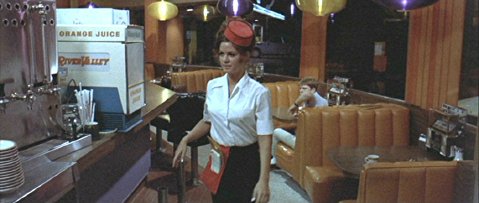
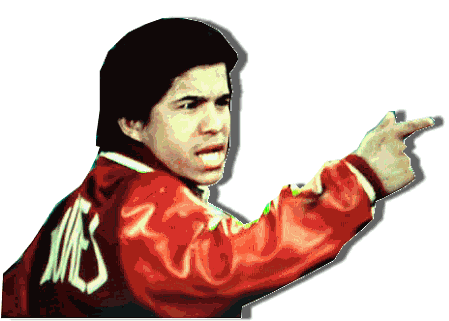
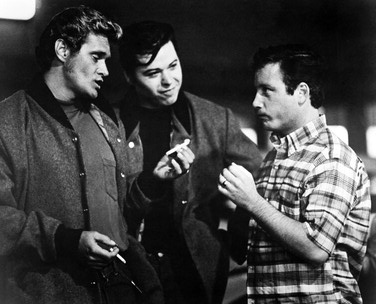
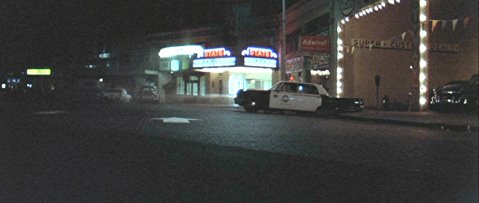
| Graffiti is Lucas� attempt to capture his high school days and the cruising culture in Modesto, California. The film mixes both elements of realism and fantasy as the young filmmaker shows the world the way society was but in an imaginative and entertaining way. The style of the film is realistic whereas the film itself is not. Lucas says, �The actual film... is a myth. For instance, some friends of mine did that to a police car, but it didn�t come off like that. The car just sort of went clunk, and it was really un-dramatic. But, in the film it comes off.� He further elaborated, �The hoods are another example. There are groups like that, but their not really like that. It�s been mythized so that its easier to take and more fun. The fact that it�s shown in a very realistic style makes it believable.� |
| A discussion on American Graffiti wouldn�t be complete without mentioning the style of the film. Here, over the next 8 pages or so, we'll look at some of the elements that make this film unique and give you some idea why other films that have attempted to recreate the Graffiti magic often pale in comparison. So, don't be a schmo from Kokomo, start readin'! |
| The story has a divergent structure where all the key characters are introduced together at the beginning as we see their separate personalities and how they interact with one another. Each character is then involved in an unrelated subplot that intertwines with the main story. This narrative style of storytelling with separate plots was unique for 1973 films subsequently; the technique is now commonly used in most TV programs such as crime-dramas like, "CSI" and sitcoms such as �Malcolm in the Middle.� �It�s funny when you look back now, because everybody�s sort of copied those films,� says Lucas, �They�re so ingrained in our culture now, it�s almost impossible to think there was a point where those things were completely odd and unique.� |
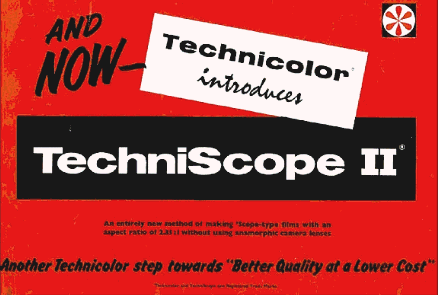
| For Lucas' second feature film, the 28 year-old filmmaker was allotted a small B-movie budget of about $775,000. In part, it is the lack of a big Hollywood budget that gives the 1973 film it's charm. A cast of mostly unknown actors working for scale, old-school film techniques, and creative post-production sound treatment were all used. In addition, clever dialogue, an awesome mix of non-stop oldies, and unrelated stories that interconnect all add up to one great film. |
 |
 |
 |
 |
 |
 |
 |
 |
 |
 |
 |
 |
 |
 |
 |
 |
 |
 |
 |
 |