The music to American Graffiti features a continuous backdrop of
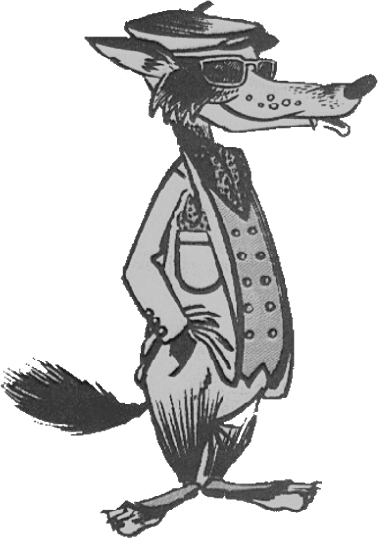
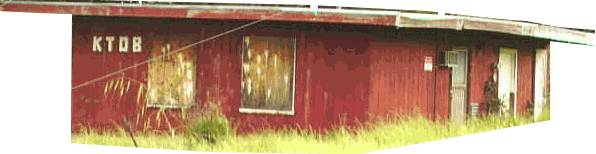
50s and '60s rock and doo-wop, some with Wolfman Jack introductions. There are 41 jukebox hits, on the album and every one of them is a classic from its time. The tunes for the soundtrack were drawn from a list about 200 songs that Lucas and producer Gary Kurtz compiled from the director's large collection of 78 and 45-rpm records. However, the low-production budget prevented them from using some of their first choices. For example, they could not use a song by Elvis because the cost of procuring the rights was too expensive. The original list of fifty songs was whittled down to 42. Approximately $75-80,000 was spent on the rights to the music for the soundtrack. When writing the script, Lucas actually listened to specific oldies for inspiration and then would write that song into the storyline. (For more on the script see our WRITING GRAFFITI page).
The result of writing songs into the script is a film with a soundtrack that humorously alludes to the action in the film. For example, Frankie Lymon's "Why Do Fools Fall in Love?" plays on the car radio when Curt (Richard Dreyfuss) first glimpses the blonde in the white T-bird. And later on in the film, Fat's Dominoes', "Ain't That a Shame" accompanies another glimpse of the blonde, however, this time the music underscores the fact that Curt is stuck in a car with gang members.
Sound Designer, Walter Murch brilliantly mixed the oldies into a wonderful tapestry of sound. When a song was too expensive or not available Lucas and Murch would simply replace it with a different song.
In 1974 Lucas told Film Quarterly, "[The] amazing thing we found was that we could take almost any song and put it on almost any scene and it would work. You'd put a song down on one scene, and you'd find all kinds of parallels. And, you could take another song and put it down there, and it would still seem as if the song had been written for that scene. All good rock and roll is classic teenage stuff, and all the scenes were such classic teenage scenes that they just sort of meshed, no matter how you threw them together. Sometimes even the words were identical."
Writer such as Jeff Smith have noted that the success of American Graffiti made it one of the dominant models for using popular music in films. Smith notes that it's use of pop records both as a subtext reference and as a source of authorial commentary would influence several directors and screenwriters who subsequently adopted Lucas technique of writing songs directly into the script. More importantly, Smith adds, Graffiti also presaged the growing influence that economic and industrial factors would have on developing film scores.
Let's explore now, the indivdual songs and the groups that are collected on the soundtrack. |