
SPOT UV MACHINE | A COMPREHENSIVE GUIDE | By: Rodelio D. Balagot
| ARCHIVE DIRECTORY | UV MACHINE | LAMINATING MACHINE | FOLDING MACHINE | PUNCH & BIND | HARD COVER BINDING | TYPES OF CUTTER |
 |
||||
|
|
Spot UV Machine |
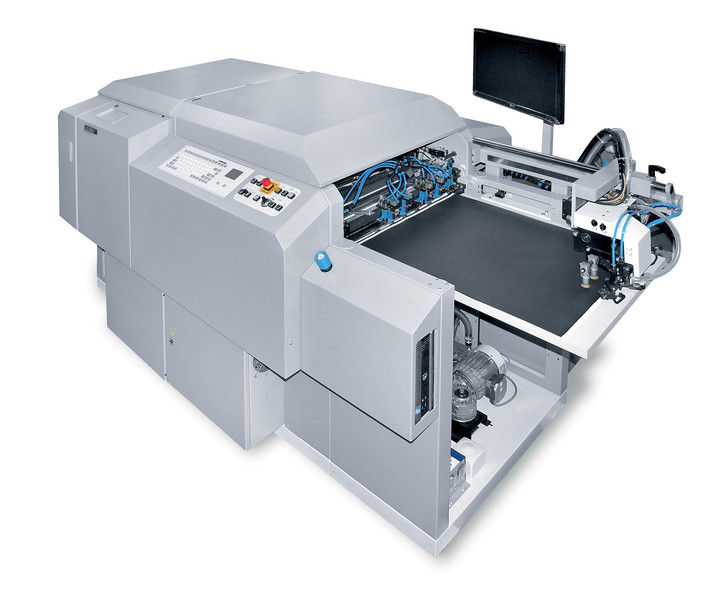
"UV coating" refers to surface treatments which either are cured by ultraviolet radiation, or protect the underlying material from its harmful effects. There are a wide variety of specialty printing techniques available for consumers who are interested in setting their printed products apart from the ordinary masses. One of the most popular based on its high impact, affordability, and versatility is spot UV printing. Although, technically, it’s not a “printing” technique but a coating technique for printed materials. Spot UV printing sounds pretty space age, but the technique itself is not so very complex. Probably the most high-tech aspect of the process is the fact that it utilizes UV light to “cure” a varnish that is applied to paper or cardstock. This varnish can be applied to plain white cardstock, but is often applied to coat color-printed paper products, sealing in their color, adding shine, and protecting the printed surface underneath from moisture and other types of damage. The UV coating process is minimally volatile, meaning little to none of the varnish escapes as a gas into the atmosphere. Basically, this just means the process does not contribute to environmental pollution. UV coating can be applied to achieve either a lightly glossy appearance, or a high-gloss shine, depending on the application technique. Business cards, flyers, and other heavier weight papers or cardstocks are best combined with UV coating (as opposed to thin paper). UV coating can be applied to the whole page, or just to certain areas – a process commonly referred to as “spot” UV coating. In either process, the UV coating has the potential to deepen the color of the print, so when you use it in print projects, it’s a good idea to take this into consideration. Ultra-violet coating of paperUltra-violet cured coatings can be applied over ink printed on paper and dried by exposure to UV radiation. UV coatings can be formulated up to 100% solids so that they have no volatile component that contributes to pollution. This high solids level also allows for the coating to be applied in very thin films. UV coatings can be formulated to a wide variety of gloss ranges. UV coating can be applied via most conventional industrial coating applications as well as by silkscreen. Due to the normally high solids content of UV coating/varnish the surface of the cured film can be extremely reflective and glossy. 80 lb text and heavier weights of paper can be UV coated, however, cover weights are preferred. UV can be applied on spot locations of the paper or by flooding the page. This coating application can deepen the color of the printed area. Drying is virtually instantaneous when exposed to the correct level of UV light so projects can move quickly into the bindery. A printed page with UV coating applied can be very shiny or flattened to a matte finish. A good example of UV coated paper is photo paper sold for home printing projects. UV coatings that are not fully cured can have a slightly sticky feeling. Ultra-violet coating of glass and plasticGlass and plastic can be coated to diminish the amount of ultraviolet radiation that passes through. Common uses of such coating include eyeglasses and automotive windows. Photographic filters remove ultraviolet to prevent exposure of the film or sensor by invisible light. UV curable coatings can be used to impart a variety of properties to polymeric surfaces, including glare reduction, wear or scratch resistance, anti-fogging, microbial resistance, chemical resistance. Computer screens, keyboards, and most other personal electronic devices are treated with some type of UV-curable coating. Coatings are usually applied to plastic substrates via spray, dip, roll, flow and other processes. UV-curable coatings are often specified for plastic parts because the process does not require heat, which can distort the plastic shape. Ultra-violet printing of Aluminum Beverage CansWhen the aluminum cans are formed, they are washed and cleaned. A special coating also is applied on the inside of the can. On the printing press up to 6 different ink rollers supply the colors that coat the printing plates. (Similar process compared to offset lithography). After making contact with the rubber blanket, the can has a complete negative image per color. The process is considered wet on wet ink. After going through each color on the rotary belt, the final image is formed and a special coating is applied to each can to protect the can/colors from wear and tear. The completed cans are sent to the UV oven, that operate over 100 F and contains between six and eight 300 watt/inch UV lamps. Both inside and outside of the can are exposed to the light to ensure proper ink curing.
|