HOT & COLD STAMPING | A COMPREHENSIVE GUIDE | By: Rodelio D. Balagot
| ARCHIVE DIRECTORY | UV MACHINE | LAMINATING MACHINE | FOLDING MACHINE | PUNCH & BIND | HARD COVER BINDING | TYPES OF CUTTER |
 |
||||
|
 |
||||
|
|
 |
||||
|
Hot & Cold Stamping |
Hot stamping is a dry printing method of lithography in which predried ink or foils are transferred to a surface at high temperatures. The non-polluting method has diversified since its rise to prominence in the 19th century to include a variety of colors and processes. Widely used on plastic and paper (where it is a common technique in security printing, it is applicable to other sources as well.
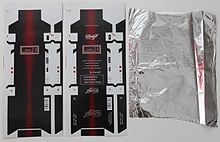
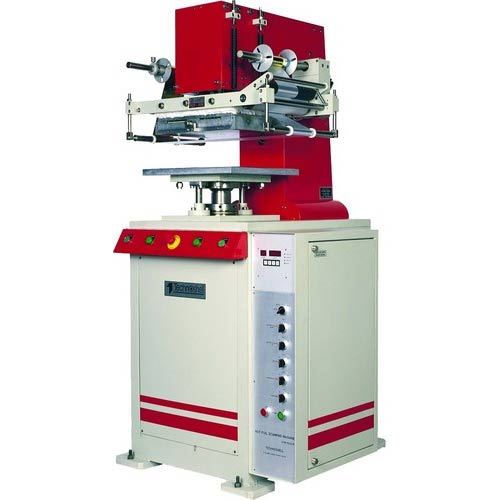
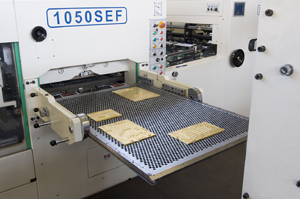
Package with hot stamping before (left) and after stamping (middle) with the foil after the stamping (right) ProcessIn a hot stamping machine, a die is mounted and heated, with the product to be stamped placed beneath it. A metallized or painted roll-leaf carrier is inserted between the two, and the die presses down through it. The dry paint or foil used is impressed into the surface of the product. The dye-stamping process itself is non-polluting because the materials involved are dry. ToolsAmong the commonly used tools in hot stamping are dies and foil. Dies may be made of metal or silicone rubber, and they may be shaped directly or cast. They can carry high levels of detail to be transferred to the surface and may be shaped to accommodate irregularities in the surface.
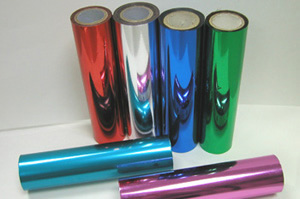
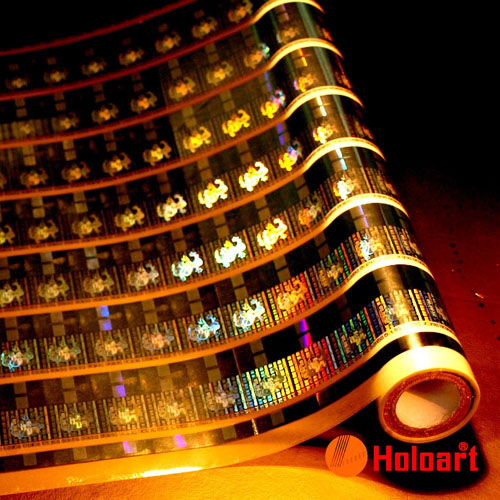
Foils are multilayered coatings that transfer to the surface of the product. Non-metallic foils consist of an adherence base, a color layer, and a release layer. Metallic foils replace the color layer with a layer of chrome or vacuum-metallized aluminum. Metallic foil construction has a metal-like sheen and is available in different metal shades such as gold, silver, bronze, and copper. Pigment foil does not have a metallic sheen but may be glossy or matte. Holographic foil paper includes a 3-dimensional image to provide a distinctive appearance to specific areas of a digitally printed application. Different hot stamping machines serve different purposes, but the most common hot stamping machines are simple up-and-down presses. Cold Stamping Process The trend of using the cold stamping process in the finishing of self-adhesive labels is constantly growing. Whether for flexographic or offset printing, free-radical-curing UV adhesives are now available that provide excellent results when applied to specially developed stamping foils and are cured through the carrier by means of UV light. All smooth plastic materials and non-absorbent paper surfaces that allow the UV adhesive to remain on the surface are suitable for cold stamping. Advantages of cold stamping
|