|
Senior Fire And Burn Prevention Safety And Smoke
Detector Program:
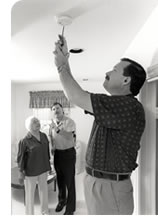 Seniors
Are Especially Vulnerable To Fire! Seniors
Are Especially Vulnerable To Fire!
Senior citizens are more likely to die in home fires than any other
segment of the population in the United States, for several reasons:
- A decreased ability to smell leaking gas or something burning.
- Older adults tend to react more slowly once a fire has started.
- Use of some medications may cause drowsiness and an inability to
react quickly.
- The skin of older adults is thinner and more vulnerable to fire.
- Memory lapses during tasks can contribute to home fires.
Protect Yourself . . . Stop
Fires Before They Start
Simple planning can help you and your loved one stay
safe from home fires.
- Install and maintain smoke detectors. Check detectors every month
and change batteries twice a year.
- Give space heaters space! Place them a minimum of three feet from
every thing - including you.
- Check electrical appliances. Check the plugs and cords for exposed
wires or frayed ends, and replace if needed.
What You Should Do In Case Of
Fire
Take care of yourself in an emergency. Follow these
simple rules:
- Recognize the sound of your smoke detector.
- Know two ways out of all rooms.
- Test the door. If it is hot, use your second way out.
- Crawl low under smoke. If you can, stay close to the floor.
- Stop, Drop, and Roll if your clothes catch on fire. Stop
immediately, drop to the ground, cover your face with your hands,
and roll. If you are unable to Stop, Drop and Roll, smother flames
with a blanket.
- Get out and stay out during a fire. Call 911 from a neighbor's
house.
Basics For Kitchen Safety
- Never leave your cooking unattended.
- Always wear clothing with tight fitting sleeves, so they do not
accidentally drag in the fire.
- Turn pot handles toward the back of the stove to prevent spills.
Use a timer to remind you to turn off burners and the oven.
- Keep stove surfaces free of clutter and grease.
- If a grease fire erupts in the kitchen, carefully slide the lid
over the pan to extinguish the flames, and then turn off the burner.
Don't Be Surprised . . . Plan
Your Escape!
If a fire breaks out, you must be able to leave home
quickly and safely. Plan ahead. Seconds count in an emergency!
- Live near an exit. Or if you live in an apartment, try to occupy a
ground-floor unit.
- Keep a phone next to your bed and post emergency numbers like 911.
- Know two ways out of every room in your house.
- Make sure you can unlock all doors and easily open all windows.
- If you are trapped, close the door between you and the smoke.
Stuff cracks and cover vents to keep smoke out. If you have a phone
in your room, call 911 and tell them exactly where you are in the
house.
Smokers Beware!
- If you are a smoker, use the largest, deepest, non-tip ashtray you
can find. Empty ashes frequently, wetting the contents before
throwing them in the trash.
- Check cushions for dropped matches or cigarettes. These can
smolder for hours and ignite long after you go to bed.
- Never smoke in bed or while on medication that could make you
drowsy or disoriented. And, never leave a cigarette in an ashtray,
or on the arm of a couch or chair.
Smoke Detectors Can Save Your
Life
To be safe from fire in your home, everyone, and especially seniors,
should have a smoke detector on every level of the house. And, remember,
smoke detectors only work if their batteries are good. Be sure to change
the batteries in your smoke detectors when you change your clocks twice
a year.
The Burn Institute has teamed up with volunteers, fire
departments and other community organizations to install a free smoke
detector for any senior who does not have a working smoke detector in
their home.
To qualify for a free smoke detector you must: be 55
years or older, own your own home and not currently have a working smoke
detector.
|
