| Burn Classifications: |
|
There are three different kinds of burns:
|
|
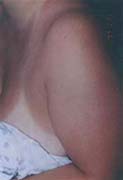
First degree or superficial burn
Sunburn is a typical superficial burn. A superficial burn is usually red and blanches (turns white) if you press on it. Superficial burn do not produce blisters, and
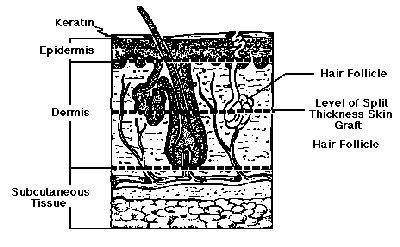
damage only the top (or epidermal) layer of skin.
|
|
A first degree burn heals by itself in three to six days. Hospitalization is required only if fever, dehydration (not enough fluid in the body) or uncontrollable
pain develops. First-degree burns are not included in calculations for burn size. Burn size is called the total body surface area or TBSA.
|
|
|
Partial thickness burn
These burns involve the entire epidermis (top layer of the skin) and some portion of the dermis (second layer of the skin). Partial thickness burns are often broken down
into two separate types: superficial partial-thickness burns or deep partial-thickness burns.
|
|
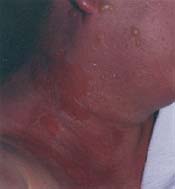
Superficial partial-thickness burns cause blistering and are painful. Under the blister, they are red and moist. They heal within three weeks with minimal cosmetic defects
(you wouldn't notice the scars with a casual look). There is usually only a change in the skin color, or pigmentation.
|
|
|
Deep partial-thickness burns are dry and may appear ivory or pearly white. They require longer than three weeks to heal and usually produce severe hypertrophic scarring.
A skin graft is usually recommended for deep second degree burns.
|
|
Full thickness burn
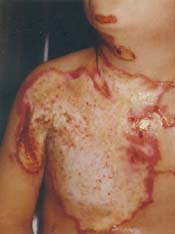
A full thickness burn destroy the epidermis (first layer of the skin) and dermis (second layer of the skin). They are dry, with a dark brown or leathery appearance.
|
|
Most deep partial-thickness burns and ull thickness burns larger than 3 centimeters in diameter are best treated with early excision (removal of dead tissue),
immediate skin grafting, and long-term use of compression garments to minimize hypertrophic scarring.
|
|
Burn Classifications
|
|
