| Jaggi's Garden Gardening for India |
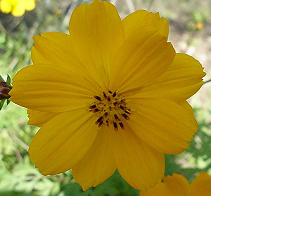
| Cosmos Botanical Name: Cosmos belongs to that vast family of plants known as Compositae. Although there are 20 known species of cosmos, two annual species, Cosmos sulphureus and Cosmos bipinnatus are generally used in Home Gardens. We are discussing Cosmos sulphureus here. This flower is Native to Mexico. It is an Annual which can be grown in Ground or in Pots. Seeding time: Seeding time starts from January after frost and lasts up to September. Flowering time: Flower starts from February end and lasts upto November. Propagation: Cosmos is grown from seeds, which can be directly sown into Pots or ground. Sow seeds and cover lightly with soil. Space four to six inches apart. Care: Cosmos needs only basic care to provide a colorful abundance of blooms all summer long. Cosmos is not a heavy feeder. Excess fertilization will cause plants to produce excessive leaf growth at the expense of flower production. The "problem" with cosmos is "over-care". "Over-care" means too much water, too much fertility and too much shade. When "over-care" occurs, cosmos becomes tall and spindly and blooms sparsely. For growing cosmos practice "tough-love" plant culture. "Tough-love" watering means only watering when the cosmos foliage begins to wilt. "Tough-love" fertility means very little if any soil fertility. "Tough-love" location means no shade and in direct, all-day blazing sunlight. Variety: The flower heads are composed of disc and ray flowers. The disc, or center flowers are yellow: the ray, or outer petals range from pale yellow or mustard to orange-scarlet. Red is a relatively recent addition to the color range. The native species is golden-yellow to orange Cosmos grows best in the worst conditions India has to offer -- hot and dry. This is why cosmos is the best possible annual for India. |
| Gardening information and resources |
 |