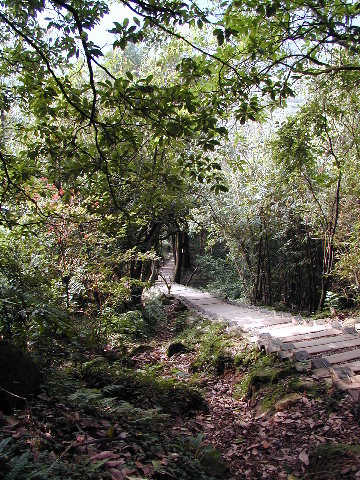
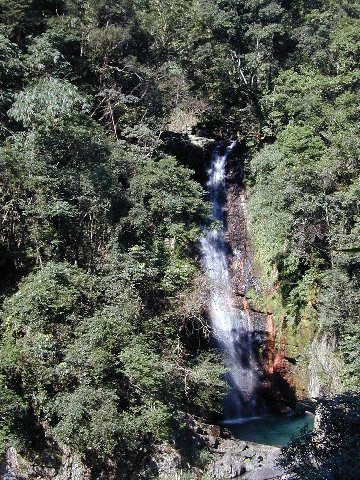
| And each of these sub-parks is of a different characteristic in nature. While it wasn't possible to vist, cover all the scenic routes, some of these were definitely worth mentioning. At Hsiao You Keng, one could already smell the strong sulphur scents while approaching the cracks. The acidic hot spring is a result of the erosion of faults that causes the rocks to collapse, thus creating the volcanic landscape. Leng Shui Keng (Cool Water Pit) is another natural formation caused by volcanic activites, which eventually forms the semi-spherical crater. If you look closer there is steam coming out from the lake. Unlike Hsiao You Keng and Leng Shui Keng, Ching Tien Kang is a sprawl of greenery and is impressive for its sheer size. The ground looks like it is covered with a huge green blanket, from far. As for Chutzuhu (Bamboo Lake), it is not really a lake as the name implies but rather a rich farmland full of yellow flowers, especially the calla that bloom every year from December. On this very cloudy day, the fog that appears makes me feels as if I am in heaven. The natural and abundance beauty of Yangmingshan National Park is hard to describe further, but not hard to feel and understand. Where else could be more relaxing than to spend a day in Yangmingshan? If I were a local, I would make Yangmingshan my every weekend spot for relaxation. |
| Taiwan - The Formosa |
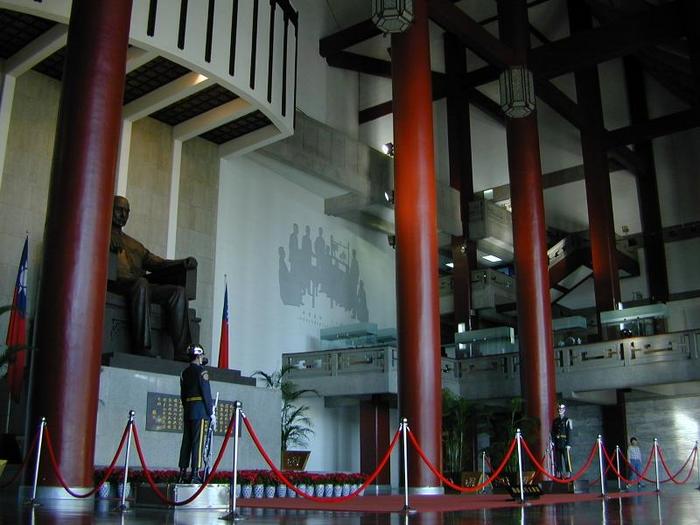
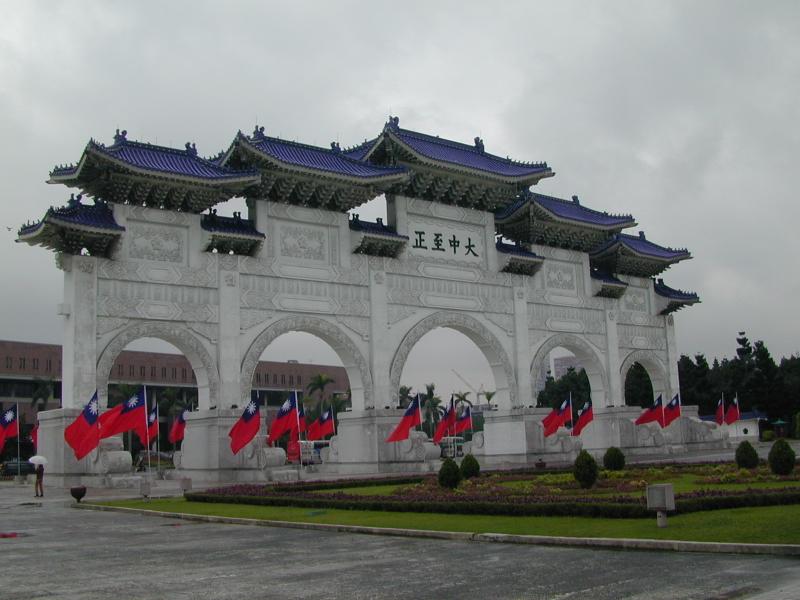
| Returning to the city again, I made it a point to visit the museums and memorial halls. This is always where the history and origin information can be found. At Xinyin district, I found my way to Sun-Yatsun Memorial Hall. The late Dr Sun Yantsun was the father of modern China; the hall was built to commemorate his work, effort and struggle to liberate China. The entrance of the hall is dominated by a 30-feet seated statue of Dr Sun. I was fortunate enough to witness the Changing of Guard ceremony, where the guards, dressed in smart uniform, went through a drill in a highly respected and serious manner. Apart from the memorial statue, there is also an exhibition on the history of the revolution held at the back hall. As a Chinese, it is definitely an inspiring visit. Chiang Kai Shek (CKS) Memorial Hall is another palatial Chinese design, dedicated to the late president Chiang Kai-Shek. The huge bronze statue of the late president stands in the hall, overlooking the big lush gardens flanked by flowers. On both sides, 2 elegant cultural establishment - National Concert Hall and National Theatre stood out firmly and proudly. Most of the international performances and acts are staged here. |
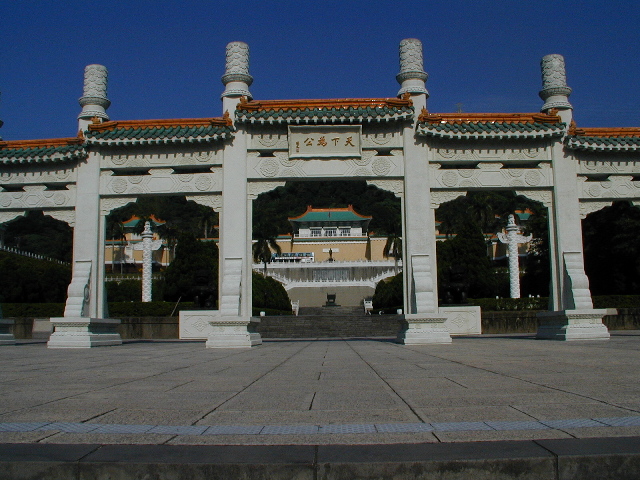
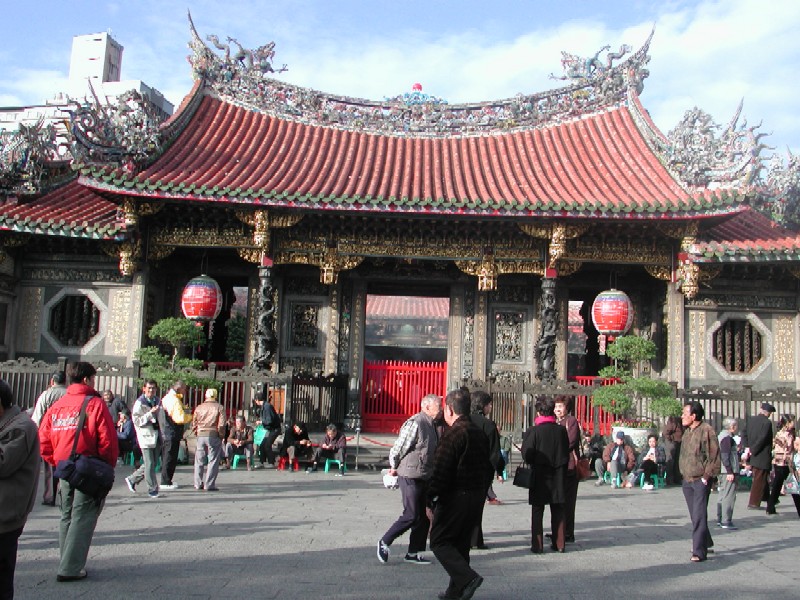
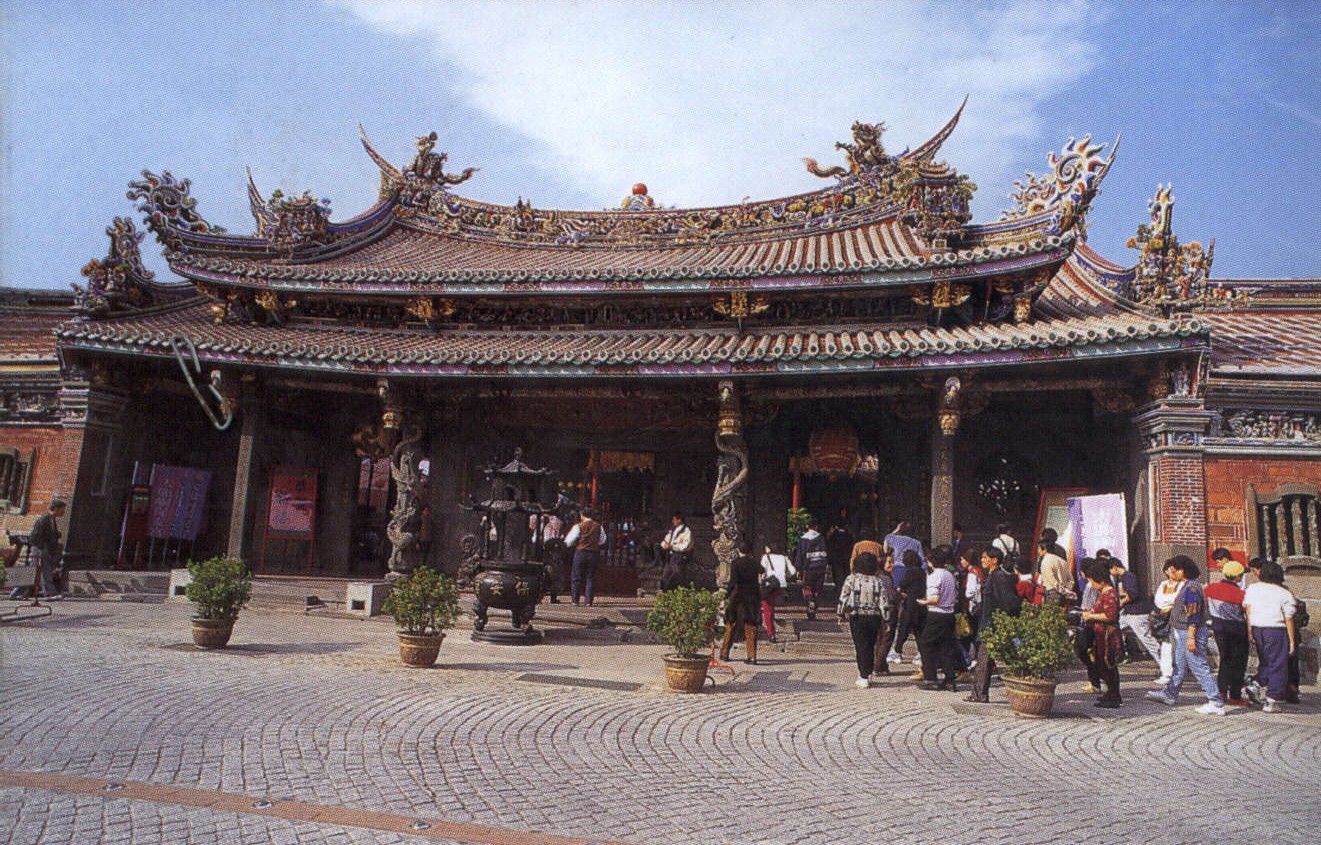
| At Shilin district, an educational trip to the National Palace Museum has definitely given me a more indepth understanding of the Chinese culture and history. On a guided tour, we were shown and explained on the items, such as bronze seals, carvings, paintings which are of the imperial collection. According to the guide, the museum is a microcosm of 5000 years of Chinese culture. The permanent collection dates back 1000 years ago, as far back as the Song dynasty. There are more than 700000 art objects, items (double the number in Lourve) and every single piece has a remarkable historical significance. On the 3rd floor gallery, the displays exhibits the bronze collection, carvings from Ming and Qing dynasties, seals of the emperor and jade master pieces. Indeed, the Chinese culture is considered vast and profound. To visit Taipei without seeing the National Palace Museum is like visiting Paris without going to the Lourve. To the Chinese temples, it was Lungshan, Paoan and Confucian Temple which fascinated me the most. Lungshun Temple has to be the most impressive in Taipei, as much for its architecture as its religious practices. Nestled in the bustling old district of Wanhua, the temple contains 2 main pagodas; the entrance leads to a small hall with an altar intricately decorated with wood and stone carvings while the roof is adorned with fiery dragons. One can see the 2 bronze dragon pillars in the front hall. The main deities are found inside the large pagoda beyond a small courtyard. The many gods, goddess, and Buddha statues enshrined side by side certainly exemplify the tolerance of Chinese folk beliefs. I actually offered my prayers on all my 3 visits. Paoan Temple is one of Taiwan oldest temples, built more than 230 years ago, and is dedicated to Paosheng Taiti, the God of Medicine. The expansive temple consists of front, middle and rear halls and bell and drum towers. From outside, the yellow tile roofs and eaves are lined with hundreds of miniature figures, while the columns are decorated with ferocious writing dragons and the ceilings adorned with wood carving of lions, flowers and figures from Chinese mythology. Diagonally opposite Paoan Temple, the Confucian Temple is not to be missed. The temple honours one of the greatest philosophers and teachers of all times - Confucius, as well as other philosophers. Confucius valued simplicity, and simplicity is the dominant characteristic of the temple. There aren't any rich decorations or stone lions, dragon carvings seen at the entrance or the interior of the temple. The columns, doors, windows here are also different as they bear no inscriptions. This indicates, it is said, that nobody dares flaunt his literacy prowess before the Master. |
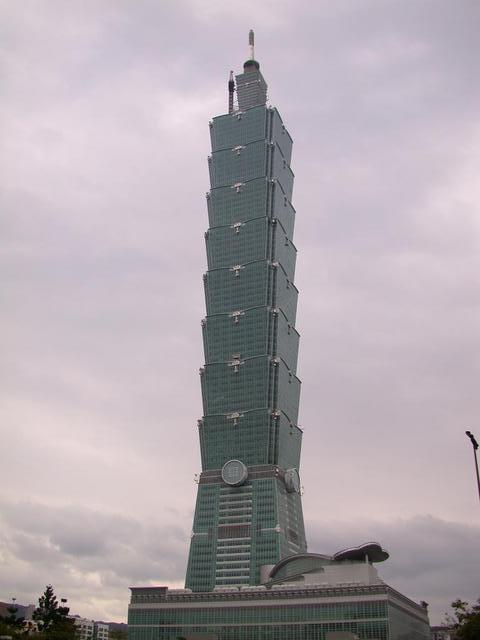
| Taipei 101 - World Tallest Building |
| Waterfall in Yangmingsan |
| Trekking Trails of Yamgningsan |
| Central Cross Island Highway toward Taroko Gorge |
| Crater Water in Taroko Gorge |
 |
| [Home] [Photo Album] [Japan] [Poland] [Hungary] [Czech] [Germany] [Thailand] [Taiwan] Last Update : 15 January 2005 Copyright @ 2005. All Rights Reserved |
 |
 |
 |
| Ever since I start to read up and research on Chinese history, my mind has inevitably been fascinated by the exotic mysteries of Chinese culture. Many people whom I knew claimed that other than mainland China, only in Taiwan, these exotic mysteries live on. The expression of Chinese culture - elaborate festivals, colourful folk art, traditional music, dance, opera, and timeless senses of worshops in ancient temple are uniquely classified. Although many of those cultural activites are handed down for thousands of years, they remain a lively, vital, changing part of daily life. Acknowledging this claim, I was more determined and anxious to explore Taiwan. Somehow, my solo travel to Taiwan coincides with the launch of 'Visit Taiwan Year' travel campaign by the Taiwan Tourism Bureau. For that, I found myself indulged in many unexpected and overwhelming surprises. Formosa (Beautiful Island) is what the Portugese called Taiwan in the 16th century. As the name inplies, the island emits tremendous glamour not only within the modern city, but preserves its well-structured traditional entities in the most synchronised manner. I have yet to come across any city in the world where infrastructure, society, civilisation harmonise in such a congruent manner. Truely, it turned out to be one of my most educational and memorable travels. My trip to Taiwan was not a well-planned one as there wasn't sufficient time to organise and plan prior to departure. Nevertheless, I still managed to cover the major attractions; trek along the mountain trails of the famous Yangmingshan and Taroko Gorge; immense myself in the various night markets; sock in the natural hot springs. The month of October is a wet one but that has not deterred me from finding my way to Taipei 101. Recently, it became official that Taipei 101 was the world tallest building. Opened to the public in November 2003 and standing at 509 metres, it definitely was the landmark of the city. From anywhere within the city, the sight of the building is evident. If you observe carefully, the building's interior and exterior actually incorporates the Chinese pagoda form, and the shape of bamboo flowers. The lucky number 8, which means blooming or success is represented by the 8 clearly delineated exterior sections of the buildings. Reports have it that a bell-shape damper is being built into the structure to dissipate lateral vibration to a spring system underneath. This is to prevent the building from too much shaking during earthquakes and typhoons It is not usual to see a mountain or gorge locating itself in the heart of a city. But, in Taipei, the renowned Yangmingshan National Park actually lies in the subtropical zone within the capital city! What's more, the park is conveniently accessible by the public transport. From Taipei Main Station, I took the city bus, a journey that was about 40 minutes to the foot of the park. Dominated by the Datun Volcanic Range, the area surrounding the park is rich in volcanic geology with pyroclastic cones and bell-shaped volcanoes, crater lakes, solfataras, and hot springs, giving it value for researchers and recreation seekers alike. The park vegetation consists of high and low grass plains, broadleaf trees, subtropical rainforests, and aquatic plants, including the Taiwan isoetes. The park continues to be a frequent favourite spot for locals, a must for tourists because of its amazing natural scenery, the existence of natural hot springs, plus the unusual volcanic features and topology. From pictures, I have seen stunning rock formations, wild flora, being the mountain volcanic origins. Within Yangmingshan itself, the park actually encompasses many other natural sub-parks. |
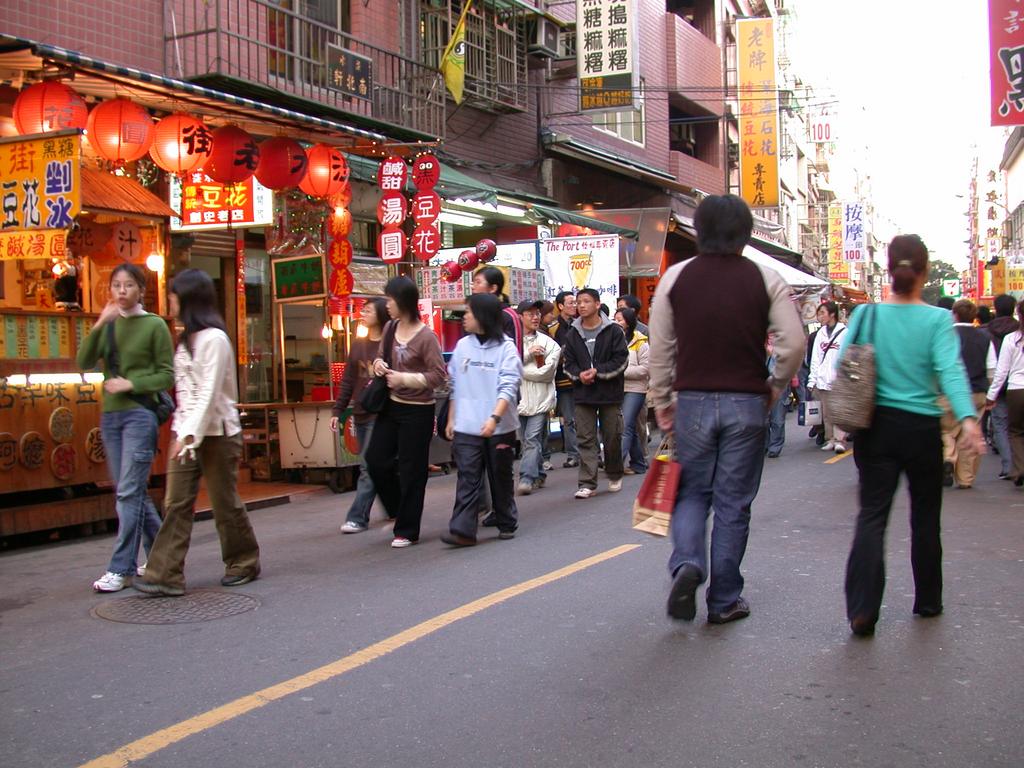
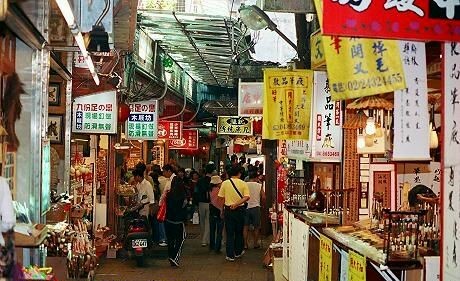
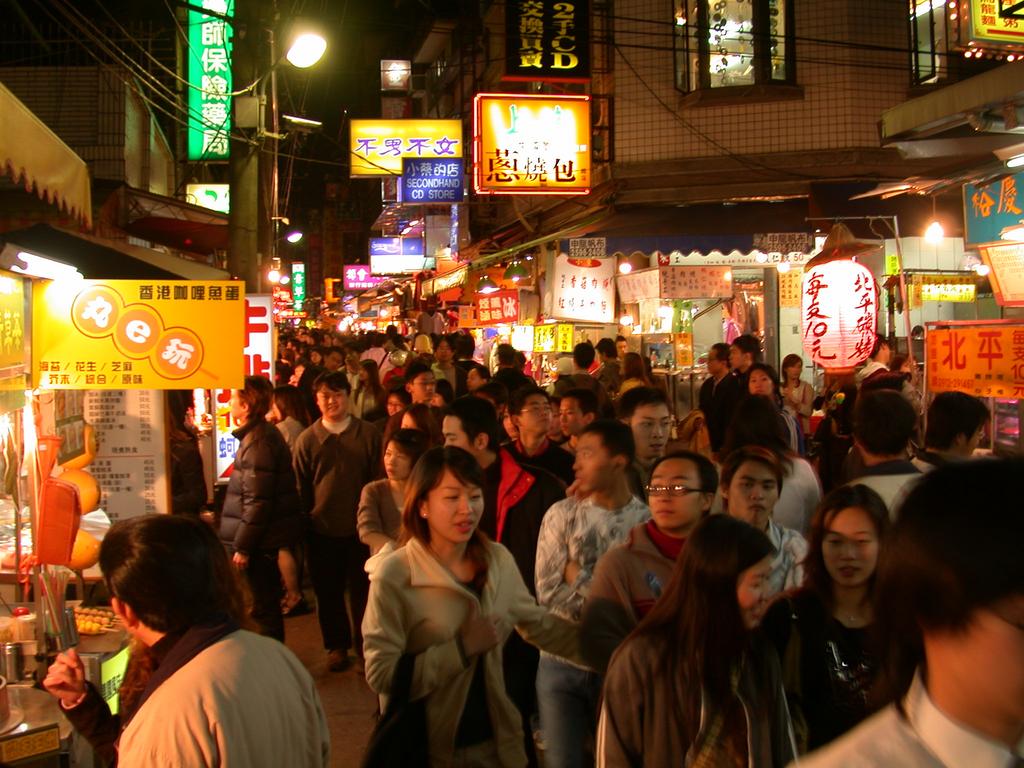
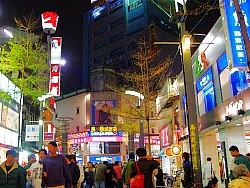
| Coming to Taiwan would not be complete without patronising the night markets. To me, I consider the Huaxi and Shilin Night Markets by far the best. Shilin Night Market is a combination of a shopper paradise and a stronghold of street cuisine. One can find and taste practically every native food such as deep-dried tofu, fried octopus, pancakes, kebabs, sausages, etc. Shirts, shoes and other garments are reasonably priced lower in Shilin and that explains the ever-buslting crowd even on a wet rainy night. However, I have a personal liking for Huaxi Night Market, probably because of its different nature, compared to Shilin. Near Ximen, the night market was formerly a red light district in the oldest part of the city. It is made up of restaurants, foot reflexology shops, souvenir shops and food stalls which latch on some stomach-churning exhibitions. Also known as the Snake Alley, gutting snakes, ripping out prized internal organs by chopping off turtle's head may not really be everyone's idea of an appetiser, but nevertheless, it's all on the show. The area has seen some rejuvenation but still offers some interesting sights and temptations for curious tourists like me. That is why I personnally favour Huaxi more than Shilin. In Taipei, the only place where youths gather is the very popular Hsimengting, also known as Shinjuku of Taiwan. Over the weekend, it becomes extremely lively and many of the street entertainers and local artistes make appearance here. The Taiwan youths show off their latest fashion, hairstyle so as to attract attention. Rows after rows of fashion shops evolve as one walks into the inner lanes. Whatever you are looking for, all the coolest possible outfits and hips, trendy cafes are there for you. While conformity is highly valued in a society like Taiwan, Hsimenting is perhaps the best place for youths to express themselves. Like many other modern and well-organised cities, I have never missed the chance to pay a close attention to the city main train station. After spending so many days in Taipei, and making several trips to and from Taipei Main Station, I must admit that the main station in Taipei is indeed the most notable landmark and has the best architectural design among the many I have seen. As a transportation hub for trains, buses and MRT, both the train and MRT stations are connected in an extensive underground network of retail shops and restaurants. There is also a mini gallery with frequently changing art exhibitions. The whole setup is so well-organised, furnished and complete. You just do not feel you are in an underground train station. |
| Despite missing out on Alishan and Sun Moon Lake due to poor timing, my first time travel to Taiwan has been fruitful and enjoyable. I have seen a lot and have experienced the warmth of the Taiwanese; the richness of local culture and now do understand why the Portugese named Taiwan a Formosa. As a sprawling metropolis, Taipei is an ideal place to visit for those who enjoy the hustle and bustle of a big city. Surrounded by the sights and sounds of nature, one can better realise the value of life and appreciate the precious gift that Mother Nature has given us. It also allows us to rediscover the importance and joy of coexisting with the world around us. The island's friendly people take genuine pleasure in demonstrating the art of Chinese hospitality, in a warmly manner. For example, the park ranger who offers her plastic raincoat to me on a rainy Sunday morning, in Yangmingsan; the students who advised me on my routes, direction and provided travel information, at Taipei Main Station; the kind middle-aged man who guided me in the snake alley after knowing that I was a tourist; and the forever friendly bus drivers who never failed to signal me on my next get-down stop. I really felt very much at home and was seriously considering returning again, soon! |
| Hsimengting |
 |
 |
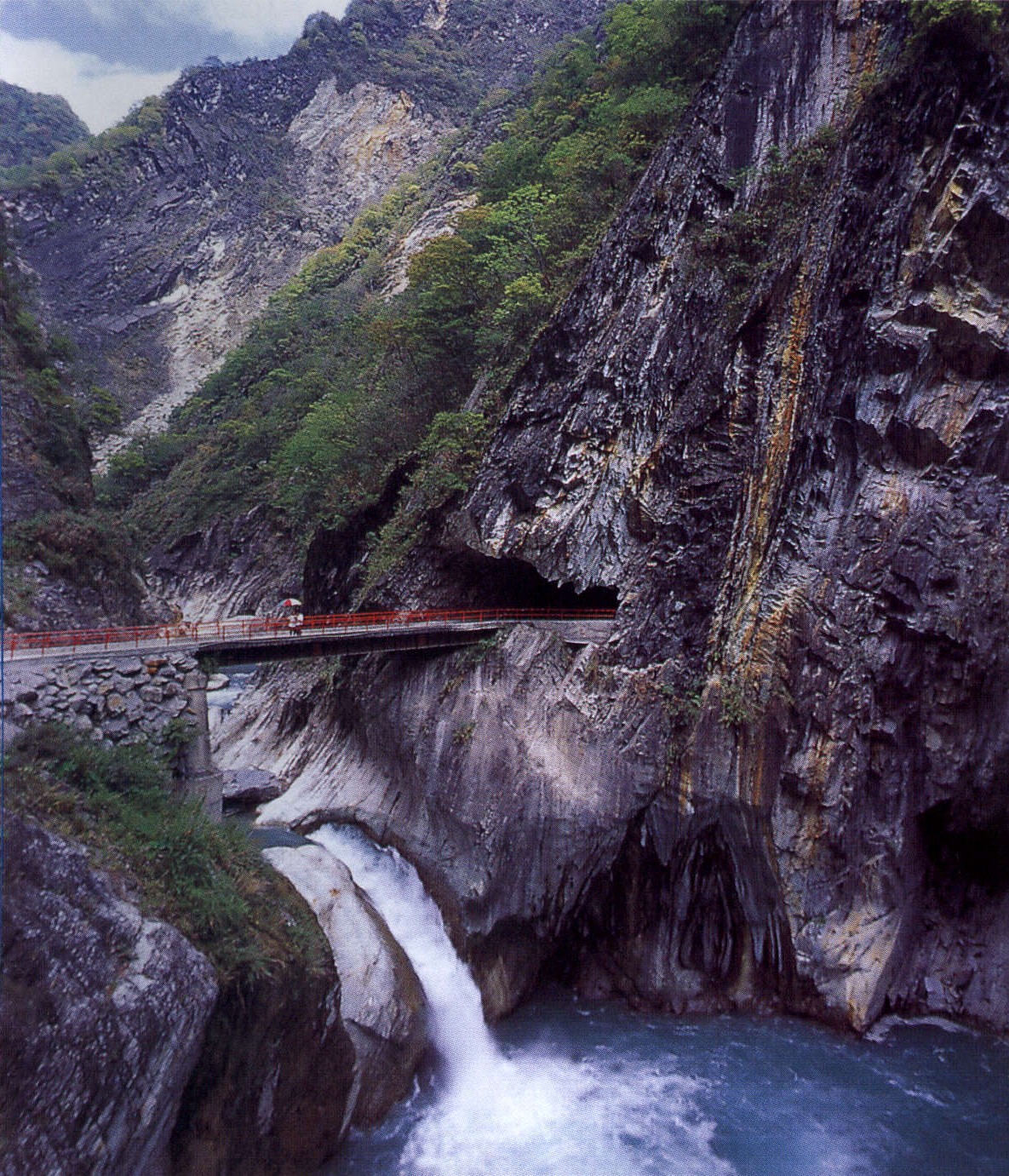 |
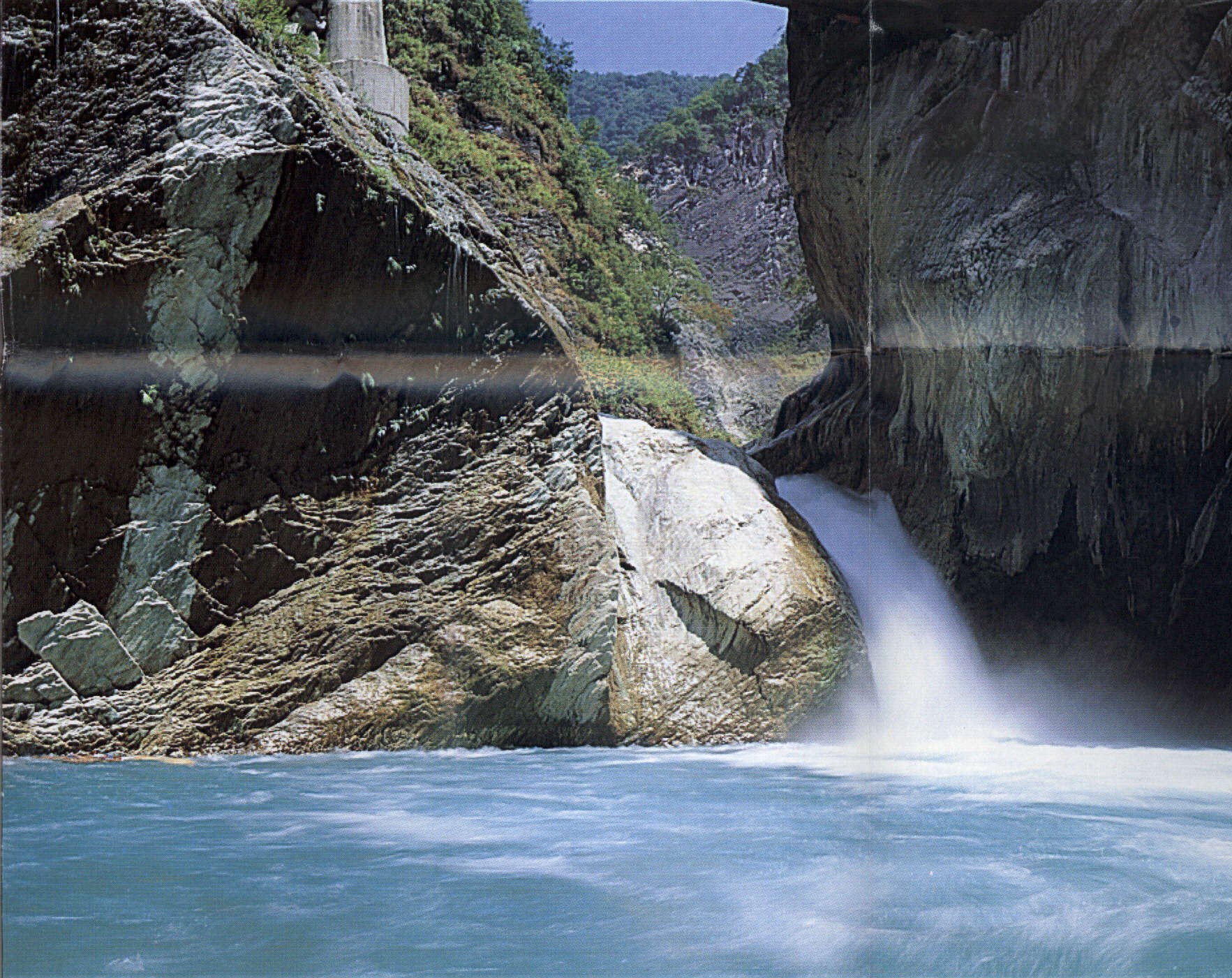
| Tourists flock to Hualien (north-eastern part of Taiwan)mainly for one common reason, ie. to hike the famous Taroko Gorge. Likewise, I have not hesitated before purchasing the train ticket from Taipei to Hualien on an early Monday morning. Taroko National Park has a coverage of 92000 hectares in the northern section to the central mountain range. This park features high mountains and sheer gorges. Many of its peaks tower 3000 metres in elevation, with many natural wonders. As the bus reaches the Central Cross Island Highway, one will certainly by awed by the spectacular gorge and the scenic beauty of Liwu River. From the foot of the gorge, the 20-km section from the Central Cross Island Highway to Tianshiang is by far the most impressive. Between Yantzukou and Tszmu Bridge, one probably needs some gut while riding on the bus up the steep slope, because the leading road is carved directly into the cliff face and the sky is just a narrow line of blue visible between sheer cliffs. Two of the highly recommended sites in Taroko Gorge are Yantzekou (Swallow Grottos) and Jiuchiudung (Tunnel of 9 Turns), both of which are located at particularly narrow sections of the gorge. The cliff face at Yantzekou is dotted with a small hollow that have been created by erosion. During spring and summer, the air is filled with white swifts and Pacific swallows, which make their nests on the cliff. The abundance of swallows is what Yantzekou (Swallow Grotto) gets its name from. Jiuchiudung is a partially overhung walk that winds its way beneath the cliffs, sometimes in shadow, sometimes in the light. It's also the best location to view the distant Juelin Precipice. Juelin Precipice is directly to the north of Liufang Bridge, which rises 1666 metres above the riverbed, even higher than the Grand Canyon (1620 metres). With such a vast area to cover, there are numerous designated hiking trails that follow aboriginal hunting paths and that provides a more intimate look at the park. Each of these trails lead to a different section of the park that offers a different and special grandeur of the mountain. As a guide, Shenmi (Mystery) Valley, Baiyang, Lotus Lake, Eternal Spring Shrine, Meiyuan-Jutsuen are popular trails that are worth a hike. |
 |
 |
 |
 |
 |
 |
 |
 |
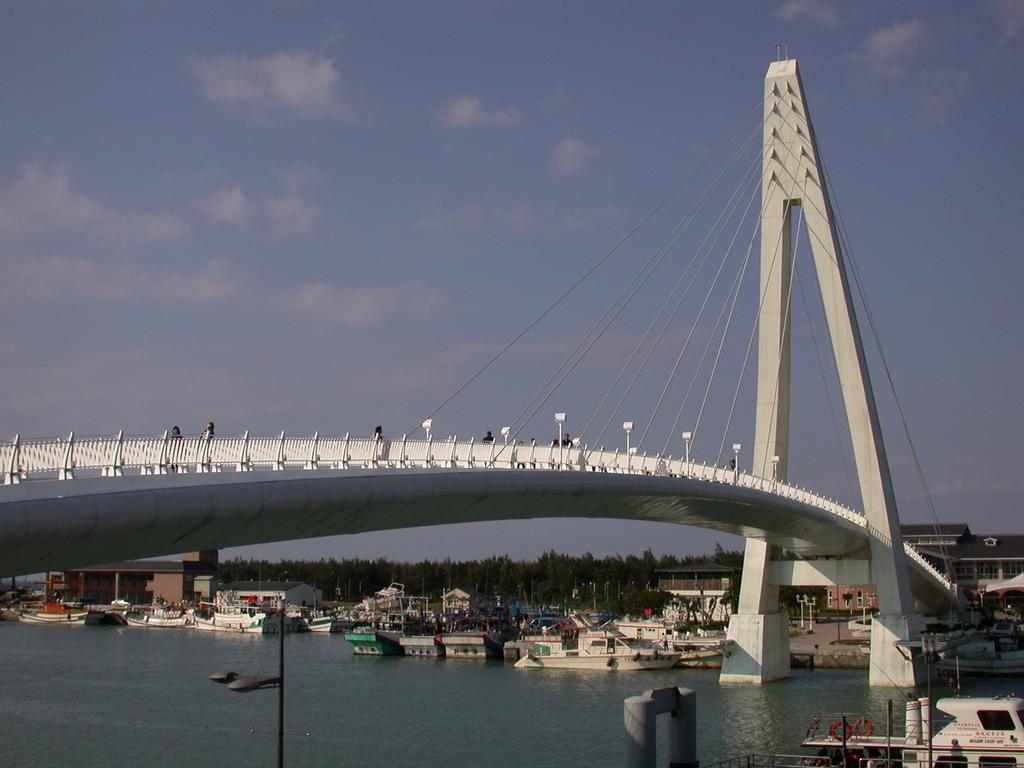
| Travelling east along the coastal highway, via Keelung city bus, this was where I found my way to the sea port of Keelung. The town is famous for its food and numerous temples. Unlike Taipei city where the commerical activities evolve, one sees a completely different picture here. There are not many high rise buildings but more of the 2-storey shophouses. Usually, shop owners resided on the 2nd floor while the ground storey is opened for daily business activities ranging from local titbits to garment shops. Residents flock to nearby wet markets to do their daily purchase, where the fresh fish, meat and vegetable are. A section of the town belongs to Jiufen, both as a tourist spot, as well as a nostalgic part where movies are shot. Perched on a mountain facing the blue ocean, the narrow streets in Jiufen leads one to a different land. One can taste the very localised traditional yam puddings, stare at the most refined jade carving, and even play with older day toys which you no longer find. Moreover, the enthralling view of the blue ocean, drifting clouds and harbour provide the perfect relaxation to the eyes, the mind. It has been such a long time since I feel this way. Both Keelung town and Jiufen are probably the less modernised and less developed part of Taipei that offers tourists an educational understanding of how the local native lives. At the other northern end of Taipei is where the old fishing village of Danshui lies. Once a main port, Danshui is where the Spanish landed when they arrived in Taiwan. The most attractive part of Danshui has to be that of the FIsherman Wharf. Crossing and strolling over the magnificent Lover's Bridge (with such majestic architecture) and along the coast, the walking wooden platform is specially constructed on the roof of restaurants, coffee houses. Sitting by the balcony, drinking a cup of hot cappuccino, the reward is an opened view of the blue ocean where the boats move slightly in accordance to the action of the waves. The scene is always tranquil and relaxing; and will always remain as one of my fondest memories. |
| Lake in Taroko Gorge |
 |
 |
| Sun Yatsun Memorial Hall |
| Chiang Kai Shek Memorial Hall |
| National Palace Museum |
| Lungshan Temple |
| Paoan Temple |
| Lover Bridge @ Fisherman Wharf |
| Street of Danshui |
| Nostalgic Jiufen |
| Huaxi Night Market |
 |