 |
|
|
|
|
|
|
|
|
|
|
|
|
|
|
|
|
|
|
|
|
|
|
|
|
|
|
|
|
|
|
|
|
|
|
|
|
|
|
|
|
|
|
|
|
|
|
|
|
|
|
|
|
|
|
|
|
|
 |
|
|
Praha - Heart of Europe |
|
|
|
|
 |
|
| The earlier part of my Bohemian trip in July 2000 begins with Prague, the capital city of the Czech Republic, traditionally being regarded as the Heart of Europe. Before visiting Prague, I have always read that the city's richness in history offer not only architectural splendour, but also because the existence of the famous Charles Bridge that spans the Vltava is so magical and lively. Prague divides naturally into five main areas. Today, these towns are represented by Hradcany (Castle District), Mala Strana (Lesser Quarter), Stare Mesto (Old Town), Josefov (Jewish Quarter) and Nove Mesto (New Town). The city is also divided into two by the Vltava River (Moldau), where Karluv most (Charles Bridge) is connected. |
|
|
|
|
|
Royal Castle |
|
|
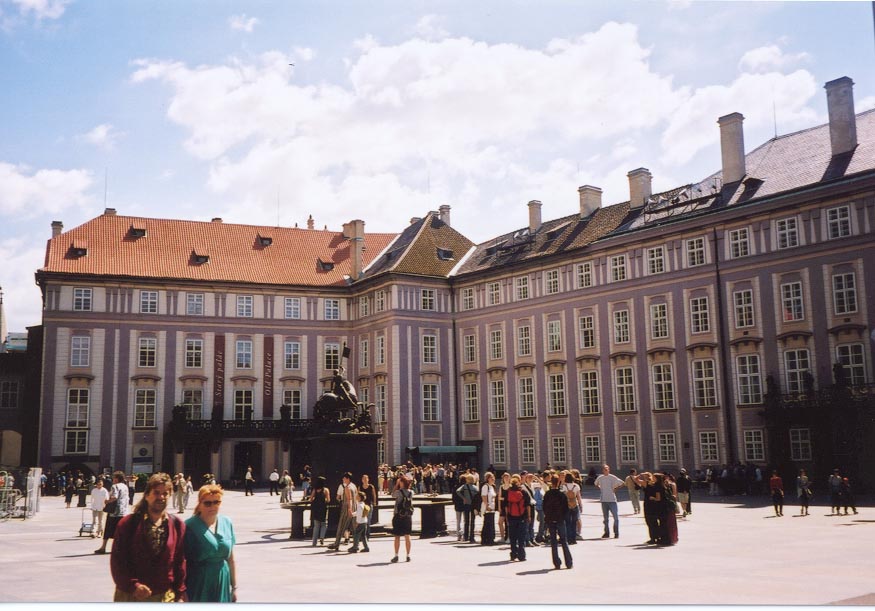
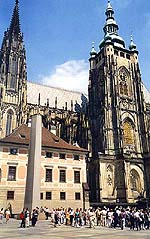
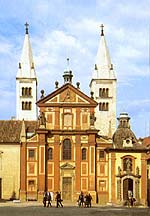
| Hradcany, Prague's ground which encloses castle and cathedral, begins in front of the Matthias Gate, with Prague Castle as the entrance to the complex. St Vitus Cathedral, being Prague's largest church, has such a magnificent exterior facade view. There is definitely a striking contrast between the complete ornateness of the exterior wall and the calm immensity of the interior. It makes one awes over the craftsmanship of this piece of Gothic style of contemporary architecture. On the southeastern side of the courtyard is the Royal Palace of Bohemian rulers between the 11th and 16th century. Upon stepping into Vladislav Hall, one can easily spot the vaulted ceiling design, with Gothic lamps hanging high. Since 1918, the presidents of of the Republic have been sworn in here. On the left side of the Hall, the vaulted Rider's staircase and plenty of headroom were meant for knights to ride up to tournaments. Adjoining to the south is the Basilica of St. George. Since the 1960s, this building was restored Romansque, predating the cathedral, despite losing some of its ancient lustre. Inside the basilica overlooks 3 aisles, the middle one a great barn-like hall with a flat wooden ceiling. At the east end, a triumph arc frames a raised altar approached by a double flight of baroque steps. Accordingly, occassional concerts are still held here because of its excellent acoustics. Finally, to the north of the cathedral, the distinctive Powder Tower is where Rudolf II's chemist tolled to find the formula of making gold. In 1549, Prague's largest bell was made here for the cathedral. The tower also exhibits the chemist's equipment together with some of the 16th century furniture and works of art. |
|
|
|
 |
|
|
 |
|
 |
|
|
|
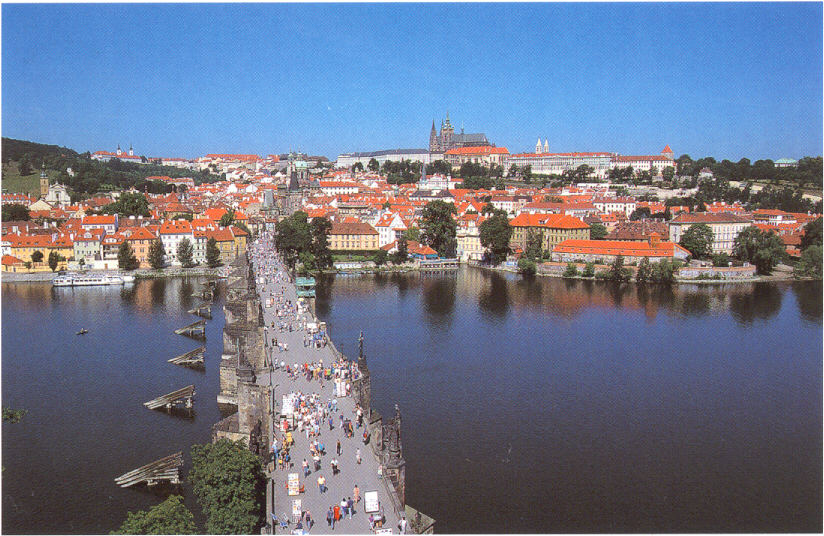
The Lesser Quarter (Mala Strana) across the river from Old Town and is best reached by means of the Charles Bridge. Standing on the bridge is probably the best location to stare at the stunning view of Prague and the river. At any time of the day, the bridge throngs with visitors, street vendors setting up their stalls, painters exhibiting their proud pieces, band of musicians supplying free entertainment and where lovers meet. There is a total of 31 statues lining on both sides of the bridge. They were constructed during baroque period. |
|
|
|
|
|
|
|
|
|
|
|
|
|
St Vitus Cathedral |
|
St George Basilica |
|
Powder Tower |
|
|
|
|
|
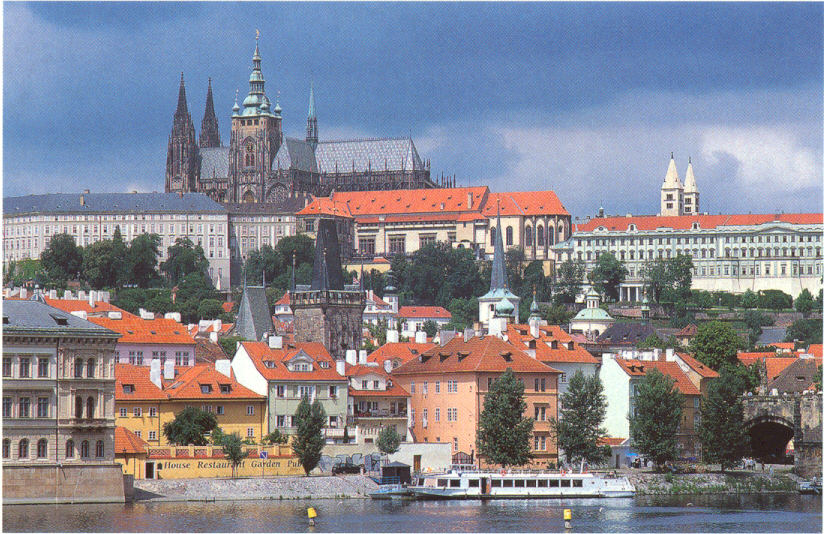
| Charles Bridge leads to Lesser Quarter Square, a large market place where one finds medieval structured houses concealed behind Renaissance and Baroque facades. Within a few metres away, cafes spring up where locals and visitors simply love to sit by the river enjoying the tranquility of clear water. Kaisertein Palace occupies the east side of the square while the Liechtenstein Palace occupies the west side. Both palaces' classical facades are equally overwhelming in the eyes of a visitor. However, dominating the square should be the Church of St Nicholas, which is considered the greatest Baroque church in Prague. Its dramatic green frescoed dome, flamboyant sculpture, rich materials and sheers scale are simply magnificent. |
|
|
|
 |
|
|
|
 |
|
|
|
 |
|
|
|
|
|
|
|
Lesser Quarter by River Vlatva |
|
|
Charles Bridge Leading to Lesser Quarter |
|
|
|
|
Tyn Church |
|
|
|
|
|
|
|
|
|
 |
|
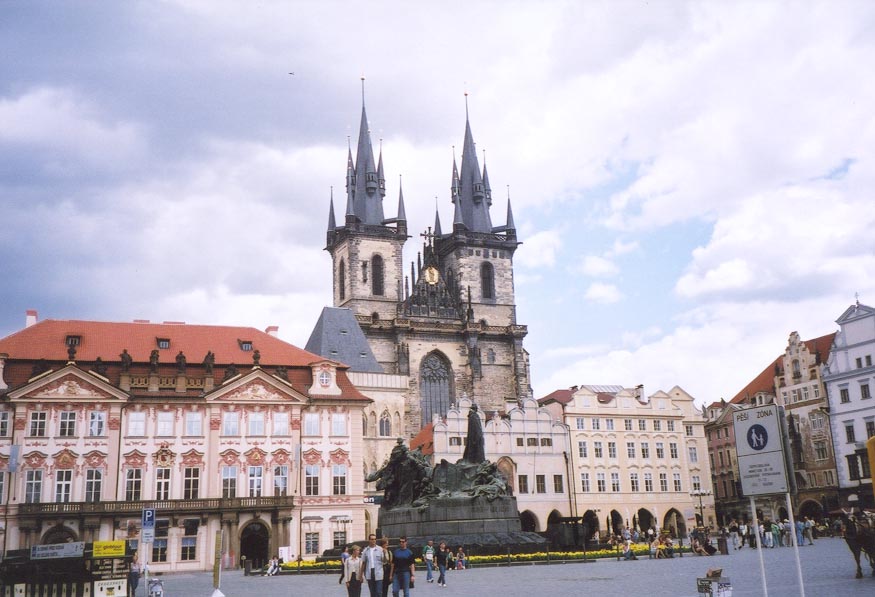
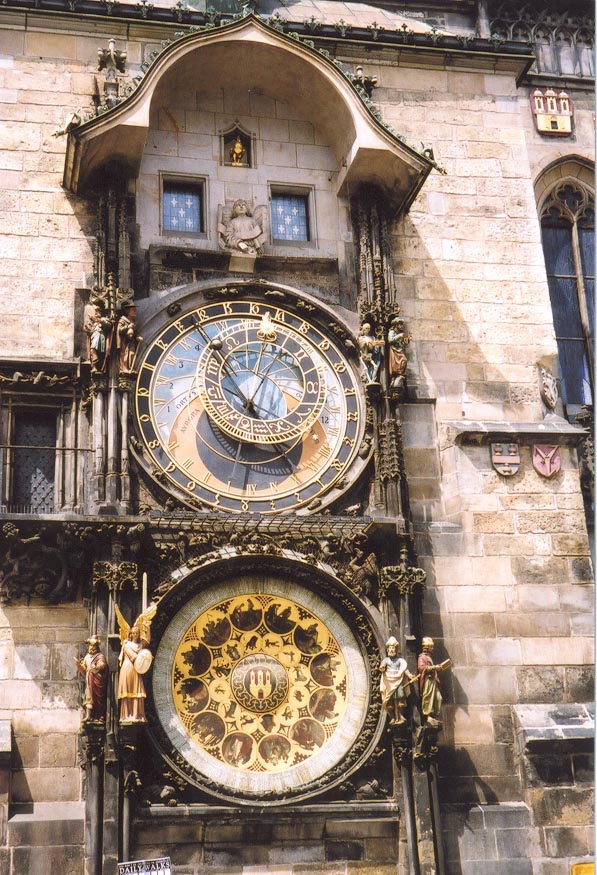
| If you are yearning to do a little window-shopping, Stare Mesto (Old Town) is definitely the place to be in. The square is Prague's finest and probably among Europe's most beautiful. The Old Town Hall at the south west corner presented its proportion by steadily swallowing up neighbouring buildings between the 14th and 19th centuries. The southern facade of the hall is constructed with the beautiful astronomical clock. Its exterior is most noticeable. The wonderful contraption consists of 2 clock faces : the calendar below which moves on a day every time the clock strikes midnight. On the hour, every hour Christ and 12 apostles emerge and the skeleton of Death tolls a bell with one hand which holds a sand-glass in the other. You can also see a turbaned Turk, a miser and a vain man admiring himself in a mirror. The complicated clockface shows everything from equinoxes and phases of the moon. Amazing, isn't it? A historical landmark of the Old Town is dominated by the Tyn Church, an inspiring 14th century Gothic architecture whose twin towers and 18 spires are visibly seen from all over the city. The twin steeples are named after Adam and Eve. The surrounding buildings, dwarfed by the towers of the Tyn Church can only form the backdrops. The Powder Gate at the end of Celetna guards the entrance to Old Town. The gate was first built as a fortress in the 11th century but was used as a store for gunpowder in the 17th century. |
|
|
|
|
Astronomical Clock |
|
|
|
|
|
 |
|
 |
|
|
|
|
 |
|
|
|
|
Josefov - Jewish Quarter |
|
|
|
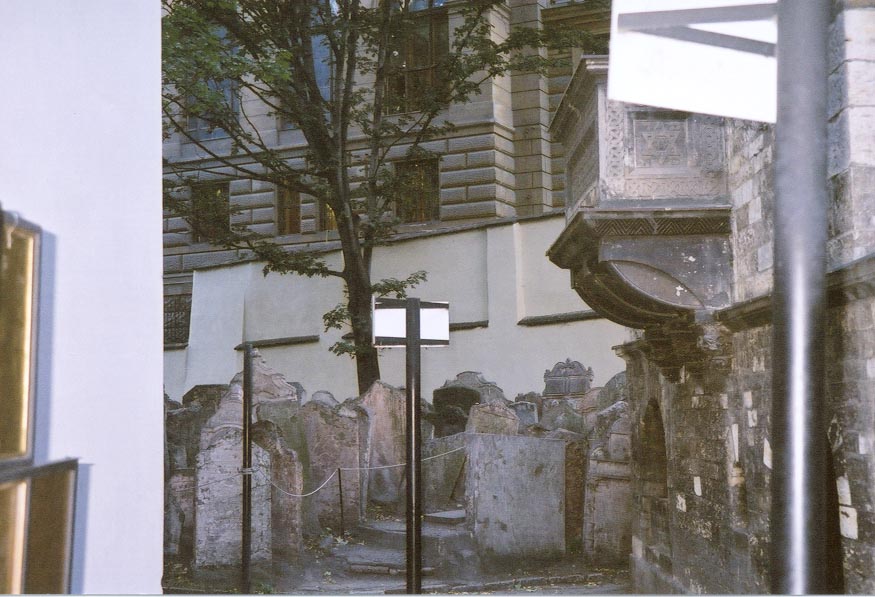
Jewish Cemetry |
|
|
|
|
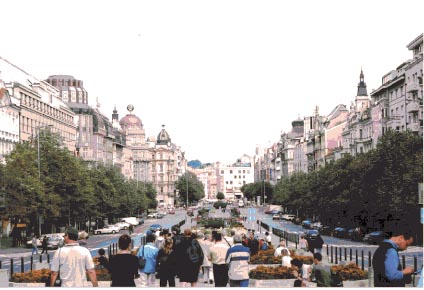
Wenceslas Square |
|
|
|
|
|
|
|
|
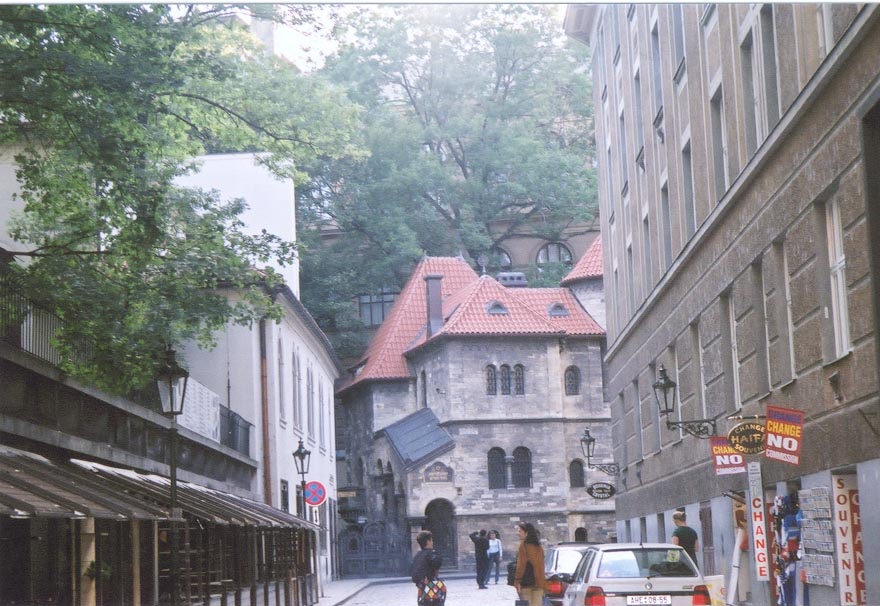
At Josefov, the Jewish Quarter of Prague, the area used to be resided by the Jews of Prague for centuries. During the German occupation, the Prague Jews suffered appallingly under the Nazis. Today, one can still find historic synagogues and cemetery because it was Hitler's cynical plan to create a museum of extinct race. There is still a small Jewish community in Prague and some synagogues remain places of worship. At the Old Jewish Cemetery, under gnarled trees the crowded gravestones were found to be struggling for space because they were all clustered extremely close to each other. For 600 years until the late 18th century the Jewish population of Prague were buried here.
Nove Mesto (New Town) was found in 1348 by Charles IV. Today, the modern district is the business and commercial centre of Prague where shops, cafes, restaurants and bars compete for space along the elegant boulevard. Wenceslas Square is not really a square and could hardly be called beautiful. It is rambling rather than intimate, a long shrill market place rather than a chic boulevard. If you are not aware, key events in the Prague spring and the Velvet Revolution took place here. It is the neo-Renaissance National Museum that comes into sight after emerging from the underground. This building is one of Prague's best testimonies to the Czech revival in arts. On the other end, the splendid Municipal House stands out ravishinly. This art and culture centre has a domed face that has a large semi-circular mosaic entitled 'Tribute to Prague' and is richly decorated with stacco and statuary. Inside, the Smentana Hall, Prague's largest concert venue is also the scene of the first concert in the annual Prague Spring Festival.
Indeed, Prague is remarkably an overwhelming city whose architectural splendour embodies a rich history at the heart of Europe. Those who walk through Prague walk through the history of Europe and its cultural streams, following the traces of reformers, artists, rulers who influence this continent as far as ideas, arts and politics are concerned. The city has so much to offer, so much to admire and so much to absorb. |
|
|
 |
|
|
|
[Home] [Photo Album] [Japan] [Poland] [Hungary] [Czech] [Germany]
[Thailand] [Taiwan]
Last Update : 26 November 2003
Copyright @ 2003. All Rights Reserved |
|