| The city takes its name, Munich, from the words for monks, referring to the small Benedictine monastic community which had been established by the River Isar in the early 9th century. In 1158, Munich became the dual residence of the powerful Wittelsbachs, later to rule Germany in 1255, and the Bavarian capital in 1503. In the 17th and 18th centuries, the enrichment programmes see the construction of churches and 2 palaces; baroque and rococo embellishments became widespread as the city grew. In the 19th century, under King Ludwig I, the city is remodelled as according to ancient Greece. He inaugurated Ludwigstrasse, which was finished in 1852. He also found the university and endosed the city with some of its great art and antiquity collections. His successor, King Maximillian II, commissioned the architect Friderich Burklein to lay out Maximilianstrasse. Today, Munich is one of the most glamorous cities in Germany. Despite suffering from the heavy bombing during World War II, one could hardly imagine what it has been through by taking a stroll in the city centre today. The streets are covered with elegant avenues, greenery, chic shops, church towers, monuments, fountains, classical architecture, of beer gardens and beer halls, of trams in the ubiquitous Bavarian livery of blue and cream, of buskers, students, galleries and pavement cafes. In March 2001, my delegation to Munich offers me the chance to explore this Bavarian city in a more detailed manner. I still remembered that Gamisch-Partenkirchen was the first region I visited. Located at the south-west of the Bavaria, the twin towns of Garmisch and Partenkirchen together form one of Germany's most popular resorts, beautifully sited at the foot of the Alps. Via the cogwheel train and the Eibsee cable car, my colleagues and I were finally able to reach the peak of Germany's highest mountain - Zugspitz (2964m). The sunshine and crisp mountain air makes the plateau an ideal place for relaxation and regeneration. The panoramic view captures the vast Kreuzeck ski area where the downhill and ski trails start (at the top of the Alspitz cable at 2050 metres). The incredible scenic view of Lake Eibsee is spectacular too, from where you stand. The lake is surrounded by beautiful graciers and terrains of different colours and sizes. Staying in the old town of Garmisch, I also witnessed the traditional Bavarian 'oompah' dance where the men wore leather shorts along with hats sporting feathers and badges, while the women decked themselves in colourfully embroidered dresses. As the folk music rolls on, they slap their thighs and sometimes each others' faces as well! |
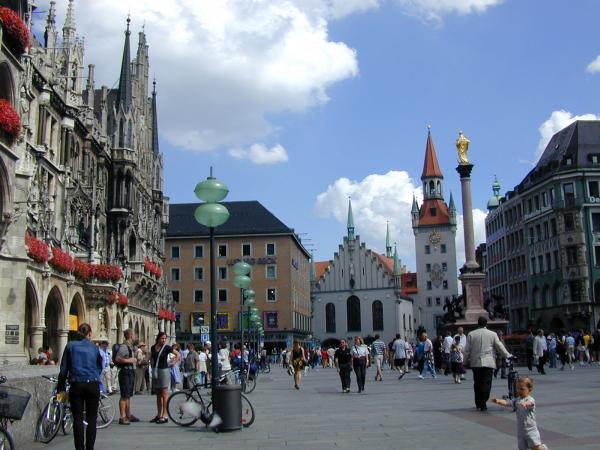
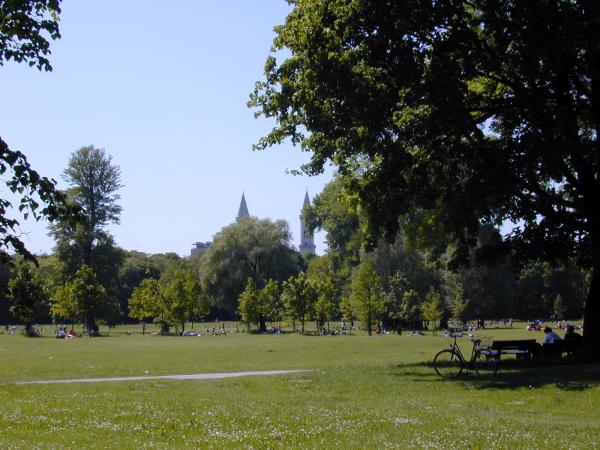
| When most businesses do not operate on Sunday, Germans generally tend to visit parks and gardens, where the greenery lies. The Englisher Garden, which is one of the worlds most municipal parks, is flanked by the city centre, Schwabing and Isar River. The garden incredibly extends for some 5 km and covers 373 hectares and was designed by an American refugee called Conunt Rumford. It also houses a number of attractions such as a boating lake and the Monopterus which is a Greek temple built on an artifical hill in the southern section of the park. The centrepiece of the park is a beer garden with a Chinese pagoda in it. Some areas here are carved out for sunbathing in nude, which many people take advantage of as soon as the first rays of sunshine appears! One part of the city, which is a must for all visitors, starts in the old city - Marienplatz. Marienplatz has been the heart of Munich for over 800 years. The most dominating building in the square is the sinister looking neo-Gother Neues Rathaus (1867 - 1908). It is |
| Germany - Of Fairy Tales and Fast Cars |
 |
 |
 |
 |
 |
| Square of Marienplatz |
| Englisher Garden |
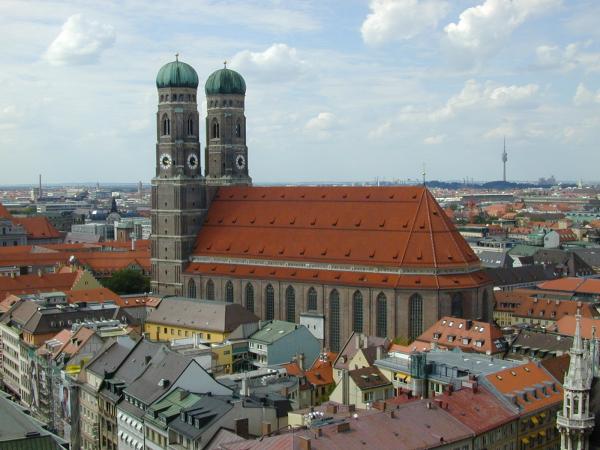
| Frauenkirche |
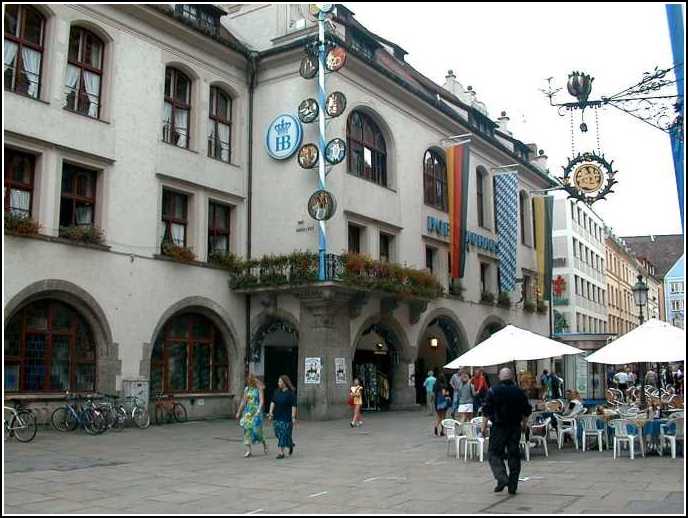
| Hofbrauhaus Restaurant |
| one of those buildings that divides opinions but its opulent details and sheer size are impressive. Today, its main attraction is the carillon that attracts people at 11 am and noon everyday. As the bells peal out their tunes, 32 mechanical figures first re-enact the festivals of the marriage of Duke Wilhelm V to Renate von Lothringen in 1568, then they do a Cooper Dance, which was first performed in 1517 because it was believed to be a way of averting the plague. Behind Marienplatz stands Munich's open-air food market - Viktualienmarkt. Over here, there is a wide range of products on display, with its dazzling colourful stands and unmatched selection of delicacies and specialities. German and international foodstuff with tables and counters are meant for eating and drinking, and thus making the area a feast for the eyes as well as the stomach. It's also the realm of the garrulous, sturdy market women who run the stalls with dictatorial authority. From anywhere in Marienplatz one looks up, it is not difficult to catch the sight of the twin onion-domed spires of Munich late-Gothic cathedral. Frauenkirche (Church of Our Lady) has long become the chief landmark of the city. Each tower is 360 ft high, and both have become the symbol of Munich's skyline - some say because they look like overflowing beer mugs. A splendid view of the city is yours from an observation platform high up in one of the towers. But first, one must climb 86 steps in order to reach the tower elevator. Munich's famous beer hall, Hofbrauhaus is one restaurant that must not be skipped when you are in the city. Duke Wilhelm V founded Munich's famous brewery in 1589. 'Hofbraus' means 'royal brew' which aptly describes the golden beer poured in king-size litre mugs. The cavernous downstair hall is always noisy with joyous locals and tourists. The quiet restaurant upstair looks more 'Bavaric' with Bavaria paintings on the wall. For tourists, enjoying your meal while watching the oompah dance or indulging in the performance of local bands playing traditional Bavaria folk music seems to suggest that diners are returning to the Bavaria days! |
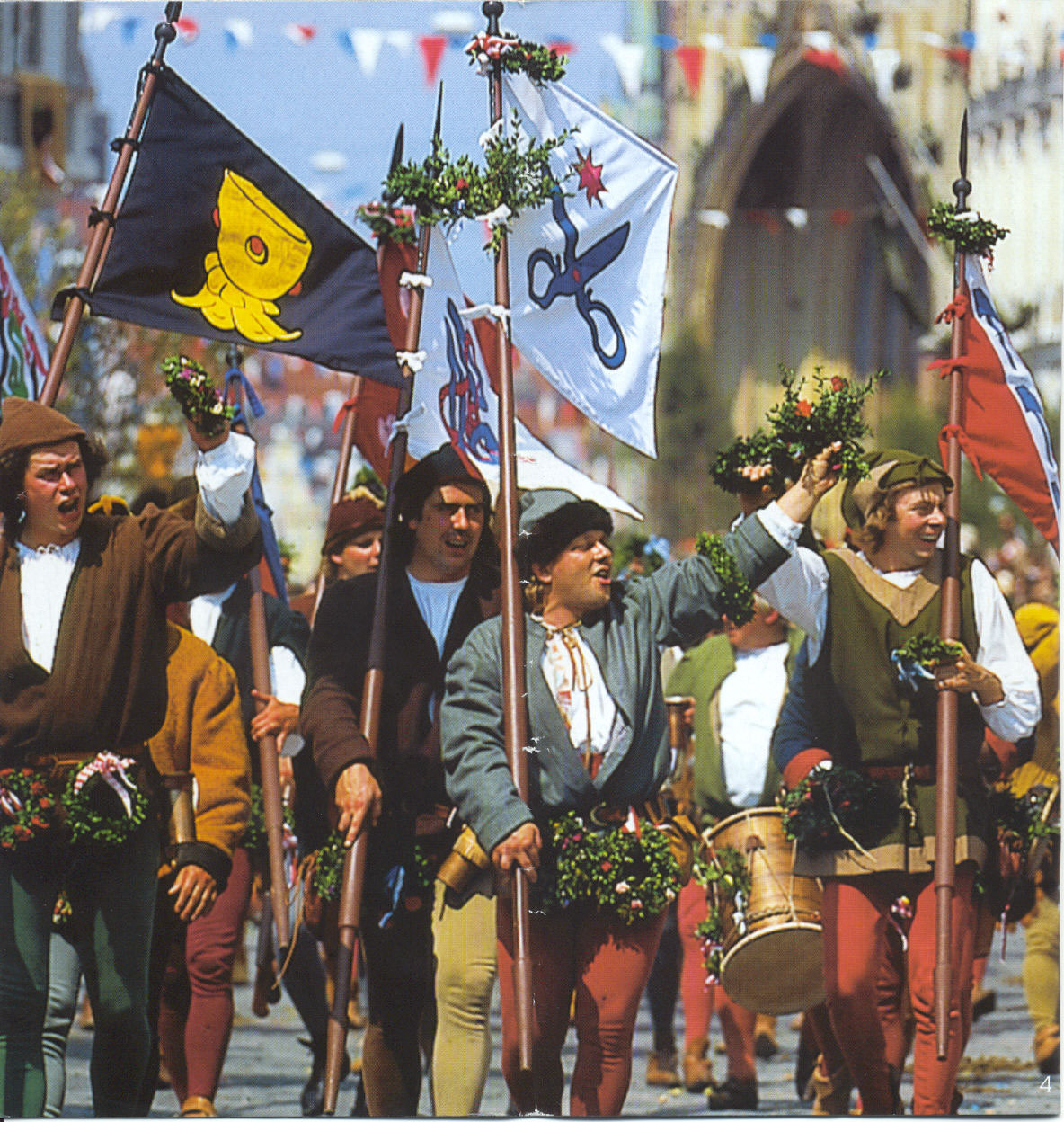
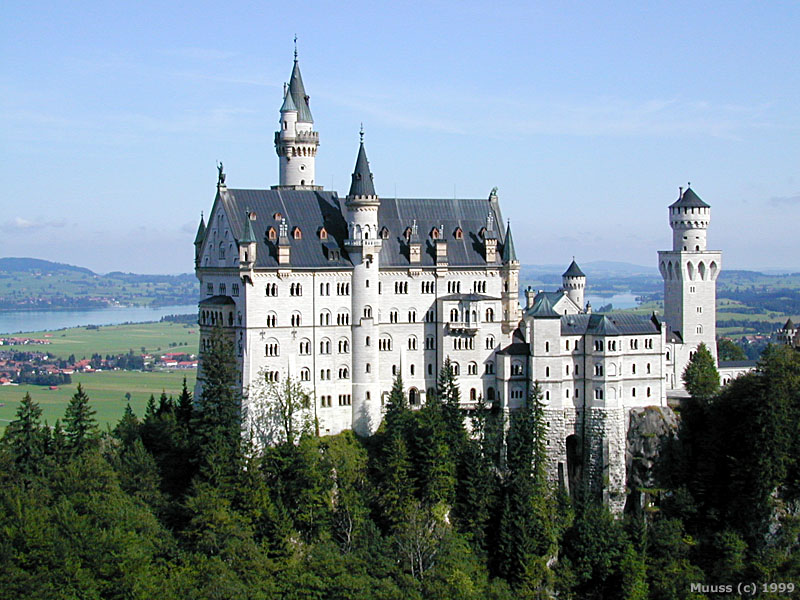
| Dachau, is a site known to suffer worldwide notoriety of being the Third Reich's first concentration camp, established in a former munitions factory on the edge of this small, paradoxically agreeable town. Today, the camp is preserved as a memorial to the tens of thousand of people of all nationalities who suffered and died there at the hands of the Nazis between 1933 and 1945. At the entrance, one can first see the comprehensive photographic display which vividly records the development of the Dachau Concentration Camp and of the treatment meted out to its inmates. Moving in to inspect the re-created barrack block, it is very disturbing to imagine the horrific conditions in which the inmates lived. The bunker (prison) is where torture, human experiments, punishments are a regular event. There is also the crematorium, whose ovens were kept going day and night, and the gas chambers (never used) which is still well-preserved. Sitting quietly at the far end of the compound is where the Church of Reconciliation lies. The church is specially built that characterises a path, leading slowly into the depths. Depth can be something that frightens and threatens, but also something that shelters and protects you. What is important, is that an awareness of depth does not destroy. Passau is a lively modern town and historical city. The train ride from Munich main station took 2 hours to reach this town, which is located near the Austrian and Czech border. Human settlements have existed here at the confluence of the Danube, Inn and IIz rivers since prehistoric times. Passau's magnificient St Steven Cathedral is located on the old town's highest point. After it had burnt down almost completely in the devestating 1662 town fire, it was rebuilt by the famous baroque architect Carlo Lurago, its stucco works were done by GB Carlone and the frescos were painted by Corpoforus Tencalla, all of them Italian baroque artists. With 17774 organ pipes, 223 stops and 4 carillons the organ in the cathedral is the world largest cathedral organ. All 5 parts of the organ can be played from the main keyboard, one at a time or all together, offering unforgetable acoustic delight. In the old town, you find picturesque squares like the Domplatz, Residenzplatz and Rathausplatz, the church tower of St Paul's, the convent Niedernburg (with tomb of St Gisela), St Michael's the cathedral and the town hall tower, nooks and crannies, the enchanting footpaths along Danube and Inn. At the 3 river conjunction point you witness a most breathtaking natural spectacle, 3 rivers coming together in one place. Passau offers a lot more than the sights documenting its lively past. It is appropriate to call it an attractive young old city full of history and culture! Upon hearing that the Landshut Hochzeit 1475 event will the held at the end of June 2001, we travelled 65 km northeast of Munich to witness this once every 3-year event in Landshut. A lavish wedding took place in Landshut between Duke George and a Polish princess in 1475, a wedding that is restaged in the town every 3rd year as part of a festival pageant. Flag waves, flutes whistle, drums beat and dancers and jesters parade the streets in a pageant that involves over 2000 participants dressed in early-15th- century costumes. Renaissance music plays in Burg Trausnitz Castle and in the Residenz. The festival ends with knights in armour joustling. We are all enchanted and impressed in the splendour that really brings a festival such as this, to life. Where else in the world will you come across anything like this? Munich is not all about buildings. The Chiemesee region, being one of the oldest holiday regions in Germany remains a popular destination for people who want to enjoy the lakes, mountains and unspoilt nature of this area. 90 km from Munich, we made a visit to Lake Chiemsee in summer. The lake has a surface area of 80 sq km, a shoreline of around 64 km and is 73.4 m deep at the deepest point, about as deep as the height of the Prien church steeple. We took a 30-minute ferry ride to Herreninsel (Men's Island), the largest island in Lake Chiemsee. It becomes world famous because of the palace built there by Bavaria's fairy tales king - King Ludwig II. This palace, the most ornate of the buildings of the unhappy king, was opened to visitors after his mysterious death. It is based on Versailles, the palace of the 'sun king' and the furnishings commissioned by King Ludwig go beyond even this in their richness and beauty. The hall of mirrors, promenade bedroom and the dining table rising through a trap door, allowing the king to take his meals completely alone, are rooms that could be out of a fairy tale from 'a thousand and one night'. It gives the impression of being part of a fairy tale from childhood days. With the company of 2 female colleagues, 3 of us joined a day excursion to see Linderhof; visit the village of Oberammeragu and Neuschwanstein Castle. Of the 3 castles built by King Ludwig II, Linderhof is the most endearing because of its lovely formal gardens and its woodland setting. Ludwig intended the castle as a 'new Versailles' but the original lavish scheme was never realised. Instead this fine rococo villa was built with its Hall of Mirrors and its extraordinary dining table. In the garden is the Venus Grotto, an artificial cave that Wagner used to stage his opera, Tannhae user. An alpine village, Oberammergau is home of Germany's most celebrated Passion Play. What is so special about this village is the art of trompe l'oeil painting and decoration of the houses with scenes giving the illusion of 3d columned halls and swirling steps. Many shops in the town sell locally carved wooden figures, mostly on religious themes, and you can see a display of historic Christmas cribs in the local history on Dorfstrasse. Neuschwanstein Castle, is King Ludwing's magnificient and most famous castle, built in the neo-late romanesque style. With its turret and mock-medievalism, its interior styles ranging from Byzantine through Romanesque to Gothic is a real fairy-tale fantasy come true. It was built between 1869 and 1886 for the Bavarian King Ludwig II. A splendid and imaginative 'fairy-tale castle' high above the Alpsee lake with the Alps towering above it. Only about a third of the building was actually completed. The 15 rooms we see on the tour show astonishing craftsmanship and richness of detail. Woodcarving in Ludwig's bedroom took 14 carpenters and 4.5 years to complete. Wagner's operas feature everywhere in the form of murals. The best view of the castle and a 45 m waterfall is from the nearby Mary's Bridge (Marienbruecke), which spans a deep gorge. On the path between this bridge and the castle is a wonderful view of Hohenschwangau and the Alpsee. If you ever wonder, Neuschwanstein actually inspired Walt Disney to build the Sleeping Beauty Castle in Disneyland. Munich is a city with many facets that have evolved from a history rich in traditions. Its unique atmosphere has made the 'city with a heart' one of the most popular travel destinations in Germany. Here, charm and naturalness unite; it is a place to feel comfortable. But not only the city is inviting, it is surrounded by the magnificient region of Upper Bavaria with its fascinating natural countryside, mountains and lakes, castles, fortress and monasteries. |
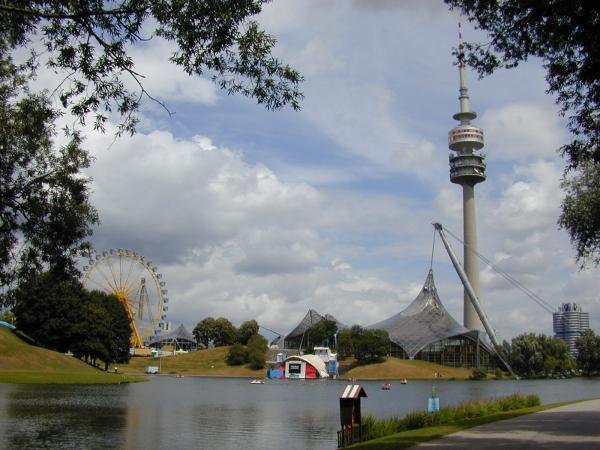
| On the northern part of the city lies the famous OlympiaPark, where the football stadium is the home of Germany's most successful soccer team - Bayern Munich. Visitors are first greeted by the unique tent-like structure of steel netting and acrylic panels. Built for the 20th Summer Olympic Games, the beautifully landscaped park is perhaps best known for the architecturally controversial suspension roofs that covers the stadium. It is extremely original and the interplay of light and landscape give it an eerie character at sunset. The surrounding park is also popular with cyclists, joggers, roller-skaters and casual strollers. During certain months, funfairs are organised within the park to give local Germans a taste of the difference in food, culture and music. Knowing for its pioneering roles in the development of automobile, the opposite BMW Museum did it in such a way that documented its chequered history by means of its concepts and creations. Its expertise and enterprise, its tradition and innovation are all visually felt. Having toured the museum, it really enables visitors to marvel at the horizons of transport technology through the eyes of 5 generations. Horizons show the development of ideas, dreams, philosophies, work society and individual mobility made possible by technology. I guess, it is only this way that BMW Museum makes it easier to understand the present as the future of our past and as the past of our future. The museum is definitely worth a visit! |
 |
 |
 |
| OlympiaPark |
| Landshut Hochzeith 1475 |
| Neuschwanstein Castle |
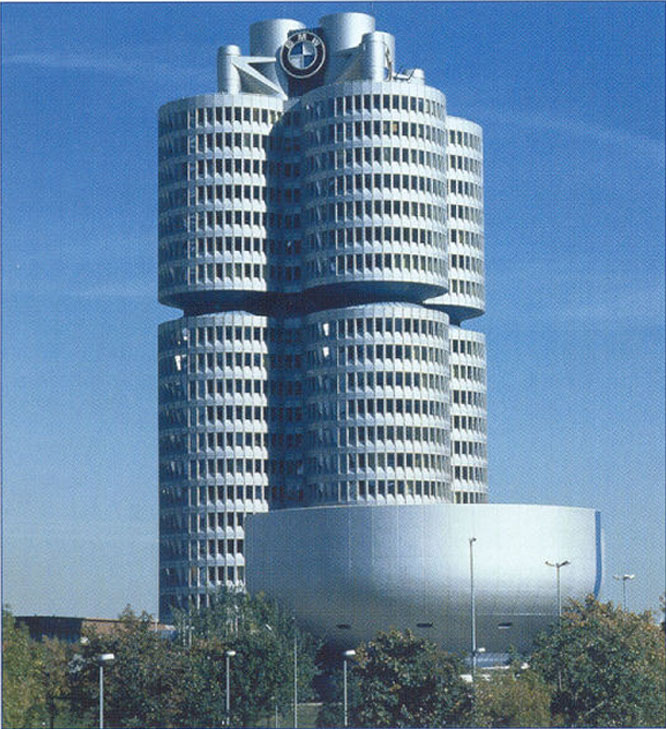 |
| BMW Museum |
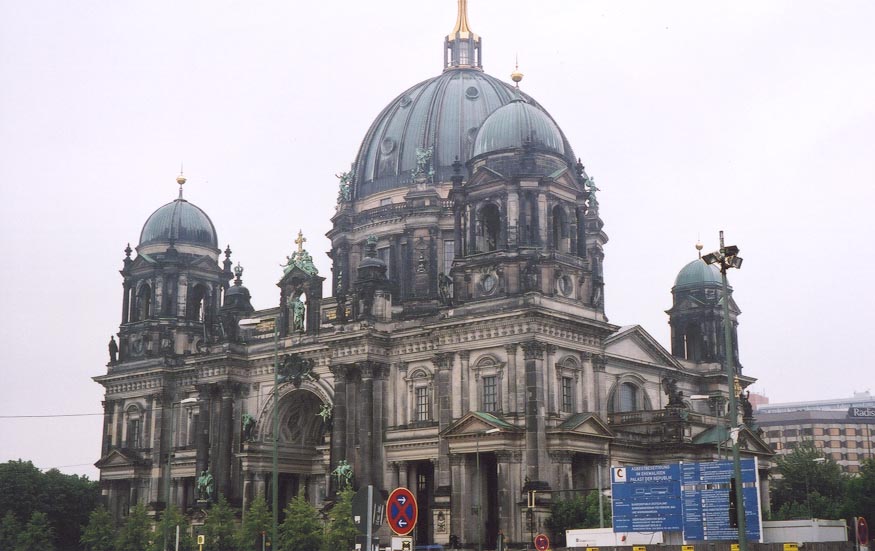
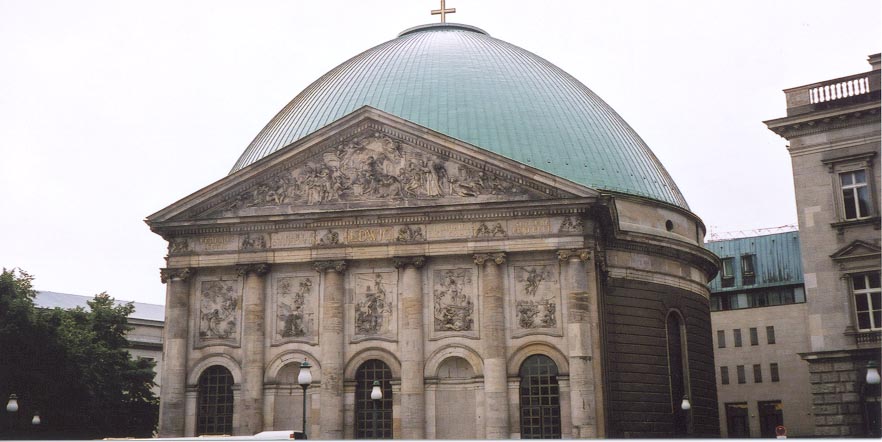
| In 1848 Berlin was the centre of Germany's March Revolution, in which conservative forces again retained the upper hand. Adolf Hitler chose Berlin as his political powerbase from 1933. World War II led to the unconditional surrender of Germany, and of course of Berlin, which was almost completely destroyed. The city had four-power status (USA, Great Britain, France, Soviet Union) until 1990. The Soviet-ruled sector was cut off from the rest of the city in 1961 in the dramatic overnight construction of the Berlin Wall. Berlin is the very last city in my Bohemien tour. The morning started after breakfast where we would all be doing the 'Infamous Third Reich Walk'. Between 1933 and 1945, the area was the nexus of power and perversion in Hitler's Nazi Germany. This was also where the Chancellory, the presidential palace and the foreign ministry were located. Across the Spree's River, opposite the road, looms the towering mass of the neo-Renaissance Berliner Dom (Berlin Cathedral, 1905), the former court church of Hohenzollern family. The colossal structure measures 114 metres in length, 73 metres in width and 85 metres in height; it is crowned by a central copper dome topped with a golden cross and rigned by 4 smaller towers. Crossing another river - Scholssbrucke River, brought us to the street of Under den Linden. The first building that comes into sight is a pink baroque structured building, containing the Deutsches Historiches Museum (Museum of German History), in the former Zeughaus (Armoury, 1706). Besides Zeughaus is the restored Neue Wache (New Guardhouse, 1818). Until the demise of the monarchy in 1918, it was indeed the royal guardhouse; it then became a monument to the victims of fascism and militarism, complete with an eternal flame and goose-stepping guards. In 1993 it was rededicated again, now serves as united Germany's central memorial, harbouring the tombs of an unknown soldier, a resistance fighter and a concentration-victim. Another 2 ensuring buildings to the east are the Kronprinzessinenpalais and Kroprinzenpalais (Palace of the Crown Princess and Crown Prince). The baroque, colonnaded Crown Princes Palace indeed served as a royal residence until the end of WWI. After 1919 it housed a department of the National Gallery, which was closed by the Nazis in 1937. In GDR days it was used as a guesthouse for visiting dignitaries. Further down, as we walked to Bebelplatz, the square is enclosed by surrounding buildings including the Humboldt University, State Library, Old Royal Library and St Hedwig Cathedral. Humboldt University (1753) was originally a palace of Prince Heinrich. It became a university building in 1810 on the initiative of Wilhelm von Humboldt, then a minister of cultural affairs. Since he was able to attract luminaries of the day, the university quickly rose to prominence. Originally call Fridrich-Wilhelm University, it was given its name in 1949. It has produced more than 2 dozen Nobel Prize winners, including the Otto Hohn (1944), who figured out how to split the uranium atom. At No. 8, there is the hulking Staatsbibliothek (State Library, 1914) standing at 107 metres long and 170 metres wide. The library counts in its collection 9 million books and periodicals, including precise manuscripts, original musical sheets and maps. On the square's south-east corner looms the giant copper-domed St Hedwig Cathedral (1783), which was partly modelled on the Pantheon in Rome. |
 |
 |
| Berlinder Dom |
| St Hedwig Cathedral |
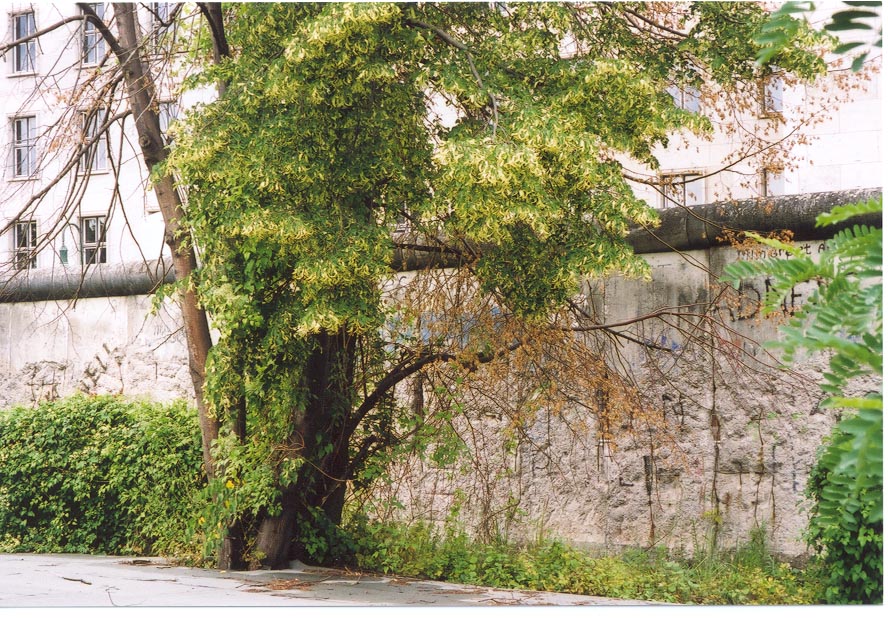 |
| Remains of Berlin Wall |
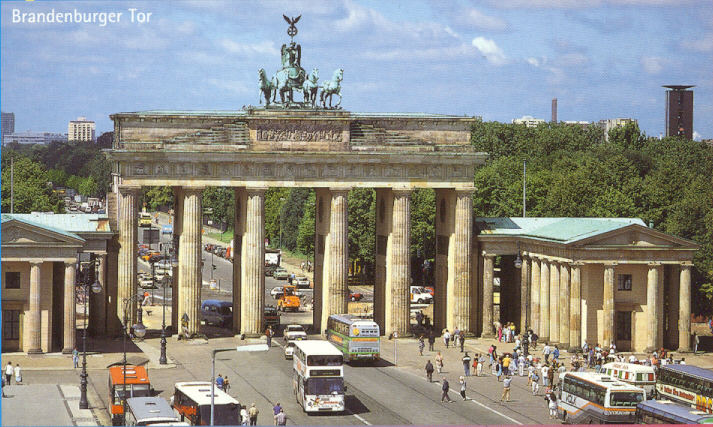
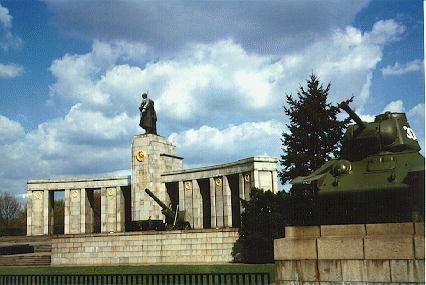
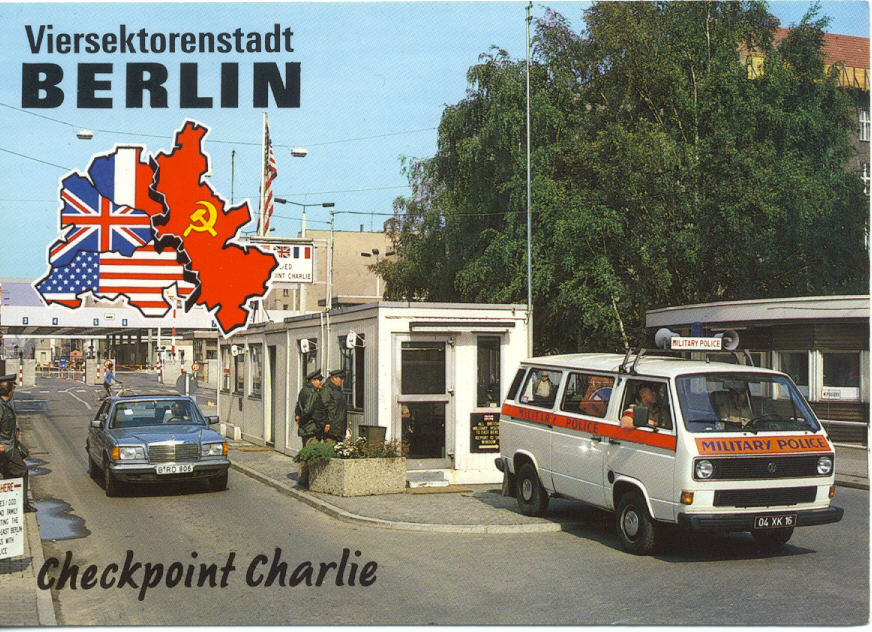
| Moving along Mohien Street and at the corner of Wilhelmstrasses and Vossstrasse stood the Neue Reichskananzlei (Hitler's New Chancellory), built for Hitler in only 11 months. The building was set up in such a way that an open courtyard led to 2 long hallways with marble floor. At the end of the floor's was Hitler's office overlooking the gardens behind. Badly bombed, the building was effaced in 1949 by the Russian but not before being stripped of all the red marble which they creatively recycled in the Soviet Memorials at Treptower Park. The legendary Fuhrerbunker, where Hitler took cyanide and then, for good measure, shot himself through the head on 30 April 1945, stood about 200 metres west of the New Chancellory. In the garden of the Old Chancellory Hitler had the bunker built in 1943 when the bombing of Berlin got serious but only spent his last 6 weeks in it. It was entered through an earlier shelter from 1935, known as the Vorbunker, and was extremely deep; the ceiling plate was 1 metre above ground, and the roof alone was 30 cm-thick concrete, above which was a 20 cm layer of soil. After the war, the Soviets tried to blow up the whole thing but the concrete proved impervious to explosives and so they burnt and flooded in. During construction of the adjacent apartment building in 1988, the ceiling was blown up bit by bit until the whole thing caved in and was filled with rubble. The Brandenburg Gate was built in 1791, this imposing structure has endured several symbolic reincarnations. Intended by its architect Carl Gotthard Langhans to be a symbol of peace, the winged victory goddess and 4-horse chariot posing on the top of the gate were added a couple of years later, turning it into a monument to Prussian might. The goddess and her steeds had a short stint in Paris when Napoleon came along and swiped them in 1806. Political groups from various ideological corners hijacked the pliable Brandenburg Gate as the backdrop for their rallies and processions until 1961 when the wall was built and the gate sealed off in no-man's-land. In 1989, after the dissolution of the border, the area was reopened to the public. Today, traffic passes freely under the gate and the surrounding plaza is dotted with stalls. Enterprising scammers sell all sorts of military souvenirs and hunks of Berlin Wall concrete, mostly of dubious authenticity. If the Berlin Wall was ever reconstructed from the fragments sold to tourists it could probably close the whole of Germany. On the street north, just west of Brandenburg Gate, is the Soviets Memorials, flanked by the 1st 2 Russian tanks to enter Berlin in 1945. The reddish marble is said to have come from Hitler's chancellory, which once stood on Wilhelmstrasse. After the Third Reich Walk, a number of us proceed to visit the Checkpoint Charlie Museum. Checkpoint Charlie was the most well-known border crossing between West and the East. In October 1961 American and Soviet tanks faced each other here, when the USA intervened to defend the fundamental rights of Berlin's special status. Again and again, Checkpoint Charlie is the scene of demonstrations. Escape attempts succeed (example, an lsetta specially converted for escape purpose is displayed in the musem) or fail just before the white borderline. Finally on 22 June 1990, in the presence of the foreign ministers of the 4 victorious powers of the 2nd World War and both German states, Checkpoint Charlie was ceremoniously demolished. Between 1961 and 1989 more than 5000 people were able to escape across the Berlin Wall. In the course of time the aids they used to overcome the increasingly perfected GDR border security system became more and more inventive, and many of them have found their way into the museum's collection: several converted cars, a mini submarine which an escapee used to pull himself along under the Baltic Sea, hot-air balloons and home-made motor-powered kits equipped with a Trabant engine or the tank of the Jave moterbike. People also escaped hidden in loudspeakers, or in a radiogram. The numerous escape tunnels are documented in full, including the stories of these enabled 57 successful people to reach West Berlin. In addition to many photographs in the tunnel, the car in which the earth was transported is also on view. The exhibition also presents the history of both parts of the divided city - their contrasts and similarities - from the end of Second World War. The presentation is always '2-sided' - events in West Berlin are seen in relation to those in the East: Berlin in ruins, rebuilding, blockade and airlift, Ernst Reuter's appeal to the world (1948): 'Look to this city and recognise that you must not abandon it and its people, cannot abandon it'. On 17 June 1953, almost everywhere in GDR the population is in revolt. The uprising is brutally put down with the help of Soviet tanks. Further stages in the exhibition show the building of the Wall, the 4 Powers Agreement, the 750th anniversary celebrations, the fall of the Wall and German reunification. With a little time, I took the opportunity to stroll along the elegant, scenic and cultural boulevard of Under den Linden. The street is lined up with lime trees, where the ambience of the old metropolis can almost be touched. Under den Linden, undoubtedly the most Prussian of Berlin's streets, was planned by the Great Elector in 1647. Here, too, much was annihilated during the war and ruined by socialist misplanning in the post-war years. Indeed the city's main sights are strung like pearls on both sides of this broad street and provide a thorough introduction to the city's fascinating past. Today, it is such a bustling artery filled with strolling tourists and business people rushing from one appointment to the next. These classical structures conceived testify to the fact the Berlin once ranked among the most beautifully European cities. Berlin continues to be the focus of the excitement and frustration that has folled the end of the Cold War. With the infamous Berlin Wall gone, it's not always easy to tell where the actual border was that once separated East from West although the true historical centre of the city is in the eastern half. You can't engage with Berlin unless you have an appreciation of its tumultuous past. First inhabited in medieval times, the city has always been of strategic, cultural and economic significance. Innovative industrial development and lively intellectual ferment have coexisted in Berlin for centuries, though wars have taken their toll on the people and their buildings. From the catastrophic Thirty Years' War to the heavy bombing of WWII, Berliners have been obliged to call upon their stern suffering and set to reconstruction efforts. Everywhere you go there are reminders of darker days, both incidental (many buildings are scarred by shrapnel) and considered. Luckily, the city's charm ensures no visitor needs stay sombre for long. Noisy, intimidating, cutting edge, plastic and on-so-civilised, Berlin spells grove in hundreds of different ways, but always makes it sounds enticing. |
| Once a thriving market, the quiet, graceful Gendarmenmarkt is Berlin's most beautiful square. Its name comes from the Gendarme regiment which had its headquarters and main stables here from 1736 to 1773. The twin churches of Deutscher Dom and Franzosicher Dom combine with the Konzerthaus to form a superbly harmonious architectural duo. Unifying the elements include the columned particos on all 3 buildings and the domed towers of the 2 churches. Now the home of the Berlin Symphony Orchestra, Konerthaus (Concert Hall, 1821) is the 3rd structure in this spot and was originally called Schauspielhaus (theatre). With performance dating back to 1776, the Deutscher Dom (German Cathedral) was completed in 1708 and consists of a pentagonal central structure surrounded by apses. At the north end of Gendarmenmarkt is the Franzoisischer Dom (French Cathedral), so called because it was once the main church of the French Huguenots who, persecuted in their own country, settled in Britain in the late 17th century. Since 1935 the cathedral has housed the Huguenst Musem, which traces the history of the French Protestant's in France and in Berlin-Bradenburg from the 17th to the 20th century. Nowadays, the cathedral is used as a place of worship. The end of the Third Reich Walk brought us to the genuine Berlin Wall, the symbol of the city for 28 years. As the remain of it today, this 160 metres section runs along Niederkirchne Strasse from Martin - Gropius - Bau to Wilhelmstrasse. The scenes of 13 August 1961, the day Berlin was abruptly cut in 2, are still vivid in many people's minds. Literally overnight, not only the capitalism and communism divided but perplexed families, too - children from parents, friends and one another, Berliners from their places of work. The Soviet-inspired wall was 161 km long, 4 metres high, studded with watchtowers, barbed wires, and mines and guard dogs in the east. This folly, this ribbon of shame, this affront to civilisation claimed the lives of as many as 160 would-be escapees during its lifetime. Nothing could prevent the collapse of the Wall. On 9 November 1989, thousands of East Berliners streamed into the West - the euphoria was endless. Almost immediately, thousands of people began chiselling off chips of the Wall. Some thereafter most of it was taken down and, in some cases, sold off to museums and private collectors. Some stretches, however, still stand, silent symbols not just of an era of divison but also of the triumph of freedom and individuality over a suppressive and unjust political system. |
 |
 |
 |
| Brandenburg Gate |
| Soviet Memorials |
| Checkpoint Charlie |
| Latest Update : 26 November 2003 Copyright @ 2003. All Rights Reserved |

|
 |