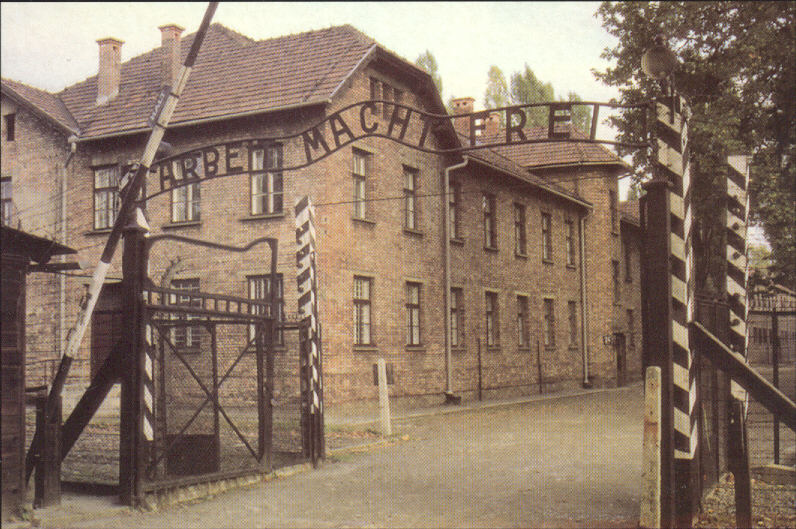
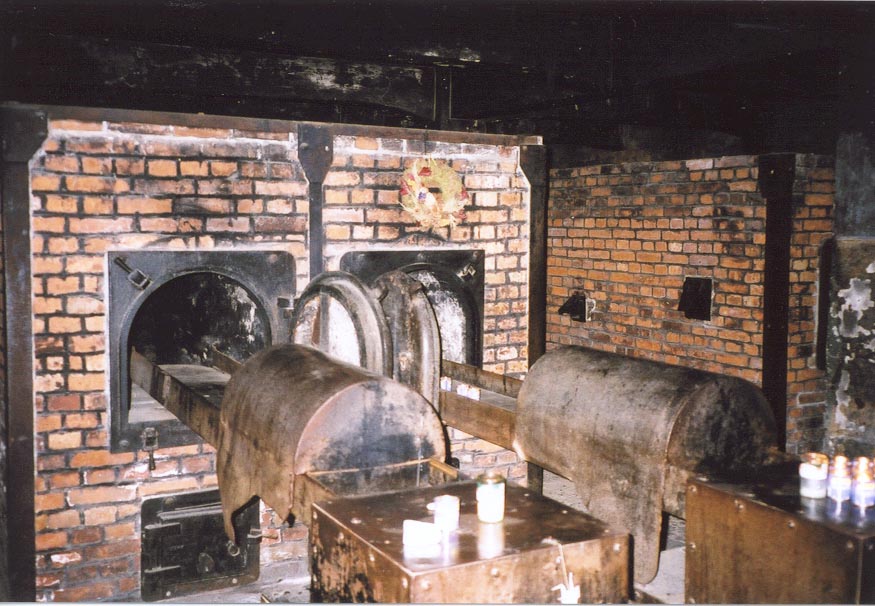
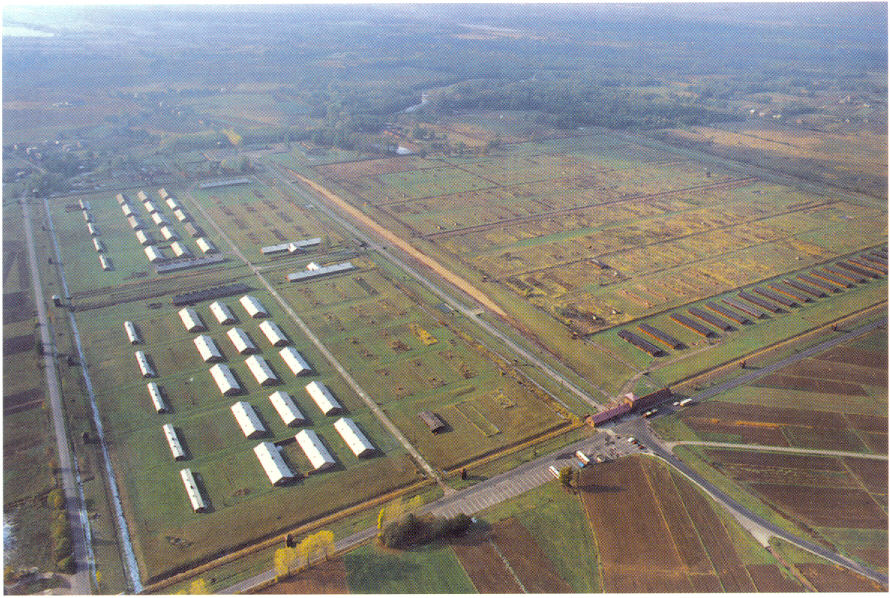
| VIsiting Auschwitz leaves not only a heart breaking experience but also the unforgetful image is embedded on the mind, even till today. Every time I looked back at my Bohemian trip,the visit to Auschwitz brings back some sad memories. Auschwitz, town in sourthern Poland, is the site of the largest concentration camp and death camp run by Nazi Germany during World War II (1939-1945). The Nazis established Auschwitz in April 1940 under the direction of Heinrich Himmler, chief of 2 Nazi organisations - Nazi Guards known as Schutzstaffel (SS) and the secret police known as the Gestapo. The camp at Auschwitz originally houses political prisoners from occupied Poland and from concentration camps within Germany. Construction of the Birkenau, also known as Auschwitz II, began in October 1941 and included a woman's section after August 1942. Birkenau has 4 gas chambers, designed to resemble showers, and 4 cremotoria, used to incinerate bodies. 405 000 prisoners were recorded as labourers between 1940 and 1945. |
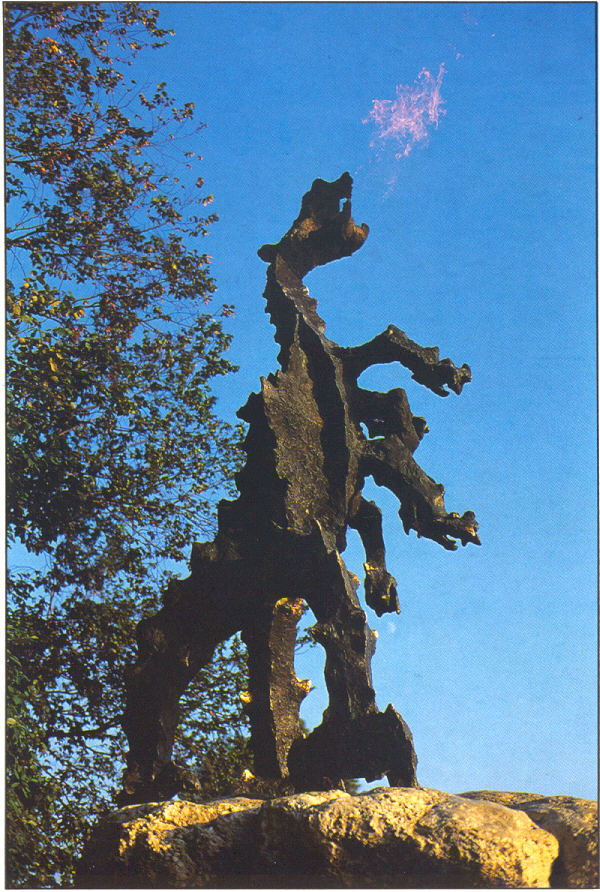
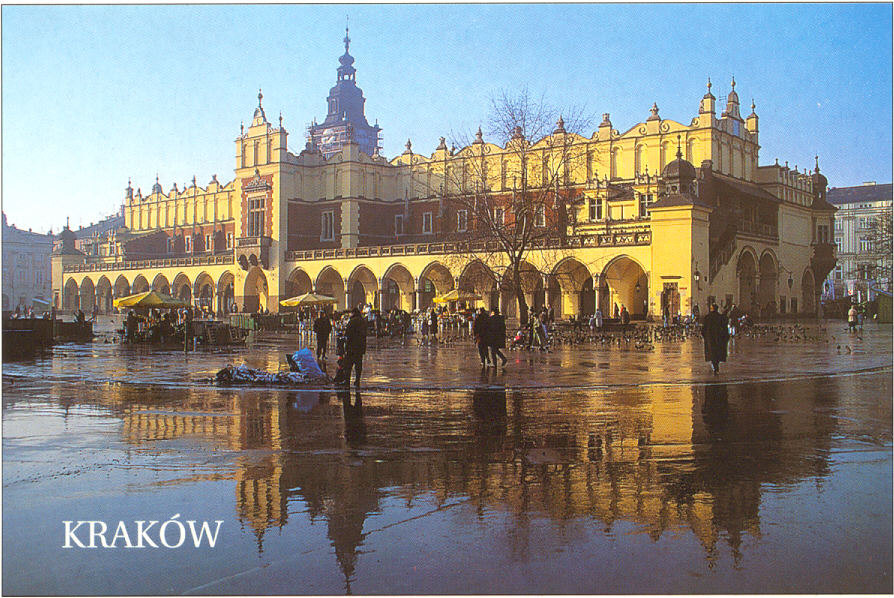
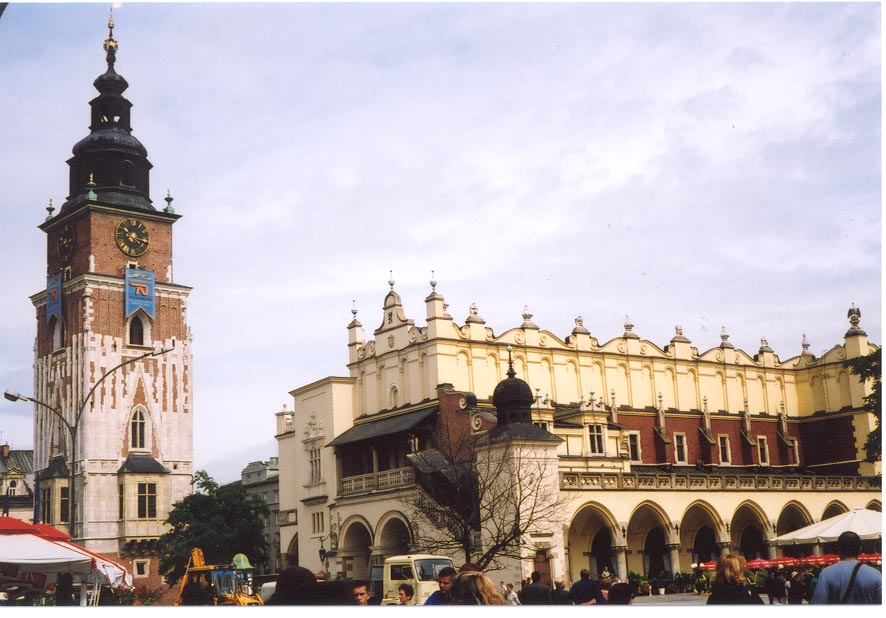
| Krakow is one of the new Polish cities to have survived the war more or less intact. Having wiped out the Jewish population, the Nazis minded the city for systematic destruction in 1945. However, nothing was detonated as they retreated from a sudden advance by the Red Army. Coming unscalted, the city preserves most of its old historical architecture and structure. My Krakow adventure started in Szeroka (Wide Street), a Jewish Quarter (Kazimierz). In 1942 the Nazis confined Jews to Kazimierz ghetto before sending them to the death camps. Of the 68 000 Jews who lived in Kazimierz in 1938, only a few hundred survived the war. Seroka still retains its Jewish character, though parts of this and some surrounding streets are still so run-down you would think the war had only just ended. Restoration work is ongoing, and in the meantime, they are receiving plenty of tourists, particularly American Jews tracing their roots, or other visitors taking 'Oskar Schlinder tours' tracing the step of his story and some of Mr Spielberg's film location. One of the most recently restored buildings is the Isaac Synagogue. Dating from the 17th century, this was the city's largest and originally the most lavishly furnished synagogue. Having left unfurnished as a shell, the slightly austere appearance makes visitng this synagogue all the more moving. There is also the Remuh Synagogue, the smallest in the city. It is not only a monument but still used for worship by a minority of the local Jews. While ascending Wawel Hill, the inspiring Wawel Castle is the first to come into sight. Serving as the royal residence between 1038 and 1596, this complex of buildings include medieval defensive walls and towers, the royal castle, royal cathedral, treasury and armoury. The castle is a splendid conglomeration of different eras in art and architecture: Gothic, Renaissance, Baroque and classical. At the entrance to the Gothic cathedral is a prehistoric tusk, which has hung here for centuries; superstition states that so long as the tusk hangs by the entrance the cathedral will be safe. Built on the site of an earlier Romanesque church the triple-naved design included side chapels that were added later. The most spectacular is the Renaissance Sigismund Chapel built from 1519-1533, crowned with a magnificent gilded dome, and Italy cross chapel with frescos incorporating Ruthenian and Bysantine elements. From the 14th century the cathedral was used for royal coronations and funerals. At one end, there is also the labyrinthine crypt. It is usually much quieter than the cathedral, and is the final resting place for members of the royal family and national figures. It is also, so Hindu esoteric thinkers claim, one of the mystic energy centres of the world. Superstitious Poles believe that it is necessary to lean against the wall for about 10 minutes a week in order to sap sufficient vital energy from the wall. Beneath Wawel is the Smoczna Jama (Dragon's Cave), home of the mystical Wawel dragon. The entrance to the cave is marked by an incongruously modern metalwork sculpture of a slimline, 1960s-style dragon periodically breathing gas flames. Rynek Glowney (Main Market Square), the heart of this city is always bustling with locals and tourists, and during the summer, this continues until late into the night. Measuring 200 metres on each side, it is one of the Europe's largest medieval square (only St Mark Square in Venice is larger), with plenty of space for numerous restaurants and cafes, as well as flower stalls, pavement artists and street performers. Being such a cultured town, you can always find many duos and trios playing exquisite classical refrains. At the centre of the Market Square stands the Sukiennice (Cloth Hall). Originally a covered markets with stalls, shops and warehouses, the current Renaissance facade with mascarons, for which (apparently) Krakow's most distinguished burghers posed. The ground floor of the Sukiennice continues commercial role, with stalls selling folk arts and crafts, amber jewellery, leather goods and souvenir, which are definitely a cut above the usual. |
| Poland - A Reinvented Nation |
 |

|
| Latest Update : 26 November 2003 Copyright @ 2003. All Rights Reserved |
 |
 |
 |
 |
| Arbeit Macht Frei = Work Brings Freedom |
| The Burning Crematory |
| Birkenau Compound |
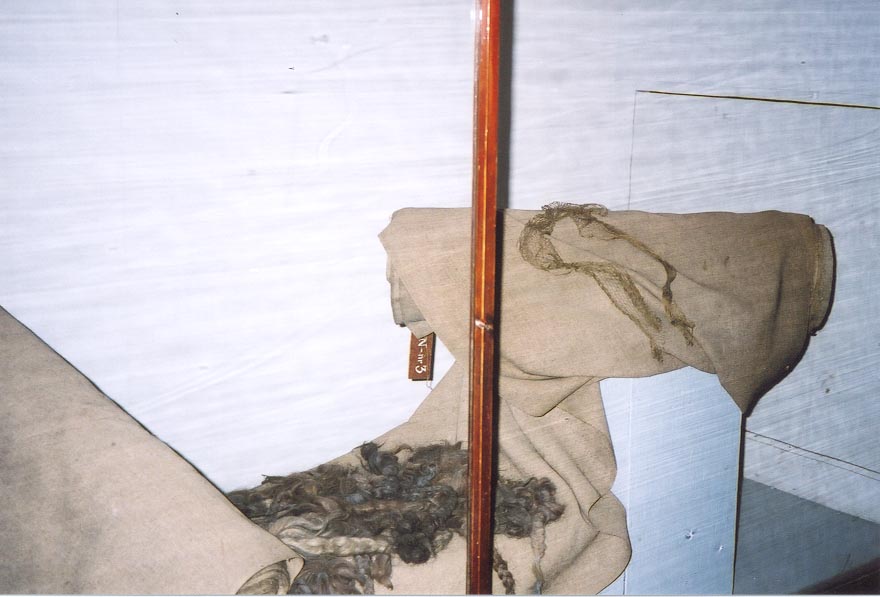 |
| Remnants - Women's Hair |
| Of these, about 340 000 perished through execution, beating, starvation and illness. Jews comprised the largest number of victims, and Auschwitz has become the prime symbol of what became known as the Holocaust of European Jewry. At least 5 to 6 million Jews killed by the Nazis during World War II died there. Large number of prisoners of war, gypsies and homosexuals also died in Auschwitz. Approximately 40 more satellite camps were established around Auschwitz. These were forced labour camps and were known collectively as Auschwitz III. The 1st one was built in Monowitz and held Poles who had been forcibly evacuated from their hometowns by the Nazis. Prisoners were transported from all over Nazi-occupied Europe by rail, arriving at Auschwitz in daily convoy. Arrivals at the compound were separated into 3 groups. One group went to the gas chambers within a few hours; these people were sent to Birkenau camp where more than 20 000 people could be gassed and cremated each day. The second group were made to labour within Auschwitz. Some prisoners managed to survive through the help of German industrialist Oskar Schindler, who saved about 1000 Polish Jews by hiring them to work in his Krakow and Czech factories. A third group, mostly twins and dwarfs underwent medical experiements at the hands of doctors such as Josef Mengela, who was also known as the 'Angel of Death'. Inside the barrack museum, I witness the most gruesome and provocative exhibits where you see the remnants of thousands of lives - women's hair, eye-glasses, tin cans, suitcases, shoes. It's so hard to imagine the sheer enormity of evil committed. On the 2nd floor, at Barrack 5, it's also shocking to stare at the pile of children's clothing. It's even harder to believe that the Nazis actually maximise their economic gain from further cold-blooded murder. What they did was, before the bodies were burnt, the victim's hair was cut off and fillings on false teeth were melted into bars and sent to Berlin. It was only on 27 January 1945 when the Soviet army marched into Auschwitz that the camp was finally liberated. 7600 survivors were abandoned there. More than 58 000 prisoners had already been evacuated by the Nazis and sent by a final death march to Germany. |
 |
 |
 |
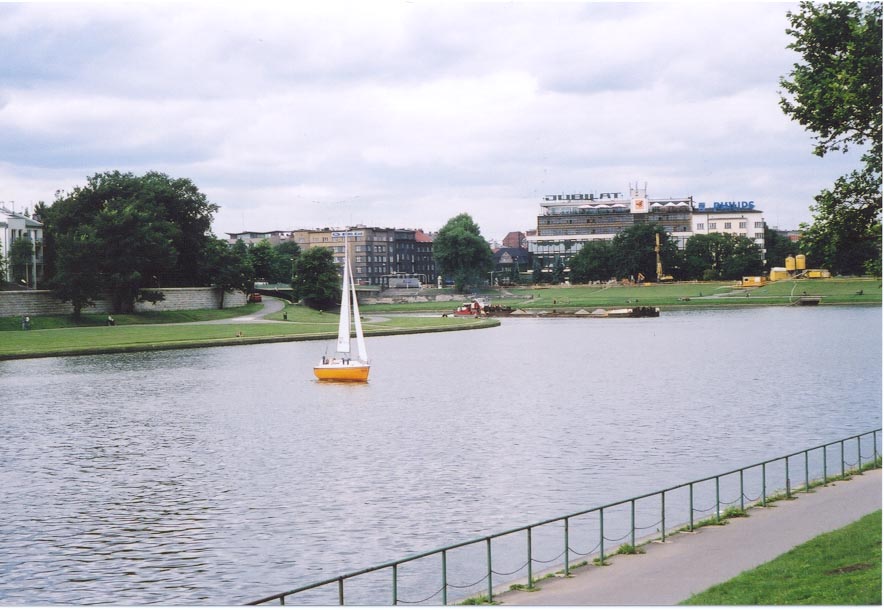
| River Vistula |
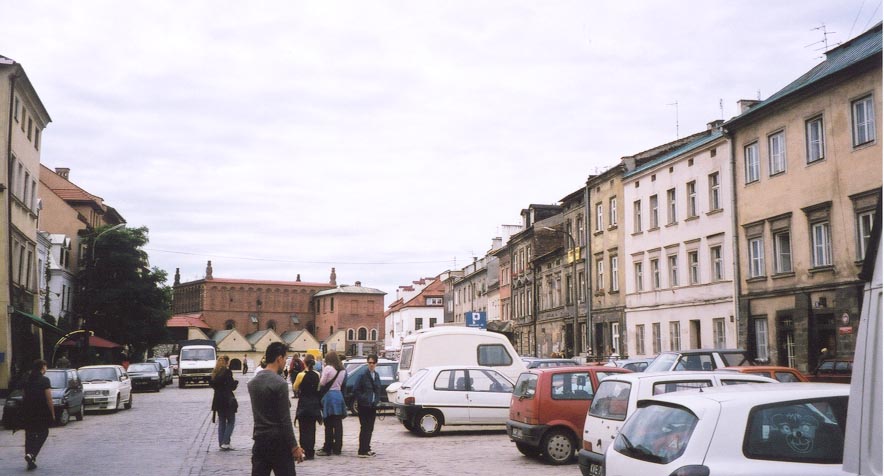
| Kazimierz - Jewish Quarter |
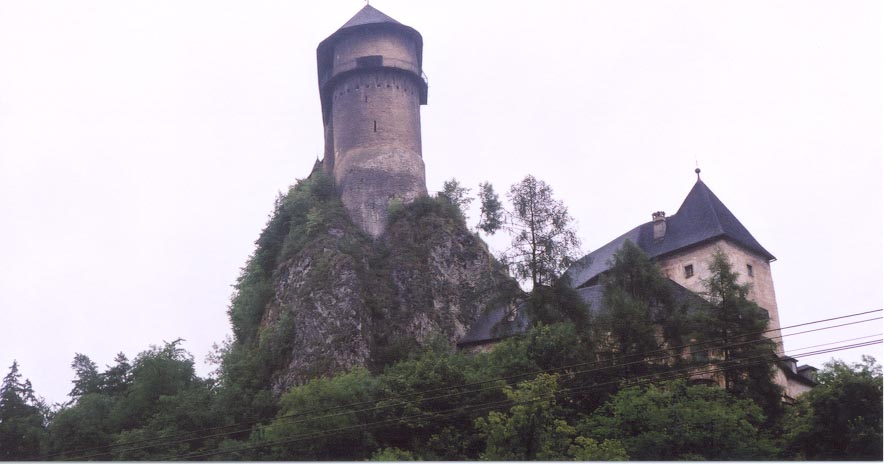
| Wawel Hill |
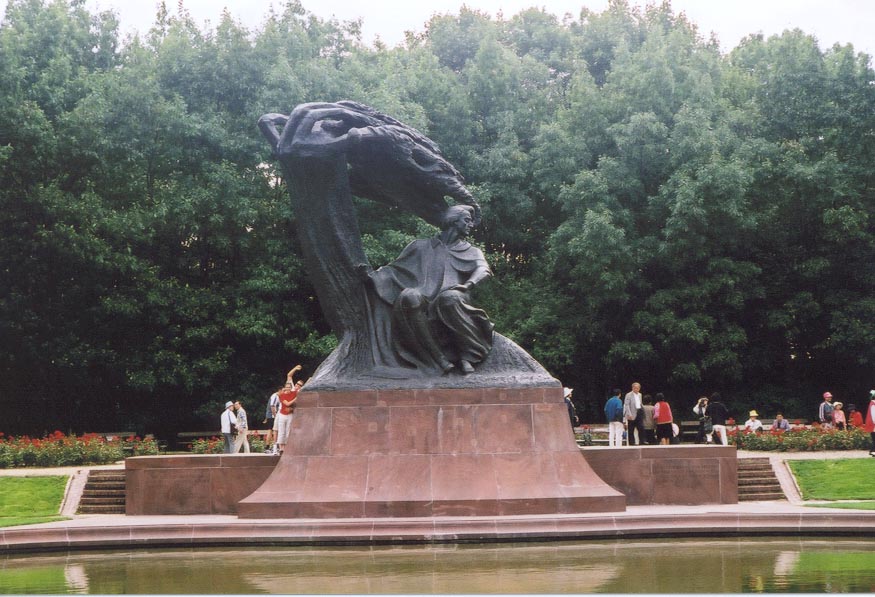
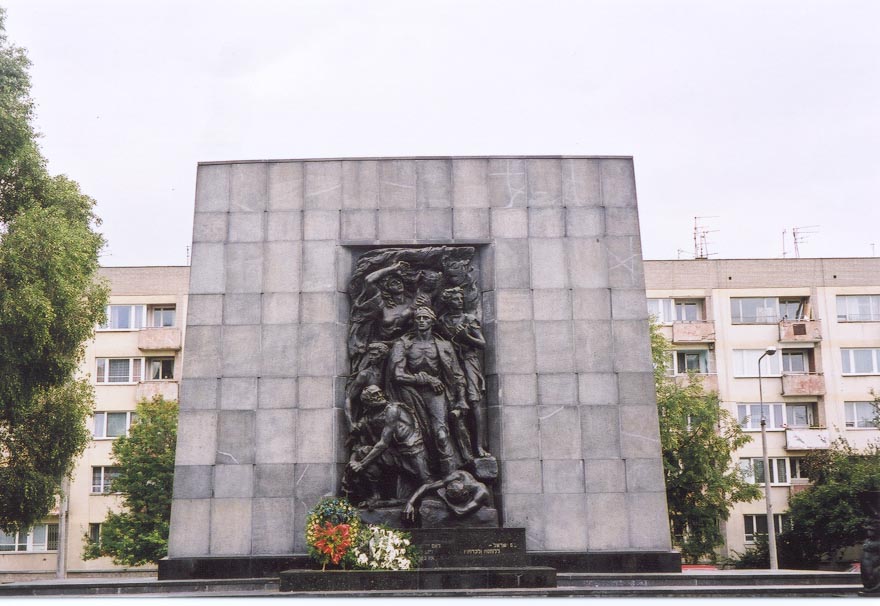
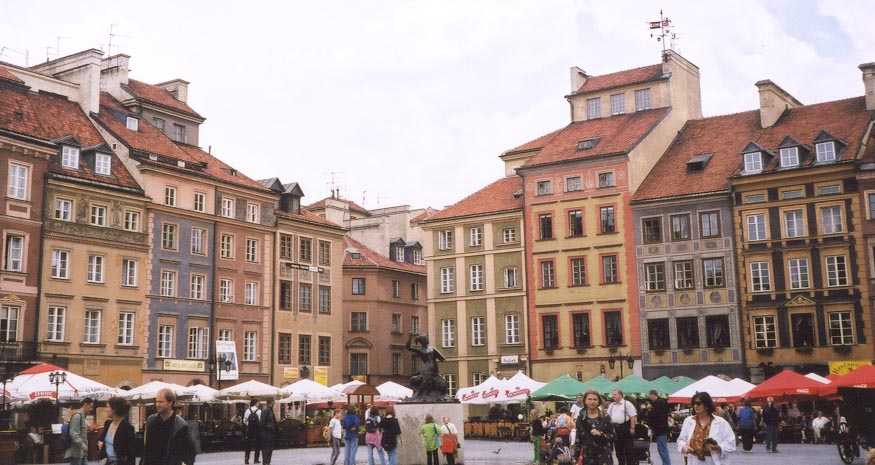
| Unlike Krakow, Warsaw was systematically destroyed and left virtually unhabited, with the total wartime damage resulting in almost 80% of the city being reduced to rubble. A massive post-war rebuilding programme recreated the Old Town and New Town districts, as well as numerous palaces, churches and important civic buildings. It all took 30 years to reconstruct them. The city is divided by the Vistula River into 2 very different parts. The western, left-bank sector includes the city centre proper and the Old Town to the north. Almost all attractions, as well as the lion's share of tourist facilities, are on this side of the river. The right-bank part of Warsaw, the suburb of Praga, has no major sights and hardly ever sees tourists. Starting with Lazienki Park, the very first monument as we walked through the entrance is Chopin Monument, a reconstruction of the original 1928 work by Secessionist sculptor Waclas Szymanowski. Walking through the woods, the park looks like a delightful haven, with avenues lined by chestnut trees and beautiful formal gardens leading to several palaces, pavilion, orangeries and other historic buildings. One of these is Palac na Wyspie (Palace-on-the-Isle) which is romantically located in the centre of the lake. Approached by bridges, the palace was built in stages from 1784-93, on the site of earlier bathing pavilions. The neighbouring Teatr na Wyspie (Theatre of the Isle) dating from 1790, was modelled on an ancient amphitheatre. The stage is a 'ruined temple', while a canel separates the auditorium, and can also be used as part of the stage. The park includes several other romantic neo-classical buildings within walking distance of each other : Slwiatynia Sybill (Temple of Sibyl), Wodozbior (Watertower) and Slyiatynia Egypska (Egyptian Temple). Bialy Dom (The White House) does have a white facade, and this small square villa was completed in 1774 as a residence for the king's sisters. Another one, Palac Myslewickich (Myslewicki Palace) is an early neo-classical with 2 semi-circular wings. Not far from Lazienki Park, we came to see the Warsaw Ghetto. The ghetto seems to have lost some of its pre-war Jewish character, though various monuments and import buildings between Stawki and Swietbkrzyska convey the tragic plight of Warsaw's Jew. The sufferings of the Jews in the ghetto and their courageous uprising are commemorated in one of the most poignant areas of the city, by Trakt Pamieclei Meczenstwai Walki Zydow (Memorial To The Struggle and Martyrdom of the Jews) on Zamenhofa street. Also on this street is the gross mound Pomnik Bunkra (Bunker Monument), from where the ghetto uprising was led, raised to the level of the rubble that was left behind after the ghetto was destroyed. The bleak Pomnik Bohaterow Getta (Monument to the Hereos of the Ghetto) symbolises the Jews' bravery and eventual helplessness in the face of Nazi anti-Semitism. In 1970 the German Chancellor Willy Brandt knelt here as a gesture of reconciliation. Memorial stone marks the route to Pomnik Umschlagplatz (Umschlagplatz Monument) in the adjoining street, Stawki. It was here that the Jews were assembled before transported in cattle trucks to concentration camps. There remains talk of plans to construct a museum in honour of Polish Jews near the former ghetto, although nothing has yet been commissioned. As far as preservation is concerned, the Old Town was rebuilt from the foundations from the fact that every authentic architectural fragment found among the ruins were incorporated in the restoration. In 1945, the Old Town Square was just the walls of 2 houses sticking out of the rubble. Today it is a harmonious blend of Renaissance, Baroque and Gothic elements. It's alive and atmospheric, doesn't feel contrived, and is replete with open-air cafes and art stalls. |
| In front of the Cloth Hall is the Pomnik Adama Michkiewicza (Adam Mickiewicz Monument), commemorating Poland's greatest romantic poet, and meeting 'by the monument' is a favourite rendezvous for both locals and tourists. Next to the Cloth Hall sees St Adabebert Church. It has been around since the 11th century, and its original entrace dips 2 metres below the present level of the square. Moreover, the vault included Romansque and pre-Romansque architectural fragments. Another church lies at another corner is the imposing twin-towered St Mary Church built during the 14th - 16th centuries. The triple-naved design features ornate interiors include a late-Gothic altarpiece entitled 'The Lives of Our Lady and Her Son Jesus Christ'. From outside, the altar piece and stained-glass windows of the nave will easily take one's breath away. Dazzling in its opulence, the material embodiment of the power and the might of Polish Catholicism. Taking Florianska street from market square leads to Dom Jana Matejkl (Jan Matejko's House). The grandeur of the neo-classical facade and 1st floor wrought iron balcony immediately distinguish this house. The street culminates at Brama Florianska (Florian's Gate). This is the Old Town's only remaining gateway, and features a section of the city wall together with 4 fortified turrets dating from the 14th century. The city wall is hung with pictures by local artists. Beyond Florian's Gate is the Barbakan (Barbican), a circular bastion built in 1499, and the largest example of its kind in Europe. The rest of the city walls were pulled down in the 19th century, and this area was laid out as the Planty, a wooded park with fountains and numerous benches that extend for almost 3.5 km, encircling the historic centre. Along Grodzka street, I come to Kosiol Sw. Piotral Pwala (St Peter and St Paul Church). In front of the church is an impressive walled courtyard with 12 late-Baroque sculpturs of the apostles. The architectural designe was modelled on 11 Gesu, Rome's renowned Jesuit Church. Inside the church, I can also evive the airy, austere grandeur of this late Renaissance buildings. Beside St Peter and St Paul church, there is the Kosciol Sw. Andreja (St Andrew Church). It is one of the city's oldest, with elegant stucco work by Balthasar Fontana and a pulpit in the shape of a horse-drawn carriage. The Tartars used the church as a refuge and fortress during the 1st raid of Krakow. Krakow, to me, is a peaceful town, with lesser activities. Its simplicity can hardly be described in words. What happens in the past has not dampened the city in its character and spirit. |
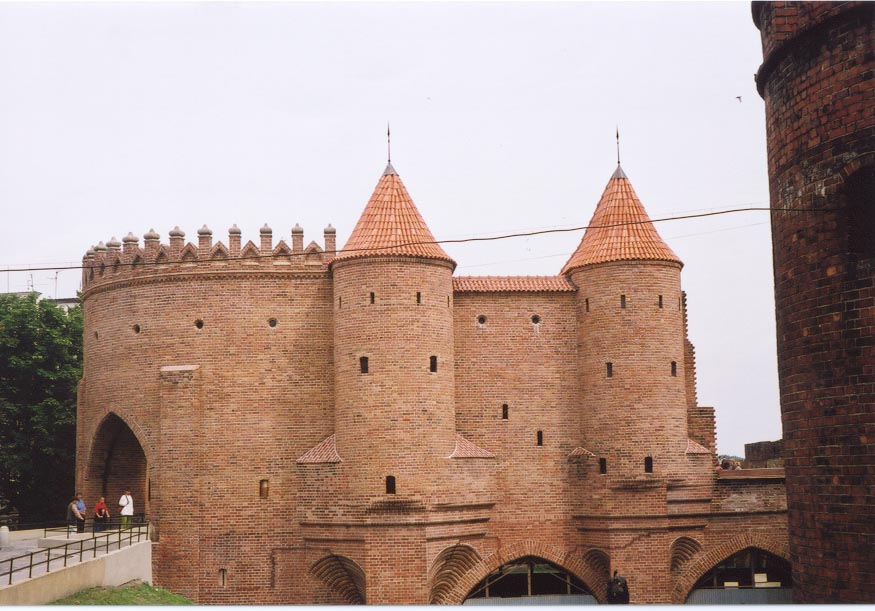
| Along Dluga and Podwale street, we were led to the Barbakan (Barbican) fortress which was dated from the 16th century as part of the Old Town's defensive wall, and row a popular haunt of street artists and entertainers. Continuing along the elegant street Freda takes in the Baroque Kosciol Sw. Jacka (St Jacek's Church), opposite which stands Kosciol Sw. Ducha (Church of the Holy Spirit) founded in 1688 to commemorate King Jan III Sobieski's victory over the Turks at Vienna. We eventually came to the centre of Old Town, Rynek Starego Miasto (Old Town Market Square). The square is always bustling with people visiting the square's numerous cafes, bars and restaurants, while street traders and artists ply their wares outside the galleries and shops. At this time of the year, the square is also covered with tables, while horse-drawn carriages clip-clop from here to the Old Town (which is closed to traffic). |
 |
 |
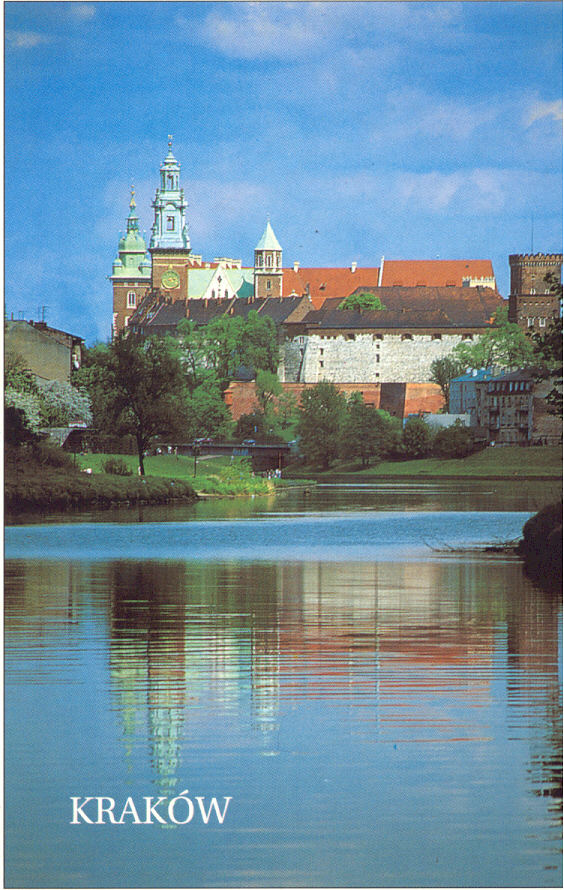
| Wawel Castle by River Vistulal |
| The Legendary Wawel Dragon |
 |
 |
| Sukiennice - Cloth Hall |
| Cloth Hall in Main Market Square |
 |
 |
| Chopin Monument |
| Warsaw Ghetto |
 |
 |
 |
 |
| Tomb of the Unknown Soldier |
| Barbakan |
| Old Town Market Square |
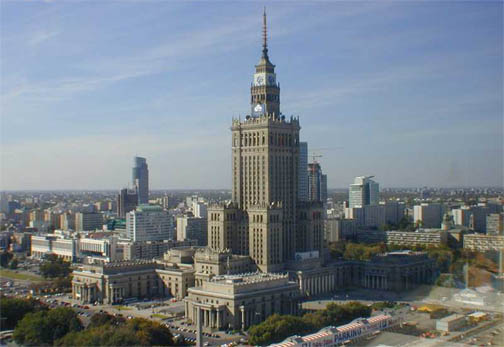
| Palace of Science and Culture |
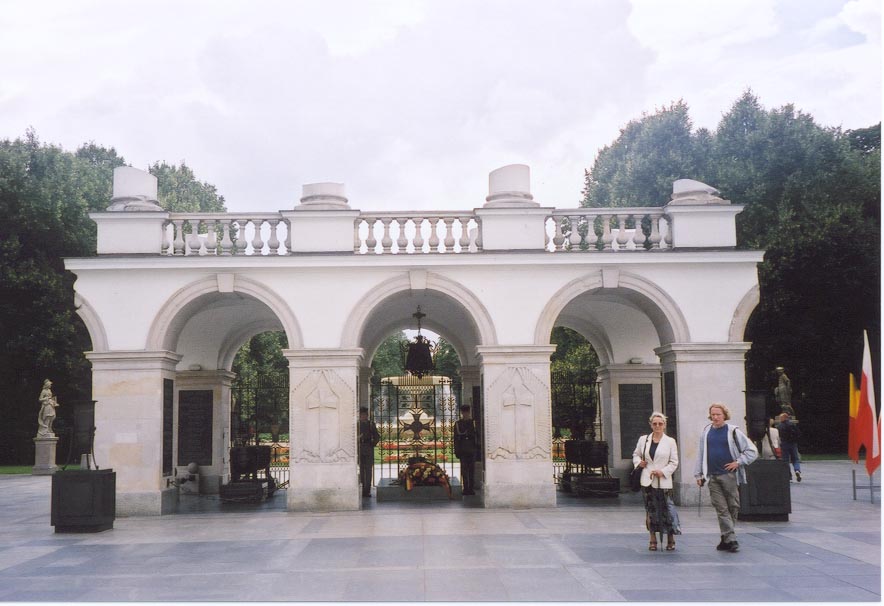
| Beautifully recreated includes a later Gothic portal of Number 21, while the house 'Pod Murzynkiem' (Under the Negro), featuring a Renaissance portal and carved head of a negro, is one of 3 bugher houses which were linked behind their facades to accomodate the Warsaw History Museum. Leaving the Old Town along Swietojanska leads to Katedra Sw. Jana (St John Cathedral). Warsaw's oldest church, and the largest in Old Town, the cathedral was rebuilt after World War II in the original 14th-century style known as 'Uistulan Gothic', defined by an austere but spiritual simplicity. Turning left leads us to Ogrod Saski (Saxon Gardens), Warsaw's first public garden, opened in 1727, where one immediately leaves behind the roar of the traffic. Originally Baroque in design, the gardens were laid out in the style of an English garden in 1827, and include a neo-classical watertower, decorative statuary and a fountain. At the edge of the gardens, on Plac Pilsudkiego is Grob Nieznanego Zolnierza (Tomb of the Unknown Soldier). Consecrated in 1925, it included urns from battlefields in which Polish troops fought, as well as from the graves of Polish officers murdered by the Red Army in Katyn. The tomb is under a small section of a colonnade, which is all that remains of the former Palac Saski (Saxon Palace) destroyed by the Nazis. At 3 pm, there is a simple ceremonial changing of the guard taking place by the tomb. Cutting across Saxon Gardens, we then head towards the central district known as Srodmiescie (mid-town). This is another dramatic change of character, socialist Realism and Modernism, exemplified by Palac Kultury I Nauki (Palace of Science and Culture). Built on Warsaw's largest square, Place Defilad, between 1952-5, it was offically a 'gift to the Poles from the Soviet Union'. Needless to say, the palace of culture was universally loathed - as both a symbol of Communist oppression and for its uncompromising architecture. The statistic makes interesting readings : 3288 rooms on 30 floors and a total height of 235 metres, with the palace playing an important scientific and cultural role, comprising scientific institutes, cinemas, theatres and a multi-purpose congressional hall seating 3200. The observation terrace on the 30th floor provides a magnificent panorama of Warsaw and its suburbs. Opposite the east side of the Palace of Culture is Marszalkowska, a principal on which numerous office buildings, fast food outlets and department stores are located. At best, this thoroughfare is plain Modernism, at worst it seems harsh and depressing. Some of the surrounding streets only provide more of the same, with the Warsazwa Centralna (Central Railway Station), an example of hideous 1970s Modernist architecture. Warsaw is probably regarded as a city full of extreme contrasts. 'Depressing' is the verdict of some visitors, who are over-exposed to the city's most brutal post-card re-development, and under exposes to the immense beauty which, is also present throughout the city. As it is possible to go for long walks, which can yield either unrelieved ugliness (in the mid-town area), or spectacular architecture that exemplifies various genres (along the Royal Route), one needs to know exactly where you are going and what the real options are. In fact, some of these contrasting 'zones' are so rigidly defined that one can leave one and enter another simply by crossing the road. |