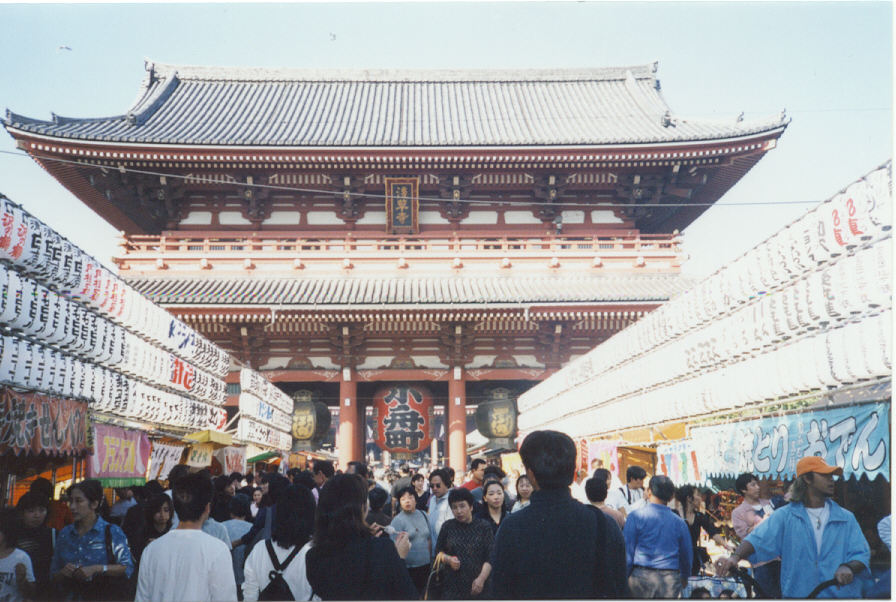
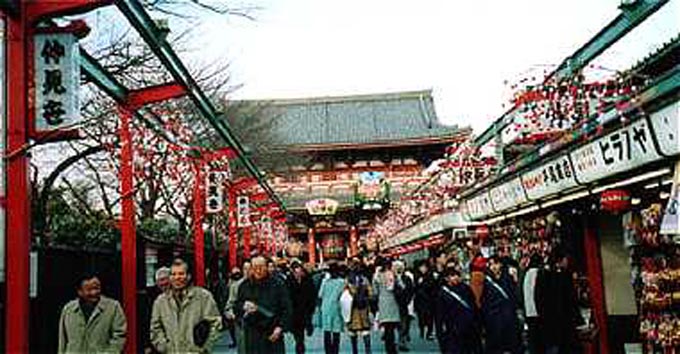
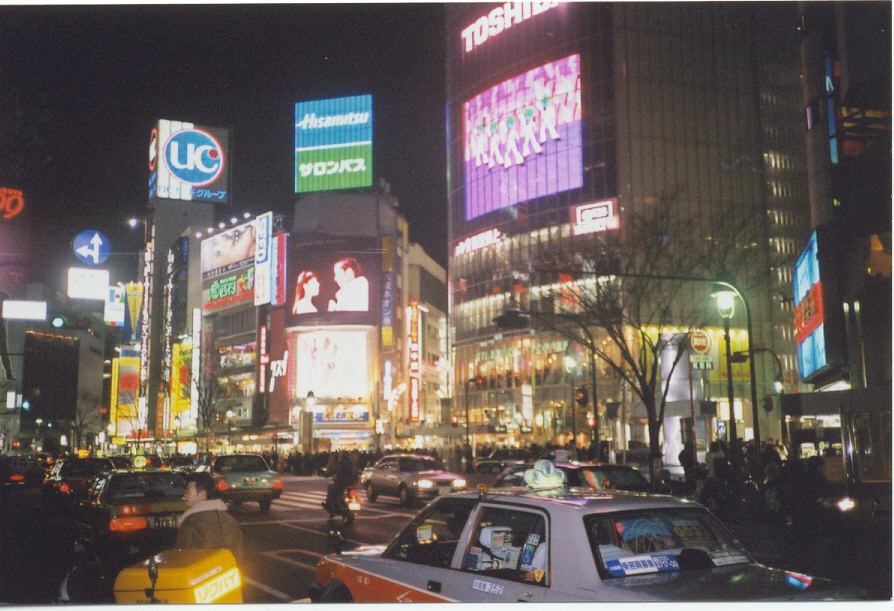
| Japan, known as the Land of the Rising Sun, is a country which lures me back many times in between 1999 and 2000. Strangly enough, the feeling in each return to Tokyo seems to excite me even more every time I step out of Narita Airport. It's hard to explain this affection. But it is not difficult to explain what makes the city so attractive. The city emits exquisite beauty in the most cultured manner which is exhibited by the ever-polite locals; blended by both ancient and modern culture, traditions in food, thinking, arts, architecture and life style. It is somewhat amazing to witness and learn to understand this uniqueness of Tokyo. Across Sumida River, the Asakusa district forms the part of the old downtown. Visitors are able to experience true traditional Japanese culture. The Kannon Temple, being the oldest temple in Tokyo lies in the heart of the district and is guarded by the Kaminarimon - the Gate of God of Thunder. This entrance greets visitors with a huge, red paper lantern hung on the hedge of the gate. Nakamise Street, the temple compound, is a shopping street which leads directly to the Asakusa Kannon Temple. At any time of the day, this street is bustled with crowds and Japanese in kimonos. Both sides of the street also line up many small shops that sell traditional manekineko (beckoning cat), washi (Japanese paper), happi (Japanese jackets, kimonos to rice-crackers and green tea. In front of Kannon Temple stands a huge bronze incense burner. Worshippers waft the fragrance over themselves, a charm to heal or ward off illness and back luck, before climbing the steps to offer prayers to Kannon, the Goddess of Mercy. If you are interested in knowing where your fortune lies in wealth, health, career or marriage, you can drop a 100 yen coin into the designated charity box and proceed to draw a lot. If the writings on the fortune paper spell positive quotes, people tend to keep these papers; otherwise, the fortune paper is folded and tied onto a wooden grill. It is believed that, when the wind blows, the bad luck will be blown away too. In my opinion, the most lively hub of Tokyo lies in the street of Shinjuku, Ginze, Shibuya and Ronppongi. In Shinjuku, you find one of the busiest subway stations in Japan. The district is divided into 2 parts - east and west. There is a very distinct difference between both parts. The eastern side comprised of high-class shops, restaurants, departmental stores, with the Kabuki-cho areas having the wildest nightlife and being popular for its entertainment and sex activities. In contrast, the western part is a row of orderly planned skyscrapers, offices, commercial centres and buildings. While in the classy Ginza shopping districts, to which tourists and locals alike like to gravitate, it is all too easy to forget that the Japanese economy is still in the doldrums. In fact, the Ginza has witnessed a recent invasion by top European fashion houses, all competing with each other to open flagship stores, bolstered by the fact that there seems no shortage of Japanese women eager to snap up the latest designer goods from Paris and Milan. I rated the nightlife of Tokyo being the wildest in Asia particular for its lively atmosphere, neon dazzle and the ever-moving crowds. The locals used to hop into a pub for a drink or a chat after office hours, before heading for home or otherwise, continuing their later-night adventure. Most shops in Ronppongi, Shinjuku and Shibuya are bueiest after 7 pm. While the night is still yound, people love to patronised pachinko parlours, clubs and underground discos. These entertainment places usually stay opened till the early hours in the morning. |
 |
 |
 |
| Japan - Land of the Rising Sun |
 |
 |
 |
 |
 |
 |
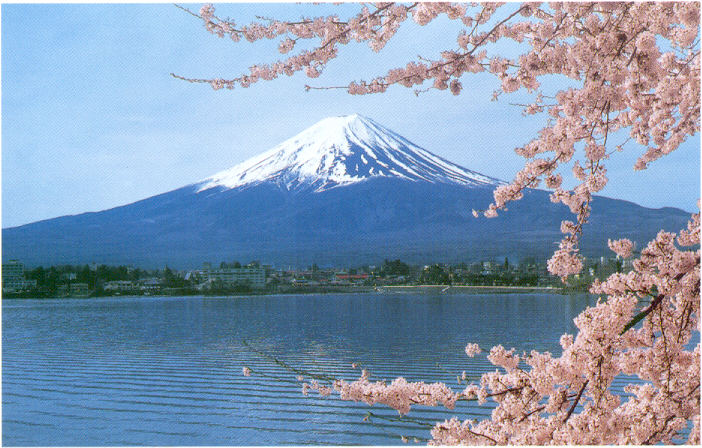
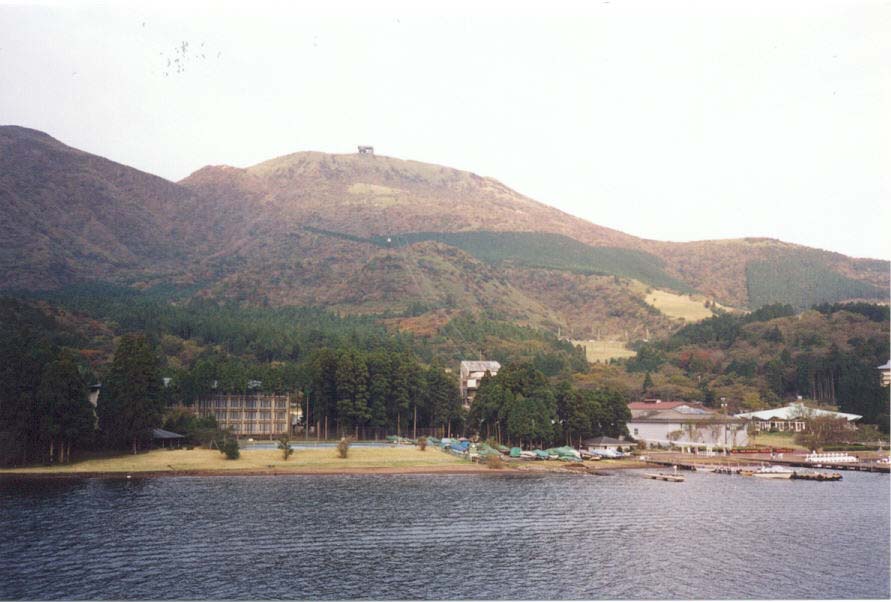
| Standing at 12388 feet tall in Japan highest and famous Mount Fuji. Located between Yamanashi and Shizuoka prefecture, Mount Fuji is the main attraction of Hakone-Izu National Park. The view of the isolated peak and its surrounding is spectacular, and can be clearly seen from anywhere in Tokyo and Yokohama, by clear weather. In the older days, the volcano was worshipped as a sacred mountain and experienced tremendous popularity in the fields of arts, literature and paintings. Today, the mountain has turned into an alpine with the likes of climbers and hikers who are ever eager to get beyond the Fifth Station (7868 feet off the ground). In mid-April, cherry blossoms, brought by the beginning of the spring season and is spread abundantly across the mass greenery. And when summer dawns, the blossoming of vermillioni azaleas will be seen instead. Mount Fuji, it's so hard to resist the tranquil beauty. From anywhere you see, it takes one's breath away! Lying between Mount Fuji and the ocean is Fuji-Hakone-Izu National Park. Hakone is an area of high mountains (most over 4000 feet), with Lake Ashi nestling in the centre and Mount Fuji nearly always in view to the northwest. Besides its beautiful nature, richness in history and culture, this tourist resort has one of the most popular onsens (traditional natural hot springs) in Japan because of a large number of interesting places to visit in its surrounding as well as its abundant hot springs. Hakone Komagatake, the central volcanic cone of the Hakone range, rises 1327 metres above sea level. After cruising across Lake Ashi, I had the opportunity to get up to the summit of Mount Komagatake via the gondola. The 1800 metres long aerial tramway operates between Hakone Park and the summit, and the ride takes only 7 minutes. From the gondola, one can enjoy a breath-taking panoramic view of Lake Ashi and the surrounding mountains. Our local guide explained that one can see all the way to Sagami and Suruga Bay and the distant Seven Islands of Izu, on clear days. True enough, while standing on the summit, Mount Komagatake offers the most magnificent view of Mount Fuji and its surrounding landscape. |
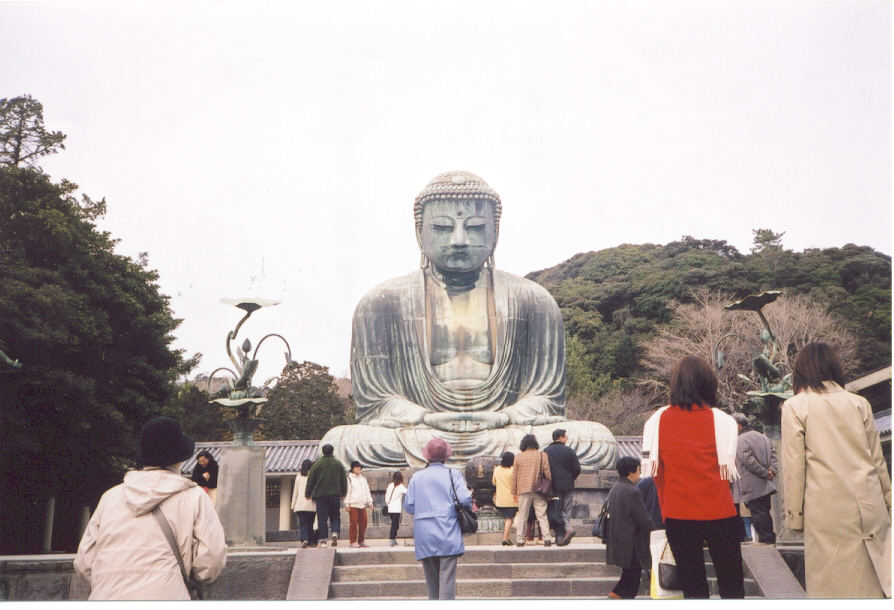 |
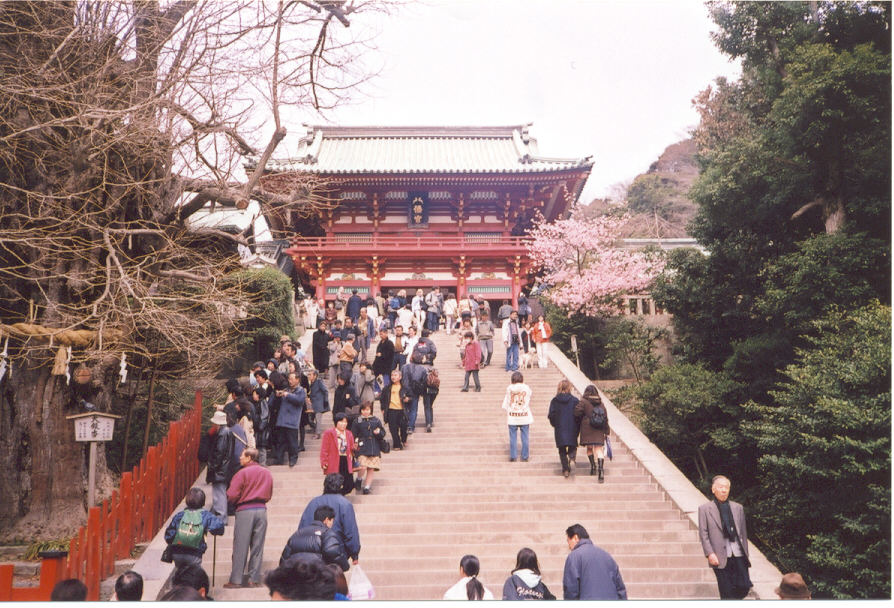
| Taking the JR subway along the Yokosuka line and alighting at Kita-Kamakura station, I have come to an ancient capital filled with a historical atmosphere - Kamakura. Leaving from the east exit, I first walked into Komachi-dori, where shops exhibit a broad range of souvenirs, food, boutiques, antiques, crafts. Komachi-dori leads directly to the Promenade of Hachimangu Shrine, a Buddhist temple which is surrounded by a peaceful lake, with cherry trees planted along it. The sakuras were beautiful even though the spring season was just over. The blend was complete with its natural environment to form the unique appearance of the shrine area. Hachimangu Shrine held joint ceremonies until the separation of Buddhist and Shinta ceremonies in the Meiji era. It played a central role in Japanese Buddhism during the era of Kamakura era. Another major point of interest of Kamakura includes the Kotokuin Temple where the Daibutsu (Great Buddha in a sitting posture) statue was seated. This gigantic 11.3 metres tall and 121-ton heaving cast-in-bronze statue vermillion lacquer paint creates a beautiful contrast with the green mountains in the background. The very first thing that crosses the Japanese's mind when asked about Kamakura would probably be Daibutsu because this is a national treasure which marks one of the centre-pieces of the city's cultural heritages. |
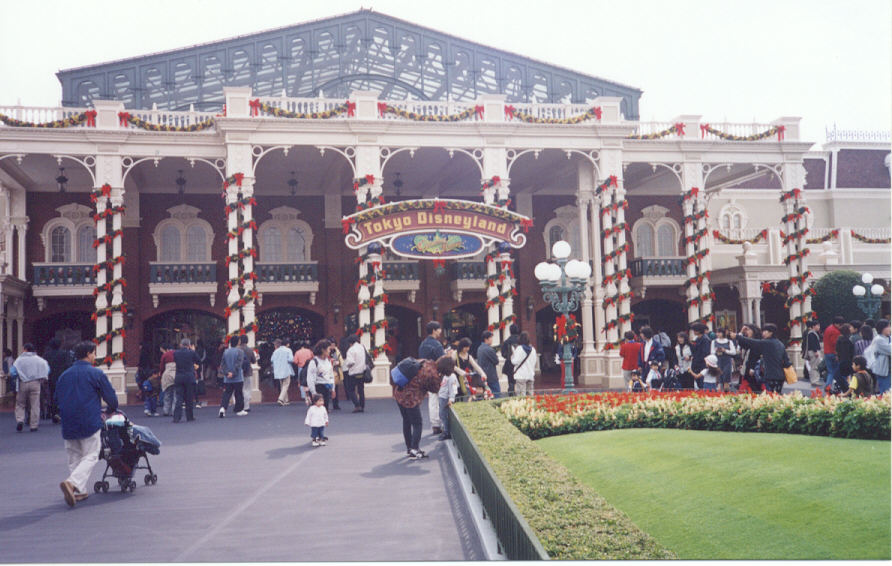
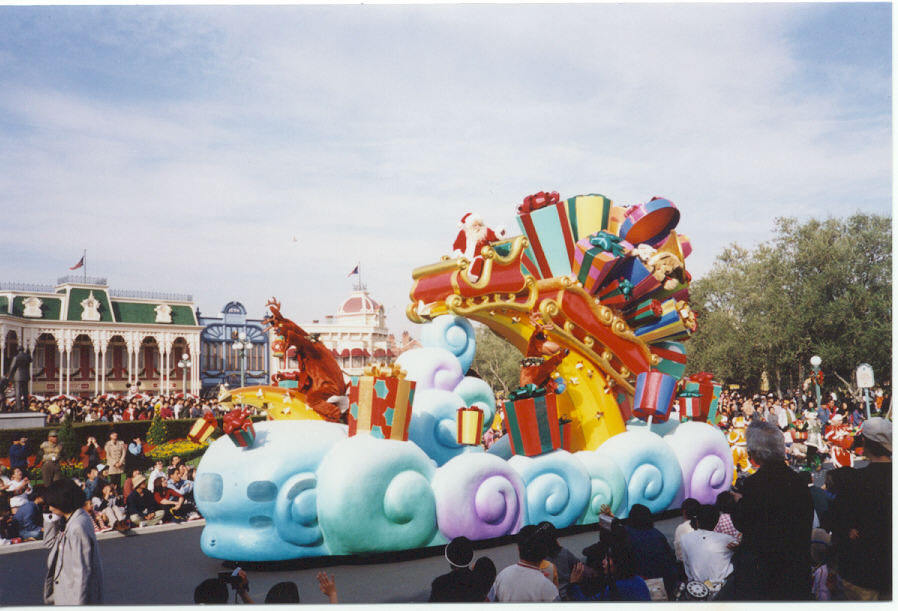
| Tokyo Disneyland Park, being the first Disney theme park to operate outside the US, welcomes many international visitors and offers a unique Disney experience - the japanese type of experience. Thrills, excitment, fun and surprises await in the Park's six themed lands. One of the most popular attractions has to be the Splash Mountain, a journey through backwoods and bayous filled with Disney characters that culminates in a hair-raising, 16 metres plunge into a water-filled briar patch. Just before Christmas, I have the opportunity to witness a fun-filled pre-Christmas parade where Santa Claus and Donald Duck came out to greet visitors while distributing presents to kids. To me, Tokyo is one city where both the traditional and contemporary co-exist in a way that makes it interesting and yet hard to understand. The contrast is always apparent. If there's one reason to be learned, it is that Tokyo thrives on changes for the better and yet preserving its roots and traditions. Despite having made several visits to Tokyo, every return brings a different kidn of surprise. It would never take long for me to make another trip back to Japan again! |
| Kannon Temple in Asakusa |
| Nakamise Street |
| Street of Shibuya |
| Mount Fuji |
| Lake Ashi |
| Daibutsu - Great Buddha |
| Hachimangu Shrine |
| Tokyo Disneyland |
| Santa Wishes All A Merry Xmas! |
 |