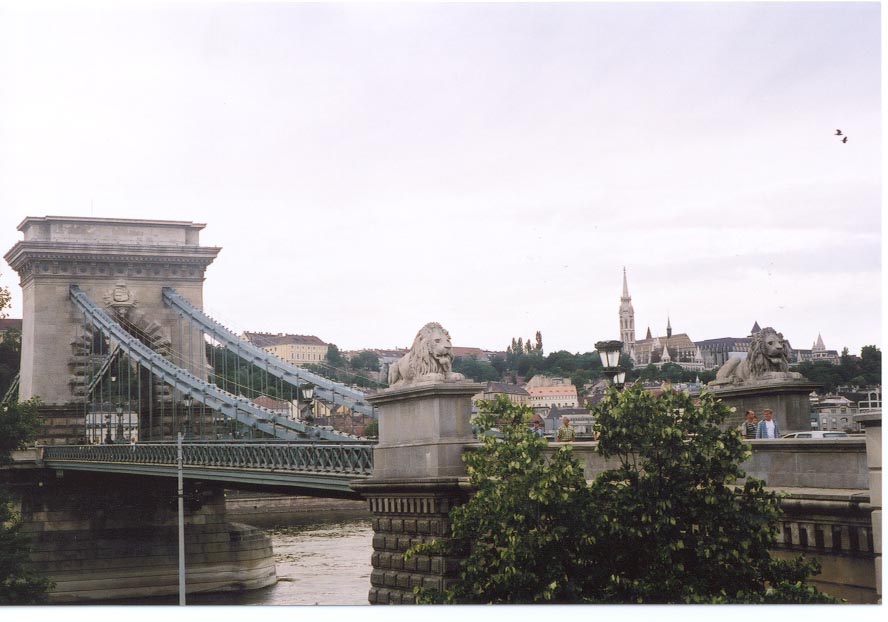
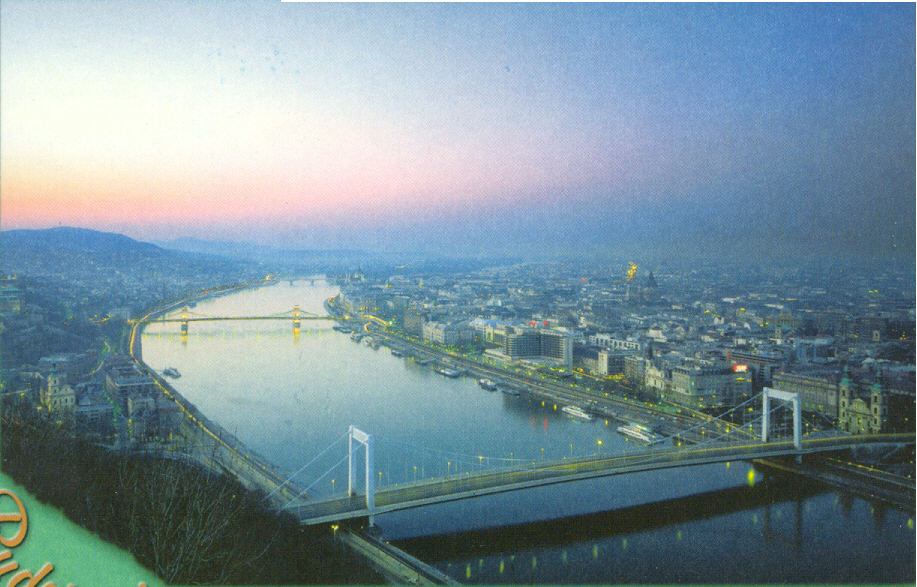
| For many years, Budapest has been one of the most popular capital for visitors. The main motive for travelling to the city is nostalgia for the dignified days of the dual monarchy. Budapest lies on either side of the Danube River and is made up of 3 ancient communities of Buda, Obuda (both on west bank) and Pest (on the east bank). The 3 previously independent towns were merged in 1972 to form the present-day city of Budapest. Danube is the second longest river in Europe. Though not blue as the song indicates, it is still a river of great beauty and importance. The river connects central and south-eastern Europe, as well as, the Balkans and the Black Sea. In fact, 7 countries share its water, namely Germany, Slovakia, Hungary, Yugoslavia, Bulgaria, Romania and Russia. Many ideas and influences from different cultures have spread up and down this river. The Danube, through its rich history, remains truely captivating. Forming the city's panorama must be credited to the Danube Bridges that connect Buda and Pest. Chain Bridge was the first permanent bridge across the water. Guarded by stone lions, the pillars are constructed in the shape of twin triumphal arches. In the night, illumination by the light bulbs gives it a vibrant look. From Margaret Bridge, the view of Castle Hill and Parliament is great. The bridge is curved in the middle in order to reach Margaret Island. The present Elizabeth Bridge was newly rebuilt in 1964, after the original one was destroyed during World War II. Simple, plain and white best described Elizabeth Bridge. While Elizabeth Bridge is white, Freedom Bridge is somewhat plainly green, with turuls (mythical Hungarian birds) and crests of old Hungary adjoining its pillars. Starting at Vaci Street, a famous shopping street since the 18th century, it was the city's most elegant stores, chic boutiques belonging to international fashion houses, footwear and leather shops. During the Socialist period, this street was considered a shop-window of the regime and is nowadays a milestone for shopping for the well-to-do of Budapest and for visitors alike. Not too far away, we also come to the heart of Budapest - Vorosmarty Square. The square is named after a great Hungary poet of the same name and is famous for Cafe Gerbeaud built in 1958 in Renaissance style. Around the square stands some faithfully restored commercial offices, which house various shops and businesses. |
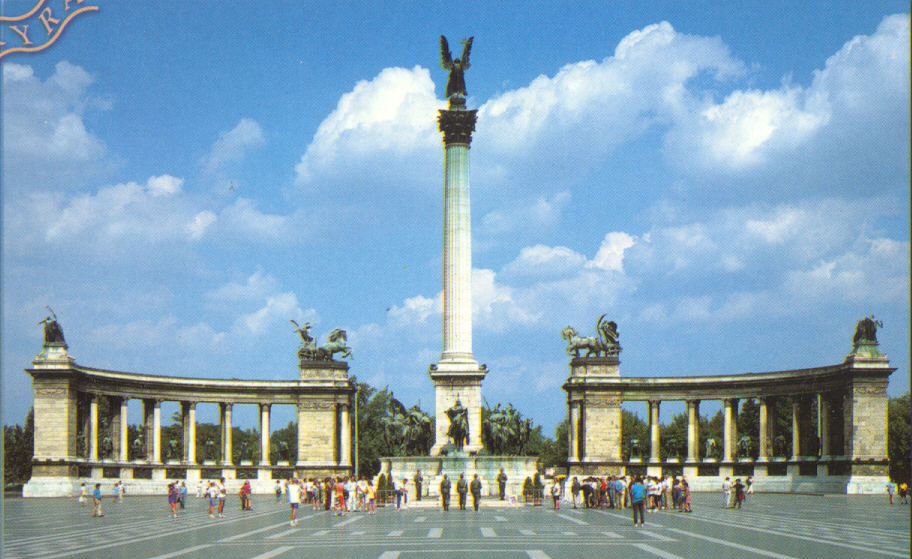
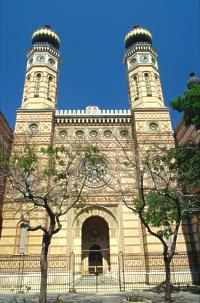
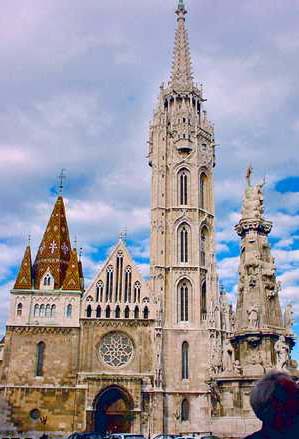
| Heroes' Square is Budapest's biggest square. On top of the column, there is the bronze statue of the Archangel Gabriel, part of the Millennium Monument, erected to commemorate the 1000th anniversary of the Magyar settlement. At the base of the column there are some statues of some of the most important rulers of Hungarian history. Behind Heroes' Square lies the Varosliget (City Park), the biggest park in the city. Its pretty lake is one of the most popular recreation sites for local and visitors alike. On a little island in the lake stands a castle-gate, spires, gables and battlements. This is Castle Vajdahunyad. The castle entrance is flanked on the left by a copy of the tower in Upper Hungary and on the right by one reminiscent of its model Sighisoara in Romania. At the back of the Romansque wing on the east side of the castle courtyard is a chapel, the doorway of which is an exact copy of that of the Benedictine church in Jak, one of the most medieval churches in Hungary. Across many unfamilar streets, we stopped on Dohany street where the Grand Synagogue is located. The synagogue is one of the most important and historically significant buildings in Budapest. Its style is of romanticised Moorish-Byzantine while the facade is dominated by 2 polygonal towers more than 30 metres tall. Crossing the Chain Bridge brings us all to the foot of Castle Hill of Buda. Ascending to the mid-level of Castle Hill, we get to see an excellent panoramic view of Pest and River Danube. Moving to Castle Quarter, it is Matthias Church that first catches our attention. Complete with beautiful stained glass windows, the church was well preserved using Gothic and late Romansque style of elements. |
 |
| [Home] [Photo Album] [Japan] [Poland] [Hungary] [Czech] [Germany] [Thailand] [Taiwan] Last Update : 26 November 2003 Copyright @ 2003. All Rights Reserved |
 |
| Hungary - Paris of Eastern Europe |
 |
 |
 |
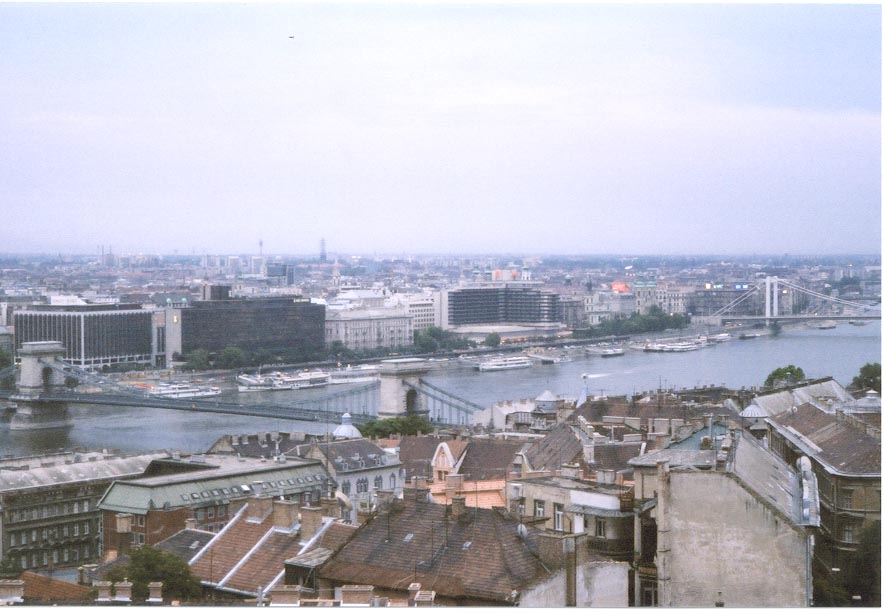
| Panoramic View from Buda Hill |
| Chain Bridge |
| Heores' Square |
 |
 |
| Grand Synagogue |
| Matthias Church |
 |
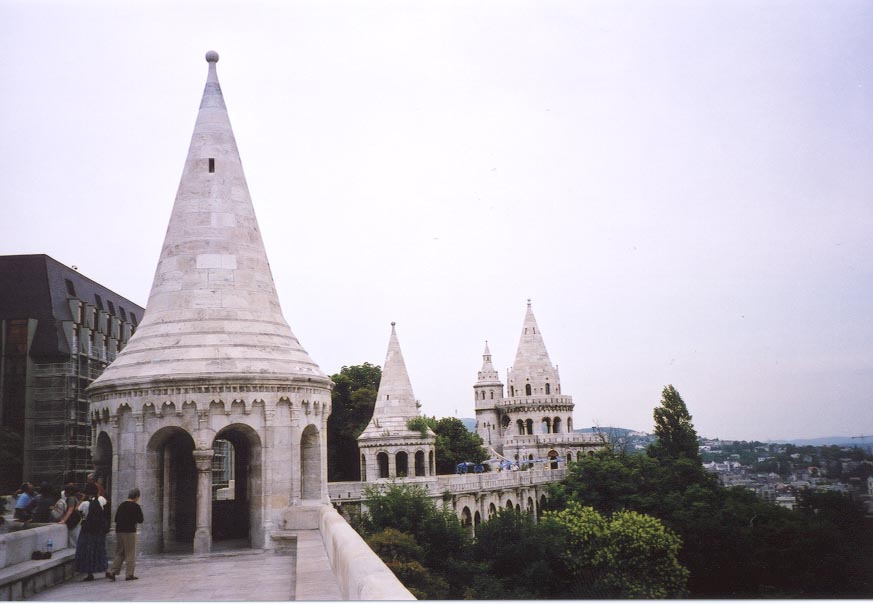 |
| Fisherman Bastion |
| A View of Danube |
| Behind Matthias Church on the eastern edge of Castle Hill stands Fisherman Bastion, one of Budapest tourist attractions. In the Middle Ages Buda's fishermen held their market here, and were therefore responsible for defending this section of the city walls. It is not as a fortification that it has become popular, as its construction is far too frivolous to be of any defensive use, but rather as a viewing terrace from which you can enjoy a marvellous panorama of the Danube, its bridges, the Parliament building, the basilica and the other large buildings on the left bank of the river. Peaceful and bustling, a big metropolis and yet friendly, Budapest is one city that treasures the old and embraces the new. This is the sort of quality that Budapest radiates. The beauty of this city is what really makes it stand apart. Its broad avenues, leafy parks and harmonious blend of architectural styles has certainly earned it the nickname the 'Paris of Eastern Europe'! |