| Home |
| World of English |
|
|
| Sounds of English |
| Australia |
| Canada |
| England |
| India |
| Ireland |
| New Zealand |
| Scotland |
| South Africa |
| United States |
| Spelling & Grammar |
| Site's Author |
| Take a Quiz |
| Feedback |
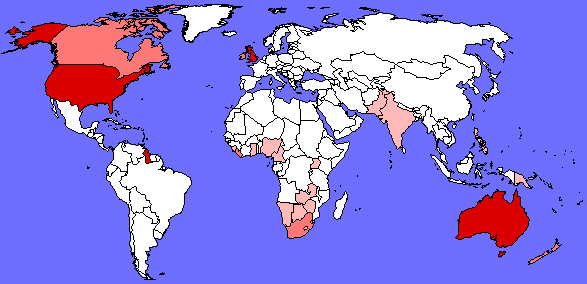
| English is usually the first and only language | |
| English is the native language along with another native language | |
| English is not native but official |
There have been many attempts at creating an international language to ease communication between individuals of diverse nations and cultures, including the Polish-born linguist Ludwik Zamenhof's Esperanto, the most widely used artificial language. French was once considered the lanugage of diplomacy. After World War II, Russian was strong but never really progressed past its Eastern European satellite nations. English, however, has had much success. No other language is as widely spoken and learnt today as English is. In countries, such as Nigeria, where several languages are in different communities, English has become the language of the government.
Click on some of the highlighted countries in the above map to hear speakers of those countries. The chart below will give you a rough idea of how widely English is spoken in the world. With this many speakers, there are bound to be many differences in accent, vocabulary, and grammar, all of which are appropriate to where they are spoken.
| Australia* |
15,749,000
|
Nigeria (with others) |
96,015,000
|
|
| Bahamas* |
230,000
|
Pakistan (with Urdu) |
100,356,000
|
|
| Barbados* |
252,700
|
Papua New Guinea |
3,345,000
|
|
| Belize* |
166,400
|
Philippines (with Filipino) |
54,669,000
|
|
| Bermuda* |
56,700
|
Puerto Rico (with Spanish) |
3,311,100
|
|
| Botswana |
1,082,000
|
St. Christopher and Nevis* |
47,000
|
|
| Cameroon (with French) |
9,635,000
|
St. Lucia* |
137,600
|
|
| Canada* (with French) |
25,427,000
|
St. Vincent and Grenadines* |
105,000
|
|
| Dominica* |
77,400
|
Senegal (with French) |
6,520,000
|
|
| Fiji |
692,000
|
Seychelles (with French) |
65,100
|
|
| Gambia |
749,200
|
Sierra Leone |
3,930,000
|
|
| Ghana |
12,815,300
|
Singapore (with Chinese Malay, and Tamil) |
2,558,200
|
|
| Grenada |
96,000
|
Soloman Islands |
267,270
|
|
| Guiana |
953,000
|
South Africa* (with Africaans) |
27,424,000
|
|
| Hong Kong (with Chinese) |
5,415,000
|
Suriname (with Dutch) |
395,000
|
|
| India (with Hindi et al) |
768,000,000
|
Swaziland (with Swazi) |
647,400
|
|
| Ireland* (with Irish Gaelic) |
3,614,000
|
Tanzania (with Swahili) |
27,730,000
|
|
| Jamaica* |
2,343,700
|
Tonga (with Tongan) |
97,050
|
|
| Kenya (with Swahili) |
20,312,000
|
Trinidad and Tobago* |
1,189,000
|
|
| Kiribati |
65,000
|
Tuvalu |
8,580
|
|
| Lesotho (with Sotho) |
1,499,600
|
Uganda |
14,716,100
|
|
| Liberia |
2,232,000
|
United Kingdom* |
56,518,000
|
|
| Malawi (with Chewa) |
7,058,800
|
United States of America* |
238,740,000
|
|
| Malta (with Maltese) |
333,000
|
Vanuatu (with French) |
140,000
|
|
| Mauritius |
1,024,900
|
Western Samoa (with Samoan) |
260,000
|
|
| Namibia (with Afrikaans) |
1,097,000
|
Zambia |
6,666,000
|
|
| Nauru (with Nauruan) |
8,000
|
Zimbabwe |
8,100,000
|
|
| New Zealand* |
3,291,300
|
Other U.S. and British Dependancies |
300,000
|
* countries with a major English mother-tongue population
Source: Crystal, D. (1988). English Language. English in the world (p. 5-6). Oxford: Penguin.