Tourist Hot Spots in
Democratic People's Republic of Korea
|
|
|
|
|
Tourist Hot Spots in Democratic People's Republic of Korea |
|
Pyongyang 平壤市
It is the center of whole Korean politics, spirit, economics, culture, and
tourism. Occupying an area of 2600km2, it has a population of
3,430,000. Pyongyang was once the capital of Koguryo (37-668 B.C.),
founded by Jumong and Koguryo, the very first nation of the Korean
peninsula. The whole ancient city was destroyed by US imperialist during
Korea war. Famous
tourist sites include the Taedong Gate, Potong Gate, and Tomb of King
Tongmyong. Taedong
Gate
is the east gate of Koguryo Pyongyang walls’ inner complex. The most
important of all Pyongyang wall gates, it is Korean national treasure no.
1. Potong
Gate
is also a relic from the Koguryo era, and is Korean national treasure no.
2. The
Tomb of King Tongmyong
is the gravesite of King Tongmyong, founder of Koguryo, it was discovered
and excavated in 1974. It
is known for the murals of lotus blossoms that graces its walls and
ceilings. Dangunneung
is a pyramidal grave of nine sections built out of
granite. Moran
Hill is
named after the Moran flower; it has four castles called Namsong, Oesong,
Chilsong Gate and Ulmil
Pavilion. Ulmil
Pavilion
was built in the middle of the 6th century, but was rebuilt in 1714.
“Ulmil Pavilion’s spring” is one of 8 scenic spots in
Pyongyang. Other places of
interests include the Korean Revolutionary Museum, Victorious Fatherland
Liberation War Museum, Korean Art Gallery, Potonggang Park, Central
Botanical Garden and Central Zoo. 它是全世界朝鮮民族的精神、政治、經濟、文化和旅遊中心。面積2,600km2,人口343萬。曾是朝鮮半島最早的國家古朝鮮和由朱蒙建立的高句麗(B.C. 37-668年)的首都,整個古都在朝鮮戰爭時間被入侵的美帝國主義者移為平地。 大同門、普通門、東明王陵、檀君陵、牡丹峰、乙密臺等都是有名的觀光景點。其中,大同門是高句麗時期平壤城內城的東門,是平壤所有城門中最重要的城門,因此被指定爲朝鮮民主主義人民共和國的第1號國寶。 普通門也是高句麗時期的城門,現被指定爲朝鮮民主主義人民共和國的第2號國寶。 東明王陵則是高句麗的開國皇帝東明王的墳墓所在地,1974年出土,以四周牆上的蓮花圖案而聞名。 檀君陵由金字塔模樣的9座白色花崗岩組成。 牡丹峰位於乙密臺上,周圍還有高古麗時期的內、外城遺址和七星門等景點。 乙密臺曾是6世紀中葉高句麗內城的北將臺,建於1714年。現在,“乙密臺賞春” 是平壤八景之一。 此外還有朝鮮革命博物館、祖國解放戰爭勝利紀念館、朝鮮美術博物館、普通江遊園地、中央植物園、中央動物園等。
Mountain
Guweolsan-Orchard
九月山-果樹區
Mountain Guweolsan is 954m tall and contains the famous Yongyeon Falls,
Guweolsansanseong Fortress site, and kiln site. Yongyeon Falls is where
all the rivers of the mountain converge to crash over a fall- a fantastic
sight. The site of the Guweolsansanseong Fortress site manages to give an
idea of the vastness of the fortress when it still stood- its
circumference was 5.23km long. The kiln site was used to fire Koryo
celadon. Mt. Guweolsan was also the place where Korean People’s Amy
fought against the US imperialist and its puppet army during the 6-25 War.
Gwail-gun is comprised of over 70% fruit fields and orchids--the largest
fruit-producing region in Korea. Because it is in close vicinity to
Pyongyang, it is perfect to visit together. |
||
|
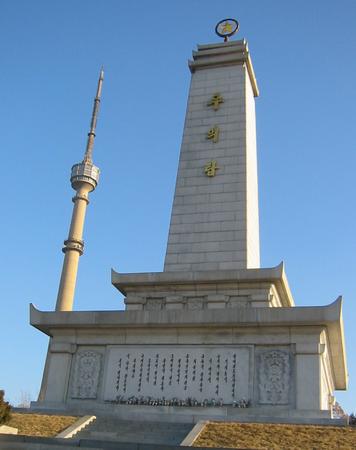
Sino-Korean Friendship Tower erected in 1st October, 1959. |
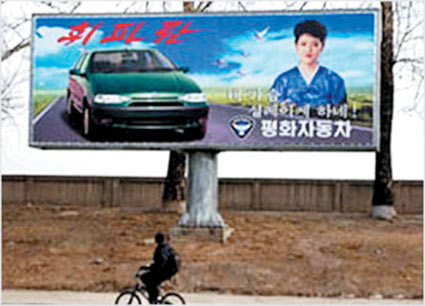
Advertisement Board Korean Vehicle in 2004 |
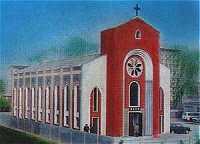
Changchun Cathedral build in 1988 |
|
|
|
|
|
中朝友誼塔 1959年10年1日建立 |
平壤國產轎車商品廣告牌(2004年) |
平壤青春天主教堂(1988年) |
|
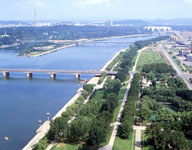
Taedonggang river, one of the 5 long rivers, 450.3km |
Moran hill, one of the 8 scenic spots. 96m high |
Mountain Taesong, former royal palace of Koguryo, it has Zoo and botanical garden. |
 |
 |
 |
| 大同江是朝鮮的五條大河之一,450.3km |
牡丹峰,八大景點之一,高96m |
大城山,高句麗皇朝的皇宮遺址, 現有動植物公園。 |
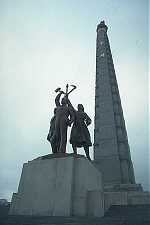
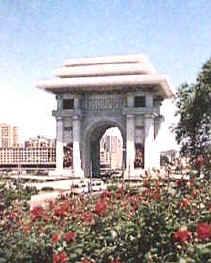
| Tower of Juche Idea, 170m | Arch of Triump, 60m | Grand Mounment, Mansu hill |
 |
 |
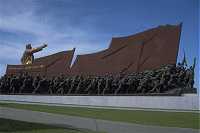 |
| 主體思想塔,170m | 凱旋門,60m | 萬壽山紀念碑 |
|
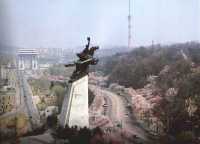
Chollima Status Erected in April, 1961, 46m height, 100 tons weight. |
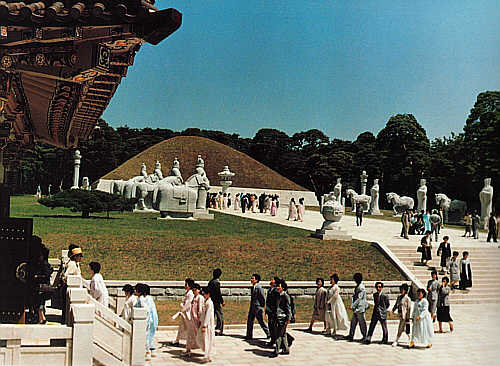
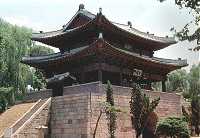
Tomb of King Tongmyong |
Taedong Gate Korean national treasure no. 1 |
 |
 |
 |
|
千里馬銅像 1961年4月建造,46m高, 重量為100 tons。 |
東明王陵 |
大同門 朝鮮第1號國寶 |
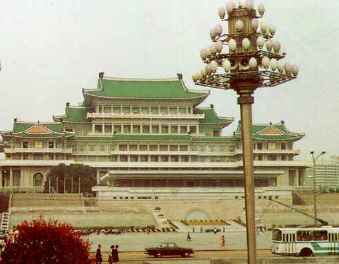
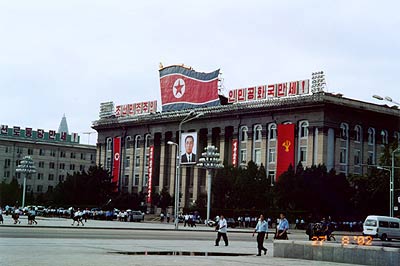
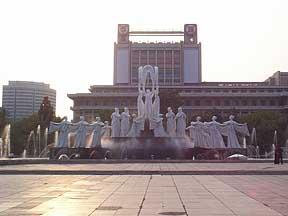
| People's Study House | Kim Ii Shing Square | Mansudae Art Theatre |
 |
 |
 |
| 人民大學習堂 | 金日成廣場 | 萬壽臺藝術劇院 |
|
Metro - Yonggwang Station |
World's tallest Ryugyong Hotel (105 stories) in progress |
Pyongyang at night |
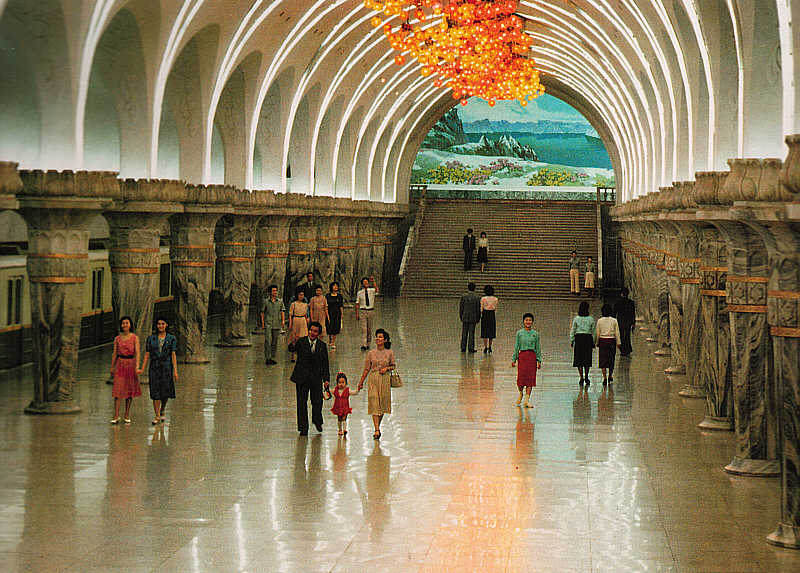 |
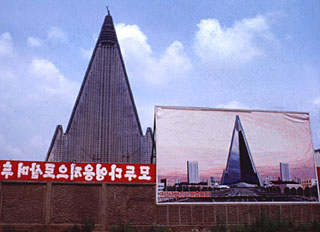 |
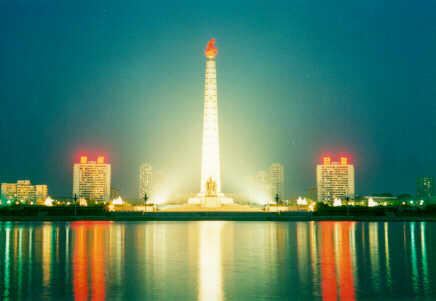 |
| 地下鐵路榮光車站 | 在建築中的世界最高的105層柳京飯店 | 平壤之夜 |
|
Kaesong,
Nampo
and Mountain
Myohyang,
South
Phyongan Province 平安南道 - 開城市,南浦市 和 妙香山 Kaesong
開城
Kaesong was the capital of the Koryo dynasty (918-1392) for about 500
years. It occupies 1200km2 and has a population of 390,000.
Beginning in the Koryo era. It cultivated a history of fine craftsmanship
(the Koryo celadon is an example) and international trade. Kaesong was
also active in ginseng production, and the Koryo ginseng from the area is
world famous. Tourist sites include the Sonjuk Bridge and Nam
Gate. The Sonjuk
Bridge is a Koryo era (1392-1910) stone
bridge, and in the east there is a memorial containing the calligraphy of
the Chosen era’s famed calligrapher Han Sok
bong. The Kaesong
Nam Gate is the south gate of the Kaesong
fortress. Pagyon
Fall has two small ponds, Pagyon pond is the
upper one and Komo pond is the lower one. Thanks to the gazebo next to the
Fall, one can relax while enjoying the view. Tomb
of King Kongmin is a twin tomb for king and
queen. In the tombs are a 12 animal mural (Jisinsang) drawn by king
Tongmin. Other attractions include the Kaesong
History Museum.
Nampo南浦市
Nampo is an
international port city with an area of 82.9km2, it has a
population of 800,000. There were about 10 islands in the area until the
1960’s, but beginning in the 1970’s the islands became connected
through artificial land and roads by development. Nearby tourist sites
include the Taeseongho Lake and Ssangyeongchong.
West
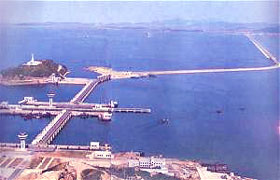
Sea Barrage is a gate (35m high, 8km in length) in the mouth of the
Taedong River so ships up to 5
tons can pass by. The beautiful Taesong
Lake is a multi-purpose dam with an area of 7.79 square
kilometers and a circumference of
32.5km. The Sangyongchong
is a Koguryo era grave with murals of people and the 4
gods painted on its walls.
Mountain
Myohyang 妙香山
Mountain Myohyang is 1,909m tall, and is named Mountain Myohyang because
of its strange and beautiful shape. The temperature average is 8.3 degree
Celsius. There are a wide variety of plants as well as rare animals.
Historically the mountain is significant because in 1592 (25th year of
King Sonjo’s rule, Choson era), when faced with the Japanese invading
forces, the monk Hyu Jong gathered a militia of monks in the mountain in
defense for fatherland. Making it even more attractive as a tourist spot
is the Tangun Temple, which contains relics of Tangun, founder of
Gojeoseon- the very first nation on the Korean peninsula. Also in the area
is the International Friendship Exhibition, which exhibits various gifts
given to Korean from nations around the world. The Myohyangsan History
Museum and Mountain Myohyang spring water are also worth noting. |
||
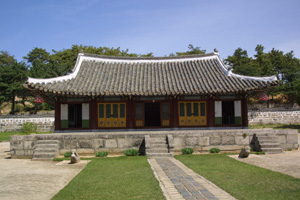
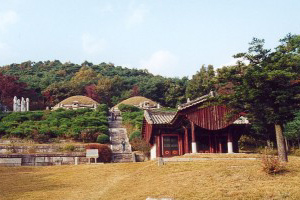
| Nam Gate | Songgyun Academy | Tomb of King Kongmin |
 |
 |
 |
| 開城南大門 | 開城成均館 | 恭憫王陵 |
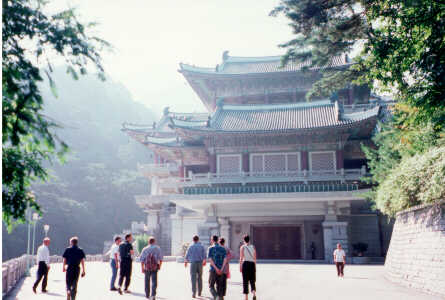
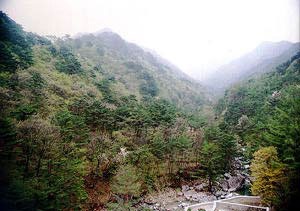
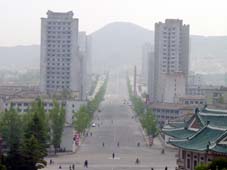
| International Friendship Exhibition | Mountain Myohyang | Kaesong city |
 |
 |
 |
| 國際友誼展覽館 | 妙香山 | 開城市 |
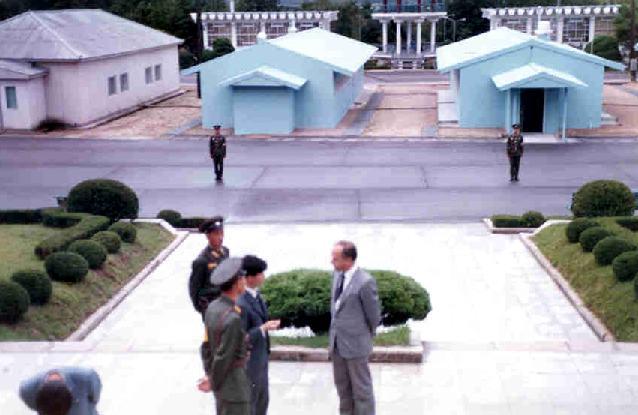
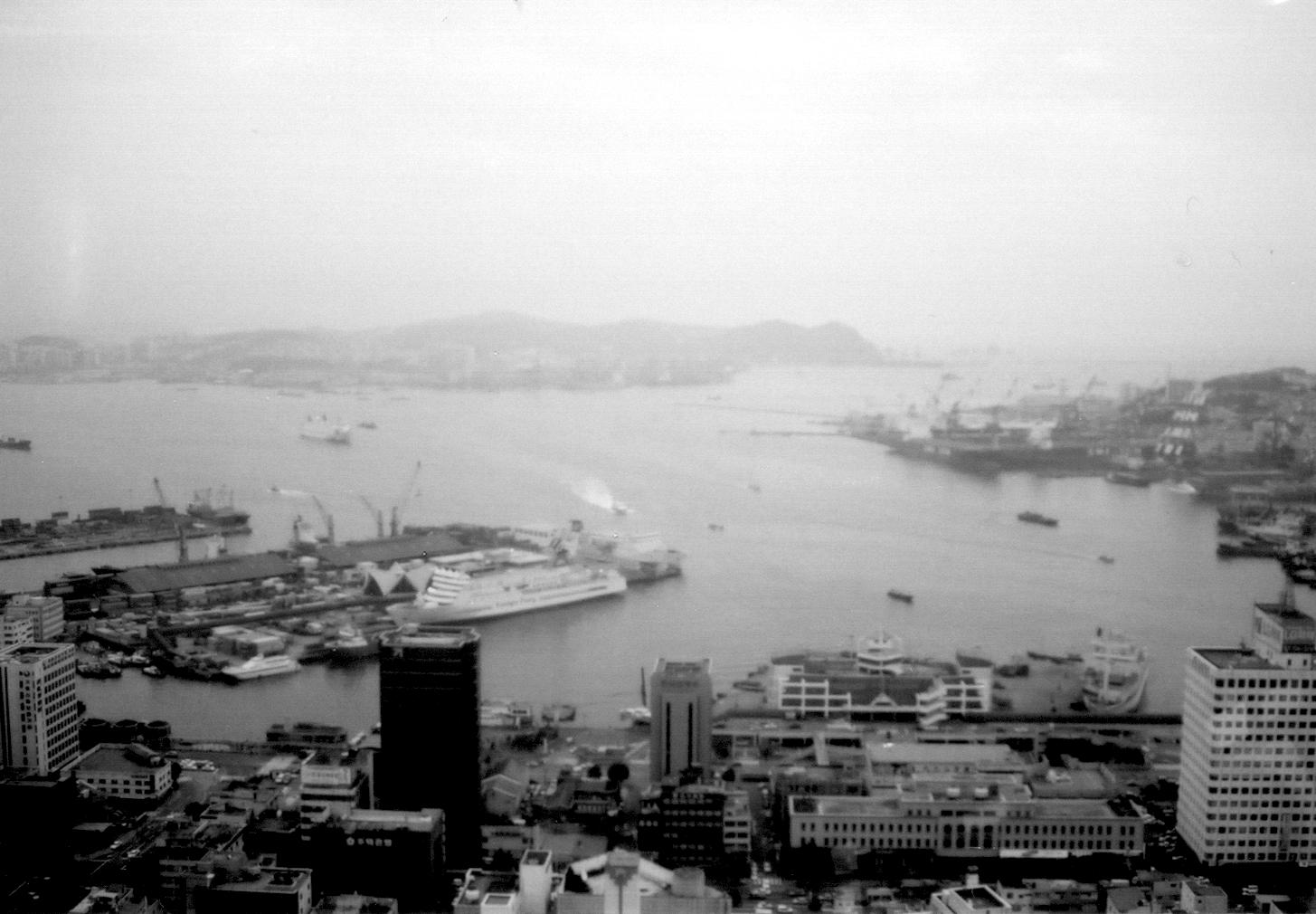
| Panmunjom | West Sea Barrage | Nampo Harbour |
 |
 |
 |
|
板門店 |
西海水閘 |
南浦港口 |
|
Wonsan and Mountain Kumgang, Kangwon Province 江原道
- 元山市
和 金剛山 Encompassing
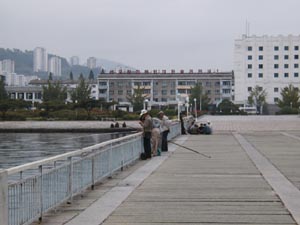
the 110km area from Wonsan (a port city) to Mountain Kumgang, this area is a tourist heaven
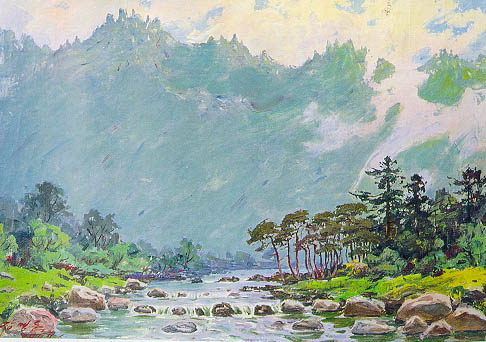
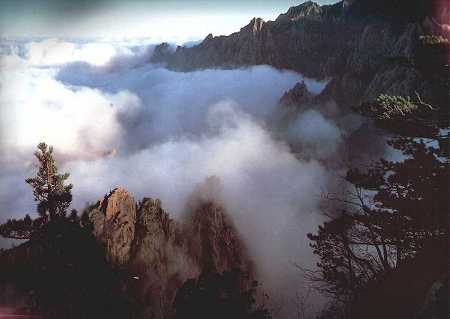
which contains fabulous shores, lakes, mountains, and temples. Mountain Kumgang is home to the Piro
Peak, the tallest point of the
mountain and 1,638m. With 12,000 mountain peaks, valleys, waterfalls, and
ponds, it is a truly phenomenal vision of nature. There are over 940 types
of plants as well as endangered fish species. Major tourist sites of the
area include the Kuryong Falls, Manmulsang, Lagoon Samil, and Sea Kumgang.
The Kuryong Falls are the greatest in Mountain
Kumgang, the Manmulsang is a collection
of oddly shaped boulders, and the Lagoon Samil and Sea Kumgang are places
that offer the beauty of lakes and oceans.
Wonsan is a port city situated
on the east coast, with a population of 280,000. 港口城市元山至金剛山110km的區間內全由海岸、湖水、山及多個觀光景點組成。金剛山共有1萬2千座山峰,其中主峰毗盧峰高1,638m。此外,溪穀、瀑布、池塘等隨處可見,山上還有940多種植物及熱目魚等珍惜保護魚類。金剛山著名的景點有九龍瀑布、萬物相、三日浦和海金剛。 九龍瀑布是金剛山最大的瀑布,萬物相集中了各種形態的岩石,三日浦和海金剛則分別以湖水和海邊的景色而出衆。 元山市面朝東海,人口28萬。 |
||
| Port of Wonsan | Lagoon Samil | Mountain Kumggang |
 |
 |
 |
| 元山港 | 三日浦 | 金剛山 |
|
Mountain Paekdu, Ryanggang Province 兩江道 - 白頭山(長白山)
Just at the Sino-Korean boundary, with
a peak at 2,744m, Mountain Paekdu is the highest mountain in the Korean
peninsula. A dormant volcano, its volcanic activity began dying down about
2 million years ago, forming its current shape. Its climate is typical of
high altitudes, with extreme temperature fluctuations. The average
temperature is 6 to 8 degree Celsius, with an average rainfall of 1,500mm.
Many rare animals inhabit the area, including tigers, bears, and
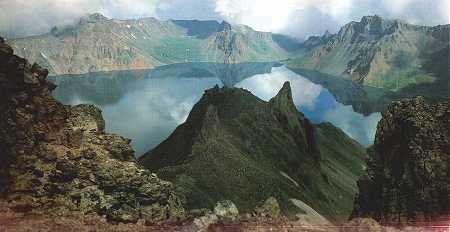
panthers--as do over 2,700 plant varieties. At the peak of the mountain is
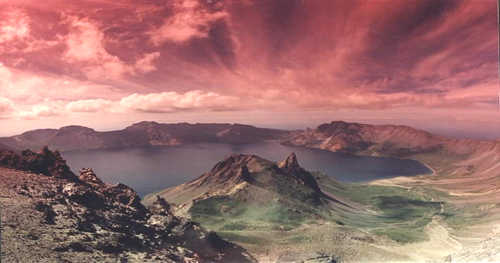
the Lake Chon, a caldera lake with an area of 9.17 km2 and an
average depth of 213.3m. It is surrounded by peaks, and harbors many
marine life forms. 中朝兩國的邊界區,海拔2,744m的白頭山是朝鮮半島上最高的山。約200萬年前,白頭山的火山運動逐漸減少,成爲一座休眠火山並形成了現在的山體。白頭山的氣候爲典型的高山氣候,變化很大。年平均氣溫6-8℃, 年平均降水量爲1,500mm。白頭山上不僅有金錢豹、老虎、熊等珍稀動物,還分佈著2,700多種植物。白頭山頂上的火山湖天池平均高度213.3m, 面積9.17km2,坐落在四周山峰的懷抱裏。天池裏存活著各種水產。 |
||
| Lake Chon | Lake Samji | Sun Raising in the East |
 |
 |
 |
| 天池 | 三池淵 | 東方紅,太陽昇 |
|
Sinuiju
and Uiju, North
Phyongan
Province
咸鏡北道
-
新義州,義州地區
Sinuiju is a transportation hub located at the mouth of the River Amnok.
Sinuiju city is laid out in the form of a checkerboard, with the northeast
region occupied by government agencies and residences, and the industrial
area on the River Amnok. With an area of 10.6km2 and a
population of 32,500, Uiju is a major
city as Pyongyang or Kaesong, filled with historical artifacts that
include Thonggun Pavilion. The Thonggun
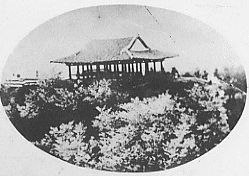
Pavilion is a raised gazebo, which served as
a military lookout during the Koryo era. Its festive structural design is
notable. |
||
|
River Amnok |
Sinuiju SAR Emblem |
Thonggun Pavilion |
 |
 |
 |
| 中朝邊界鴨綠江 | 新義州特別行政區區徽 | 統軍亭 |