Thursday, November 29, 2007
Bought again Books
(downstairs from Vibe)
Cedar Falls
Featured Reader
Scott Cawelti
Thursday, January 31, 2008: Aaron McNally book release

|
FINAL THURSDAY READING SERIES |
|
Thursday, November 29, 2007
Featured Reader Thursday, January 31, 2008: Aaron McNally book release |
|
|
This month the Final Thursday Reading Series moves downstairs to Bought again Books (Vibe will be open as usual for coffee and other drinks). Signup for the open mic begins @ 7 p.m. on a first come, first served basis. Limited slots are available, so readers are encouraged to sign up early to read your best five minutes of poetry, fiction, or creative non-fiction. Singer-songwriters are also welcome. The open mic begins at 7:30 p.m. The featured reader takes the stage between 8:00 and 8:30 (depending on how many open mic readers there are). After the reading, there will be a brief question and answer session.
Scott Cawelti will read from his nonfiction novel-in-progress, Bullets, Lies and Motorcycle Rides: The Mark Family Murders. Cawelti has researched this subject since 1980, having been a high school classmate of Jerry Mark, the accused murderer now serving four life terms in the Iowa State Penitentiary in Fort Madison. Cawelti has taught writing, film, and literature courses at UNI since 1968. He is the editor of The Complete Poems of James Hearst (University of Iowa Press, 2001), author of The Inventive Writer (Mayfield, 1993), and co-author of Introduction to College Writing (Kendall-Hunt, 1990). He has also been a longtime editorial columnist for the Waterloo/Cedar Falls Courier and a contributor to various essay collections. He will be retiring from UNI in May 2008. You can read a sample of his work below. |
|
|
|
Read Work by Past Featured Readers
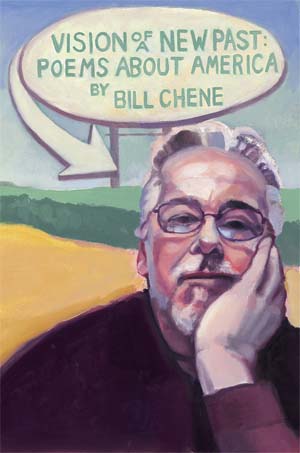
Poetry by Bill Chene
Also Available from
Poetry by Pierre-Damien Mvuyekure
Poetry by Jonathan Stull
Poetry by Vince Gotera ***Winner of the 2004 Global Filipino Literary Award for Poetry***
Poetry by Ahkos
Microfiction by Jim O'Loughlin |
excerpt from So how do lawyers approach a criminal case? You can literally get by with murder if the prosecution can’t provide evidence beyond a reasonable doubt that you actually committed it for all twelve jurors. If even one juror harbors a reasonable doubt and refuses to vote for a guilty verdict during deliberations, the jury, even with eleven others holding no doubts at all, cannot convict. You remember the old Henry Fonda film, Twelve Angry Men that illustrates this whole notion. The vote must be unanimous. So it’s a fairly rigorous process, and supposedly keeps innocent people from going to prison, since it’s a fair challenge to convince jurors that there’s no reasonable doubt, meaning “proof of such a convincing character that you would be willing to rely and act upon it without hesitation in the most important of your own affairs. However, it does not mean an absolute certainty.” Since the defendant is considered innocent until proven guilty, lawyers for the defense need prove nothing. So the burden of proof lies with the prosecution; the defense need only invalidate that proof, showing that the prosecution didn’t make a case beyond a reasonable doubt. This is what Lawrence Scalise tried to do for Jerry Mark, pointing out flaws in some of the witness’s testimony, showing that Jerry was beloved by his mother, pointing out how angry and bitter some of the witnesses felt toward Jerry, and that some of the witnesses that put Jerry at various points close to Iowa could be mistaken. Reasonable doubts can be created fairly easily: a witness who insists that he/she saw the defendant elsewhere at the time of the murder might do it, no matter how much such witnesses might have been discredited on cross examination. A character witness who insists that this fine man or woman could not possibly have committed such a heinous act might do it. And a counter-story from the accused himself might create reasonable doubts if he could offer reasons for his actions that point away from his guilt.
Upcoming Final Thursday featured readers include Vince Gotera and Aaron McNally. Watch this site for more details.
|
| updated Oct. 16, 2007 by Jim O'Loughlin |
 Vibe
is located at 909 W. 23rd St. in Cedar Falls on the second floor of
Bought again Books.
Vibe
is located at 909 W. 23rd St. in Cedar Falls on the second floor of
Bought again Books.