WHY THE LENS
WORKS
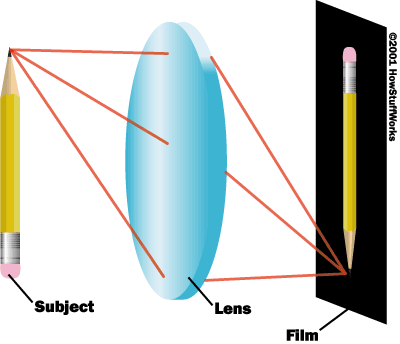
A lens is simply a curved piece of
plastic or glass. As light travels from one medium to another, it
changes speed. Because light travels more quickly through air
than plastic or glass, light slows as it enters the lens. As
light hits the lens at an angle, it is bent in one direction.
When the light exits the lens and reaches the air again, it will speed
up and it will be bent again. A lens in a camera is a convex
(both sides of the lens are curved out) piece of plastic or glass,
which causes light to bend toward the center of the lens as it enters
it. When a lens is curved correctly, it bends the light in
such a way that an image of the scene that is front of the lens
is focused behind it.
The angle of light as it enters the lens changes as you move the lens
closer or farther away from the object. The Nikon N55 lets you
attach different lenses so that you can see and object or scene at
different magnifications (see How the lens works
to detach and mount a lens). The magnification power of a lens
is determined by its focal length - the distance between the lens and
the real image of an object in the far
distance. As
the distance between the lens and the real image
increases, the light beams spread
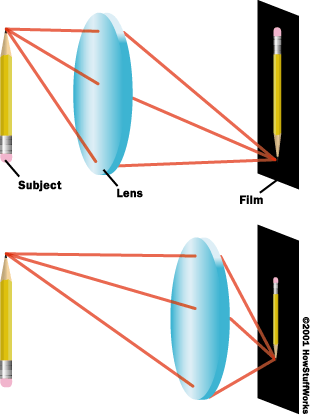 out
more.
This forms a larger real image.
out
more.
This forms a larger real image.
Different lenses have different focal lengths. A telephoto lens has an extremely long focal length, which allows you to zero in on specific things you see in the distance. A wide angle lens has a shorter focal length, so it shrinks the scene in front of you.
The lens on the Nikon N55 is actually composed of several lenses working together. As you turn the zoom feature on the lens, you are moving the different lens elements back and forth. This changes the distance between the lenses and adjusts the magnification power (focal length) of the lens as a whole.
out
more.
This forms a larger real image.Different lenses have different focal lengths. A telephoto lens has an extremely long focal length, which allows you to zero in on specific things you see in the distance. A wide angle lens has a shorter focal length, so it shrinks the scene in front of you.
The lens on the Nikon N55 is actually composed of several lenses working together. As you turn the zoom feature on the lens, you are moving the different lens elements back and forth. This changes the distance between the lenses and adjusts the magnification power (focal length) of the lens as a whole.