WHY THE FILM
WORKS

Film is a long strip of plastic
with coatings on each side. This strip begins as a base (a
transparent material that is about 0.004 inch thick). One side of
the film is shiny and contains various coatings that are important to
the physical handling of the film in manufacturing and in
processing. The other side of the film is where everything
happens!
This side of the film may have twenty or more individual layers coated on and all held together by gelatin (yes - the same kind used in Jello). Some of the layers are there to filter light. The imaging layers contain microscopic grains of silver-halide crystals that
act as photon detectors. These
are the most
important part of film because it is what undergoes a photochemical
reaction when they are exposed to light.
that
act as photon detectors. These
are the most
important part of film because it is what undergoes a photochemical
reaction when they are exposed to light.
Organic molecules known as spectral sensitizers are added to the silver-halide grains to make them more sensitive to blue, green, and red light. Other chemicals added to the surface of the silver-halide grains affect the sensitivity of the grain to light. This sensitivity is known as photographic speed. Films come in different speeds:
- ISO (International Standards Organization) 100 - good for photography in bright sunlight
- ISO 200 - good for outdoor photography
- ISO 400 - good for indoor photography silver-halide crystals
- ISO 1000 or 1600 - good for indoor photography where you will be using a flash
The higher number on the speed of the film, the more sensitivity to light it will have. You would need a faster film for photographing quickly moving objects or for pictures taken with the use of a flash. This film can sometimes be "granier" because the silver-halide grains are actually larger.
The Nikon N55 is an automatic camera, so we will assume that the camera is automatically set on the proper exposure. Once you have the object you would like to photograph in view and in focus, push the shutter release button. During this brief moment, the camera's shutter was opened for a fraction of a second, and a latent image of the visible energy reflected off the objects in your viewfinder was formed on your film. On that particular part of the film, the brightest portion of your picture exposed the majority of the silver-halide grains.
In color film, there is a separate layer in the film for each color. Red light forms a latent image in the red-sensitive layer of the film, green light forms one in the green-sensitive layer, and so on.
When the film is being developed, many different things take place. A developing agent converts the grains that have latent images into pure silver metal with the right temperatures, the right time, and the right amount of agitation. The unexposed grains will remain silver-halide crystals. A fixing bath removes the silver-halide crystals that were not exposed. After the film is washed to remove any chemicals, it is dried and cut into negatives.
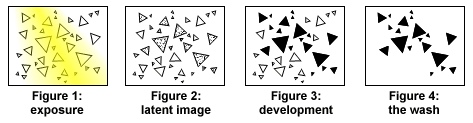
both photos from: http://www.sunspotphoto.com/ssp/film/b_w.php
This side of the film may have twenty or more individual layers coated on and all held together by gelatin (yes - the same kind used in Jello). Some of the layers are there to filter light. The imaging layers contain microscopic grains of silver-halide crystals
that
act as photon detectors. These
are the most
important part of film because it is what undergoes a photochemical
reaction when they are exposed to light.Organic molecules known as spectral sensitizers are added to the silver-halide grains to make them more sensitive to blue, green, and red light. Other chemicals added to the surface of the silver-halide grains affect the sensitivity of the grain to light. This sensitivity is known as photographic speed. Films come in different speeds:
- ISO (International Standards Organization) 100 - good for photography in bright sunlight
- ISO 200 - good for outdoor photography
- ISO 400 - good for indoor photography silver-halide crystals
- ISO 1000 or 1600 - good for indoor photography where you will be using a flash
The higher number on the speed of the film, the more sensitivity to light it will have. You would need a faster film for photographing quickly moving objects or for pictures taken with the use of a flash. This film can sometimes be "granier" because the silver-halide grains are actually larger.
The Nikon N55 is an automatic camera, so we will assume that the camera is automatically set on the proper exposure. Once you have the object you would like to photograph in view and in focus, push the shutter release button. During this brief moment, the camera's shutter was opened for a fraction of a second, and a latent image of the visible energy reflected off the objects in your viewfinder was formed on your film. On that particular part of the film, the brightest portion of your picture exposed the majority of the silver-halide grains.
In color film, there is a separate layer in the film for each color. Red light forms a latent image in the red-sensitive layer of the film, green light forms one in the green-sensitive layer, and so on.
When the film is being developed, many different things take place. A developing agent converts the grains that have latent images into pure silver metal with the right temperatures, the right time, and the right amount of agitation. The unexposed grains will remain silver-halide crystals. A fixing bath removes the silver-halide crystals that were not exposed. After the film is washed to remove any chemicals, it is dried and cut into negatives.
both photos from: http://www.sunspotphoto.com/ssp/film/b_w.php